


How can art open paths towards the deinstitutionalisation of people with functional diversity?
To compose the plural from diversities
Art can open pathways towards the de-institutionalisation of people with diverse functional needs.
To compose the plural from diversities
The deinstitutionalisation of the lives of people with diversity is one of the great challenges of our times. History teaches us that this institutionalising process has been long and profound, and is deeply ingrained in contemporary Western societies.
Currently, numerous European and state bodies are promoting strategies for the deinstitutionalisation of individuals with diversity. These strategies involve social, political, and cultural changes, focused on guaranteeing all rights related to independent living and, above all, on transitioning from institutional dependency to life with community support.
Starting from this process of cultural and institutional change, from Concomitentes and through this project Interdependences, we are going to investigate and work on the narrative sovereignty from the group Clients, at to tell their own stories, to advance, as they wish, in their rights to common and interdependent life.
Artistic and mediation practices serve as activating tools for other contexts, to re-position bodies, generate new tensions, and re-signify the availability and use of languages, spaces, times, relationships, and connections, attempting to activate desire, will, and wonder (both individually and collectively).
All the practices proposed are done with the intention of opening new conversations about autonomy and its interdependencies within the closest community. To know and express their desires and needs when imagining and composing their lives, as well as to place bodies in new situations that generate shifts in thinking, practice, and the imagination of possible futures.
We try to work from an emotional perspective, starting from the domestic, understanding that, in this case, the private, the personal, is a starting point that allows us to approach and better understand who we are and what our interests are, but also what our pains are.
To compose (ourselves) from the domestic.
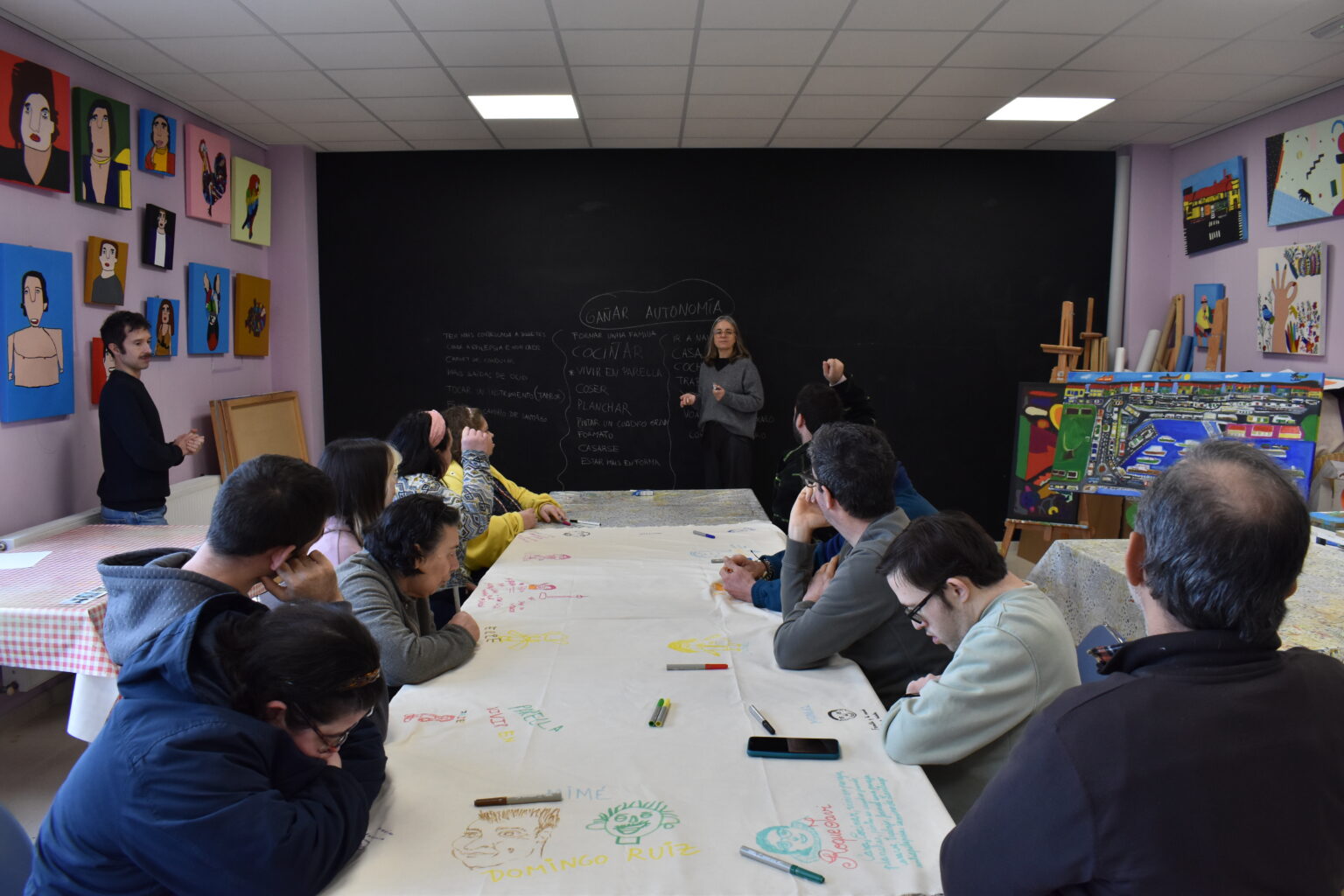
To introduce ourselves, we share a personal object, something domestic that allows us to narrate an (important) part of our stories. Sitting on the floor change body position to be able to think from other places, in a circle rearrange the classroom layout to enable collective thinkingwe began an exercise in understanding from our affections, from what we bring to tell and share. This narrative, from the private and domestic, generated a space of intimacy and trust, key to everything that follows.
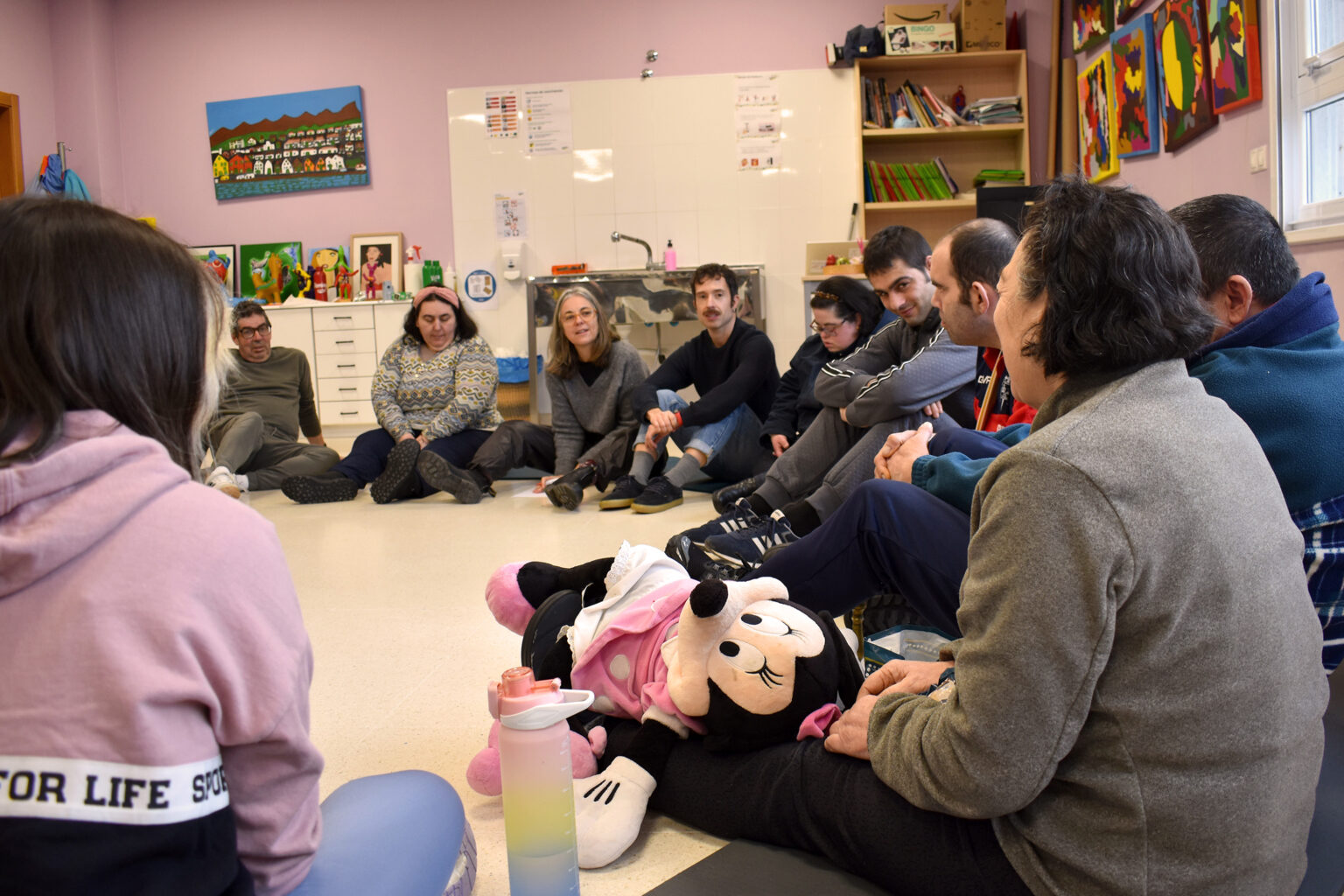
Polaroid camera. Portrait set.
How do we want to be seen? How do we want to be portrayed? Through a Polaroid camera, we compose a series of portraits.to move the body through spaces in order to produce the imagined portrait.
Playing with the camera, in an exercise of personal, social and political imagination... they move outside their classroom to compose their portraits: playing billiards, with their personal objects (their history, their memory, their imagination), with their paintings, in the multisensory room, accompanied or alone, at the authority's table, in the bathroom, in the kitchen.
To make room for wonder, for questioning, to expand the languages of desire, to desire from other perspectives, to play with the senses and to move through other experiences in order to see ourselves, hear ourselves, and to be inspired and gradually become part of something else (common and collective), which we don't yet know what it is but to which we are drawing closer, each day, with each practice.
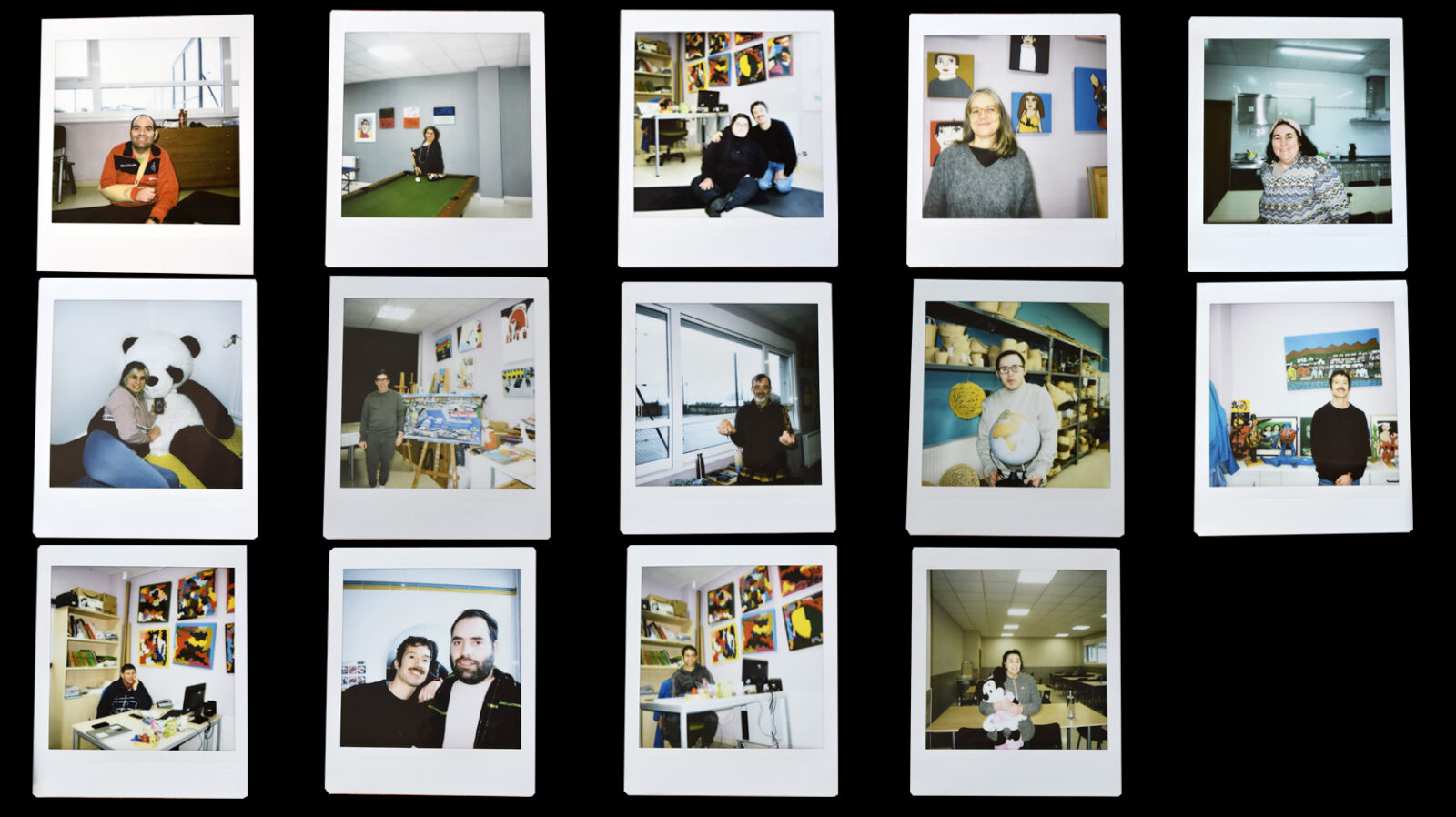
Long table, imagine the other.
We do the reverse exercise: how do we see the person in front of us? How are we able to grasp who they are? How do we draw them?
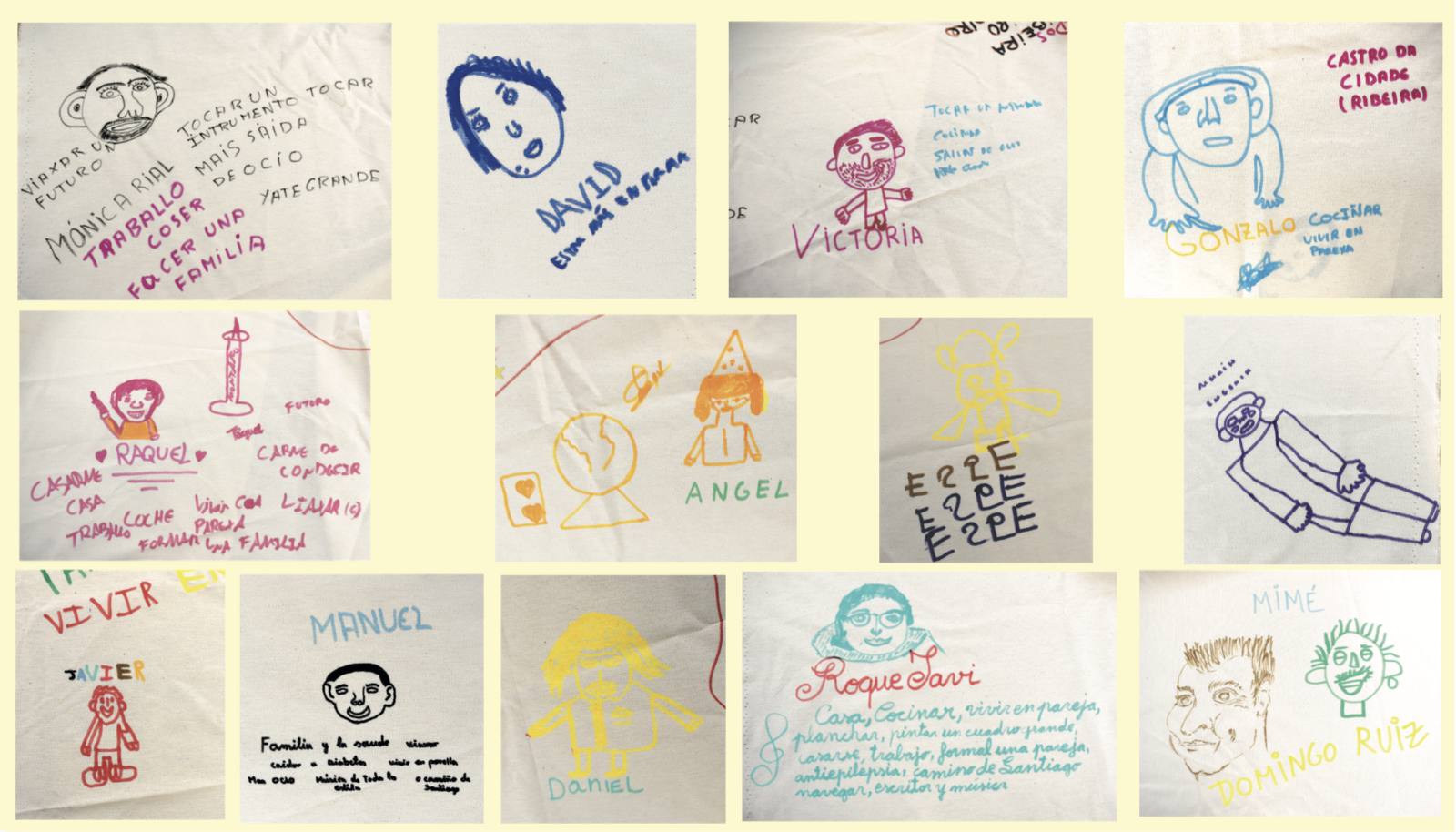
At a long table, from which conversations emerge, we are creating another set of portraits, this time painted and produced by colleagues, while at the same time gathering their wishes for imagining other autonomies and interdependencies.
With the body repositioned, participation is high. Political imagination. The challenges are far from small. They aim for the essential: how to live, how to spend their leisure time, travelling and getting to know places and people, working in what they love: the arts.
All areas that point to: housing, leisure and work revolve around the same desires: combating loneliness, feeling like you belong, expanding emotions, having desires and being able to fulfil them, getting excited, but above all, the need is arising to transform interdependence into a Ecodependency. He’s nature.
Housing
They want to live as a couple, to be accompanied, to be able to exercise their right to life together as they wish. The imagination regarding forms of life is multiple, as are their needs and their different possibilities.
The work, the process, is to unravel: What do they need? What should those homes be like? Those ways of life? Where? With whom? In what manner? With what interdependencies? With what resources? What do those homes need to contain and how should they be structured?
Re-signifying the design process of a dwelling for people with functional diversity is one of the challenges we are putting on the table. One of the avenues we are opening up for research, a thread we will keep pulling on, during the mediation process.
Leisure and travel
They wish to travel, not far. Near. To new places. They wish to discover new paths, to walk them (not for too long), with breaks. In contact with nature. They wish to meet new people, to form relationships with others. To feel part of a living ecosystem essential for survival on the planet. They are indispensable, just like the leaves of plants.
Work. In culture. In the arts. They are artists.
Work is important. Having your own salary. A task to perform within a finite planet where diversity is essential to preserve lives and eco-dependencies. Diversity as sensible tools to allow the emergence of multiple relationships that occur if the context is favourable, if we care for our common planet, if we allow beings to grow with their unique qualities and create spaces for them to express themselves, together, with the right nutrients, the necessary support, and activated connections.
See you in the second session. Lots to cover.




 Concomitentes