


How is it going?
Going out to meet
To read in Catalan, click here.
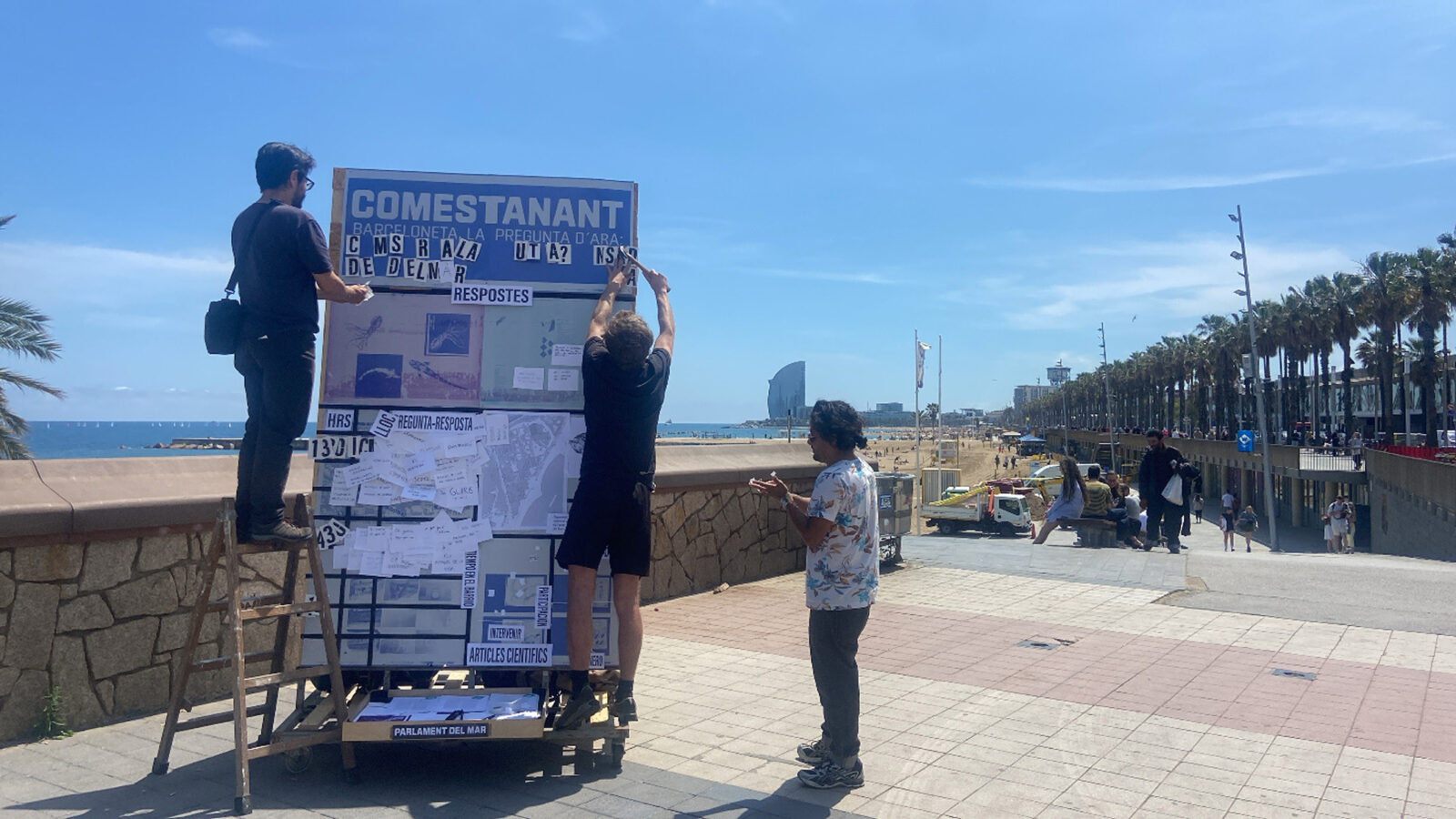
After the opening day and beyond the team motor meetings, the Parliament of the Sea We went out into the street. For three days we walked around different points of Barceloneta with the comitentes and the lumbung press collective: the Institut de Ciències del Mar, the Escola Mediterrània, the plaza del Mercado de la Barceloneta and other spaces in the neighborhood. Going out into the encounter meant bringing the process to where everyday life takes place and opening a conversation with those who live, work and pass through these places.
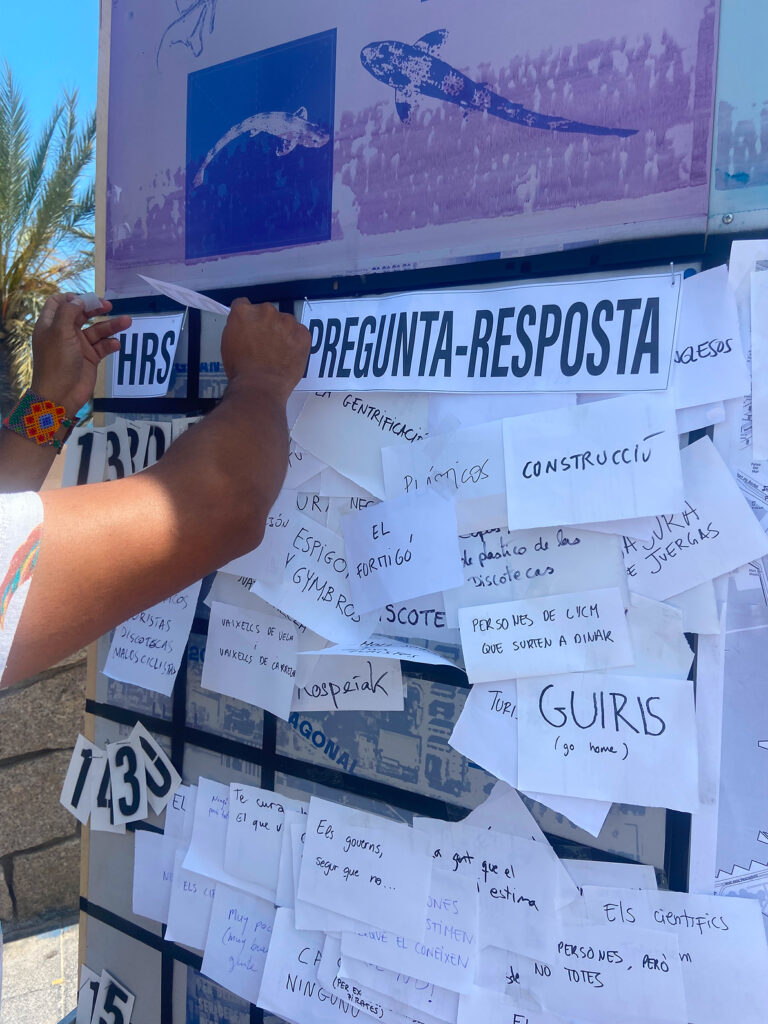
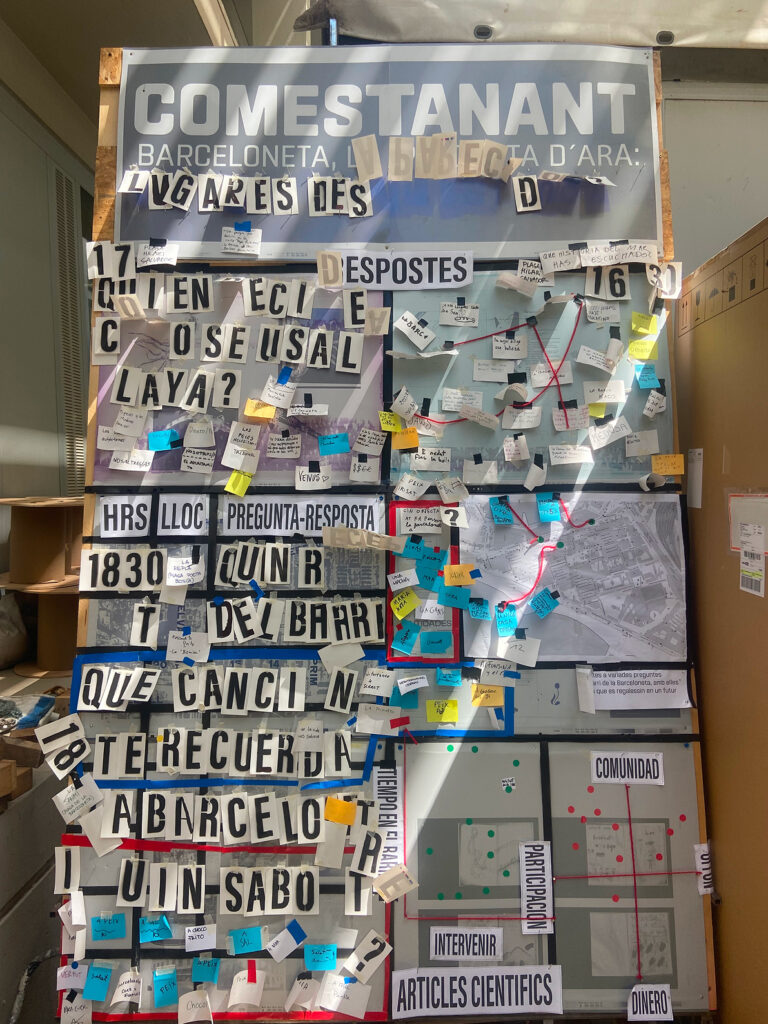
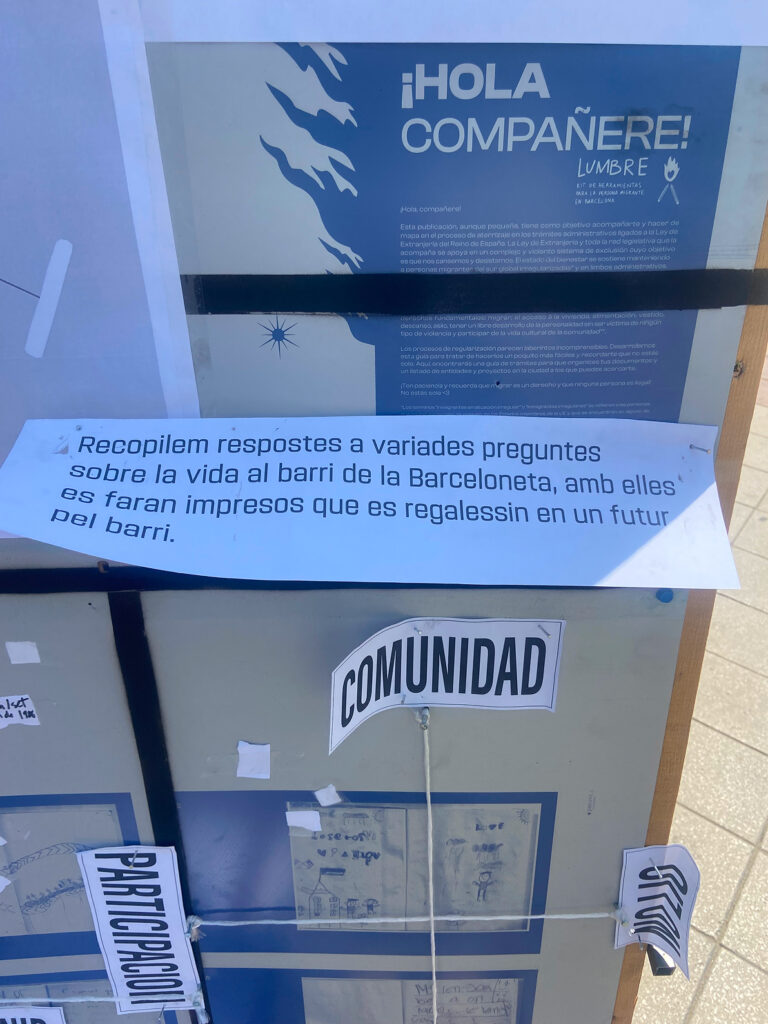
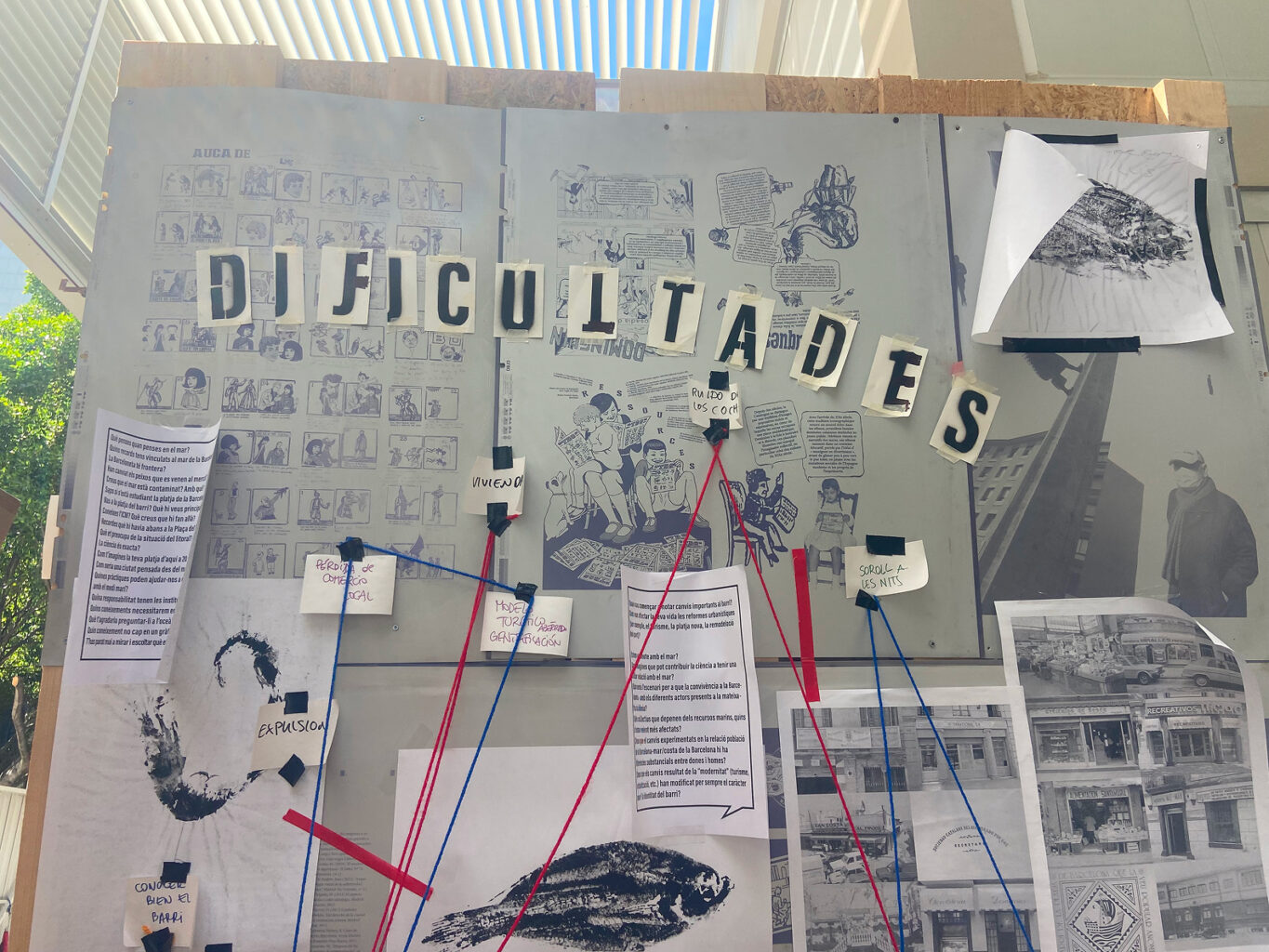
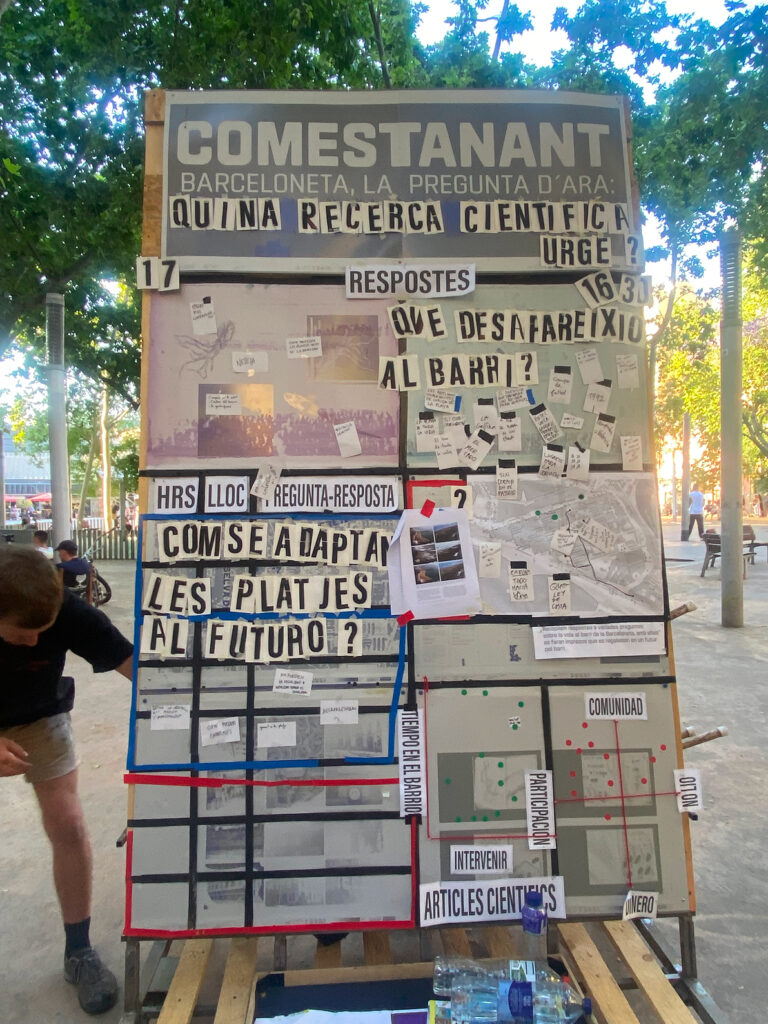
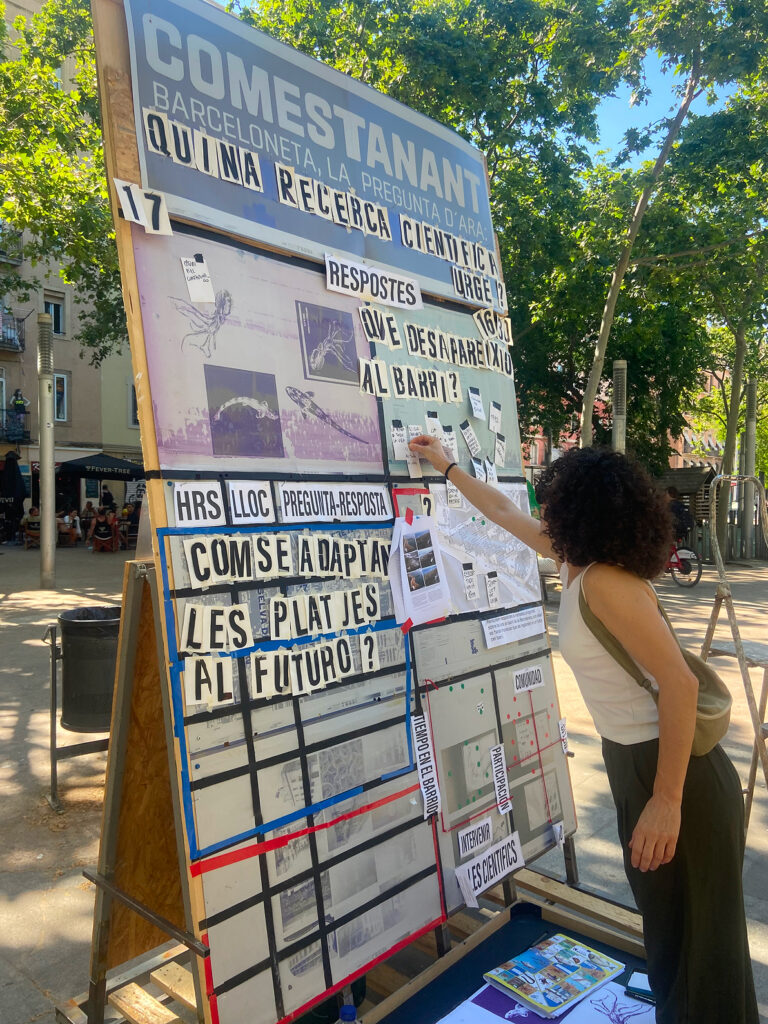
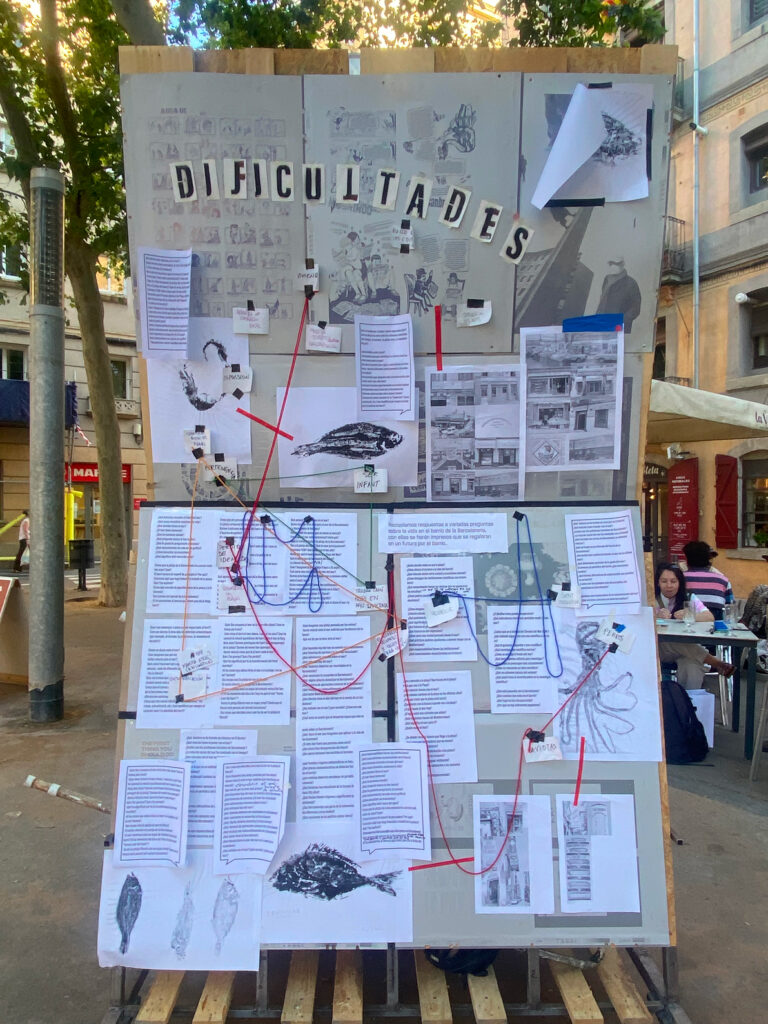
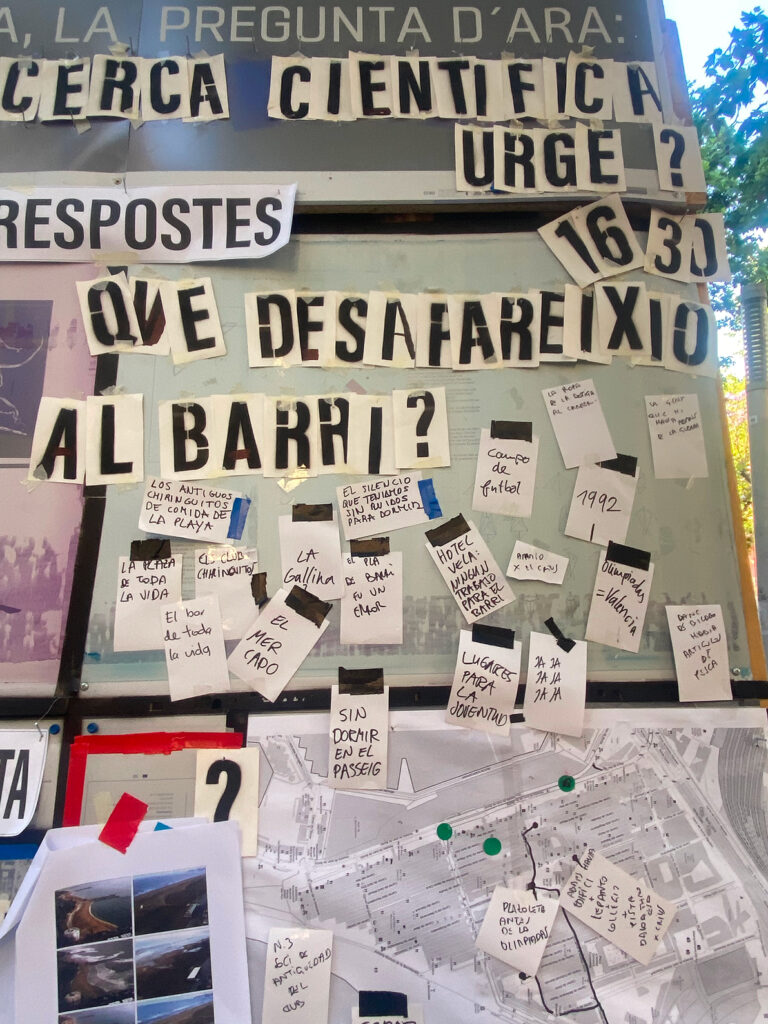
To do this, we brought with us a mobile board created by lumbung press. A listening and interaction device that could move, stop, and adapt to each encounter. On it was a selection of pre-formulated questions, images, and spaces to complete.
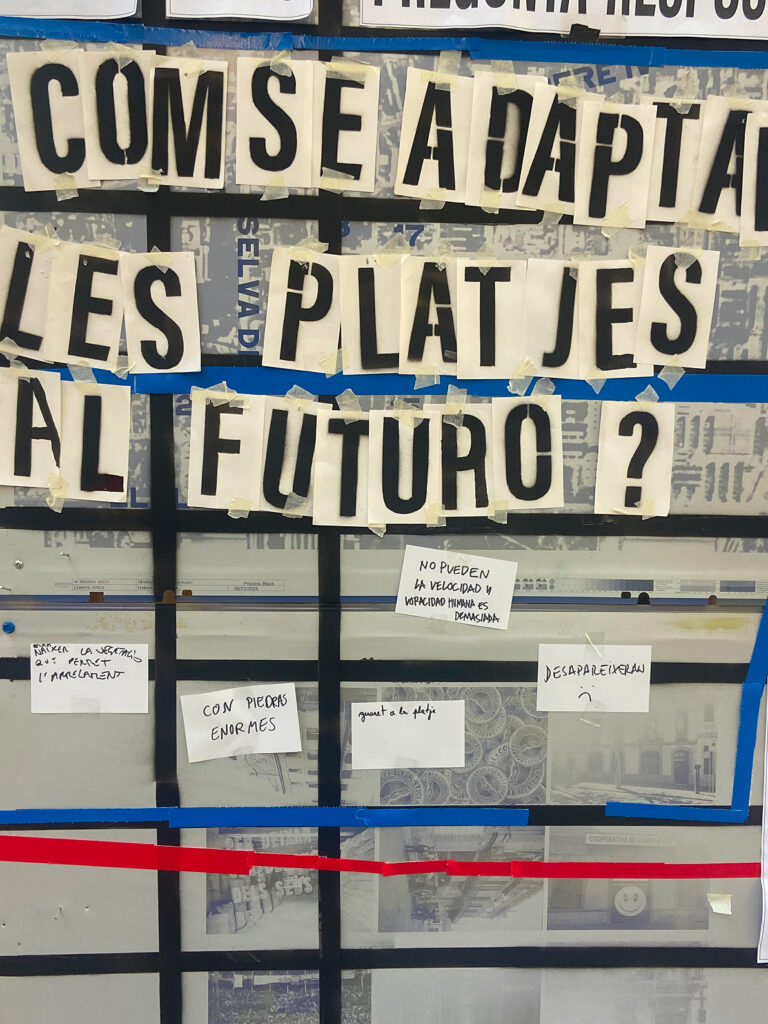
How is it going? was one of the first questions that appeared on the board, capable of opening up different directions: how is the sea going? how is it changing? how is the neighborhood going? what has changed in our relationship with the beach? what do we remember? what worries us? what would we like to happen?
From there, each encounter took its own path. Some conversations began with a memory; others, with a anecdote, a concern or an observation. Memories of the beach and the harbor emerged; stories related to fishing, to businesses, perceived changes in the coastline, everyday ways of relating to water and knowledge transmitted from generation to generation. Also appeared different ways of living and understanding the sea. For some people, it is a place of work; for others, of leisure, of encounter, of memory or passing by. For others, it is a space of conflict and discomfort, traversed by the tourist pressure, overpopulation and the transformations that this has caused in the neighborhood and on the coastline. The sea and the beach thus appear as places where uses, interests and ways of life that are not always compatible intersect. Rather than seeking a common answer, the discussions allowed these perspectives to coexist, come into tension, and be brought into relation.
The board began to function as a memory in motion of the process, but also as a surface capable of returning and transforming what it was collecting.
How is it going?
Going out on a date
After the opening day and beyond the meetings of the motor team, the Parliament of the Sea We went out into the street. Over three days, we walked through different parts of Barceloneta together with the comitentes and the lumbung press collective: the Institute of Marine Sciences, the Mediterranean School, the Mercat de la Barceloneta square and other spaces in the neighborhood. Going out into the street meant bringing the process to where everyday life takes place and opening a conversation with the people who live, work and pass through these places.
To do this, we brought with us a mobile board, created by Lumbung Press. A listening and interaction device that could be moved, stopped, and adapted to each encounter. Above it was a selection of pre-made questions, images, and spaces to complete.
How is it going? was one of the first questions that appeared on the board, able to open up different directions: how is the sea going?, how is it changing?, how is the neighborhood going?, what has changed in our relationship with the beach?, what do we remember?, what worries us?, what would we like to happen?
From there, each encounter took its own path. Some conversations began with a memory; others, with an anecdote, a concern, or an observation. Memories of the beach and the port emerged; stories linked to fishing, business, perceived changes in the coastline, everyday ways of relating to water, and knowledge passed down from generation to generation. Also appeared different ways of living and understanding the sea. For some people, it is a place of work; for others, of leisure, meeting, memory, or passage. For others, it is a space of conflict and discomfort, traversed by the tourist pressure, overpopulation, and the transformations this has caused in the neighborhood and on the coastline. The sea and the beach thus appear as places where different uses, interests, and ways of life intersect that are not always compatible. Rather than seeking a common response, the discussions allowed these perspectives to coexist, come into tension, and be brought into relation.
The board began to function as a moving memory of the process, but also as a surface capable of returning and transforming what it was collecting.




 Concomitentes
