


Why does Peñamayor matter (to us)?
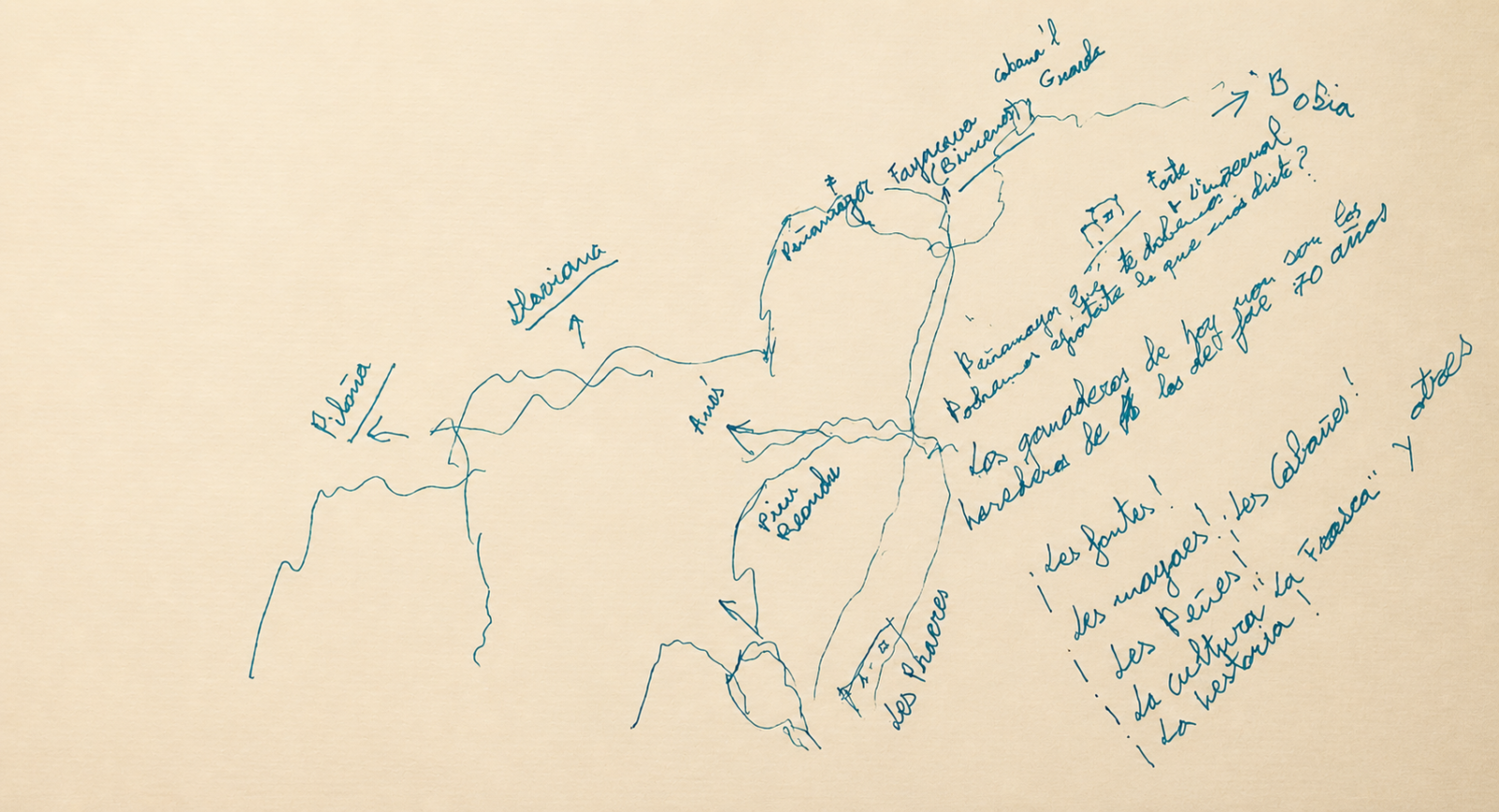
To recognise the mountain honours the diversities of worlds as a way to curb the extractive impulse.
Why does Peñamayor matter (to us)?
Recognising the mountain honours the divergences of worlds as a way to curb extractivism.
«The blackbird had begun to sing. Something used to import, and at that moment nothing existed but the imperative duty of to make listen».
— Vinciane Despret, To inhabit like a bird. Ways of making and thinking territories (2022).
Peñamayor matters, it matters to us, for many reasons. It matters to us for its landscape, for its people, for its ethnography, for its beauty, for its rich biodiversity. And also for its abundant water, the water we drink The mountain dwellers and the one that waters the city; the one that stagnates and conceives life; and the one that flows and departs, the one that escapes through Ḥuensanta, through the Sierros de La Bauga, or through the meanders of the river Prá. And such is the thirst for importance(s) that moves us here, in La Peña, that we are concerned even by the channelled water, and by that which is bottled and sold industrially as a medicinal product. It is this condition of the multiple that concerns us; all of it, in its entire complexity.
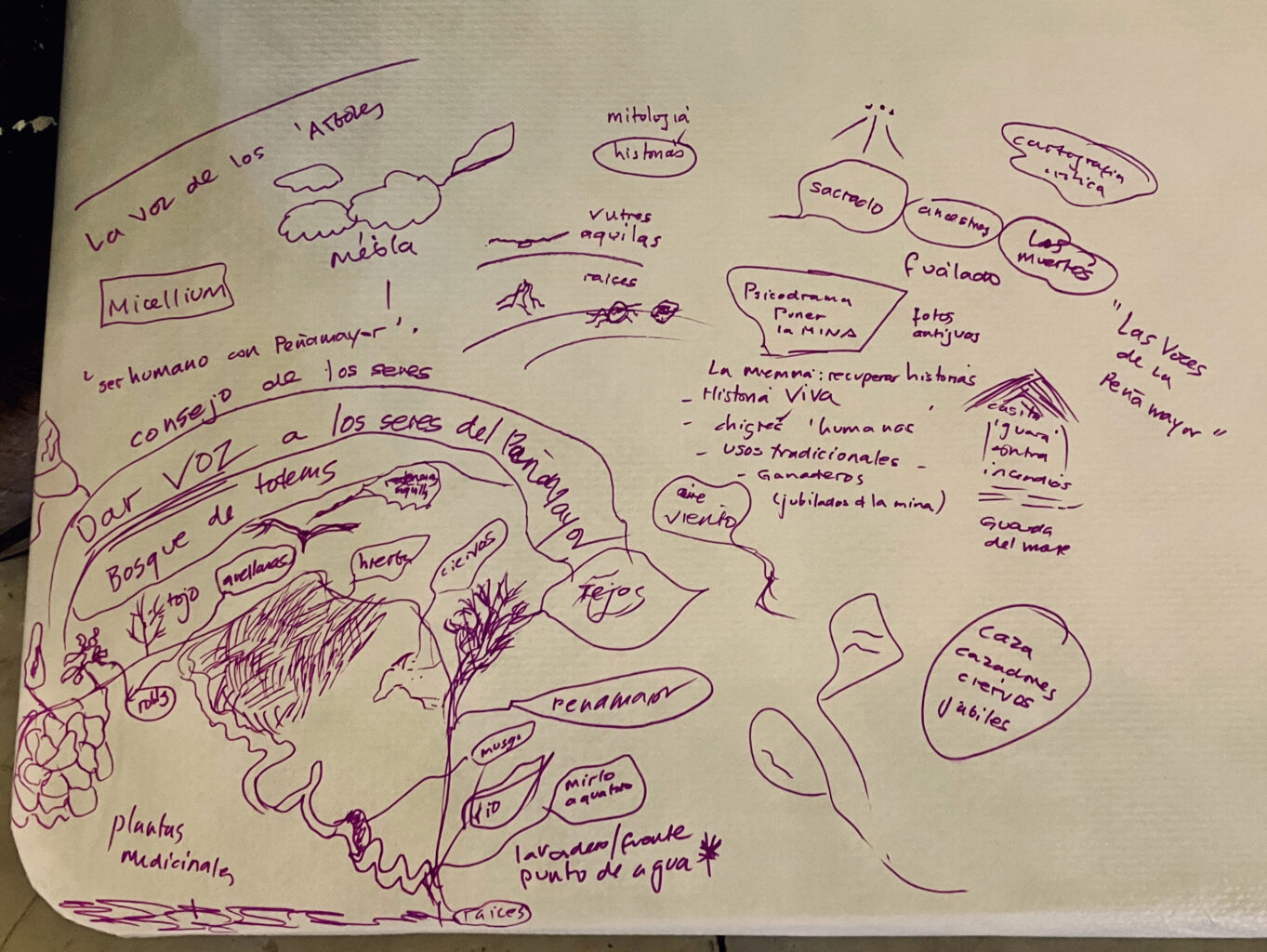
Because when we talk about importance, we don't mean «interest»; nor do we mean «value», let alone «price». Talking about what matters is to bring into the conversation a sense of «relevance» (Savransky 2016) that exceeds us, of something that, perhaps due to its untamed nature, only aesthetic experience has the potential to conjure. Importance is, as Despret (2022: 13) pointed out, something that Make a claim on our behalf for an act of listening, something that requires, in order to be welcomed, a «multiplication of ways of being». That's why, [Re]getting to know the bush It's about how we can take responsibility for the cosmologies that are intertwined in Peñamayor and which are not accounted for, or which we find it very difficult to make accounted for, in a context also marked by the shadow of mining speculation. [Re]getting to know the bush it's about exploring how the cultivation of the capacity for honour, as it vibrates with what life gives us, can help curb the spread of the extractivist impulse.
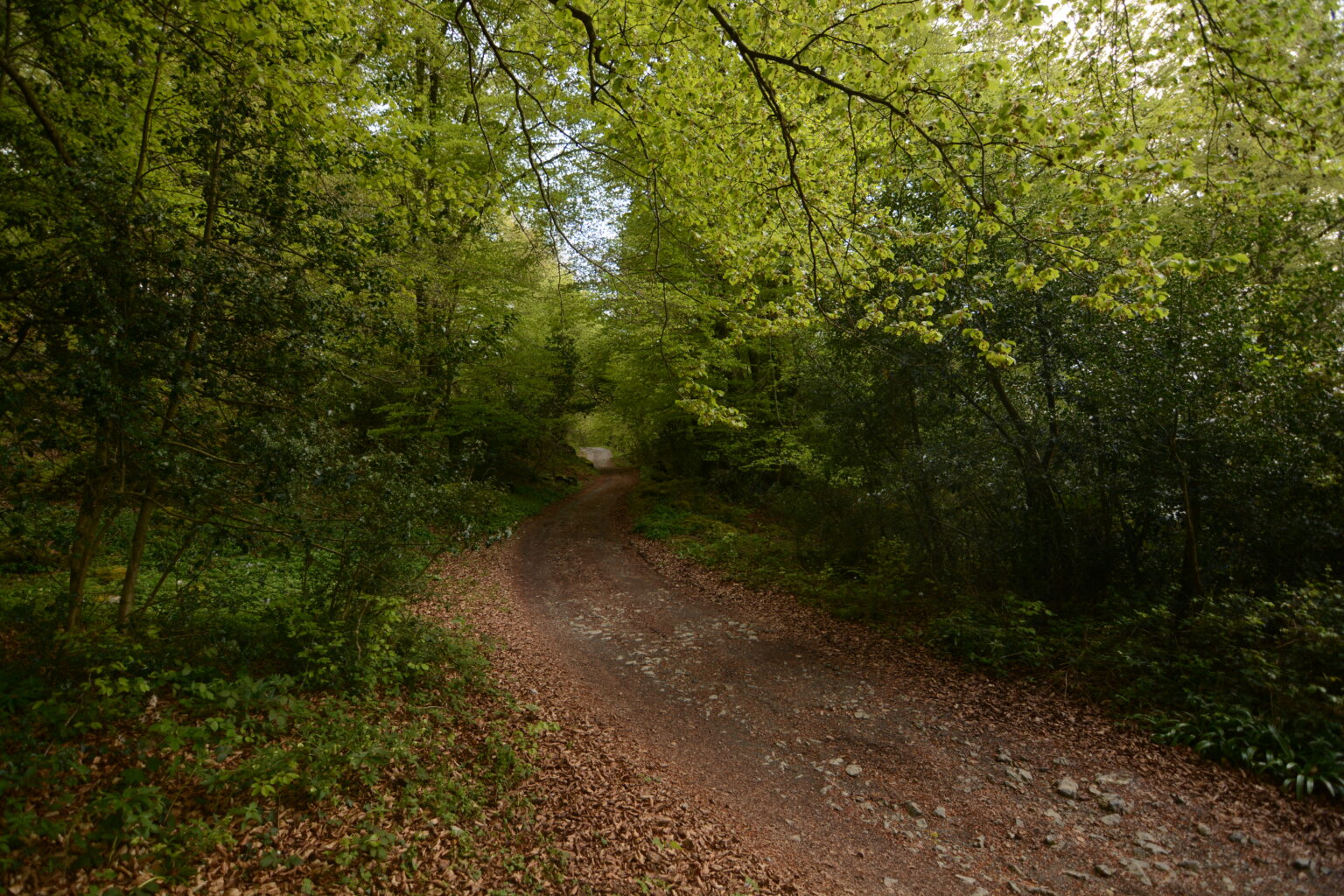
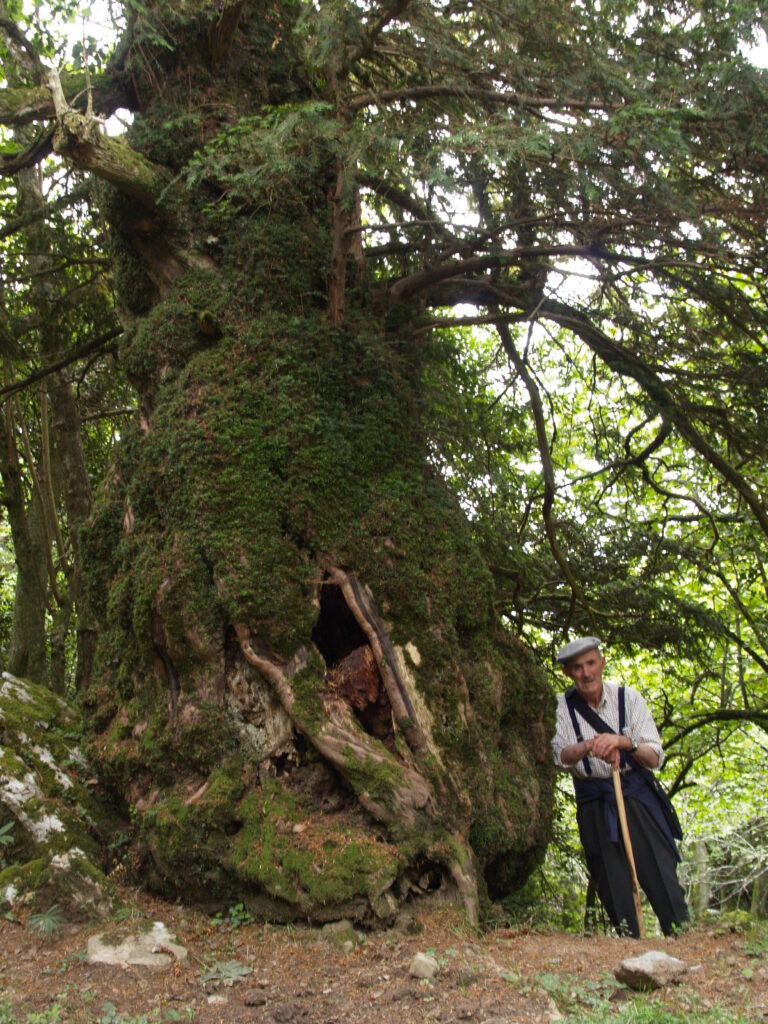
Because it is not only the water, but also the forests, that matter to us. The monumentality of these ancient beings that Peñamayor safeguards seems as relevant to us as the need to keep some of them secret: acknowledging this incredible heritage matters to us as much as the «right to opacity» (Glissant 1990; García-Arenal 2025). And yet, how can we not say it, it also matters to us to make visible. The memory of Mable, for example, and her devotion to the care of those totems of the pagan that are the Textiles; o, in anthropological terms, of those «(extra)modern» infrastructures (Viveiros de Castro 2016) of Naturcultural council (Gálvez 2023). He, who left us in 2018, bridged the gap between the re-enslaved of a (nearly) extinct rurality and the ecological sensibility that we are to nurture today. Inheriting the many nuances that this communication between worlds brings to the table is, of course, something that also matters to us to care for.
But Peñamayor concerns us not only in what it keeps silent, nor in that fragile communication between more-than-modern worlds. The effervescence of encounters also calls to us, the subversive intimacy we experience when we are in the mountains; the sensory alteration, the movement of limits and borders that takes place there, the celebration of life. It also matters to us, and this should be stated clearly, the commitment in the face of stories of violence that occurred, that are occurring, and that, unfortunately, everything points to could occur again. We allow ourselves to be affected by this problematic legacy, no less than by that which keeps alive our capacity to listen, to take collective responsibility, and to repair (Macaya 2026). Because it is not just the landscape, nor so-called «nature», that calls to us. The "paisanaje" (the people of the landscape), in all its richness, is also on our radar.
And the ingrained nature of it also matters to us. Peñamayor has always been a place of passage, of transhumance, to go to cowboy, for the seasonal encounter, and that speaks to us of a different way of understanding the relationship between voice, body and territory. It's not that we disregard the histories of monumentalisation – the «Official Peñamayor,» so to speak –; it's that it also matters to us to pay attention to the invisible, to what has no place in the usual modes of «feeling-thinking» (Fals Borda 2009; Escobar 2014). The stories of repression and heroic resistance move us, and we receive them in historical symmetry with those of the anonymous, with those who spent their lives going up and down, and with those who linked what seemed impossible to link. The stories told from above we counterbalance with those from below, those of cattle production with those of going for chamomile; those of major sporting events with those of the culture of The fresh. Well, it's not just what is said and seen. What is kept silent, what is passed from hand to hand, and what requires alternative languages to assert itself, is also important.
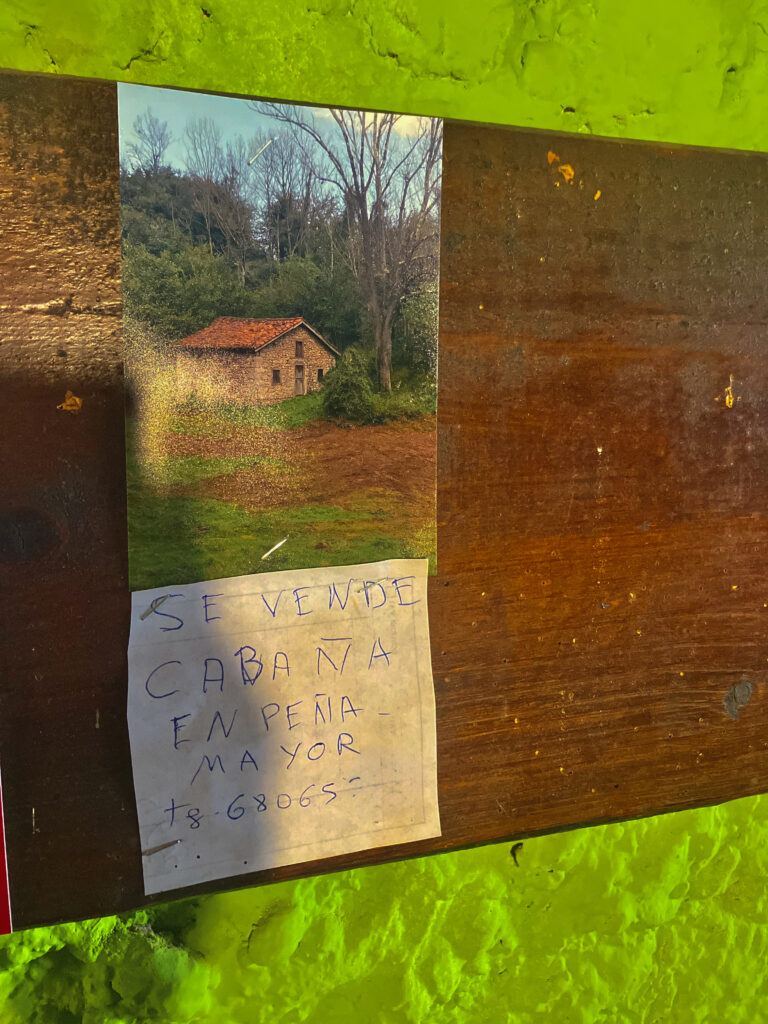
We also perceive the attraction of dwelling. The tens, if not hundreds, of huts that populate La Peña are important to us; all of them: those that are shelters and those that are no longer, those of the "presaliadxs" (a term of uncertain meaning, possibly referring to refugees or former residents) who burned in the war and those that remain sheltering livestock; those that were reconverted into Chigre and shelter, like those that otherwise open up to the common; those of times of jubilee and impromptu festivities; those that became permanent settlements, and those of occasional flirtation. We care about their microhistories («because […] it matters what stories we tell in order to tell other stories» [Haraway 2016: 12]); and also unforeseen developments, as much as their difficult accommodation within legality.
And finally, we are also interested in Cabaña’l Guarda, built by the Institute for Nature Conservation; as much for the border and competence disputes that occur there, as for its unexpected transformation into a repeater of the handheld radios of those who go out hunting. But it’s not that we are indifferent witnesses to what happens; it’s not that. It’s that we care about giving our full attention to coexistence: the reality of those who go to Peñamayor and spend hours and hours photographing a wildcat, and of those who scare it away in seconds with a motorbike or quad. We care about witnessing this discrepancy, which is not just of values and ideas – but also of realities – between those who inhabit Peñamayor. And we do this not to soften or justify anything, but to become more capable of listening. To what? To what happens in coexistence... and to what could happen.
1. Emphasis mine.
2. Free translation of the Quechua-Andean expression tirakuna, which the anthropologist Marisol de la Cadena (2015) in turn translates as «earth beings». This concept designates an ontology of the mountain that exceeds the «great divide» between culture and nature in modern cosmology, where it would be either a resource or an untouchable heritage to be protected. The expression «those of the mountain», with which I support the translation of the concept tirakuna, I collect a specific circumstance of Peñamayor, with which I seek to conjure those who were rejected for being from the mountain, the deities that still inhabit this environment, and the memory of those who resisted the war, hidden in La Peña. The mountain dwellers they are the ones who give us back a gaze of La Peña in which it is not pure passivity or environment, but rather manifests some kind of agency, plays a role.
One of the traditional names for Peñamayor.
4. I take this concept from the philosopher of science Isabelle Stengers (2009: 187). She proposes a conception of honour that has nothing to do with submission, morality, or prayer, but with the work required to «make divergences present and important». Stengers here distinguishes between the multicultural «respect for differences» and the more radical art of attention by which we «make the other matter», and become capable of feeling and thinking in a way that is not entirely our own.
References
Cadena, M. de la. (2015). Earth Beings: Ecologies of Practice Across Andean Worlds. Durham and London: Duke University Press.
Despret, V. (2022). To inhabit like a bird. Ways of making and thinking about territories. Buenos Aires: Cactus.
Escobar, A. (2014). Thinking-feeling with the Earth: new readings on development, territory and difference. Medellín, Ediciones Universidad Autónoma Latinoamericana.
Fals Borda, O. (2009). Una sociología sentipensante para América Latina. V. M. Moncayo (Comp.). Bogotá, CLACSO / Siglo del Hombre Editores.
Gálvez, María Auxiliadora. (2023). «The Voice of the Sun: An Artistic Production Process in León». Solar Narratives: A Diary of Concomitance. Available at https://concomitentes.org/la-voz-del-sol-un-proceso-de-produccion-artistica-en-leon/ [accessed 28 April 2026].
García-Arenal, José Iglesias. (2025). «Right to opacity, joy of overflow». Non plus ultra journal of concomitance. Available at https://concomitentes.org/derecho-a-la-opacidad-alegria-del-desborde/ [accessed 28 April 2026].
Glissant, É. (1990). Poetics of the relationship. Paris, Gallimard.
Haraway, D. (2016). Staying with the Trouble: Making Kin in the Chthulucene. Durham and London: Duke University Press.
Macaya, L., & Genera. (2026). Caring for the bond, confronting harm: a guide to feminist and transformative justice. Pamplona & Madrid, Katakrak / Traficantes de Sueños.
Savransky, M. (2016). The Adventure of Relevance: An Ethics of Social Inquiry. London, Palgrave Macmillan.
Stengers, I. (2009). In the Time of Catastrophes: Resisting the Coming Barbarism. Paris: Éditions La Découverte.
Viveiros de Castro, E. (2016). «On the Modes of Existence of the Extramoderns». In B. Latour & C. Leclercq (Eds.), Reset Modernity! (pp. 491–495). Cambridge: The MIT Press.




 Concomitentes