


We are opening «Cuévana», a sculptural intervention by Todo por la Praxis in Barruelo de Santullán
 Rita Díez Estalayo
Fecha 03/10/2026
Lugar Barruelo de Santullán
Horario 18:30 to 22:00
Participantes Todo por la Praxis, Alfredo Escapa Presa; Inhabitants and descendants of Barruelo de Santullán
The work, which aims to recover the memory of the women of Barruelo, will be inaugurated on 3 October next
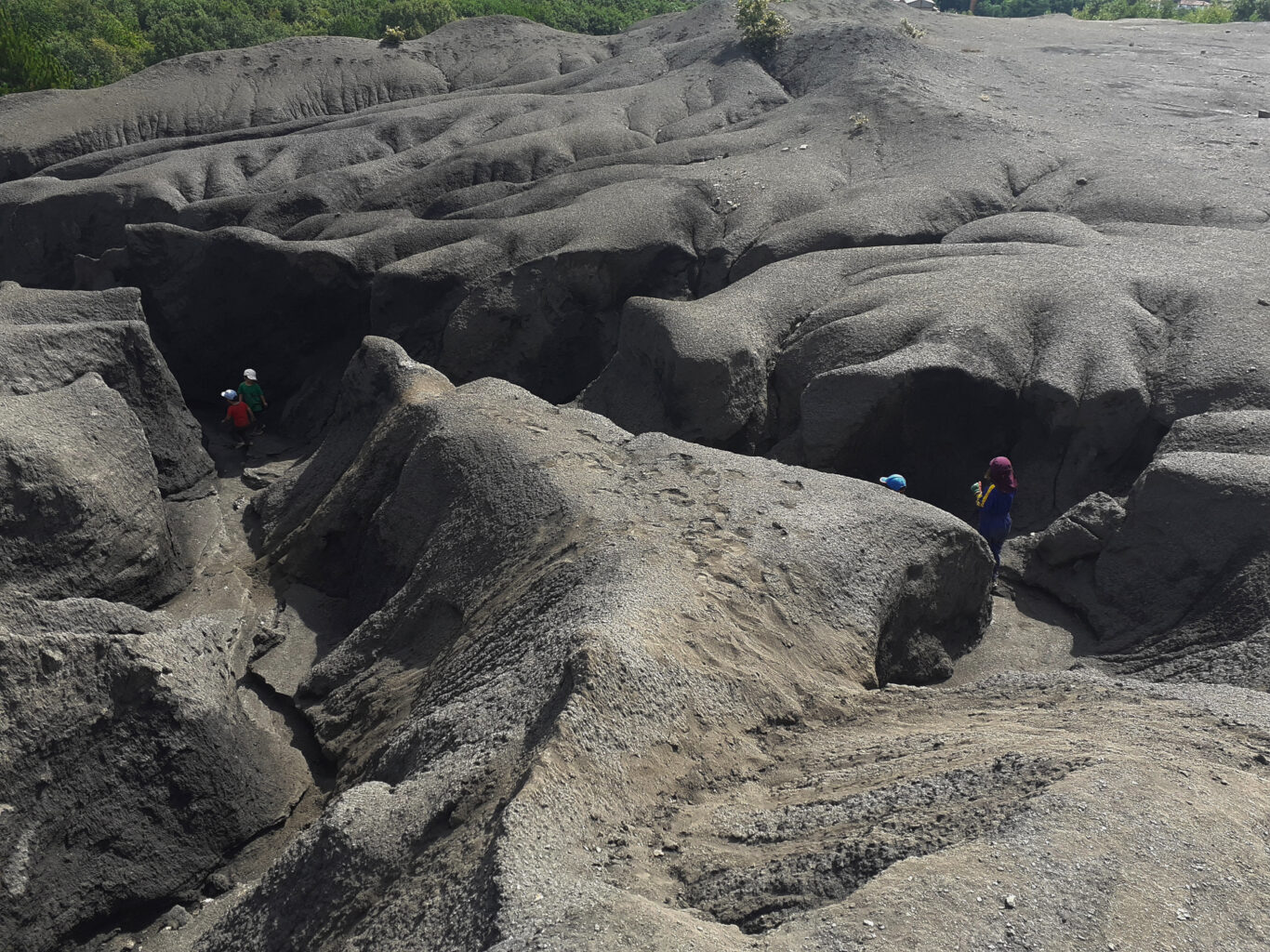
Next 3 October We have opened in Barruelo de Santullán Cuévana, a collective sculptural intervention that recovers and pools the memories of the women of the area. The artwork is part of ALILAND, the European project coordinated by Concomitentes that explores, through participatory art, processes of repair in areas marked by industrial activity.
A collectively woven memory
Over the last few months, a group of women from Barruelo de Santullán has been meeting to discuss the individual and collective memory of the village and the ways of life built around the coal industry. Through walks, conversations, writing exercises, the exchange of objects, sound recordings and the collection of family photographs, the group has gradually built a shared space from which to view the history of the area from other perspectives.
From this process is born Cuévana, an 8-metre-diameter circular intervention that proposes a symbolic restitution of the memory of the women of Barruelo. The piece departs from a mining narrative historically centred on the figure of the miner and opens up the account to other presences and essential labours for sustaining the life of the village: care work, upbringing, domestic economies, labour, the transmission of knowledge and everyday networks.
Inside, images and texts are organised into five symbolic strata —political stance, work, pleasure, transmission of cultural memory and care— which allow us to approach different dimensions of these experiences. The photographs come from both family archives and new portrait sessions carried out with the participants, in which the palms of their hands become an intimate trace of their stories.
The structure takes as a reference the pannier, a hand-woven basket used for collecting coal from the spoil tip and carrying loads. The feminisation of the name, Cuévana, shifts this image towards women's memory and the gestures of carrying, gathering, containing and sustaining. Its circular, black, woven form refers to the mine, the earth, the seam and the slag heap, but also to the womb and other spaces of interiority and survival.
The weaving of the structure will also be a collective action: over several days, the piece will be completed through an open process of work and conversation. Thus, to build Cuévana it will also be a way to prolong the process of listening and shared knowledge production that has given rise to the work.
Inside, warm lighting will cause the images to emerge from the darkness, like presences returning to occupy a place in the shared narrative. A bell located at one of the entrances will also recall the memory of the former bell of the mining area and will be able to ring either when operated by those visiting the artwork or with the wind.
Programming
Start: 18:30
Meeting point at the Mining Interpretation Centre
Walk to Cuévana
Activation of the Cuévana
Nibbles
Final: 22:00
Registration is not necessary.
Cuévana is part of Art Living Lab to Repair the Land (ALILAND), a European project coordinated by Concomitentes starting in 2025, which works in three European territories affected by the consequences of various industrial activities. In Barruelo de Santullán, the project addresses the traces of coal mining and proposes thinking about reparation through memory, participation and collective creation.


 Concomitentes