


A Concomitentes project among the 10 exemplary European projects in ecological transition according to Creative Europe
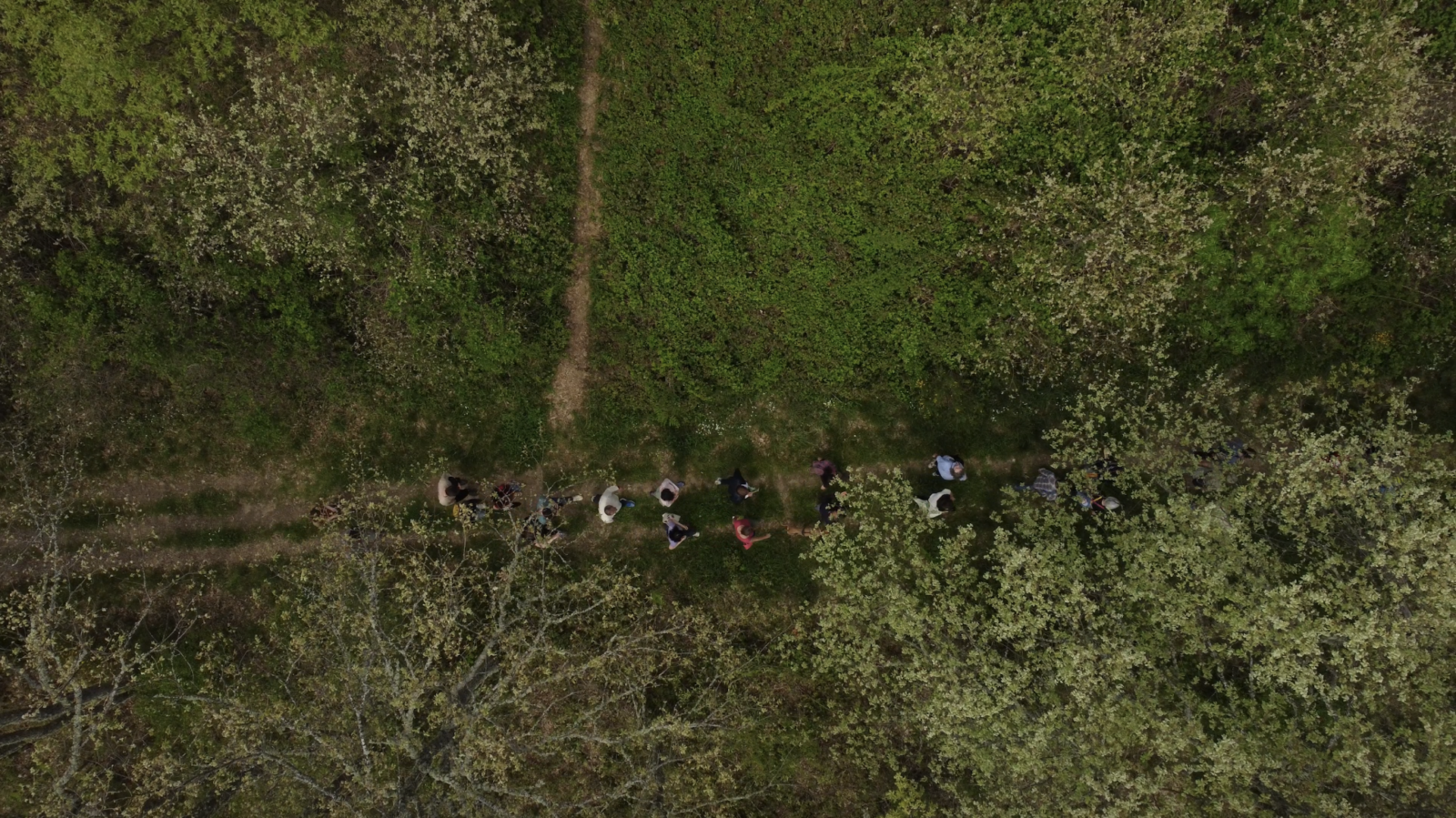 Photo of Hammer Drone
This selection recognises the value of cultural and artistic work as an indispensable tool in the ecological transition.
Concomitentes is proud to announce that Aliland, your European participatory art and post-industrial territory repair project, has been selected to be part of Tracing Constellations: Stories of culture, cooperation and impact across Creative Europe cooperation projects (2021–2024), a publication of the Executive Agency for Education, Audiovisual and Culture (EACEA) of the European Commission.
This publication showcases 50 outstanding projects out of the almost 600 funded by the Creative Europe programme between 2021 and 2024 through its Cooperation Projects call. ALILAND is one of them 10 projects selected as examples of good practice in ecological transition and sustainability, one of the five thematic constellations that articulate the publication alongside democracy and European values, youth, digital transformation, and new practices and models in the cultural sector.
The publication places ALILAND within the chapter Green Transition and Sustainability, which groups projects that are actively reimagining the role of cultural professionals in the face of ecological challenges. Tracing Constellations, These projects contribute to sustainability through complementary approaches: transforming sectoral practices, reducing the CO2 impact in the production and distribution of cultural activities, raising awareness of environmental issues through cultural processes, and creating time and space to work with communities and professionals in developing new imaginaries and regenerative – rather than extractive – cultural models.
The publication explicitly highlights ALILAND as an example of how Cultural action can transform abandoned spaces into places of collective reimagining, within the axis of post-industrial transformation and territorial repair.
To delve deeper into these approaches, the authors of the publication interviewed Alicia Ruiz Muñoz and Fran Quiroga, from Concomintentes, coordinators of the ALILAND project, to explore how the arts contribute to repairing both the land and communities when addressing environmental themes.
This selection recognises the work of Concomitentes and its European partners as a benchmark for the field, and confirms that culture – when practised through listening, participation and territorial engagement – is an indispensable tool in the ecological transition of our societies.
What is ALILAND
Aliland part of a reality present throughout Europe: territories marked by industrial decline that bear visible wounds — abandoned coal mines, areas of intensive agriculture, dismantled energy infrastructures — and which have seen weakened not only their ecosystems, but also the social fabric of communities frequently considered obsolete.
The project works in three territories affected by extractivism: coal mining in Barruelo de Santullán (Spain), with the project Energy Aftermath, intensive farming in Wietstock (Germany) and the electricity sector in Šibenik (Croatia). Instead of treating these places as relics of the past, ALILAND transforms them into spaces of «repair» – a process that is simultaneously ecological, social, and cultural.
At the heart of the project lies the methodology Living Lab, which subverts traditional models of cultural production by positioning communities as commissioners of artistic projects. Citizens and facilitators deliberate on their concerns and aspirations regarding the «aftermath» of extractivism, and participate in democratic processes that culminate in commissions for internationally recognised artists. These artists respond with Nature-Based Artistic Solutionsworks that function as ecological interventions rooted in local memory and designed to foster environmental resilience.
Among the project's achievements are three site-specific works created under fair working conditions, three fully implemented Living Labs that empower local communities to remain active autonomously, a transferable methodological framework for participatory commissions in ecological contexts, and the first carbon footprint measurement of the project activities, integrating sustainability into all its operations.
The Art Living Lab methodology is designed to be replicated in new European contexts, building a network of communities committed to participatory artistic practices and scaling impact in territories facing similar post-industrial challenges.


 Concomitentes