


A park for parking
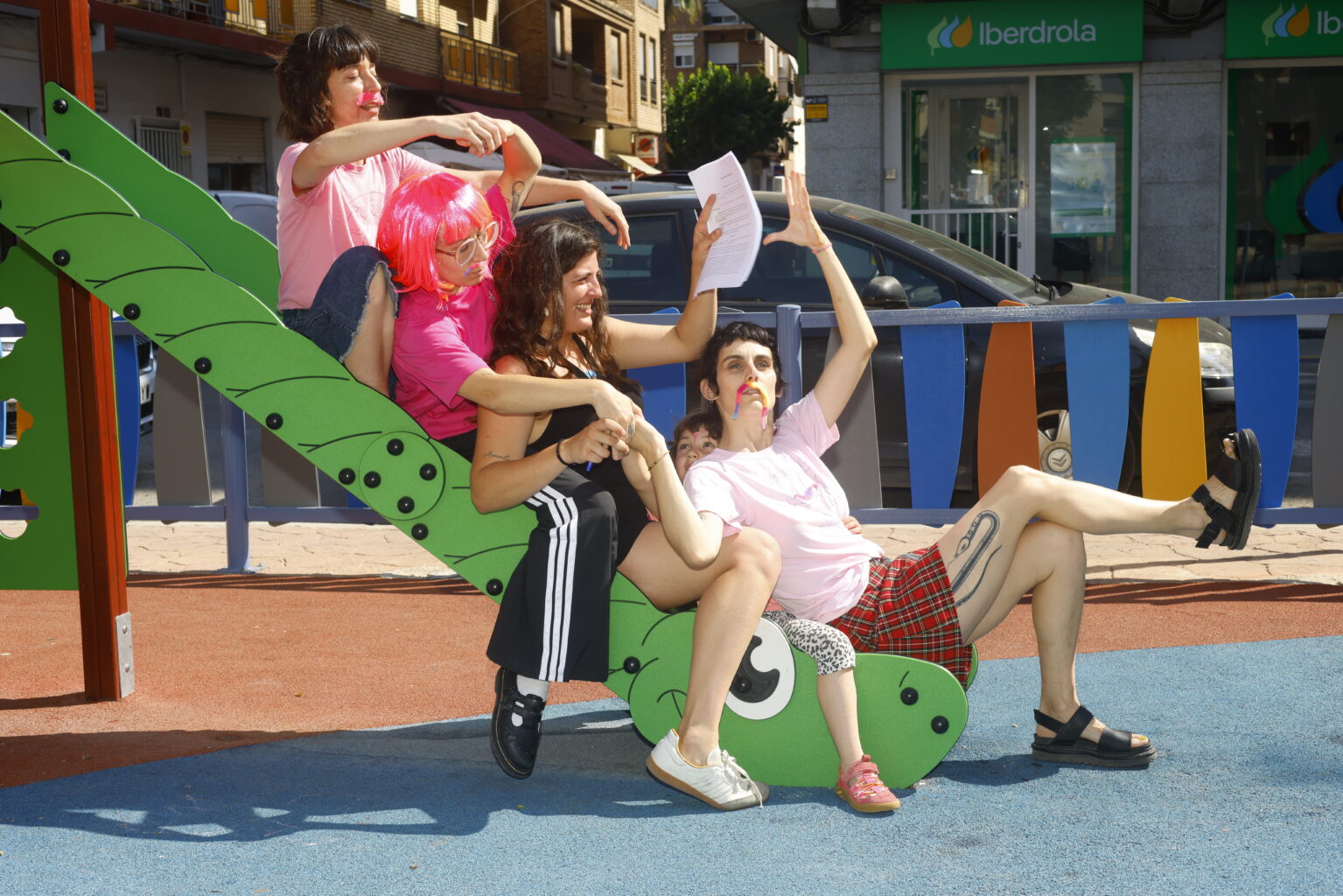 Photograph by Ricardo Cases
Reyes Pe is the artist selected to undertake the commission for Structures of Affection
Many people have asked us since we started this project: but isn't Parke Alcosa a real park? And it turns out that it is, because when you ask what makes a park a park, what the minimum requirements are, the words people, friends, play, care come up before the words slide or swing. So, after the mediation process we've been developing over the last year, the commissioners of Structures of Affection have decided to commission a park for Parke.
In our research into existing parks, those that disappeared during the DANA, those that have reappeared, which ones are most used and which ones least, we have discovered that some parks were taken by the flood and have returned as car parks, that some others have been paid for and reconstructed altruistically by groups such as a hunters' association or the Roig family, with a bit of advertising, and, above all, that they appear and disappear without anyone being asked for their opinion on them.
So we ask ourselves: how can art make Parke feel more like a park?
The initial objective of the project regarding the artist's commission was to generate symbolic structures such as totems or symbolic representations of the collective narrative or the genealogy of the space. We wanted to tell Parke Alcosa through the occupation of public space and move from urgency and necessity to desire through mutual desire and the neighbours' gaze towards common spaces. We sought the construction of new temporary agoras... and, in general, structures that would support new common spaces on a symbolic but also practical level.
Now, after a year of work, we believe that play is key to these structures and that defining “a park” is a creative exercise that can help us generate a collective process of creation and thought to consider the structures that underpin the neighbourhood.
Play is a creative, not a productive, exercise focused on enjoyment. It is the gateway to desire, it is a collective or solitary space, it is indispensable and sometimes invisible. Play needs a space but this space can also be symbolic, nomadic, large, small, or even invisible. Play is imagination and allows us to think of new alternatives to current reality, other possible narratives for desiring a different future.
Children and young people are central to the activity of the Koordinadora de Kolectivos del Parke and to the activity of Massa Salvatge. An anti-adultist perspective of the neighbourhood is essential to understanding many of the structures that exist, the affections and care that are celebrated, and the struggles that are demanded.
So, what defines a park? Are they the physical structures we recognise as such, is it a colourful aesthetic that contrasts with the buildings around it, is it a delimited space where we feel safer, is it a space of freedom, is it a specific time of day, is it our own space in the city… A park is also a space for collective care, for meeting, for affection.
We were looking for an artist who could create a work that would be a symbolic tribute to all that is reproductive that supports Parke. And we asked them the following:
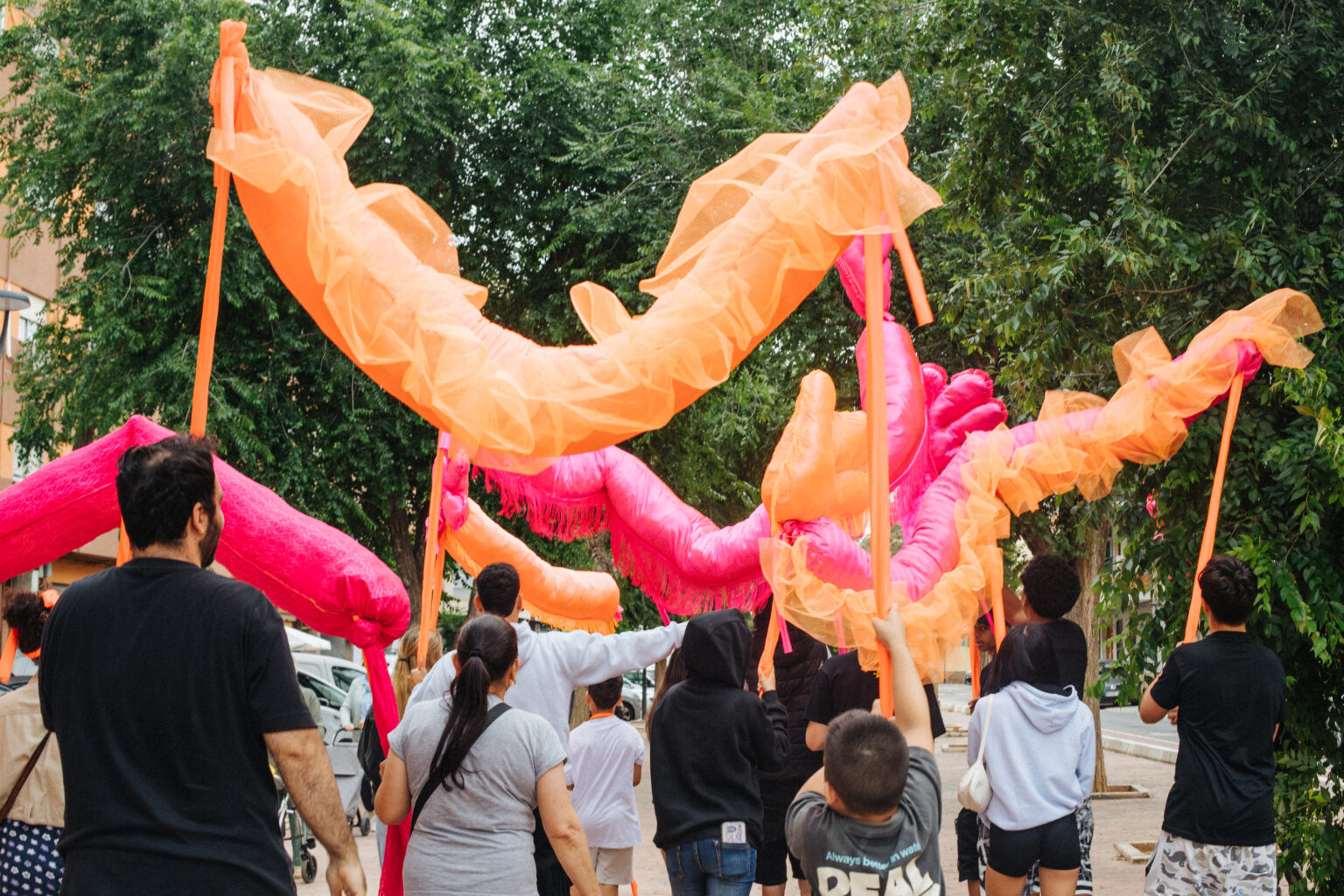
It must be one or more structures, mobile.
They can be attached to people or objects but must be movable.
It must be playable, touchable, and storable.
We would like it to provide an aesthetic contrast with the landscape.
It should be for all people of all sizes and ages.
It relates to spaces and intervenes in them in some way.
*Key aspects of the brief: play, park, affections, public space, homage, structure.
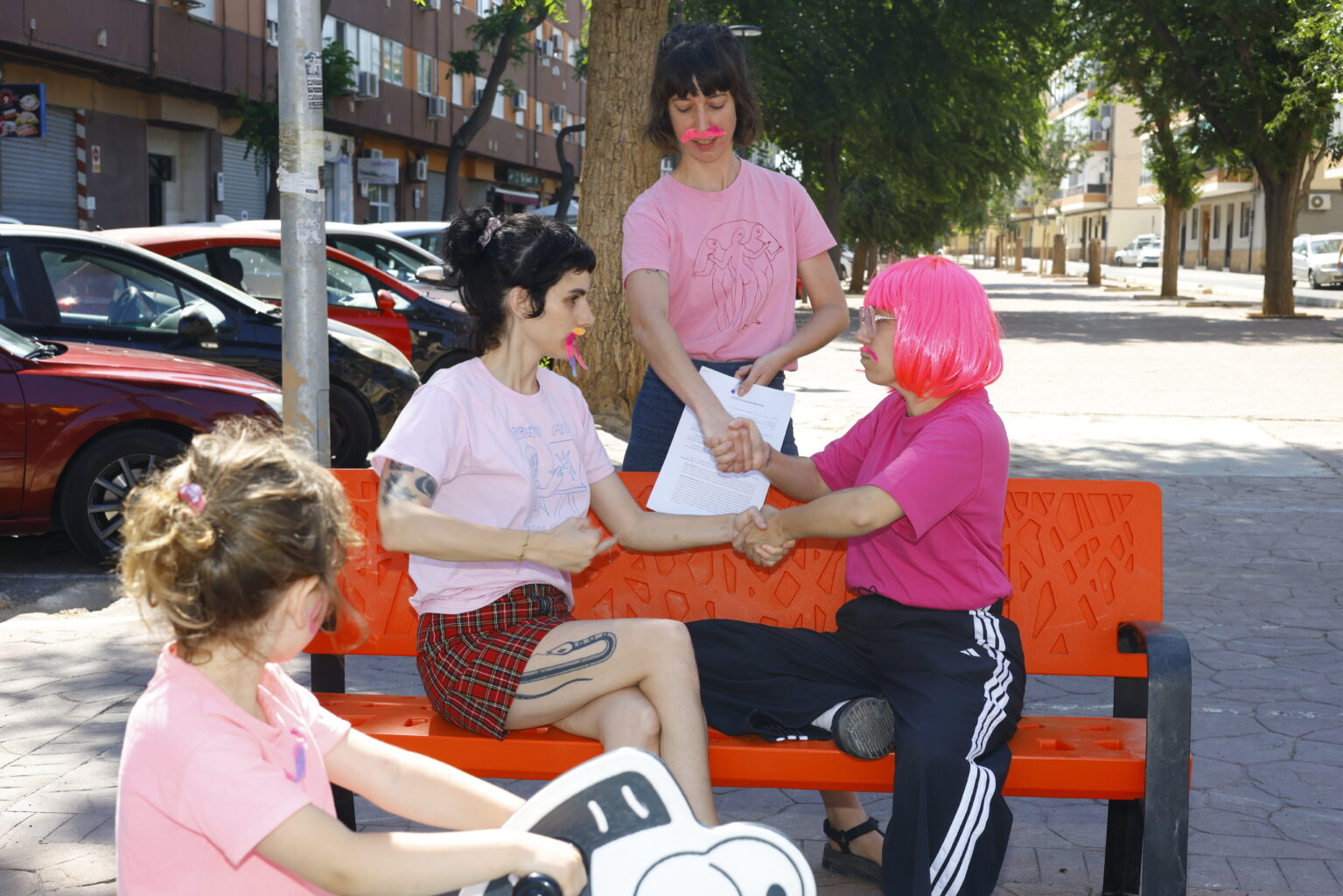
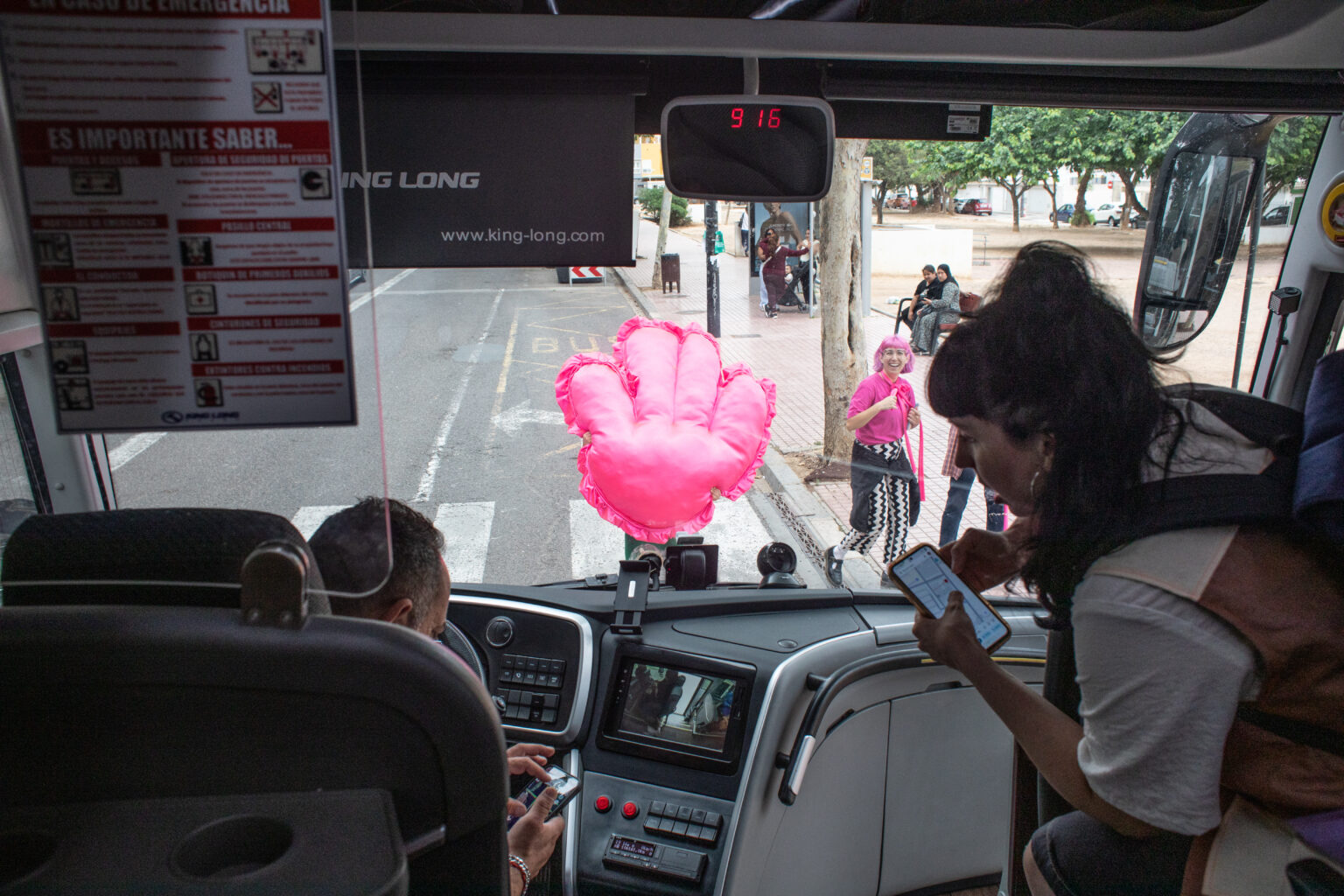
And we found the best possible candidate to play together: Reyes Pe, a person who understands the game in a very similar way to us, who works in a participatory manner in her work and who is an anti-adultist artist almost without meaning to be. And so, in a perfect symbiosis after a few weeks of play, re-enactment, art and participation, Reyes Pe, mediators and clients went for a walk in the Parke in the prelude to what will undoubtedly be the play.
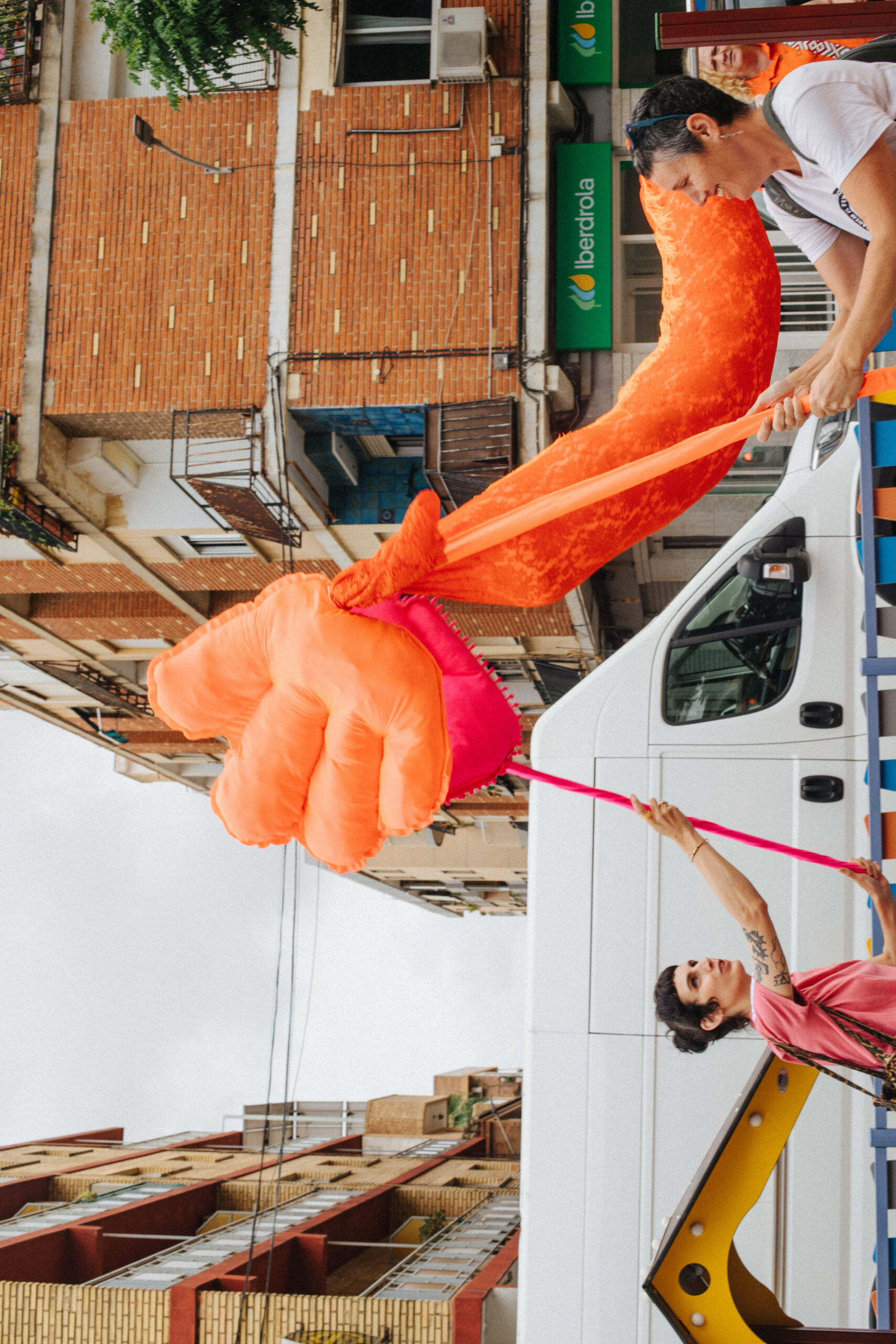
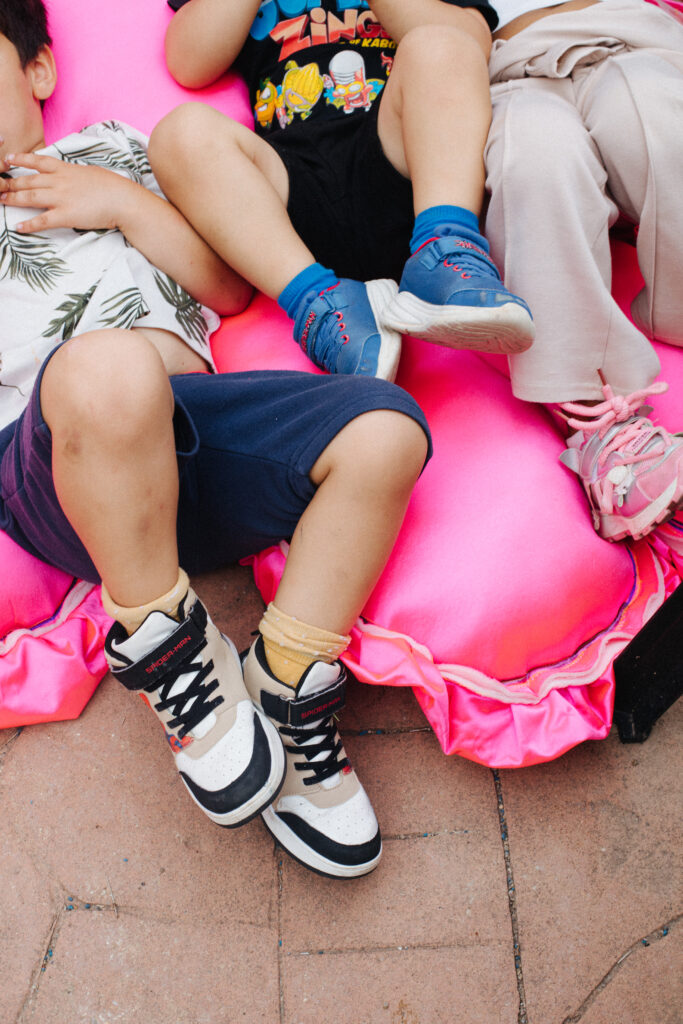
Reyes Pe She is an artist whose installation projects focus on investigating human perception beyond sight, particularly through touch, mainly using textile materials. Since 2013, she has exhibited her installations and ephemeral architectural pieces in various spaces in cities such as Madrid, Valencia, Castelló, and Barcelona. Her work as an experimental Fallas artist, developing textile art, stands out. For almost ten years, Reyes Pe has focused on the re-signification of Fallas, incorporating and promoting innovative, feminist, and diversity-focused visions within a traditionally male-dominated space. She creates all her works from her own or collective remnants, aiming to generate minimal waste and impact with a clear ecological and environmentally friendly perspective.


 Concomitentes