

Tejer l’Horta
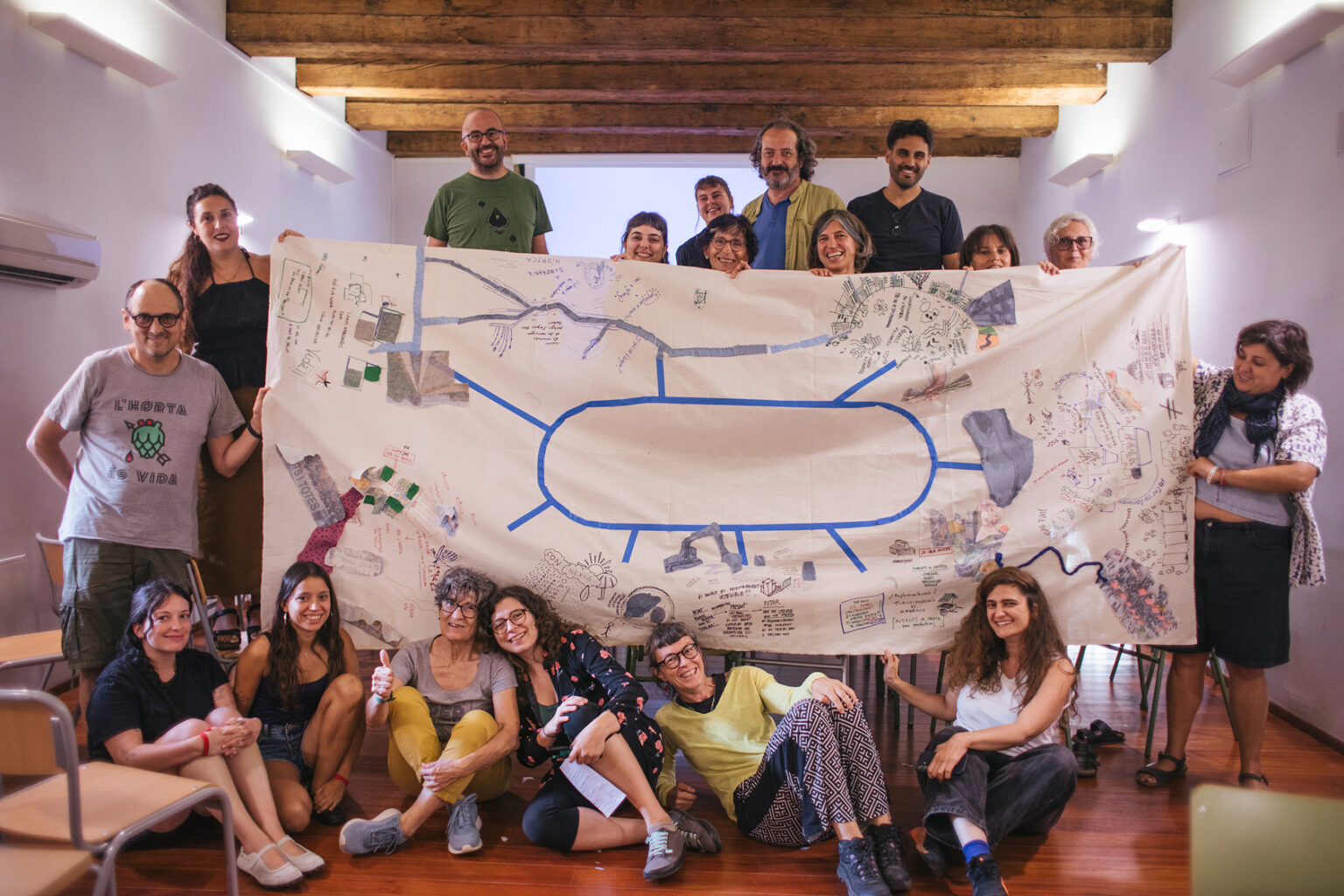 Photo by Kairos fotostudio
Metabolic Connections selects the artist Marwa Arsanios for its artistic commission
To read the text in Spanish, click here.
Marwa Arsanios joins the project Metabolic Connections. For the Horta, Acció Ecologista-Agró, and a wider network of people who have been joining the project, They have chosen the Lebanese artist to develop an artistic proposal connected to the desire to think together about other models of relationship and governance in the Horta.
This desire has been building throughout the encounters that have brought us together around the land and what we want to preserve. During «Poéticas del banquete», together with María Sánchez, we shared concerns and desires about the dish, asking ourselves once again how to articulate ourselves and defend our food sovereignty. Those words were shaping an ecopoetic manifesto, the fragments of which we deposited in a pot along with various seeds to bury them symbolically.
These concerns have found continuity at the Universitat d’Estiu de l’Horta, an annual meeting organized by the association Per l’Horta. Activists, producers in the primary sector and citizens come together to reflect on the present and future of agricultural practices. They talk about the preservation of traditional varieties, the urbanistic pressure on the territory of l’Horta and the search for alternative distribution channels to the commercial circuits that leave little room for those who produce. They portray a network of bodies that defend their vocation and a commitment to the environment that goes beyond the pursuit of economic profitability.
While those who develop these agricultural and livestock practices contribute to preserving their fertility and promoting biodiversity, the soil they cultivate continues to be exposed to the pressure of urban development mega-projects, new metropolitan parks, and resilience plans in protected orchards following the DANA of 2024. Among them, the PAI of the Font Baixa (Alfafar) entails the loss of 14 hectares of agricultural land whose hydrological function was fundamental in mitigating the effects of the floods. And the Aldaia Comarcal Innovation Park contemplates the transformation of 100 hectares of agricultural land into a floodable zone, primarily destined for industrial and logistics uses. It is difficult to talk about resilience while the capacity of these soils to absorb water and sustain biodiversity continues to be compromised, and the effects of future extreme climatic events are still to be mitigated.
With these concerns still present, On Saturday, September 26, we met with Marwa Arsanios at the Castell d’Alaquàs to begin the process of co-creating the artistic commission.. Returning to a question from the ecopoetic manifesto: “What could we do today to become, someday, good ancestors?”, the artist proposes incorporating various local archives that preserve the memory of collective struggles in defense of the Valencian territory into the process. These include Artxiviu and A hores d’ara. From them, we ask ourselves: what memories do we invoke to bring them into the present? How do we activate these visual, audio and audiovisual materials? And what languages or materials could these narratives, symbols and images contain to give shape to desire?
With the artist’s help, we choose to work on a tapestry that brings together these questions and gives shape to a collective desire for continuity in l’Horta., Taking into account three temporalities: past, present and future. On the stretched canvas, we join forces to create an idea that has permeated the entire process: understanding the Horta not as a background landscape, but as a collective body and a living infrastructure. The tapestry acts as a symbol, nomadic and portable, conveying a succession of custodianship loaded with affections, memories and personal connections that embrace the territory of L’Horta, which is increasingly fragmented and wounded.
A desire begins to take shape in the hands, intertwined with writings, drawn symbols and printed fabrics with archival images. Through cutting, collage and the superposition of textile and graphic materials, we continue to weave conversations about listening and care that sustain the defense of l’Horta. A fertile, permeable and asphalt-free land that we can continue to cultivate and from which we can feed ourselves; where the knowledge of those who work it is recognized, spaces for encounter are created between different generations and direct distribution methods are strengthened that bring what is grown closer to those who consume it. A territory where we can celebrate biodiversity and recover the memories that traverse it. We do not intend to preserve the Horta as a fixed image of what it was, but to recognize it as the living and changing ecosystem that it is and to defend it.
Collective creation workshop in the context of the Horta Summer University, Photo by Kairos fotostudio, Castell d’Alaquàs, 2026.
Here is where Marwa Arsanios’ work takes on a very particular meaning. As an artist, filmmaker, and educator, her work addresses issues such as access to land and the commons in different geographical contexts. She has been part of artistic collectives and initiatives focused on landcare practices based on shared use, beyond the logics of ownership. Her work addresses agricultural economics and ecology from concrete territories and experiences. Thus, the protagonists are the lands and the people who work them. Her research is especially relevant in the context of concomitance as it brings together different disciplines and collaborative methodologies.
His incorporation to Metabolic Connections It opens the possibility of placing these experiences of resistance in dialogue with the memories, knowledge, and forms of collective organization that sustain l’Horta. A meeting between different territories, traversed by shared questions about access, care, and the future of the land.
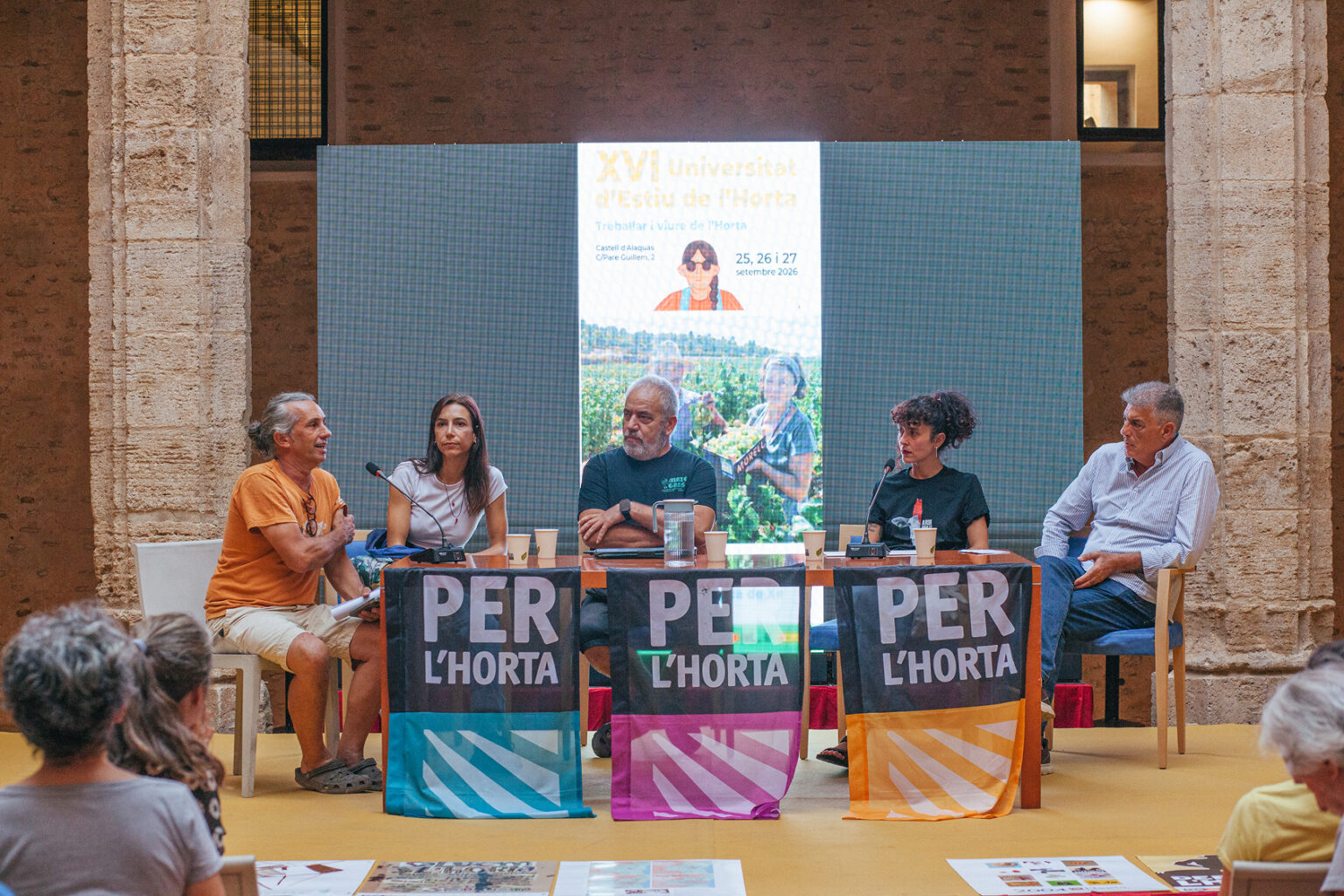
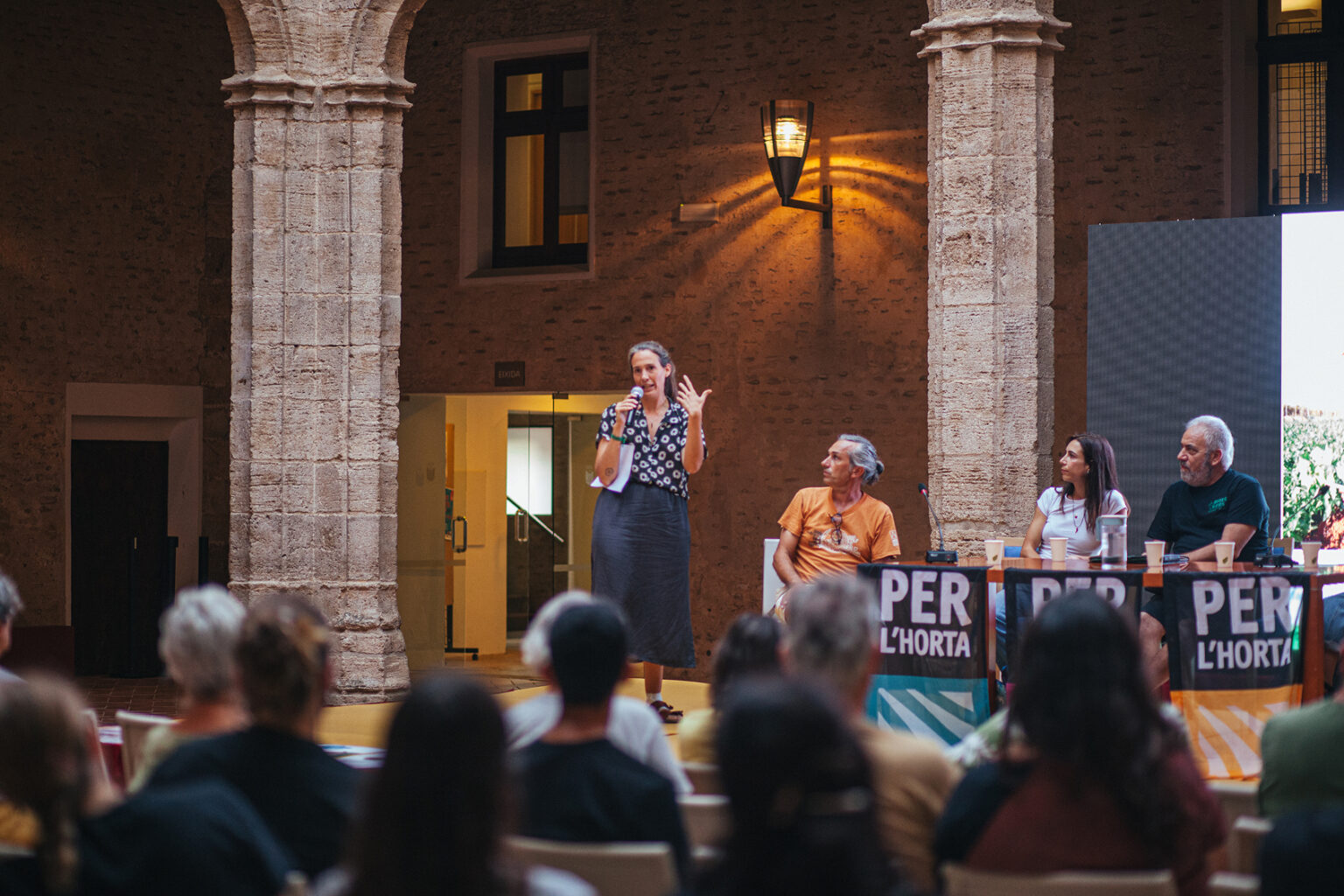
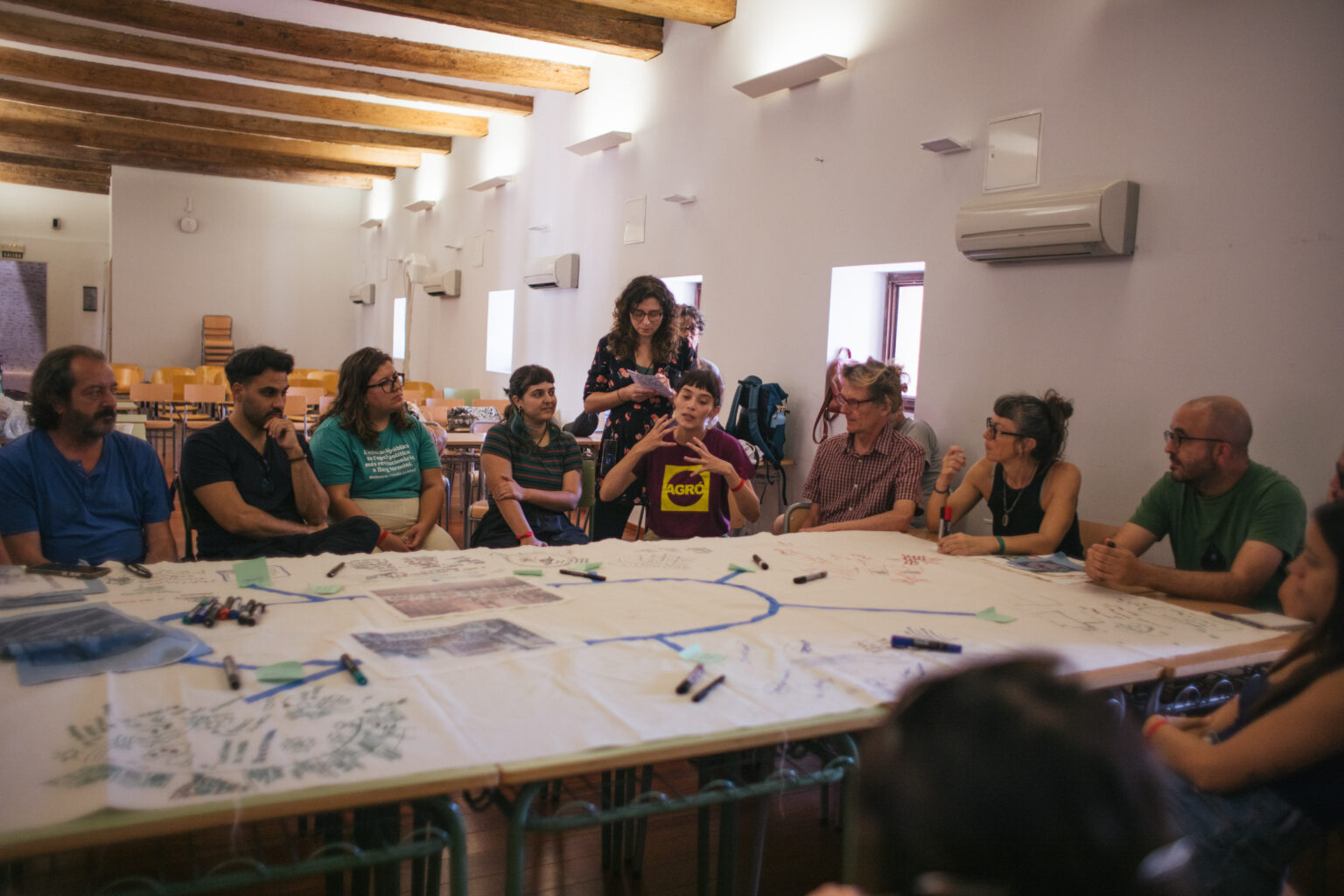
Conversations around the problems of the primary sector. Photos by Kairos fotostudio, Castell d’Alaquàs, 2026.
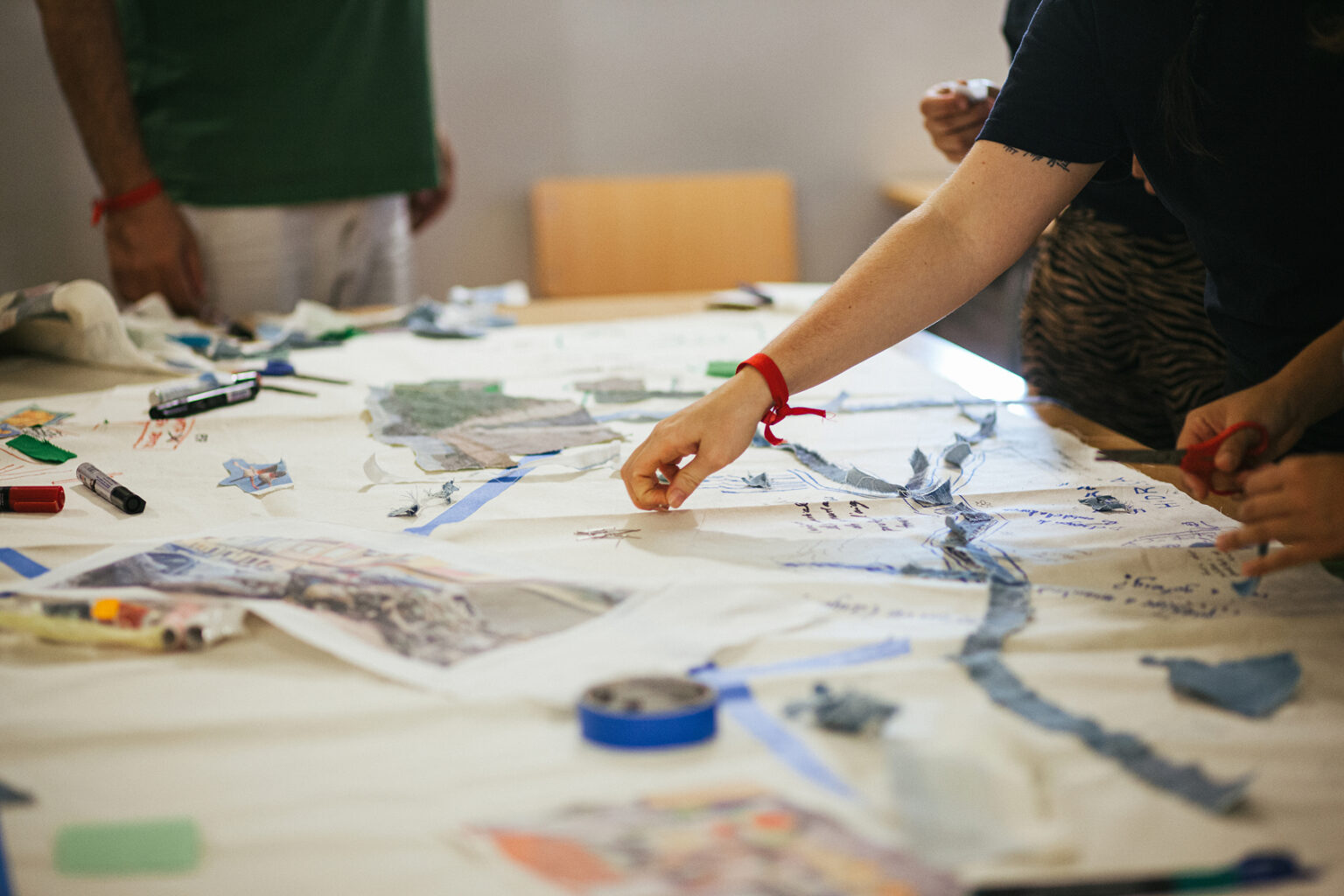
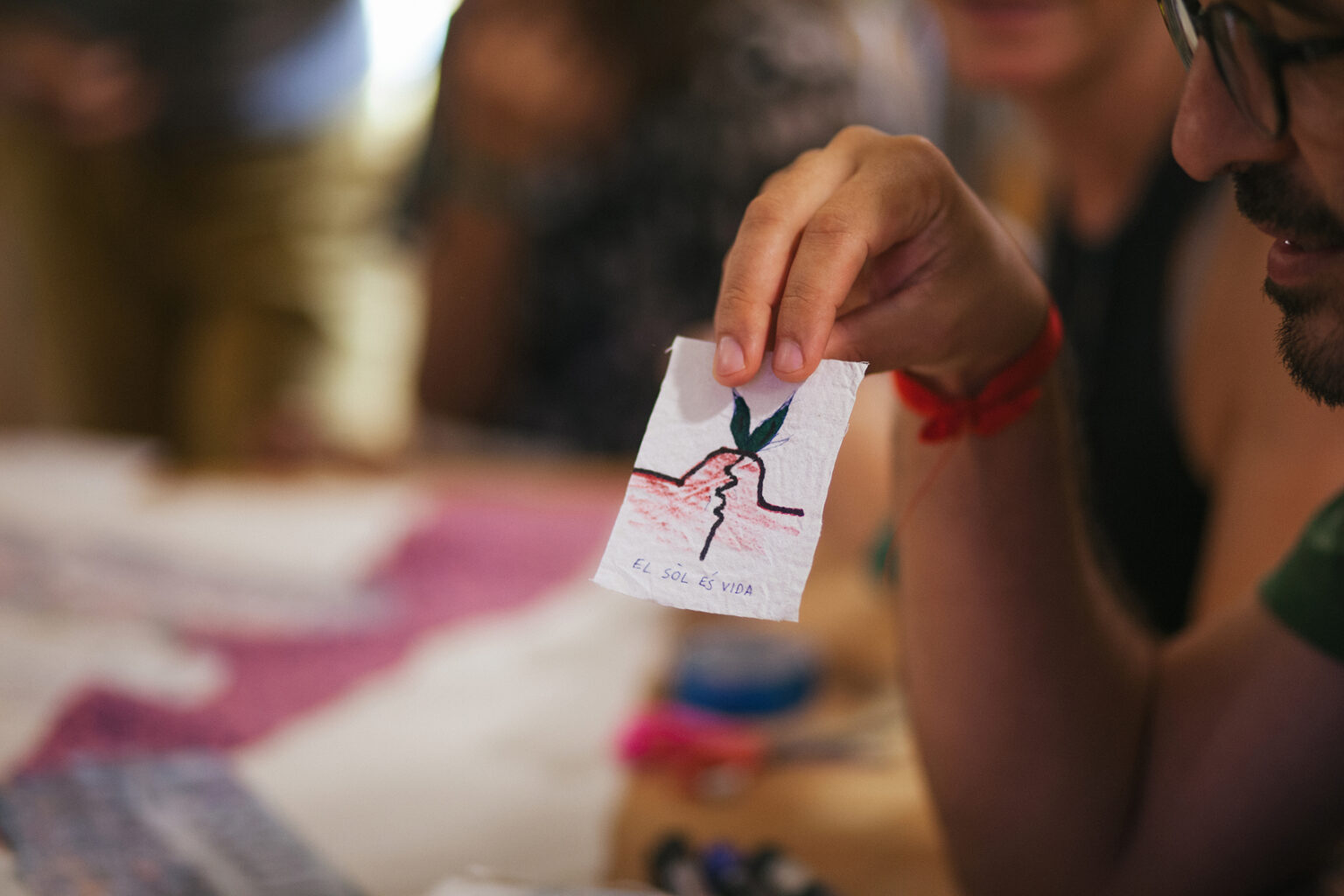
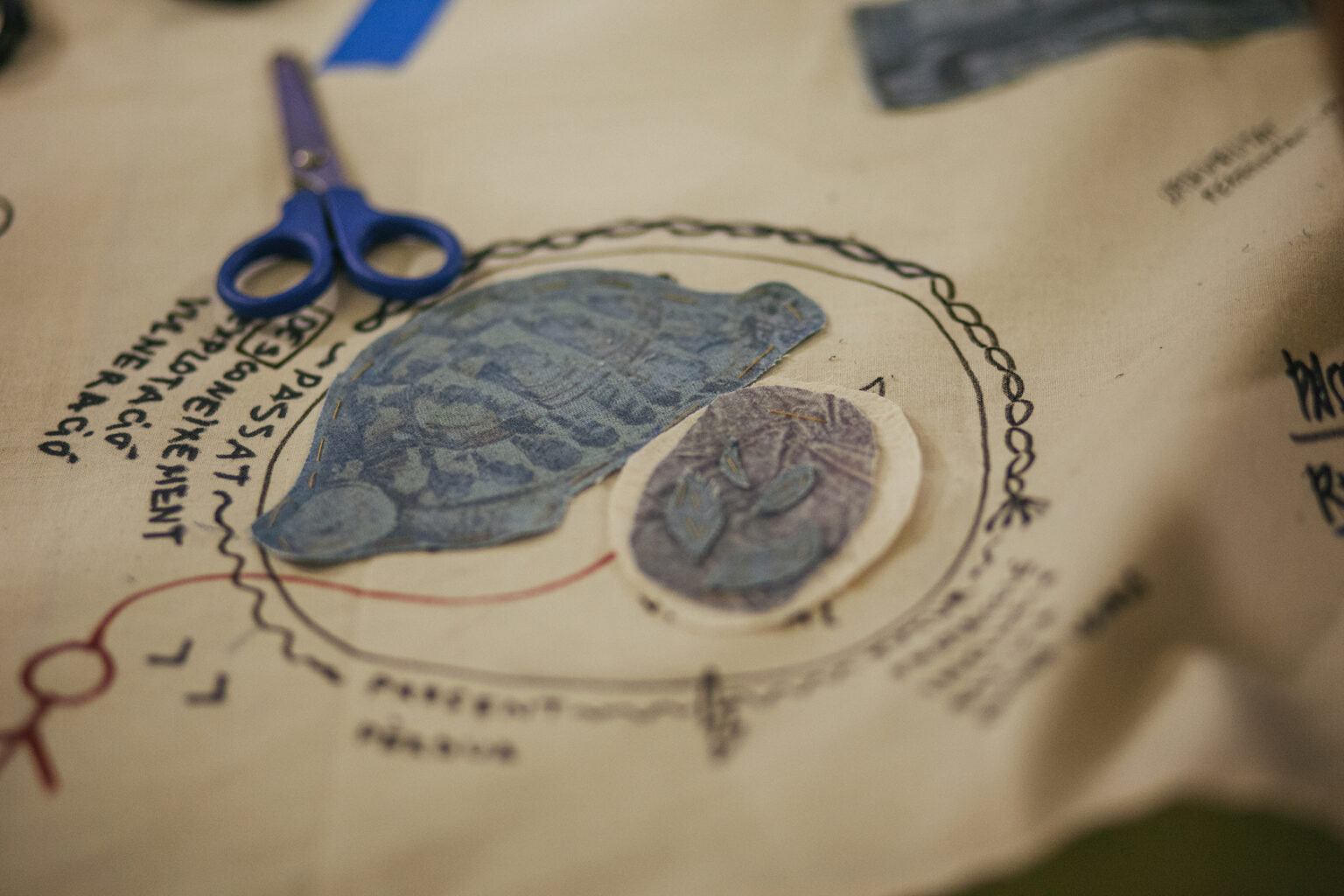
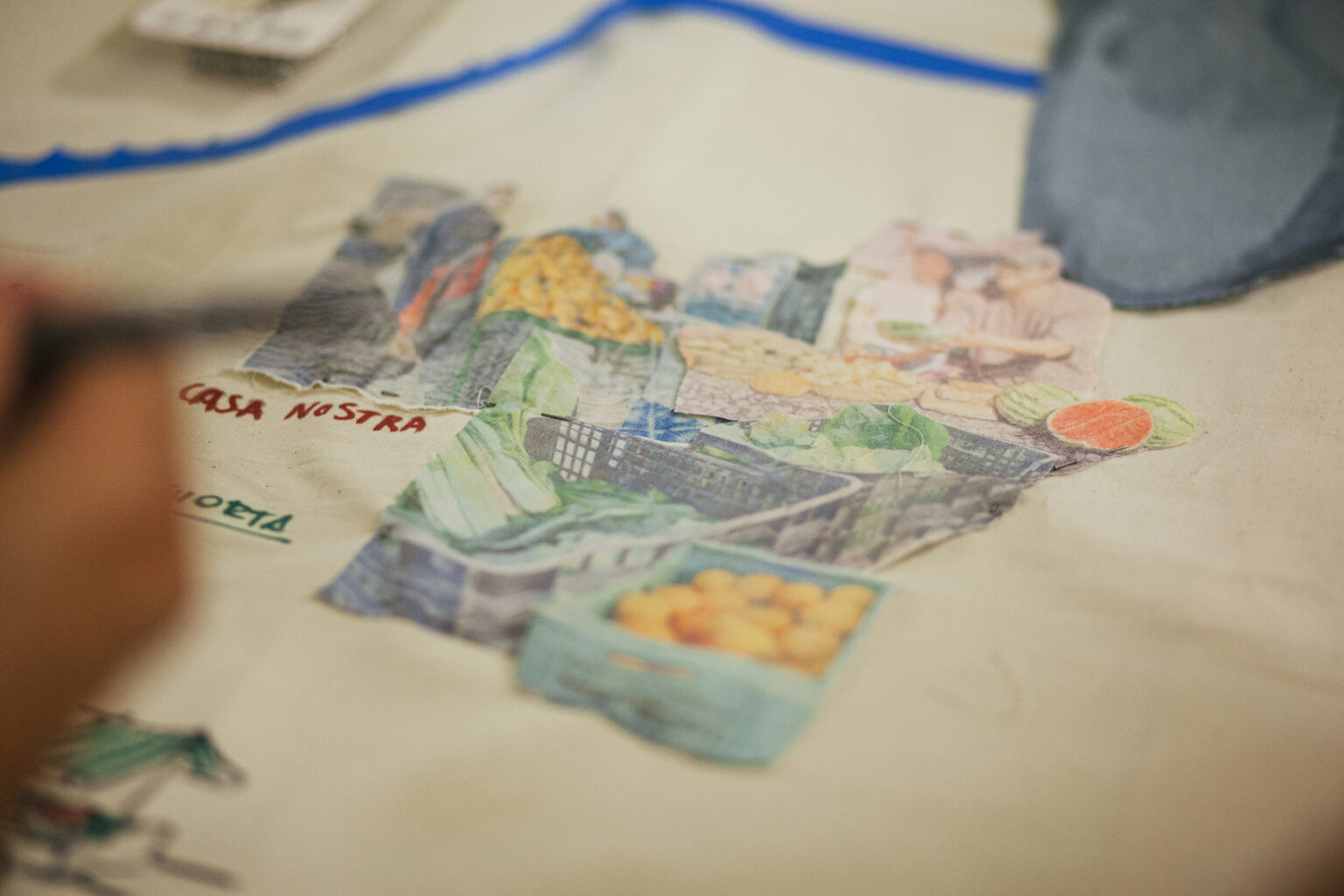
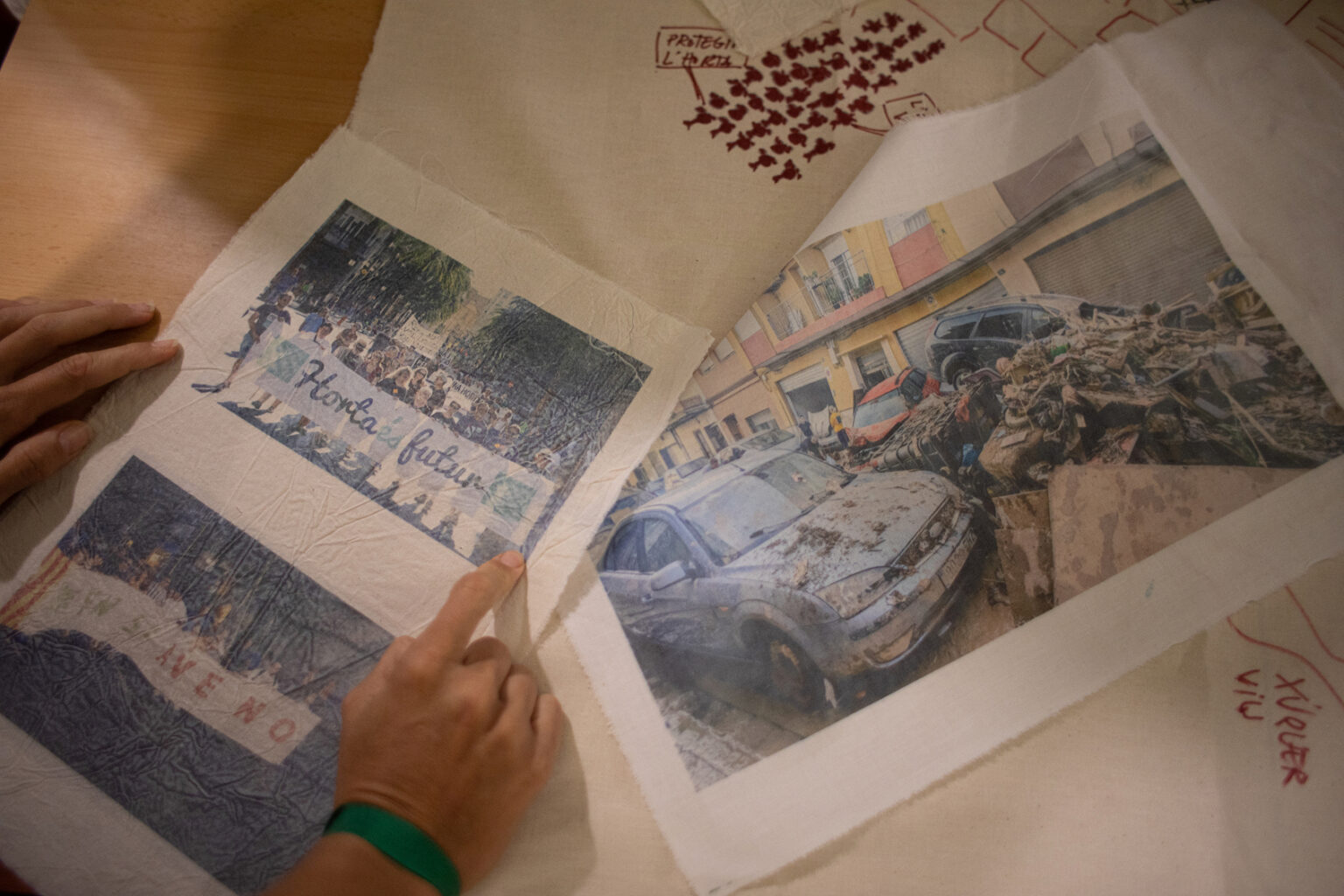
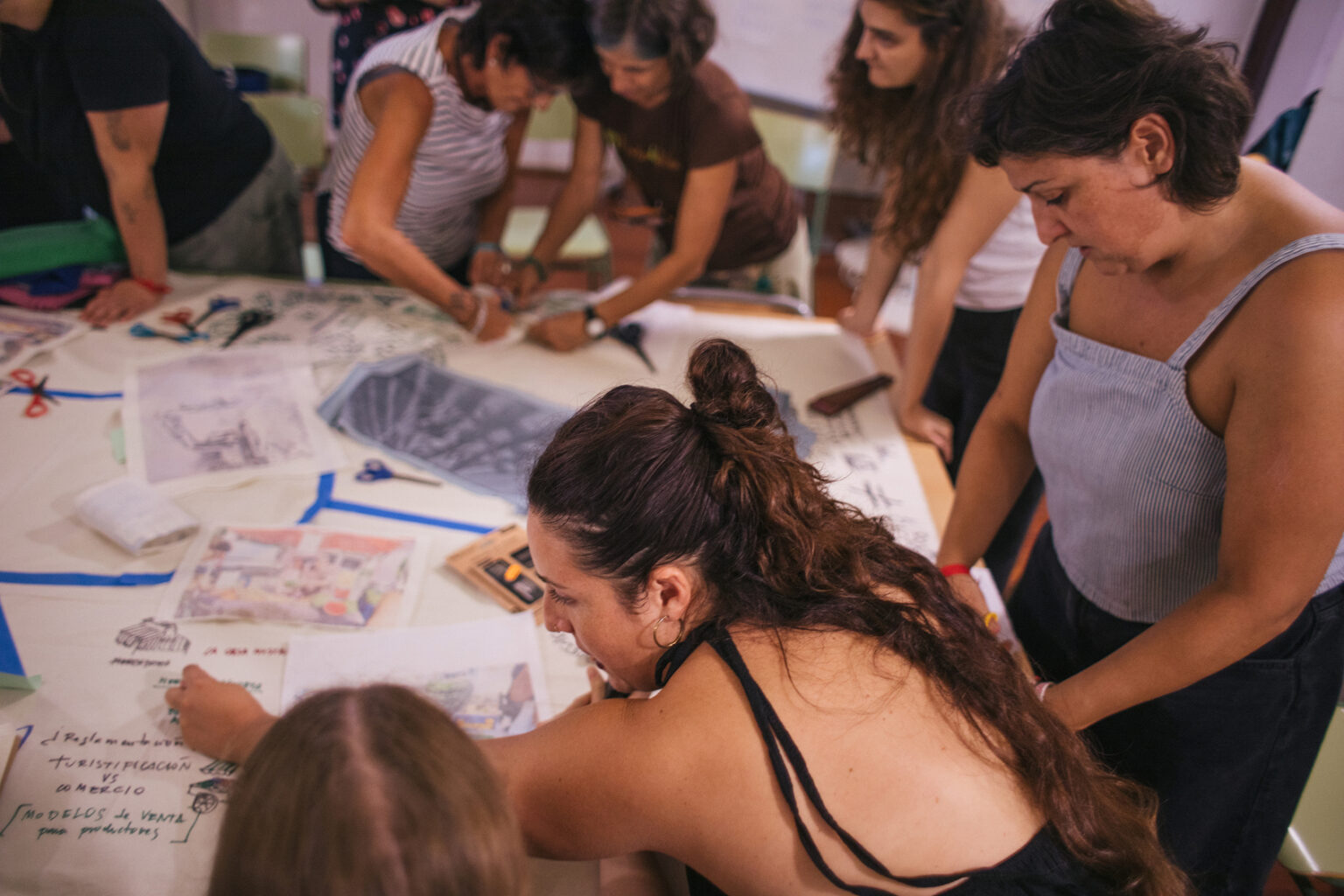
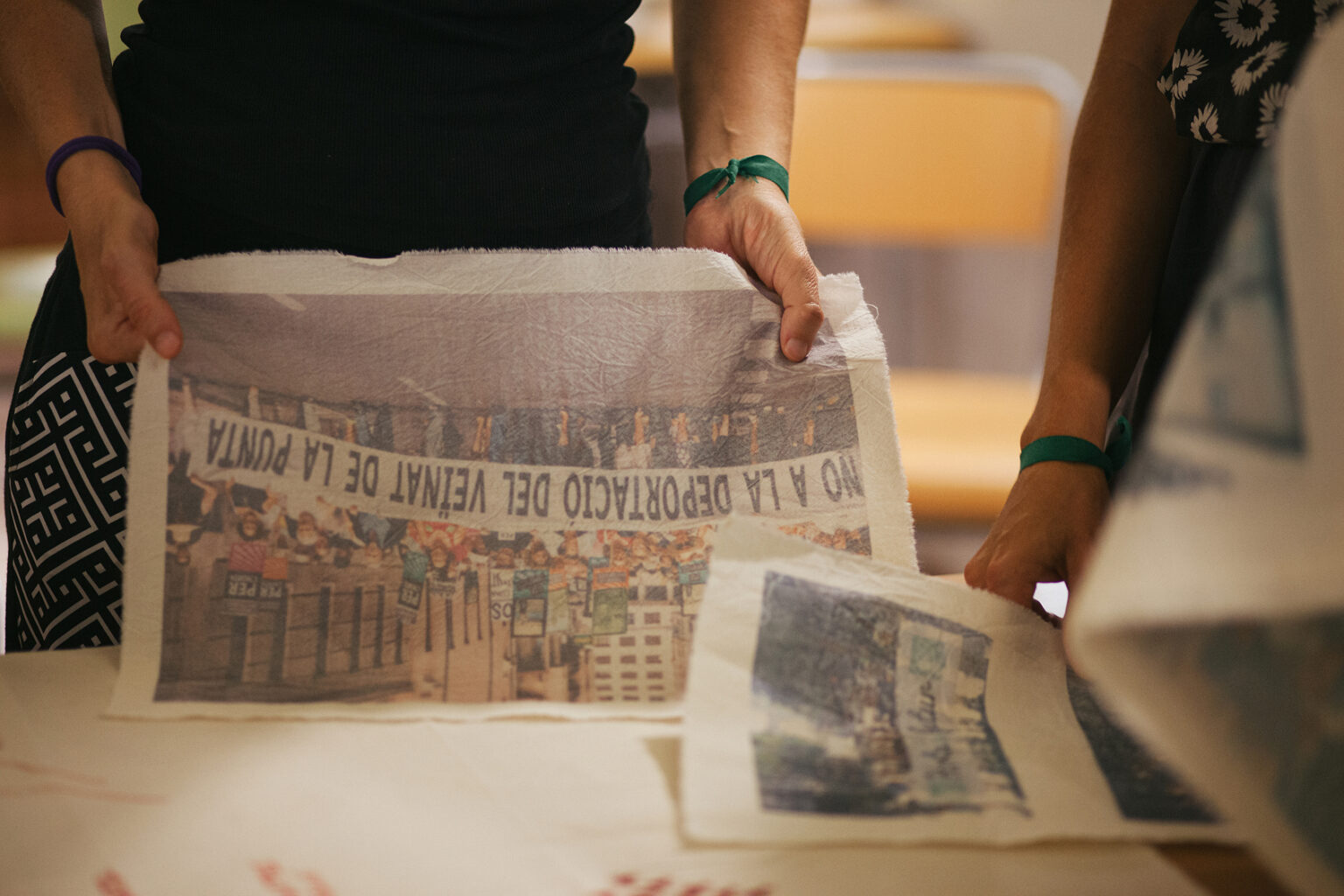
Collective creation workshop in the context of the Horta Summer University. Photos by Kairos fotostudio, Castell d’Alaquàs, 2026.
Tying the Garden
Metabolic Connections selects the artist Marwa Arsanios for its artistic commission
This desire has been built up over the meetings that have brought us together around the land and what we want to preserve. During «Poètiques del banquet», together with María Sánchez, we shared concerns and desires about the plate, asking ourselves once again how to articulate ourselves and defend our food sovereignty. Those words began to shape an ecopoetic manifesto, the fragments of which we deposited in a cauldron together with several seeds to symbolically bury them.
These concerns have continued at the Horta Summer University, an annual gathering organized by the association Per l’Horta, where activists, primary sector producers and citizens come together to reflect on the present and future of agricultural practices. They discuss the preservation of traditional varieties, the urban pressure on the Horta territory and the search for alternative distribution channels to the commercial circuits that leave little room for those who produce. They outline a network of bodies that defend their vocation and a commitment to the environment that goes beyond the pursuit of economic profitability.
While the people who carry out these agricultural and livestock practices contribute to preserving soil fertility and promoting biodiversity, the land they cultivate continues to be exposed to the pressure of urban mega-projects, new metropolitan parks, and resilience plans in protected orchards following the DANA of 2024. Among these, the PAI of La Font Baixa (Alfafar) entails the loss of 14 hectares of agricultural land, whose hydrological function was fundamental in mitigating the effects of the floods. And the Aldaia Regional Innovation Park plans to transform 100 hectares of agricultural land into a floodable area, primarily destined for industrial and logistics uses. It is difficult to speak of resilience while continuing to compromise the capacity of these soils to absorb water, sustain biodiversity, and mitigate the effects of future extreme climatic episodes.
With these concerns still present, On Saturday 26 September we met with Marwa Arsanios at the Castle of Alaquàs to begin the process of co-creation of the artistic commission. Replying to a question from the ecopoetic manifesto—what could we do today to become, one day, good ancestors?—the artist proposes incorporating into the process various local archives that preserve the memory of the collective struggles in defense of the Valencian territory, such as Artxiviu or A hores d’ara. From these we ask ourselves: what memories do we invoke to bring them into the present? How do we activate these visual, sound and audiovisual materials? And what languages or materials could contain these narratives, symbols and images to give shape to desire?
With the artist’s help, we choose to work on a tapestry that brings together these questions and gives shape to a collective desire for the Horta to continue., addressing three temporalities: past, present and future. On the stretched canvas, we knit together an idea that has traversed the entire process: understanding the Horta not as a background landscape, but as a collective body and a living infrastructure. The tapestry acts as a nomadic and portable symbol, a relay of care loaded with affections, memories and personal connections, that embraces the territory of the Horta, increasingly fragmented and wounded.
A desire begins to take shape in the hands, entwining writings, drawn symbols and printed fabrics with archival images. Through cutting, collage and the superposition of textile materials and graphics, we continue to weave conversations about listening and the care that sustain the defense of the Horta. A fertile, permeable and asphalt-free land that we can continue cultivating and from which we can feed ourselves; where the knowledge of those who work it is recognized, spaces of encounter are generated between different generations and the forms of direct distribution that bring what is grown closer to those who consume it are strengthened. A territory where we can celebrate biodiversity and recover the memories that traverse it. We do not aim to preserve the Huerta as a fixed image of what it was, but to recognize it as the living and changing ecosystem that it is and to defend it.
Collective creation workshop in the context of the Horta Summer University, Photo by Kairos fotostudio, Castell d’Alaquàs, 2026.
This is where Marwa Arsanios’ work takes on a very particular meaning. As an artist, filmmaker, and educator, her work addresses issues such as access to land and common goods in different geographical contexts. She has been part of artistic collectives and initiatives focused on land-care practices based on shared use, beyond the logics of ownership. Her work addresses agricultural economics and ecology from specific territories and experiences. Thus, the protagonists are the lands and the people who work them. Her research is particularly relevant in the context of concomitance, as it brings together different disciplines and methodologies of collective collaboration.
His incorporation into Metabolic Connections opens the possibility of placing these experiences of resistance in dialogue with the memories, knowledge, and forms of collective organization that sustain the Horta. A meeting between different territories, crossed by shared questions about access, care, and the future of the land.
Collective creation workshop in the context of the Horta Summer University. Photo by Kairos Fotostudio, Castell d’Alaquàs, 2026.
Collective creation workshop in the context of the Horta Summer University. Photo by Kairos Fotostudio, Castell d’Alaquàs, 2026.

 Concomitentes
