

"Understanding a complex context takes time and listening".
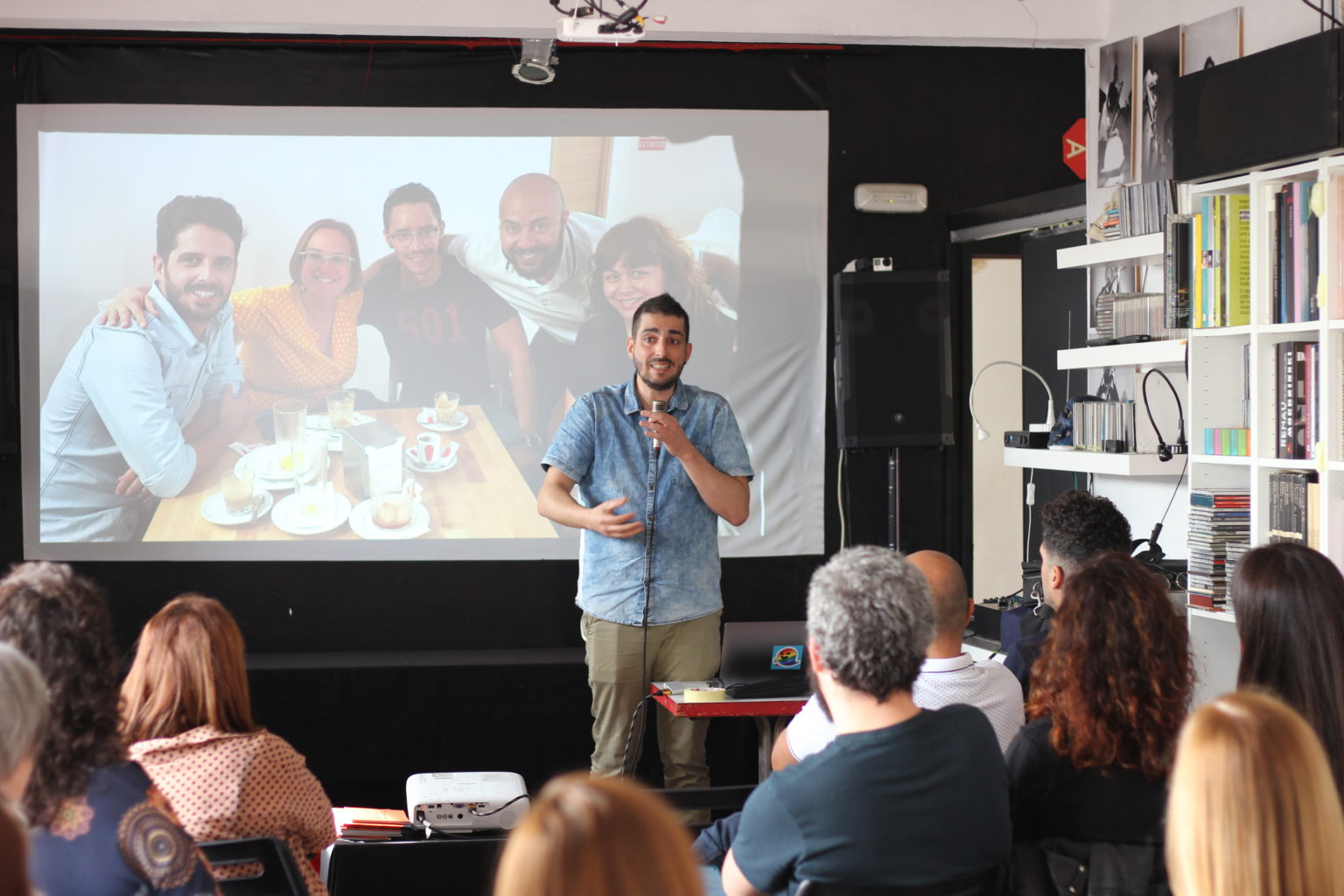
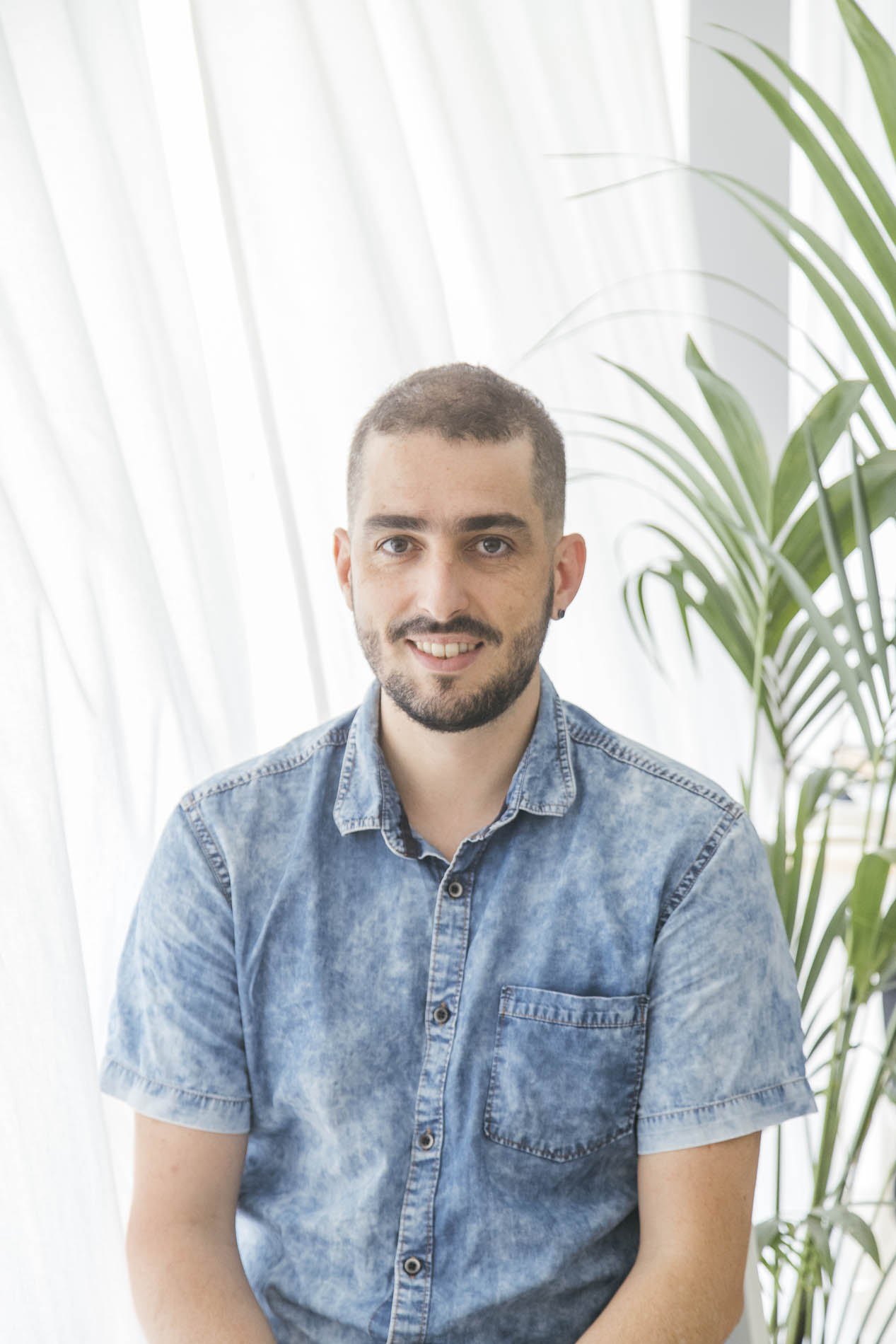
Interview with our Paediatric ICU mediator, Felipe G. Gil from ZEMOS98.
If we were to say that the mediator Felipe G. Gil from ZEMOS98 is in his blood, that breathes his commitment to the interlocution between social agents to generate transformative change through culture, surely we are not exaggerating. In this story, she shares her journey hand in hand with her five clients, at a key moment in the project in which the entry into play of the figure of the artist brings to the table the challenge of dealing with that fine balance between desire and reality.
What is cultural management for you?
A few years ago we used to talk about ‘cultural management’ to define what we did at ZEMOS98. Then there was a moment when we started to call it ‘creative cultural management’, because management refers to what happens behind closed doors so that a cultural project can go ahead, in our case it was the festival, and because we also believed that there is a tendency to think that management cannot be imaginative and that there is no way to articulate more creative proposals around management.
Lately we have abandoned the term ‘cultural management’, because we have been much more linked in recent years to social movements, activists and the politicisation of the organisation has been constant, due to the crisis and the very nature of what we do. It is also a term that refers to the traditional conception of the cultural sector, within which certain types of agents are assigned, but sometimes it fell short, precisely because of the role we play as a social connector between agents that are not part of culture, such as people from academia or the education sector.
Which term do you use?
We have come to use ‘mediation’ as an umbrella term for what used to be called ‘cultural management’, in some cases called ‘cultural mediation’.
«Put in a very prosaic way, ‘cultural mediation’ refers to being in the middle of different types of agents, negotiating the languages and codes of these sometimes very separate universes in order to bring them into dialogue to carry out a project».»
Has this definition of ‘cultural mediator’ changed for you, as a result of your entry into Concomitentes?
We understand our work as something collective. In this case, the figure of a mediator is at the service of a community, created for a specific project, or not, since he or she is acting in certain social spaces. One of the lessons learned from being in contact with social movements and activists is to understand that culture can be a common good that generates social transformation. Even in the European or national projects in which we have participated, this sensitivity did exist. What happens is that even if we go outside the ‘traditional cultural sector’, there is always a similar context. And I think that in the context of the Paediatric ICU it is the first time that we have moved far away from the profile of the people we work with, thus entering unknown territory. This is also because nursing staff use a very technical language, linked to what happens in a hospital, which has a different set of hierarchies and work cultures to those we normally participate in.
What lessons would you take away from this journey with the clients?
The main learning has been to get out of the comfort zone of working with people who know our language, to begin to understand a foreign language and context from which we have a lot to learn.
How has the mediation work in the Paediatric ICU been to build a common ideology?
Mediation is the construction of a common language. I don't feel that we have reached a point where we have constituted it, but we are searching for it. Because every meeting or conversation is a negotiation and a dialogue about the same issues. There are things that already exist a priori, the unit itself is called the Intensive Care Unit, it uses a term, «care», with which we are very familiar. Even so, the way they approach it is different, they approach it from the point of view of urgent care, of saving life, and then taking charge of a situation of extreme vulnerability, because they are children who, once their lives are saved, have to understand why they are hospitalised. Our way of working with care has always been in less stressful environments and less subject to that immediacy. On the other hand, nurses already have an a priori relationship with culture, they have to be up to date with the cultural consumption of children in order to gain their trust. And that means knowing about films, cartoons or music. In this sense, they see it as a complement to their work, but in the end it is crucial, because in order to forge the trust of the patient and their relatives, this background is put at the service of this process. In some cases they already have it, if they have children, such as Quique, Lili or Laura. But in the case of Seve or Ruyman, they have acquired it as part of their work.
«To develop the work of nurses, cultural consumption plays an important role in winning over the patient and how it is used and put into play, then there is what we can contribute from the perspective of cultural mediation».»
What spaces, methodologies and strategies have you included in this mediation perspective?
I think the central methodology, which is not exclusively technical, is listening. I have tried to listen in a very honest way to what their work was like, what problems they face, and to do so in an unprejudiced way. Another tool is empathy. It sounds obvious, but listening is not transformative if it is not accompanied by a deep process of putting oneself in the other person's place and understanding what their problems, frustrations and desires are...
This is quite a challenge.
It's not always easy, we have our own backpacks. For example, I had the feeling that ICU care equates to how feminist movements articulate their discourse. But I realised that they don't use the terminology of that movement to explain their work, even though they do put many of those values into execution. It was only by listening to and respecting this position that I came to understand that it wasn't necessary to bring this question into play and that what they do can be equally transformative, even if they don't use language that is traversed by this other imaginary. And in the end that implies a concession that you make because the work of mediation perhaps has to do with giving up in order to get closer. Understanding a complex context requires time and listening.
What would you say have been the main challenges you have overcome and which ones do you face in the medium term?
There has been an obvious one, which has been the pandemic and the distance that this situation has imposed, since there has been a phase that has lasted a year, and in which mediation has taken place at a distance. This has to do with the fact that, firstly, I do not live in the same town as the Paediatric ICU. This could normally be compensated for with travel and with the digital meetings that we already used before the pandemic to organise ourselves. Because in the end, mediation is a mix of digital and face-to-face meetings. But secondly, the pandemic imposed an exclusively digital meeting model, and this has been one of the main challenges. Then there is something more specific, which was already happening before the pandemic and has increased after it, and that is that nursing staff sometimes do not want to talk about what they experience inside the hospital when their working day is over. This has been a contradiction in which the group has been very generous, describing very painful and traumatic situations for the sake of the project. Therefore, to generate an exclusively digital space and after all the added stress that the pandemic has caused them is something we will always be grateful for.
«The mediation work was also about not overburdening the team, i.e. maintaining regular communication without saturating the group. Their generosity was much more important than anything that was triggered by the mediation, but above all we tried to take care of the group.»
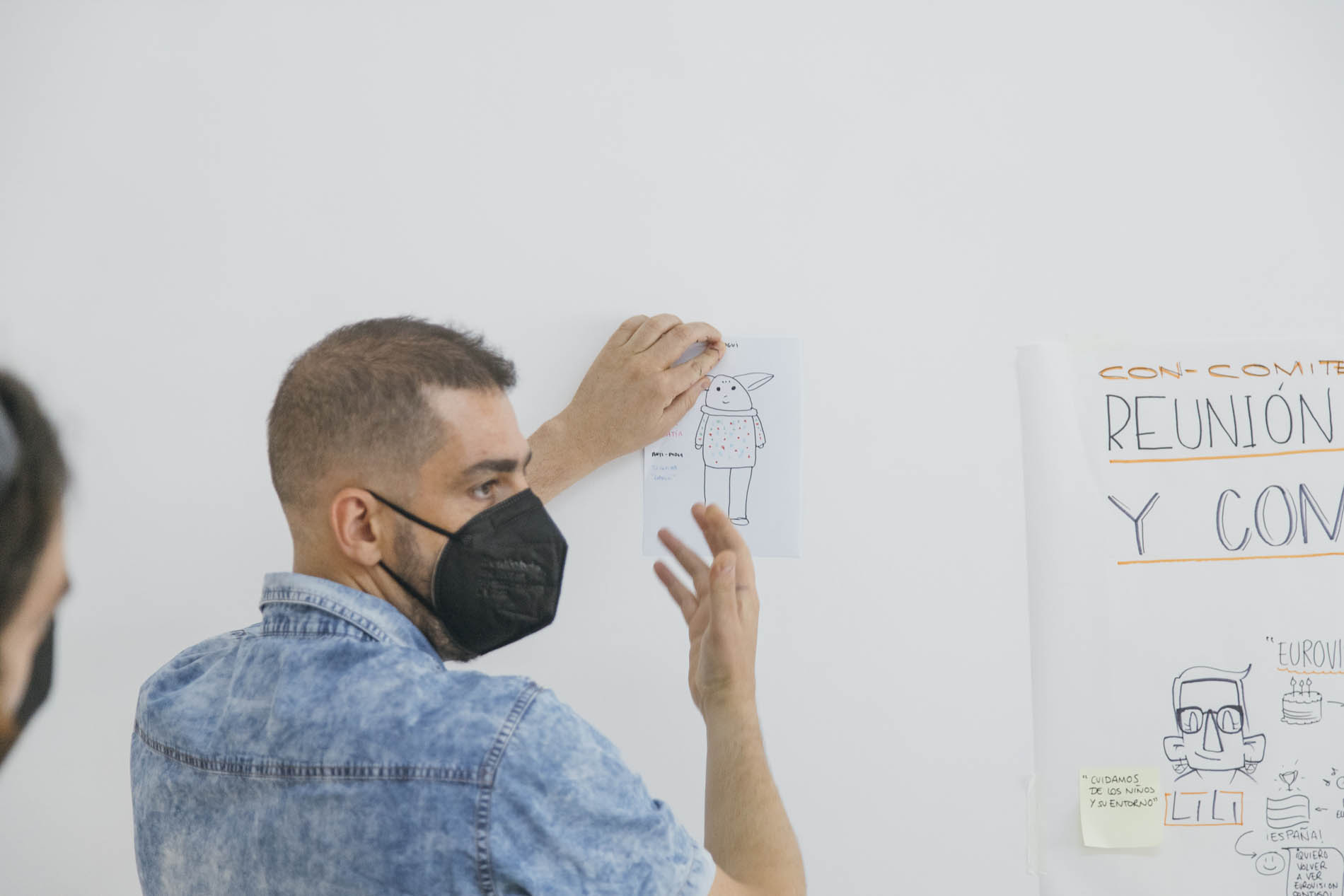
How do you see the moment of the artist's entry and dealing with the creative process versus the wishes of the commissioners?
In the founding meetings of Concomitentes in Spain, based on the protocol, experiences in France and conversations with Anastassia Makridou-Bretonneau as coordinator of the French programme for many years, we were told that the result of the work is not the solution to a problem, but an answer, among many possible answers, to a question. It is true that in our case, nurses start from something they state as a problem and that is that they need other tools to deal with the emotional care of paediatric patients. But in the end mediation is also a journey in which we realise that the artist cannot solve a structural problem in a hospital. The emotional care of the paediatric patient surely requires a multifactorial approach, with many professional and technical tools, beyond the artistic. And although we have done a process of co-research which has even led to a bibliographical review carried out by the child and youth psychologist Sara Miguel, We have to be aware of our limitations. We are doing everything possible so that the work of art dialogues very well with that initial need, but also being honest and accepting that a graphic novel, a podcast or a mobile library are not going to solve the problem completely, but help to make it visible, to problematise it and even to be very useful at some moments. But we must also be aware that artistic freedom must be respected so as not to turn this into something exclusively instrumental, but also reflective. It is not a question of not being ambitious or not wanting to have an impact on a social context, but of being aware that the magnitude of the problem is very great. It will be a step in the search for a more integral solution.