

Right to opacity, joy of overflow
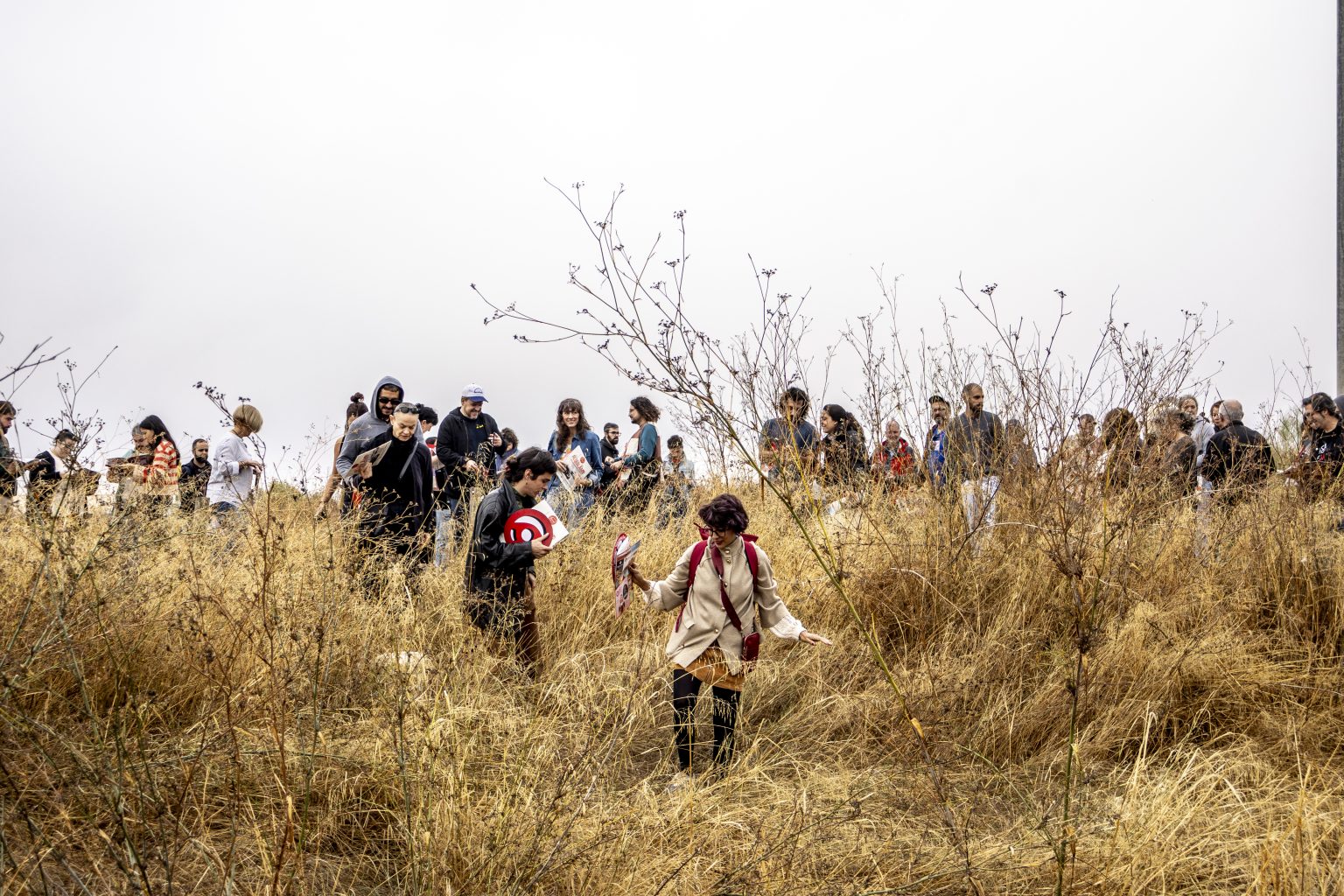 Photo by Félix Méndez
A printer throwing papers on the floor with a red liquid gushing out of a spout. A puddle of paper and ink quickly formed. It was an instant towards the end of the inauguration of Los caños, the work of Francesc Ruiz that expands by interweaving graphic materials and interventions in the public space of Badajoz. During the inauguration we travelled through part of this expansive narrative in a bus that passed through corners of the Zafra industrial estate and the outskirts of various towns in the south of the province, ending up at the inauguration of the printing press El chorrillo, which remains in charge of the group of commissioners. We shared stories of fountains covered with hard or fresh cement, quarries from which water flows, we talked with neighbours, we listened to the voices of Maiden, Juan, Isa, Pau and other comitentes, we read the journeys of trucks through a landscape that sometimes seemed compressed in a comic book or other times emerged around us.
A single paragraph only begins to outline all that we shared at the inauguration. And this was just a glimpse of Los Caños and the whole process of Non plus ultra. With the short distance that comes from having passed the inauguration (but still in the middle of the “activation” process) there are two words that come to my mind to describe it: overflow and opacity.

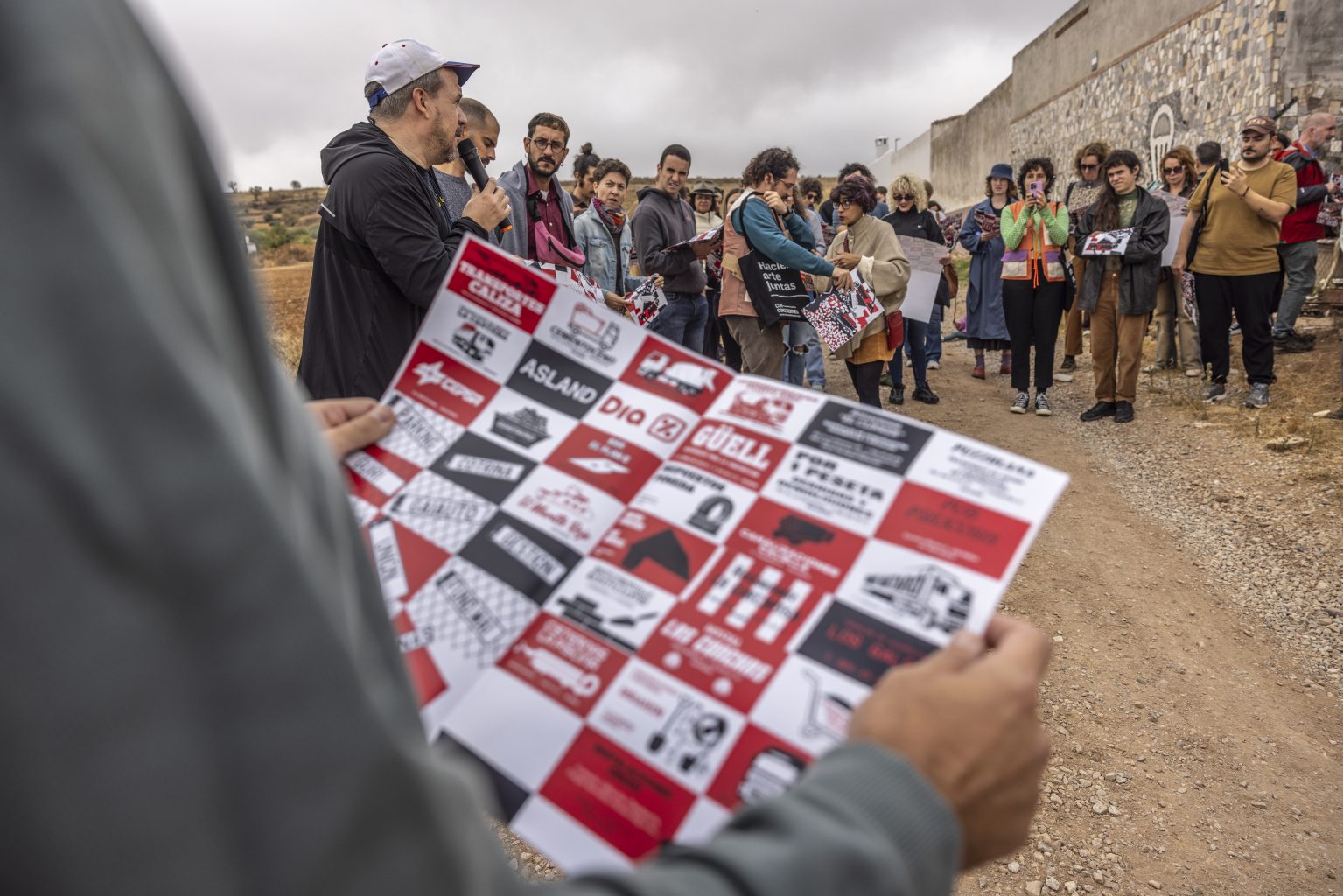

“Overflow” because the methodology sought to make stories sprout with the joy of a party, starting with the events of “Water sprouts without warning” that marked the development of Non plus ultra and continuing with the bus tour, which was permanently interrupted to tell details of the place, the thousand underground stories that with the group of comitentes we have been looking for to overcome the drought as blindness. But “overflow” also for the joy of sharing and celebrating what we have when we look at collective processes and defend a communal luxury. We don't want to think of communal cultural practices from the scarcity of imagination that is content with crumbs that patch up the deficiencies of a “periphery”. We want everything and for everyone. Excellence and deprivatised enjoyment, like those lorries that in the comic strip of Los Caños, with little lynx ears, tear down fences and keep on running. With the overflow of stories, joy, paper and ink, music, humour and poetry, Non plus ultra has built meeting spaces. The door of El chorrillo is open, who could have imagined that in one of the smallest villages in Badajoz a printing press would sprout?

“Opacity” because we have arrived here thanks to having respected quiet processes, slow at times, dedicated to generating spaces of trust. Los caños responds to a cultural policy based on trust, like the one that has built the relationship between the group of patrons and the artist, which in turn is based on the methodology of Concomitentes, which is due to trust in the citizens, in their capacity to decide and listen to each other. The group of patrons trusted in the sensitivity and good work of the artist to appropriate their stories with respect and with all the creative freedom necessary to turn them around and offer new perspectives. The artist relied on the community of comitentes to materialise his work, mainly the comic, and to continue giving life to El Chorrillo. But, and I repeat this because it is very important, spaces of trust can only be created if we respect the right to opacity. We could not have developed these links and processes with the pressure of having to permanently exercise bureaucratic and media transparency, translating our activities into languages that can be understood from anywhere at the speed of social networks.
Nor could we have translated and concentrated the whole project in the inauguration, it was inevitable that many elements would be left out. Those who came to see Los Caños returned home with comics, posters, stickers, experiences, stories and a spectacular sirloin steak in sauce from the bar La Perla. But that was just a glimpse of the project. Sorry, but if you want to know it in depth you have to stay. The only way to unravel it is to be part of it. The doors are open, but you have to commit yourself to the territory and its communities.
On the other hand, what a beautiful thing it is to never stop getting to know! At the beginning of the tour, we handed out a map in the form of a steering wheel (with which the public could “drive” while reading the information), which offered the names and descriptions of the interventions, some of which we decided not to visit that day. It gave the names and descriptions of the interventions, some of which we decided not to visit that day. What will be there? How do you imagine Bar Pepa de Brovales? What is the UHT place like? And what exactly is Aslandia? To paraphrase Luis Camitzer: community and participatory art practice should be a school, the artist learns to listen to the territory, the participants learn to inhabit uncertainty through imagination.
Photos by Félix Méndez.