


Conclusions of the Culture of Patronage Workshop
By way of unfinished conclusions.
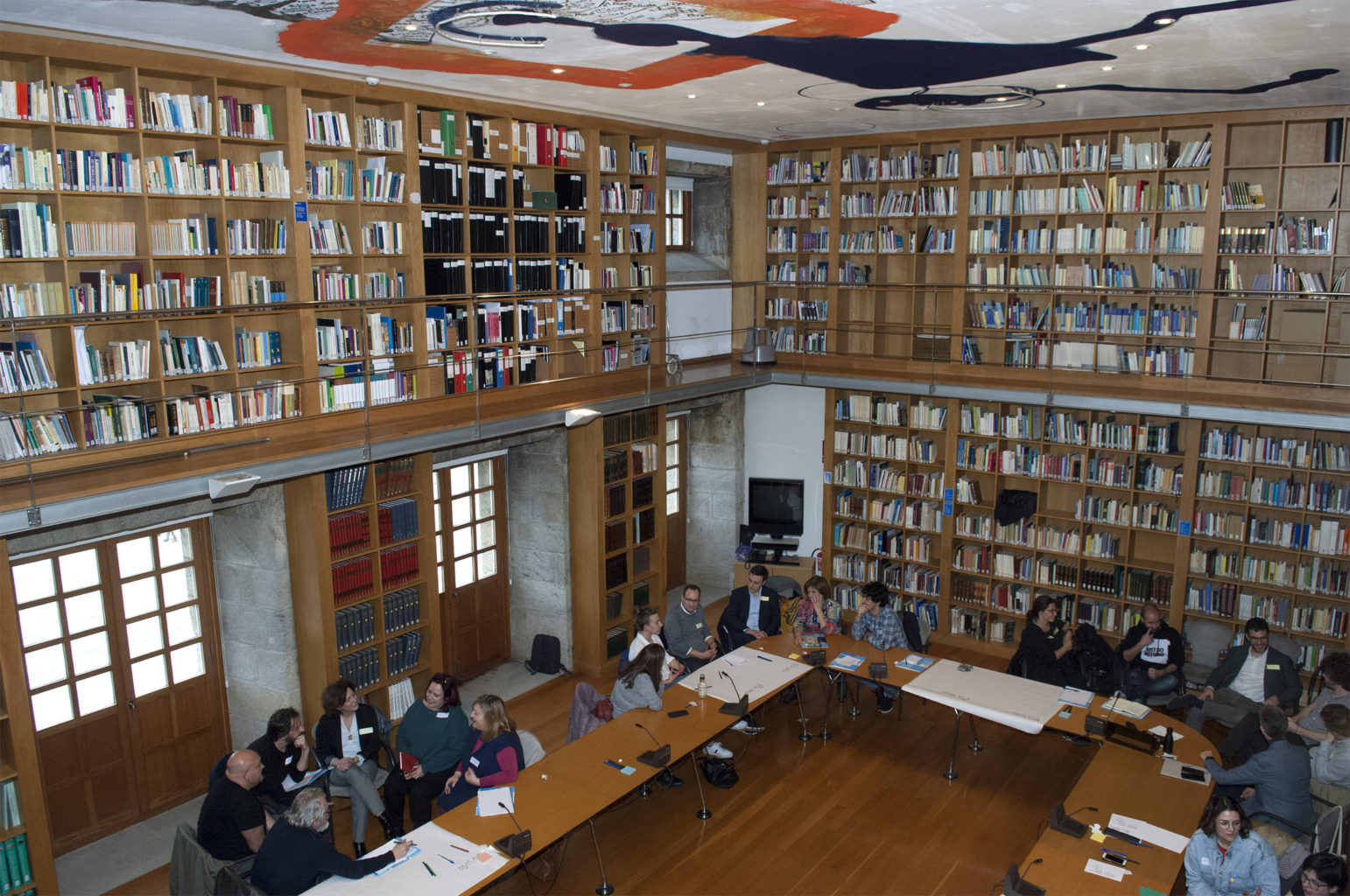
On 4 February last, the Consello da Cultura Galega hosted the Culture of Patronage Conference, with this meeting we sought to address the issue of art on patronage, responding to the following questions
and to learn about experiences and cases of good practice in sponsorship.
The day featured this programme and through these videos it is possible to access what was stated in the first morning session and in this another video we can see which policies seek to promote patronage. In the afternoon, the day included a participatory session.
The conversation was extensive, the positions and strategies differed, in some cases opposing each other, but this diversity served as a thermometer to understand the positions of different agents in relation to patronage. We present here a series of ideas by way of an itinerary or “unfinished conclusions”. Starting from the central idea that the patronage and citizenship are inseparably linked., Without discarding the need for further meetings and discussions, we draw the following considerations from the dialogue and discussion among the participants.
Conclusions of the day
(the content of this text was elaborated and signed by the coordinators of this meeting: Fran Quiroga and María Xosé Porteiro)
For the first time a Galician cultural institution, the Consello da Cultura Galega (CCG), held a day of reflection and a discussion workshop on “The culture of Patronage in Galicia”, with the participation of representatives of institutions and public and private organisations that offer, or need, this resource. The organisation, shared by the CCG, Concomitentes and the Daniel and Nina Carasso Foundation, was coordinated by Fran Quiroga and María Xosé Porteiro.
This conference was based on the consideration of patronage as a space of co-responsibility between the public and private spheres, to design and create cultural, scientific or social projects. The aim was to find out whether there is a culture of patronage in Galicia. To define what this culture of patronage should be like. Promote a plural, accurate reflection in order to weave an ecosystem that is more favourable to patronage with an ethical commitment.
Methodology: This issue was addressed in the field of culture. There was a fruitful exchange of experiences and good practices in Galicia and other parts of Spain. A dialogue was opened between the interested parties with the aim of promoting patronage as an exercise of shared responsibility and social commitment.
Conclusions
1.There must be a shared project, co-responsible and assumable, for the patronage and the citizenship, for which it is necessary to assume common positions that allow for responding to contemporary challenges and fight against remoteness and the gap between stakeholders.
2. The following are needed stable spaces for collaboration and mediation between the public administration, citizens, the business world and foundations. These spaces should be a meeting point for dialogue and serve to overcome mistrust, articulate actions to make visible the role, advantages and possibilities offered by patronage, based on the attention to society's concerns, deepen the knowledge of good practices, training and awareness of the contribution of patronage to social welfare.
3.It is necessary to strengthen patronage as a service guaranteeing the right to culture, to equity, to complementarity in the financing of culture but also as a provider of services, support or advice.
4.Working towards a socially beneficial sponsorship (a “good” philanthropy) underpinned by transparency, accountability and good governance.
5.Delineating the boundaries between sponsorship and patronage, The aim is to promote an administration that is not the exclusive recipient of patronage, but which facilitates the development of a mediation platform that guarantees redistribution and expands the number of benefactors.
6.Building a patronage that does not replace the role of the state, but complements it.
7.Set up a roadmap in which the following are given legislative frameworks more favourable to patronage, The impacts and usefulness of this form of social justice and redistribution are more visible and its advantages are made clear.
8.Extending impacts beyond the economic one, with the an attempt at more humane patronage, The EU is a caring, more participatory and managed through collaborative governance.
9.Hold a second meeting aimed at the framework established for the celebration of the Xacobean year 2021.
10.To value the interest of incorporate this theme into the GCC's areas of work that have to do with the economics of culture.
Information Consello da Cultura:
http://consellodacultura.gal/evento.php?id=200957
Conclusions:
http://consellodacultura.gal/mediateca/extras/CCG_pr_informe-a-cultura-do-mecenado2.pdf