

"Mediation allows people to be in the art world bringing a very 21st century vision".
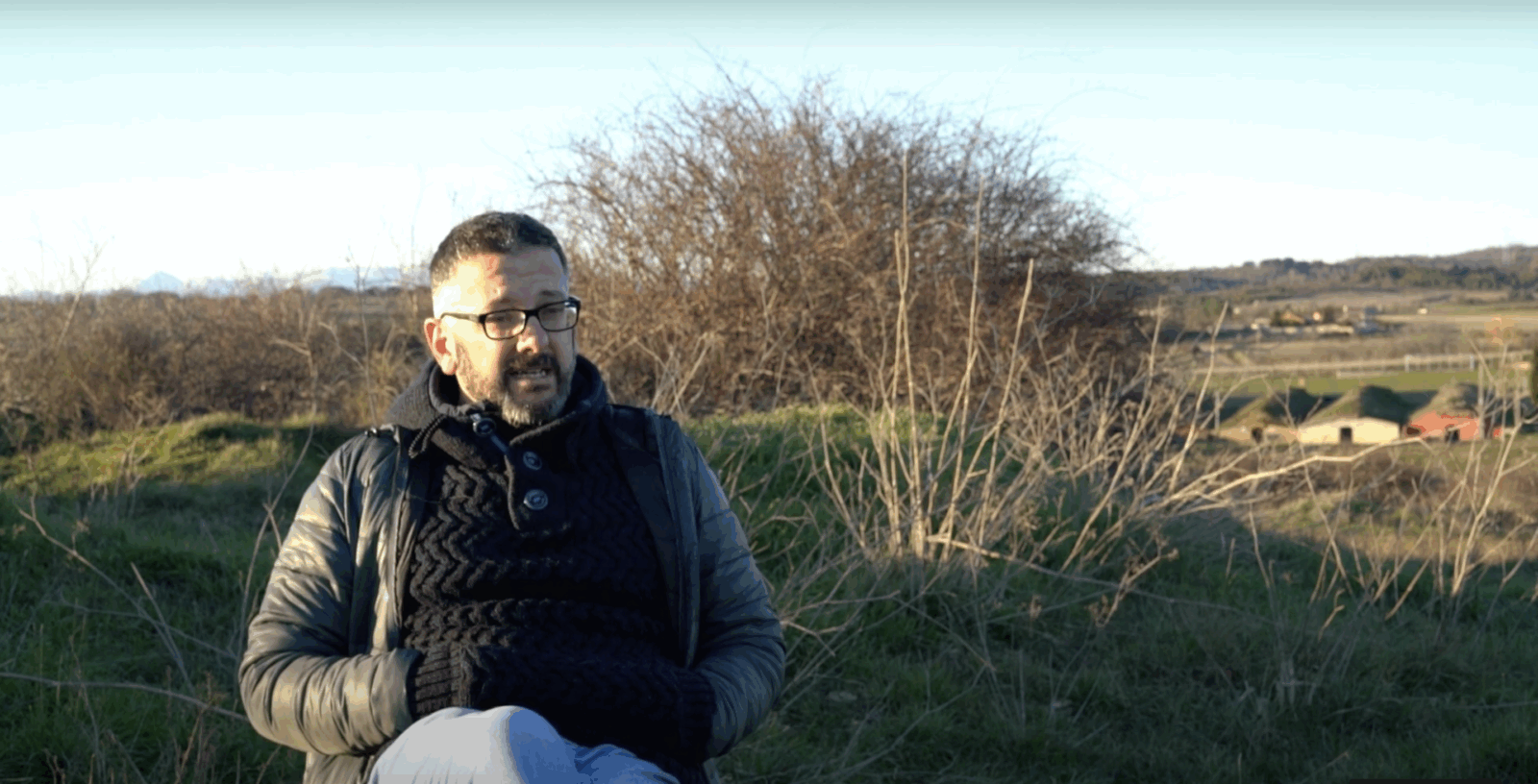
Interview with the mediator of Narrativas Solares, the project that seeks a just ecological transition in the province of León.
The Leonese mediator from Solar Narratives, He is a creator and researcher of live arts and collaborative audiovisuals, Alfredo Escapa Presa, In this conversation, he explains how to transform a social process with an impact on the territory, such as the ecological transition, into a participatory mediation, open to dialogue and listening, with the perspective of finding in a piece of art a pedagogical metaphor that captures the lessons to be learned for those to come.
Concomitentes (C): How do you get in touch with the citizens' group of the platform once the Art for Sustainability Call for Proposals is launched?
Alfredo Escapa (AE): I have been a neighbour of this area for fourteen years, so I feel very affected and linked to it. When the issue of solar panels began to be raised in the region, I wanted to participate in some way, but I didn't see myself doing it as an activist... So I saw the Art for Sustainability Call, Concomitentes I already knew, and it seemed to me the ideal opportunity to provoke.
C: How do you activate that first contact?
AE: I said to myself «let's start this project, whether it comes out or not it can be a good opportunity to create something and move forward with the platform itself”. So I met with three of the people in the group and things went very well, also because I am a well-known person in the region. At first I thought about linking it with more platforms, because there are more throughout the province, both solar and wind, but I think that in this type of process it is more important to «territorialise» the problem than to expand.
C: How do you value bringing together the mechanisms of culture and art for the issues of our time such as sustainability, the ecological challenge or climate change?
AE: This is a rather complex issue, because art is usually interpreted as something detached from life. I like Robert Filliou's phrase: «Art is what makes life more interesting than art». For a long time, because of my creative processes, I have been working from there and I believe that, in these times of emergency, we have to be working with the people, not “for” and “by” the people, «with the people».
The process of mediation that I have been working on for the last few years, this vision of seeing not the social but the people, gives a twist to the way artists look at the world, and also allows non-artists to be in the art world, contributing a very 21st century vision.
C: What do you think are the main skills that a mediator should have?
AE: The fundamental one is listening, but not just listening by ear or sight, but listening that has to do with physical evidence and that has to do with the whole body. I also interpret, perhaps because I come from the world of the performing arts, that it is a way of being.
In anthropology there is “participant observation”, but I turn it around and I like “participant observation” much more, as you are participating and in participating you are already observing and learning in that dialogue of learning. I think this is fundamental.
Then there is one that seems to me to be fundamental for a mediator and that I thought I had, but I think I am learning it with this concomitance, which is «putting yourself at the service of».
«I had it intellectually clear, but suddenly, something as powerful as a region to which I am linked or some friends I still have here or the subject we work on, which moves me a lot, encourages this «putting yourself at the service of» and disappears a little».»
C: Which ones did you have and which ones are you developing with the project?
AE: That the group are people who know how to listen and dialogue. One thing that is often attributed to the rural world, and I include myself even though I don't live in the village, is that we are a bit closed-minded people, and it's certainly the other way round, people who live in villages are very used to dialogue because life in the village is a constant process of negotiation.
C: What spaces, methodologies and mediation strategies have been created throughout these years of work to promote this reflection, research and exchange?
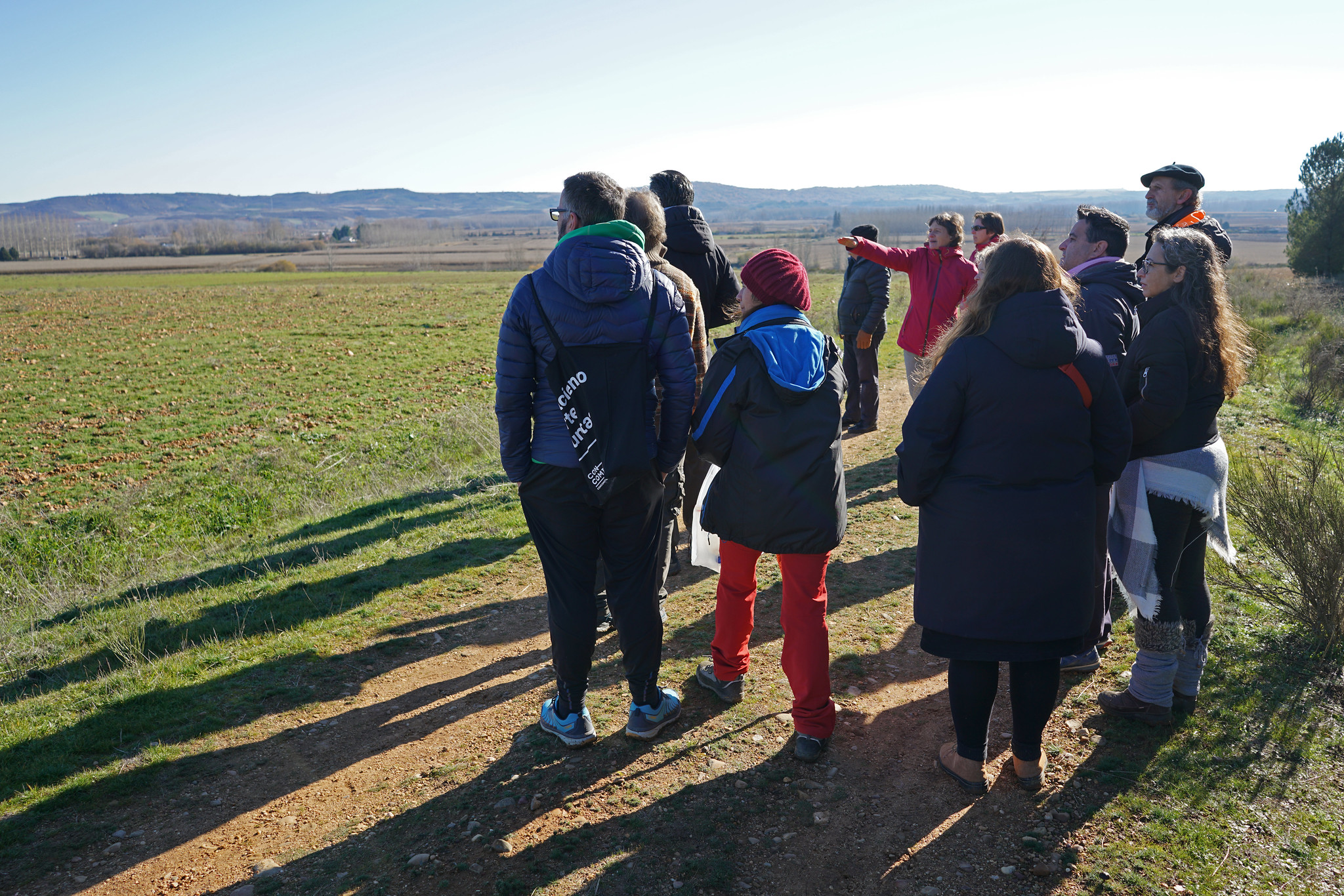
AE: There has been a turning point in the moment when we did this walk in dialogue, stepping on the land that is going to be invaded by the plaques. Before, we were always in a closed room and then we thought «let's go for a walk, even if it's December, let's go for a walk and see the site”.
And I think that the tool is above all dialogue. In the group there are, on the one hand, people who are very expert in ecological transition, university professors of biology and geology, activists and ecologists who have a lot of wisdom in this; and then people who are not in any of these movements, but who have a knowledge of this negotiation process that is impossible to “de-territorialise”.
C: Any new methodology planned for the next phase of the project?
AE: The fundamental thing has been the dialogue that has taken place and the paradigm shift that the process has brought about. And, of course, the main one, especially at the beginning, has been the “dialogue”, although we will soon initiate other forms of work.
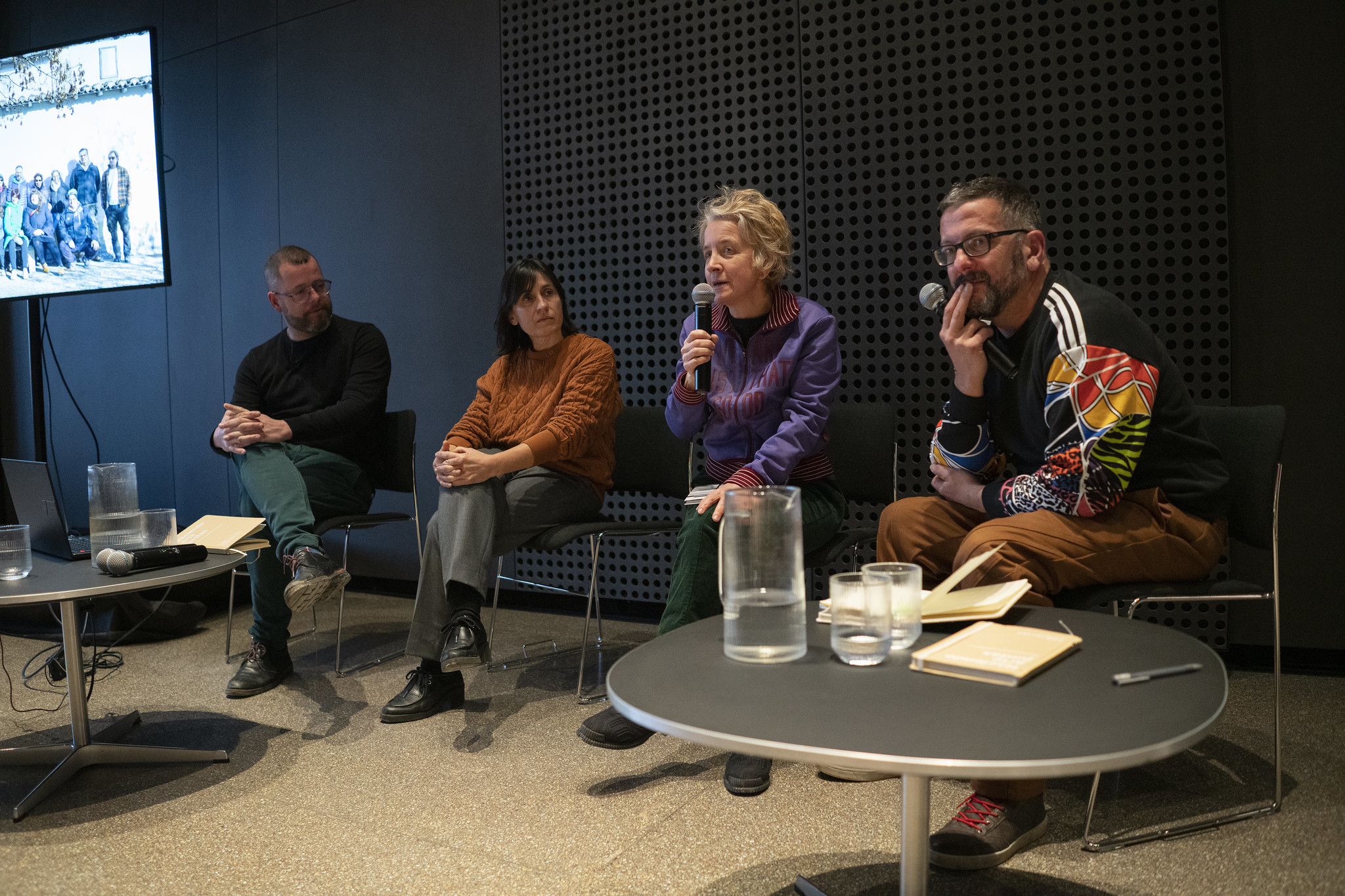
C: How many times a month are you meeting?
AE: One or two meetings a month, we are no longer here because people are busy and to transmit this space for reflection... Furthermore, this is not a concomitance alien to what is happening, a fortnight ago we had an emergency meeting due to the progress of the process from the Junta de Castilla y León for the installation of the solar panels. In this meeting we got on with this matter, managing these times of urgency is sometimes complex.
C: What do you think the mediation process has brought and what main conclusions do you draw from these exchanges?
AE: There is a lot to learn on a technical level: Terminology associated with photovoltaic platforms, as well as on a legal level, since three of the principals belong to political parties and they are talking a lot about it.
On a personal level, the learning is that for a long time there has been a «kidnapping in relationships”, the pandemic was very negative, and this concomitance has facilitated a space to realise the important things in life. In time and space ‘Solar Narratives’ can generate this space to begin to bubble up, we are five kilometres from León and everything is very close.
C: What are the next steps for the project in the short to medium term?
AE: We are confronted with to an end of winter and beginning of spring when we have to make a number of decisions important: Culminating what we want and choosing which artist or artists are going to materialise it. The methodology, on the one hand, will go very directly to the subject and, on the other hand, we want to multiply work because there is a lack of pedagogy in all of this.
«There is no communication in which we can tell politicians everything that is happening and tell them about it through pedagogy, so we will do this work at the beginning of spring and we will finish it after the summer or towards the end of the year.»
C: This is hard work that cannot be completed in a few months...
AE: We are thinking of expanding it over time, beyond the concomitance itself and Concomitentes. In this ecological transition, it's not that we don't want renewables, it's that we don't want renewables in this way.
We are considering the possibility of creating an energy community and a series of issues that have to be developed over time, there is not enough time in a year. So we are moving in that short and medium time, and expanding it further.
C: How do you think the expectation-frustration of a work of art that cannot provide a solution to the issue of ecological transition can be managed?
AE: It's complex to explain this «big issue» with a work of art, but I think it's very important to leave a trace so that other people can see themselves reflected in what's here. This is going to continue in the future, it's going to continue, it's going to continue invading territories, so I think the way to do it is to create something pedagogical that can work for the future. Pedagogical in the way I was saying before, as a way of constructing thinking for the future.