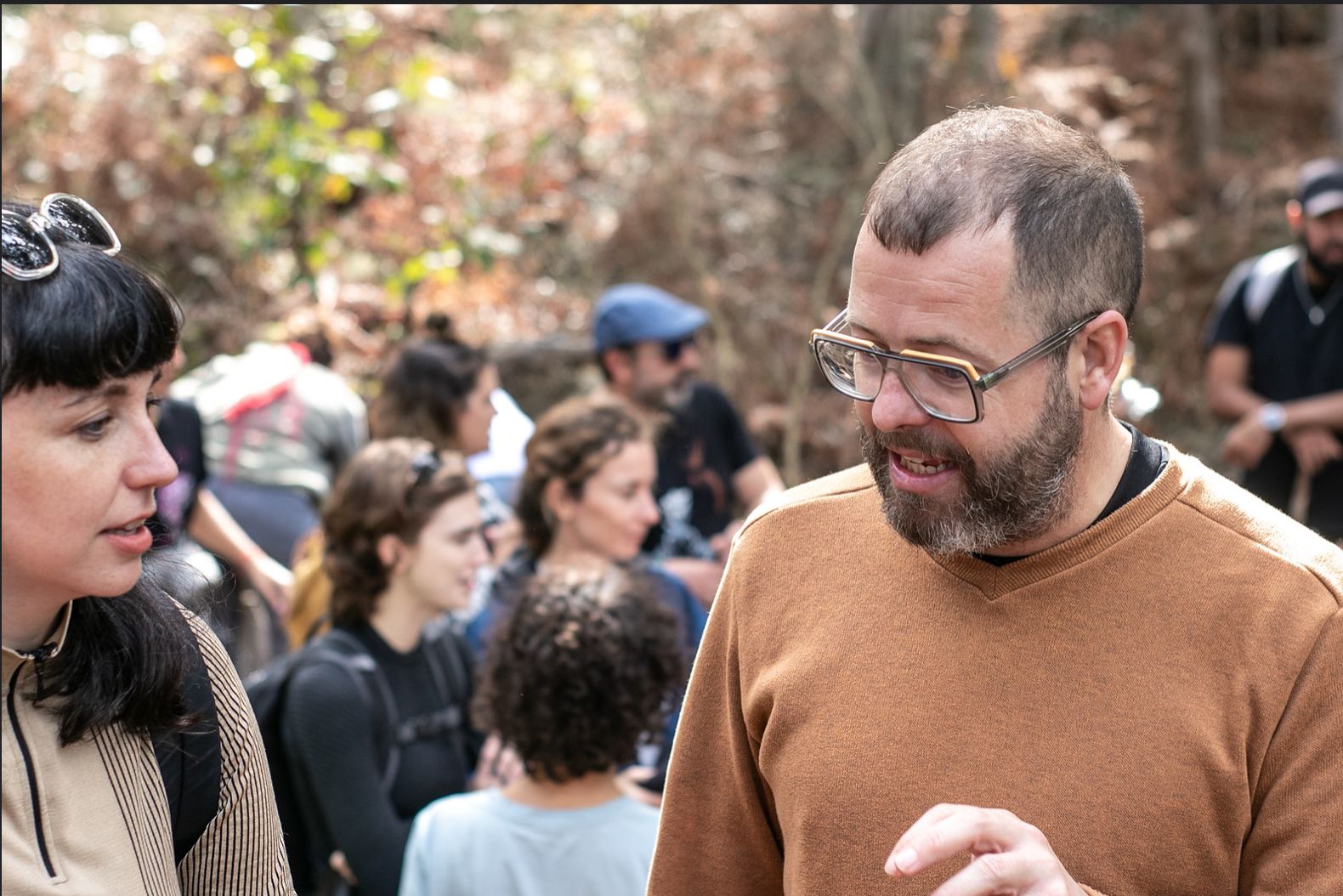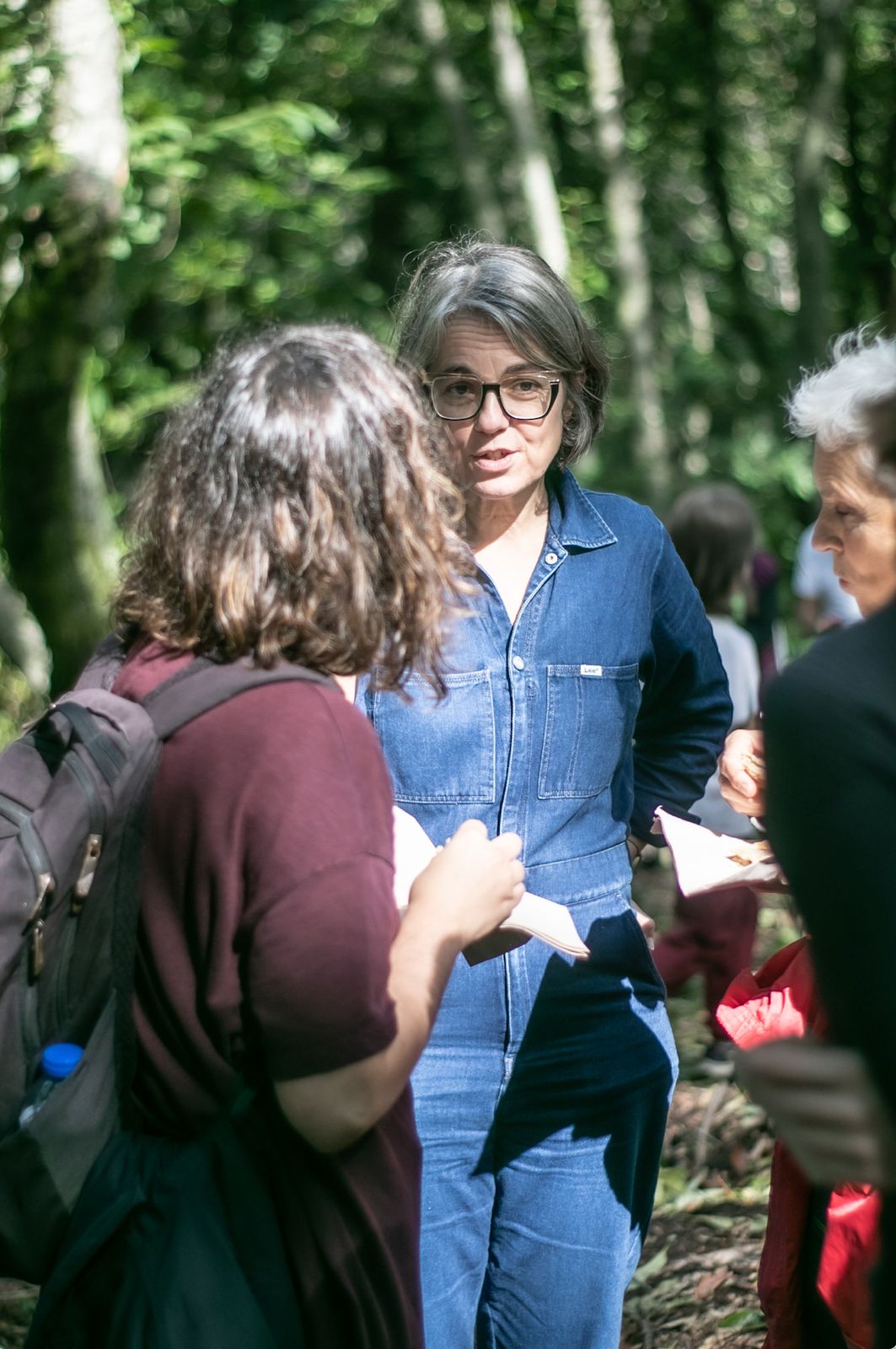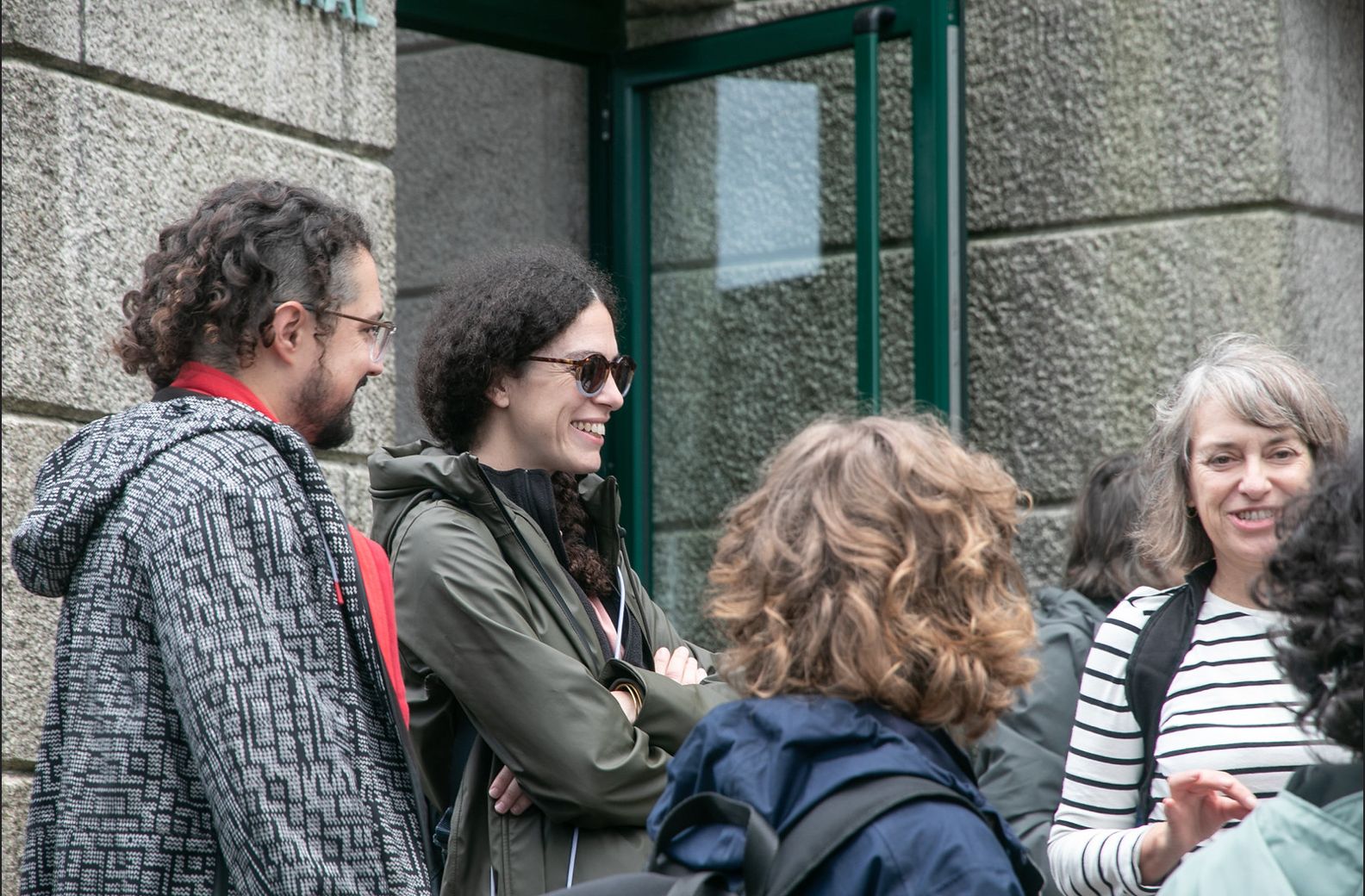


E fomos monte. A visual and textual account of the ritual Sentires do Monte.
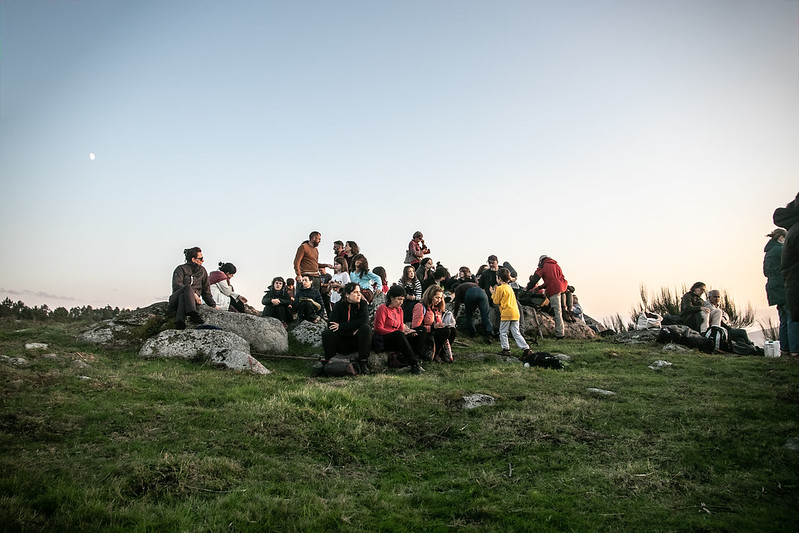
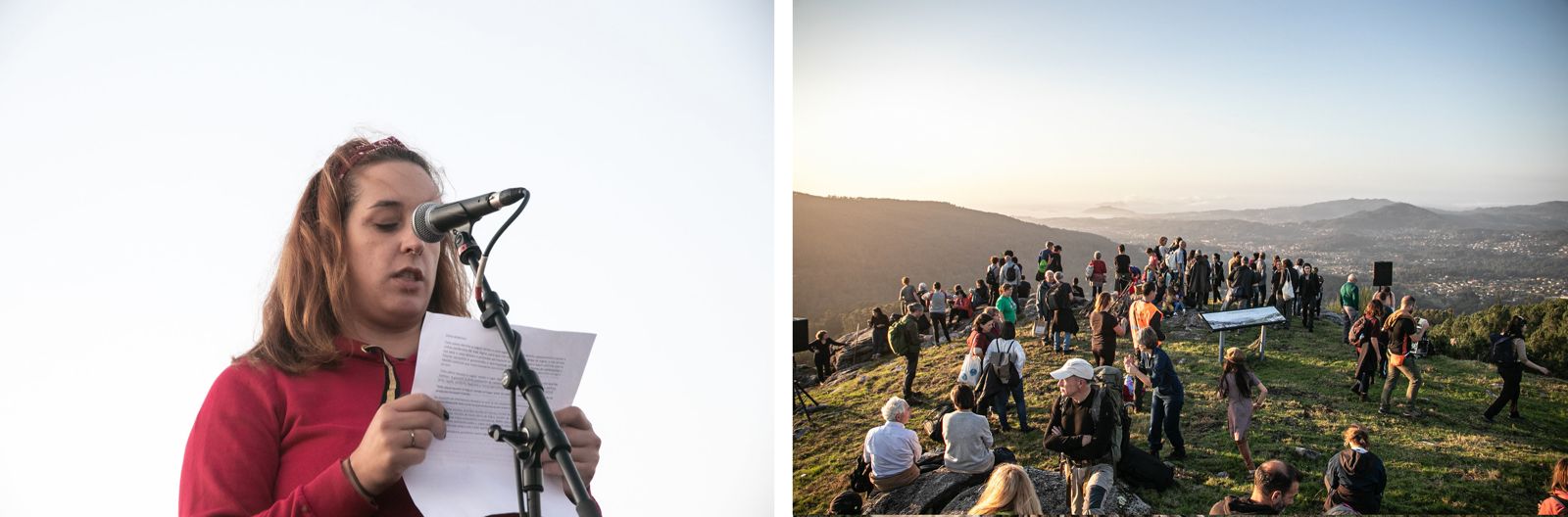
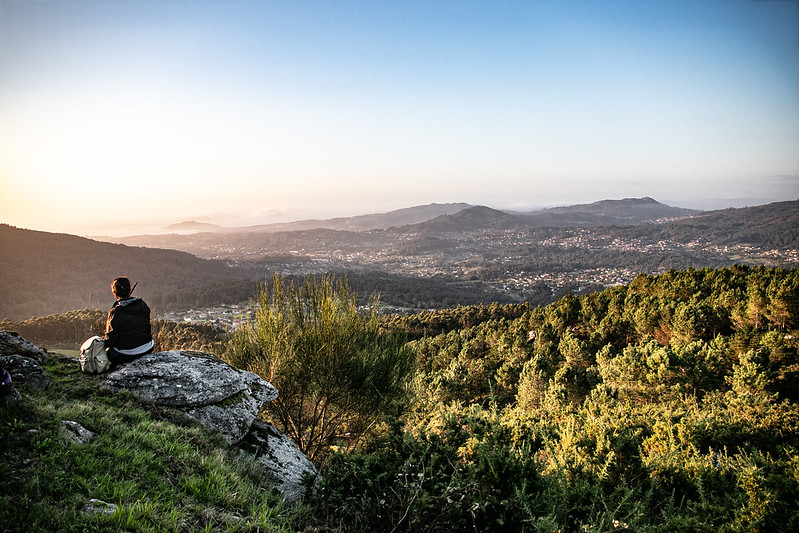
On Saturday 12 October 2024 the artist Asunción Muíños Gordo presented the art project "Os sentires do monte" (The feelings of the mountain) in the upper part of the Couso Mountains - between the Miradoiro de San Antoniño and the Monte do Facho - through a Festival-Ritual formalised in a route of eleven actions and a reading, by one of the newest community members, of the Protection Plan of the Mountain, written by the artist herself.
This art project takes place within the framework of the Terra Común de Concomitentes project with the mediation of the researcher and cultural curator Natalia Balseiro and the participation of the president of the Couso Mountains Community Xosé Manuel Araúxo; together with them, some three hundred people have participated in more than thirty meetings, work sessions, walks through the mountain, festivals, learning days, etc.
After months of collective deliberation, the collective desire defined by these community members, the Couso residents, was: to enhance the value of their legacy among the closest neighbours and the communities, with the idea of guaranteeing generational succession.
The invitation to Asunción Molinos Gordo (1979, Aranda de Douro, Burgos), researcher and visual artist, was to respond to this collective desire, through an art project creating new links with the mountain. She is an artist with a tremendously open and situated formalisation in her art projects, who works from a perspective strongly influenced by the methods of disciplines such as anthropology, sociology and cultural studies, and whose main focus of her work is contemporary farming culture.
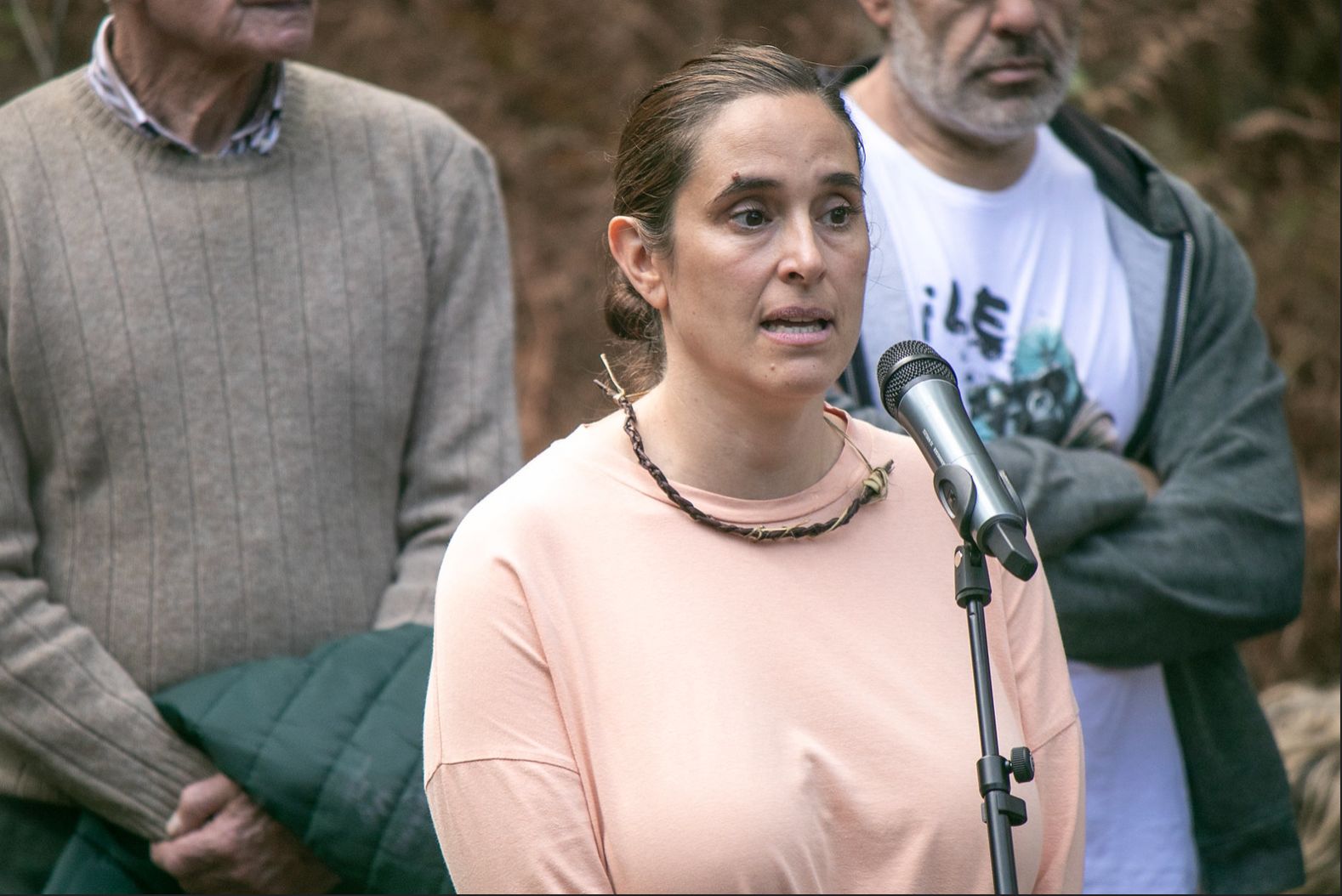
In order to carry out the art project, Asunción was accompanied for eight months by around twenty community members, as well as neighbours and members of other mountain communities, who made up the working group that participated in the design of the Festival-Ritual.
Being together, opening up new conversations, creating vencellos, etc. it is through a whole series of visits, walks, interviews, information meetings and writing exercises (odes, letters, municipal banners, handmade bica, letters of rights and other writing tools) that other forms of bonding with the mountain were created, and the essential elements of the mountain to shape the ritual were decanted: auga, animais totemicos, o aire-o osíxeno, as herbas, os alimentos, a leña, o lume, os cabalos, os devanceiros e a memoria.
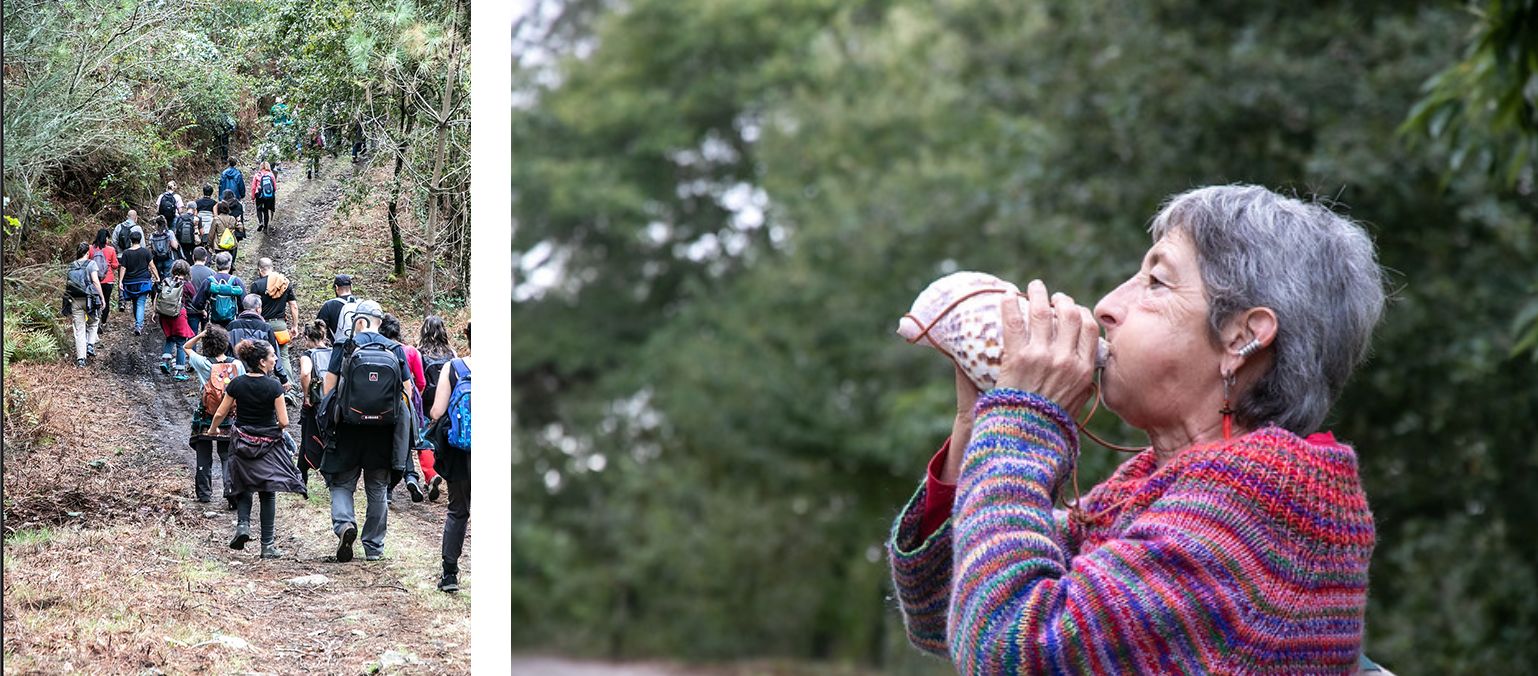
1st ACTION: call to the Mount
With these changes and a deep research work on each one of them, the Festa-Ritual was composed with a series of actions that began in the Miradoiro de San Antoniño after the call to clean the mountain by the oldest villagers with the Buguinas from the Guarda, recovering an old method to call the villagers to clean the mountains. The call to the mountain was made by Iria Enríquez Blandón, Paloma Amigo García, Pepe Reñones Rodríguez and Luís Alonso Bagacigalupe.
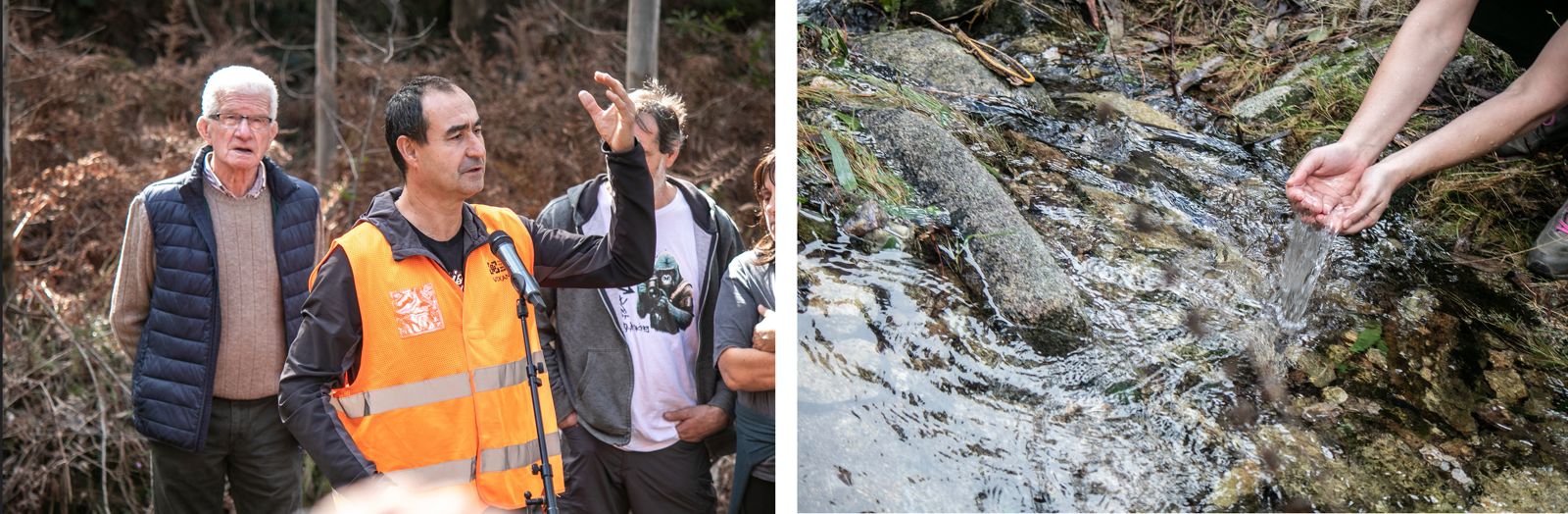
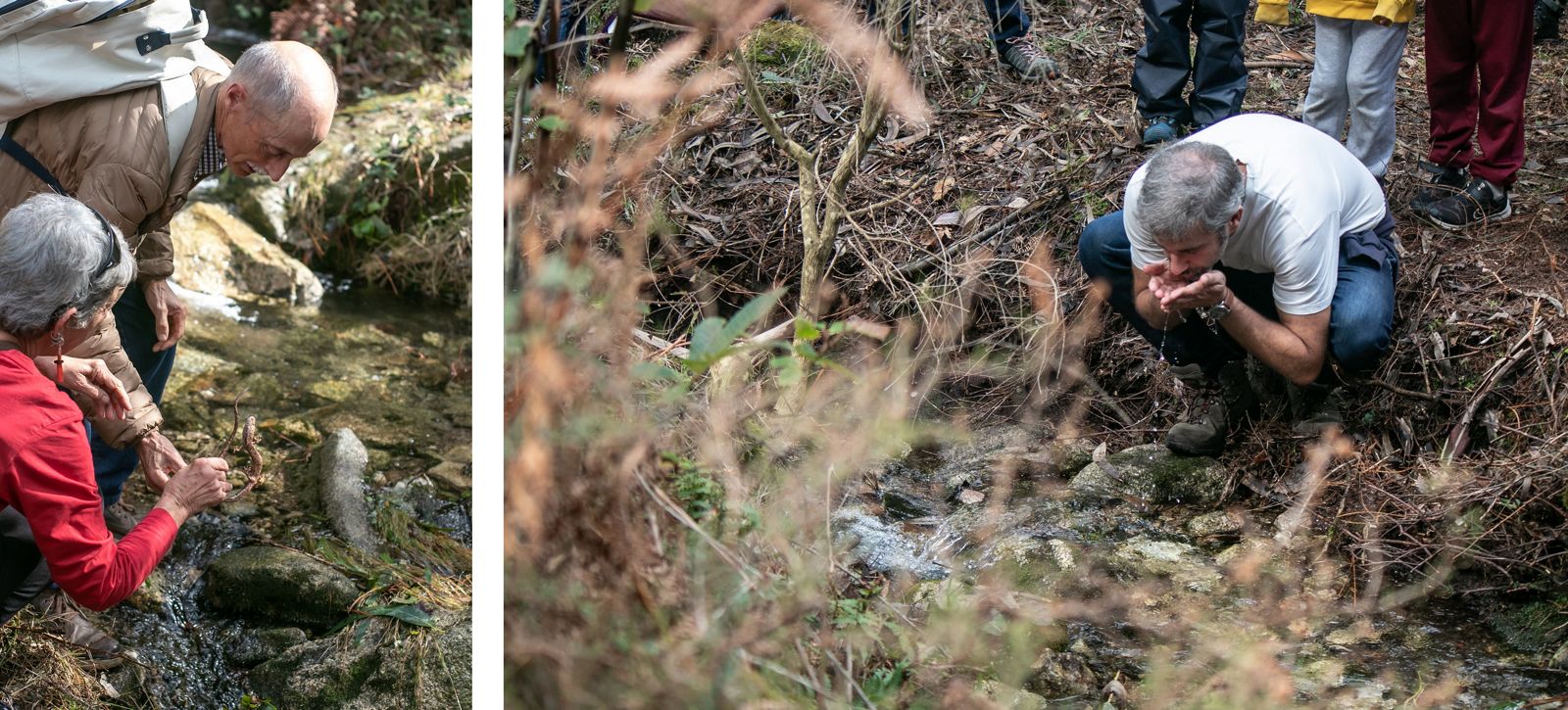
2nd ACTION: Auga
They processed together to the source of the Couso River where the water that makes life possible in Couso originates. Xosé Antón Araúxo, José Manuel Lago, Iria Enríquez Blandón and Asunción Molinos Gordo shared ancestral and collective knowledge and practices about what water can do, presenting the yellowtail or the goat as animals that signify drinking water, they revealed the practices of planting water, they performed gestures in community inspired by the irrigation communities where water is shared among all beings.
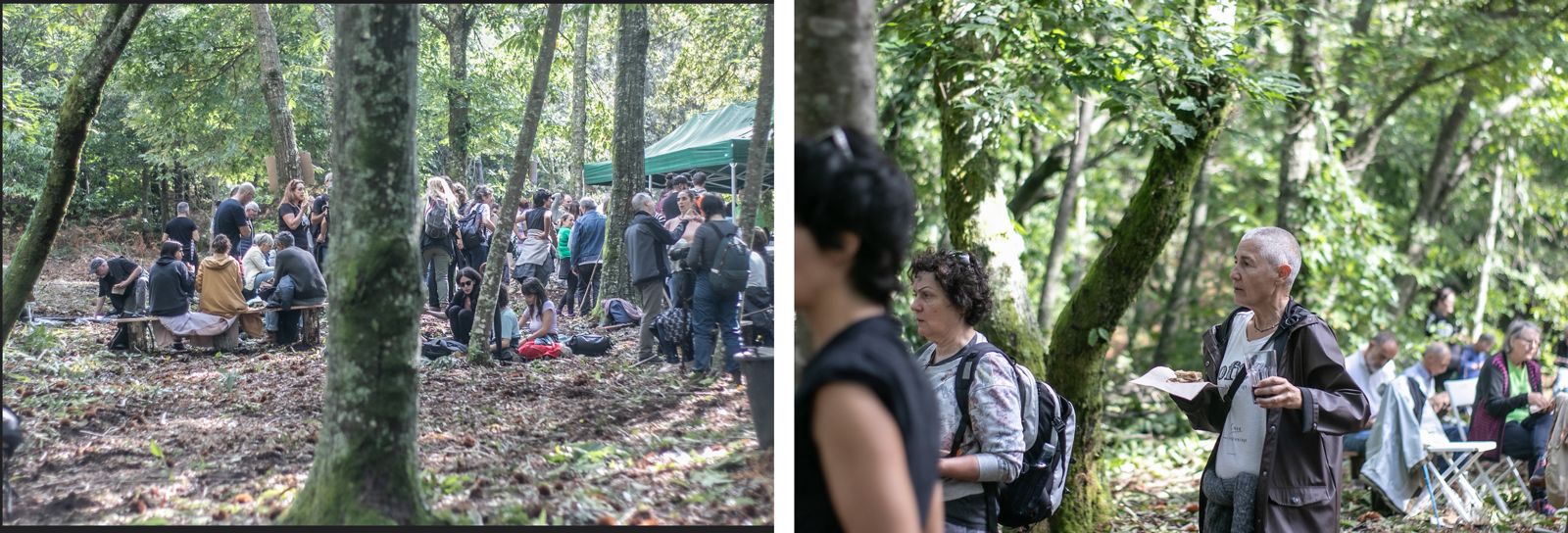
3rd ACTION: Food
They ate together, celebrated that they are here and alive. They put their bodies together to make their feast, their rite, and encorpalos. A stop at Souto Chan dás Eiras where they shared the food offered by the mountain: cen quilos de xabaril doados pola Sociedade de Caza a Gondomarense, cociññeados pola cociñeira especialista en carne de caza Eva Florentiña de Gondomar, regado con viño de casa das viñas das aldeas vinculadas ao monte e acompañado das empanadas de castañas e cogomelos dos montes de Couso cociñadas entre o Bar Gondomar e a Panadaría O Penisco (Gondomar).
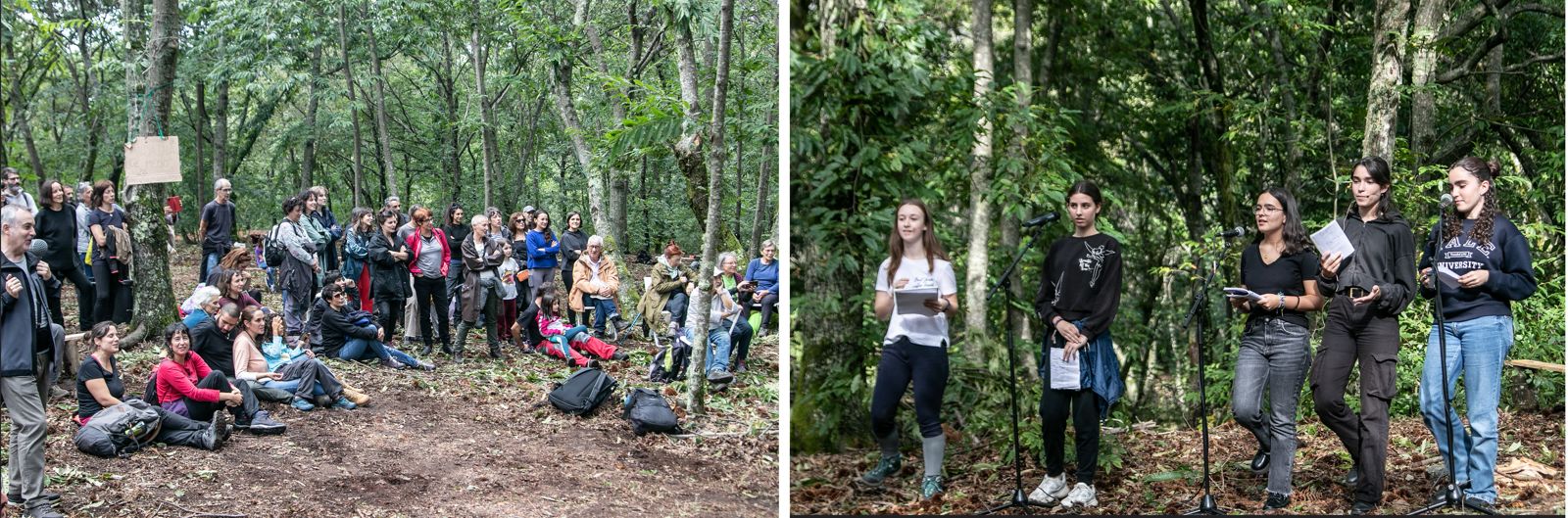
4th ACTION: Regueifas
The girls from Gondomar Alba Herranz Pazos, Mar Herranz Pazos, Carmen Villanueva Rei, Paula Piñeiro Gonzalez and Ruth Comesaña Granxa, all students of 4ºESO of the IES Plurilíngüe Terra de Turonio performed the conflicts of the mountain, of today and today, through several regueifas composed by themselves with the help of the regueifeiro of Godomar Luís Caruncho and the teacher and artist Elena Gómez Dahlaren. These five girls composed the lyrics of this verbal game about the love affairs in the forest that still exist since ancient times, but also about the distance between the administrative bureaucracy of the management of the forest and the reality of the people who live the forest every day, understanding it as a master, as a family, as a companion.
5th ACTION: As herbas
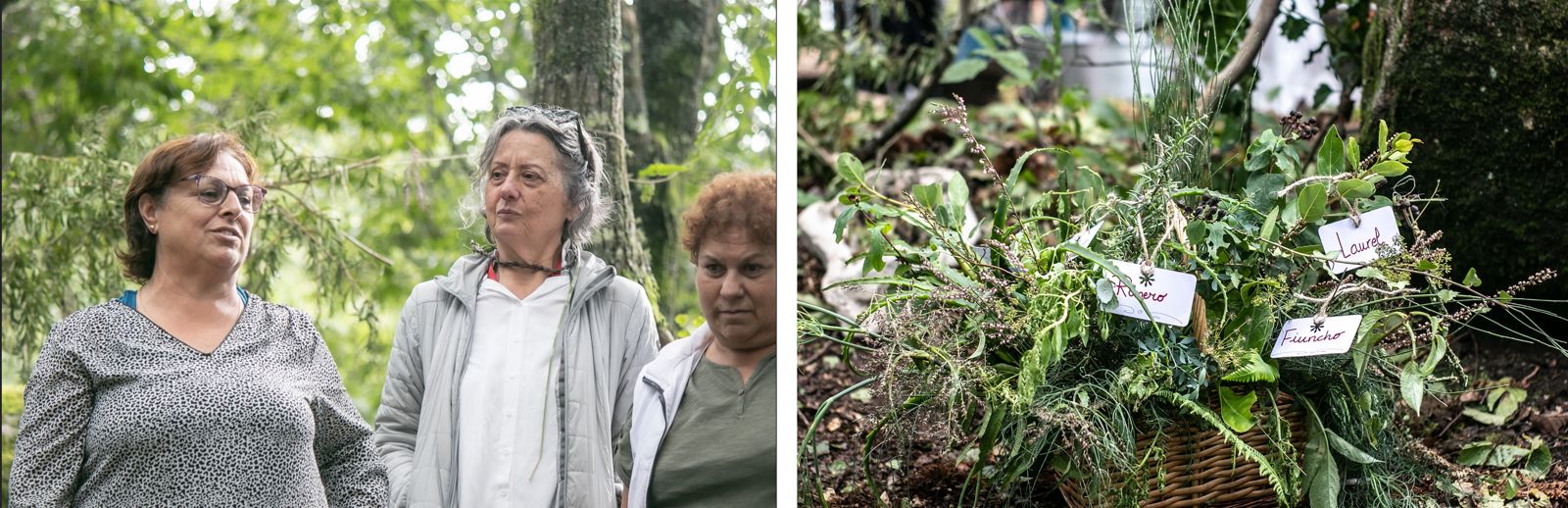
A group of women made up of Sara González López, Pilar Talariz Cobas, María Lemos Cerqueira, Susana Sáiz Medinger, Monste Salgueiro Varela and Lucila Rial Prado shared their knowledge and experiences about medicinal herbs and their different uses for food, medicine, spirits... They also prepared together with Elisa Diego Diaz from the Bar dá Casa Veciñal de Couso different herbal infusions that used to be grown in the mountains of Couso and are nowadays grown in the gardens and vegetable gardens of the Couso neighbours. These infusions were sweetened by the honey donated by the Community of Montes de Vincios through Montse Salgueiro Varela.
6th ACTION: Cabalos e mocidades
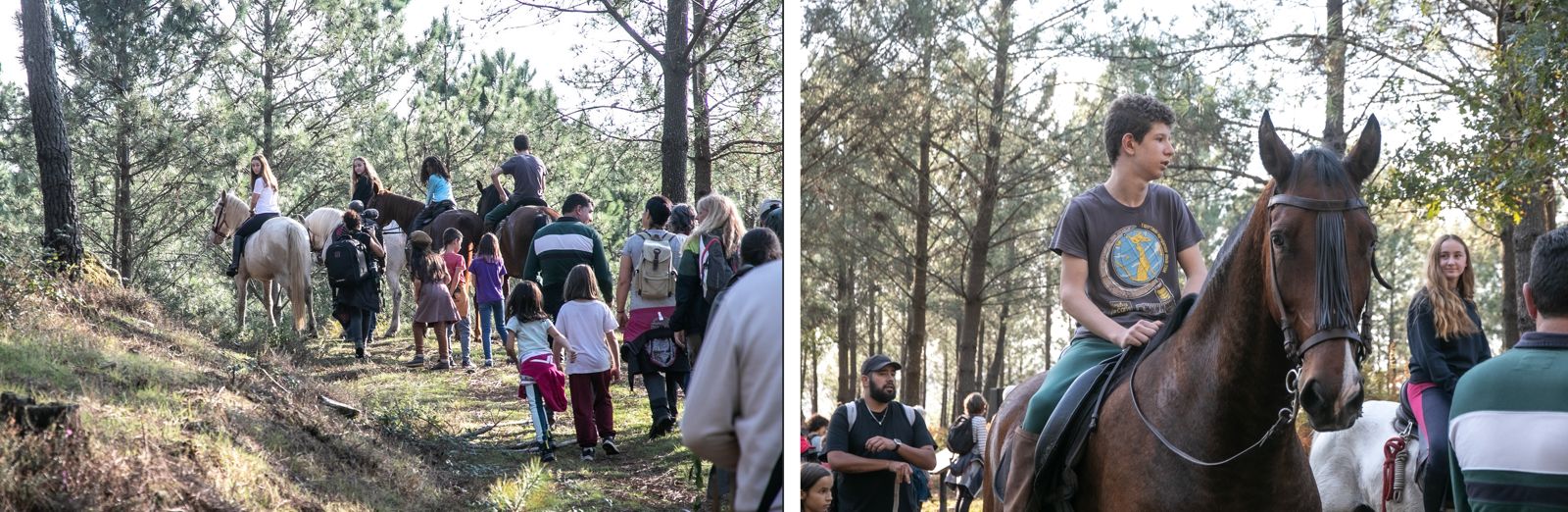
Sheila Ribero Rodríguez, Olivia Dawod Muíños, Paula Piñeiro González and Adrián Alonso Docampo -the newest members of the community- mounted on the horses of Suso and José Alonso Santos and Paco León guided us through the mountain, to the burial place of the devanceiros of Couso, the oldest villagers of the place.
7th ACTION: Mámoa
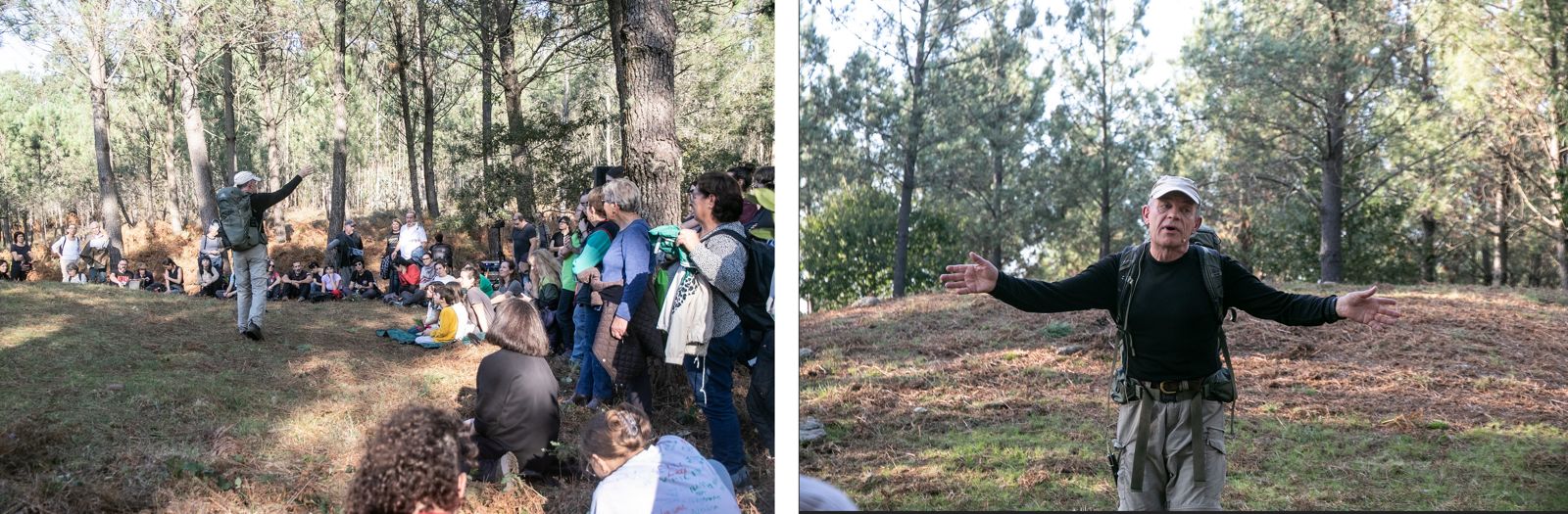
Jesús Rodríguez Dieguez traced a route through what are today, for the Couso's inhabitants, the mámoas, the places of collective burial, those places, in the high part of the mountain, that their ancestors chose to bury their community members.
8th ACTION: A gaita, o terceiro pulmón (Bagpipes, the third lung)
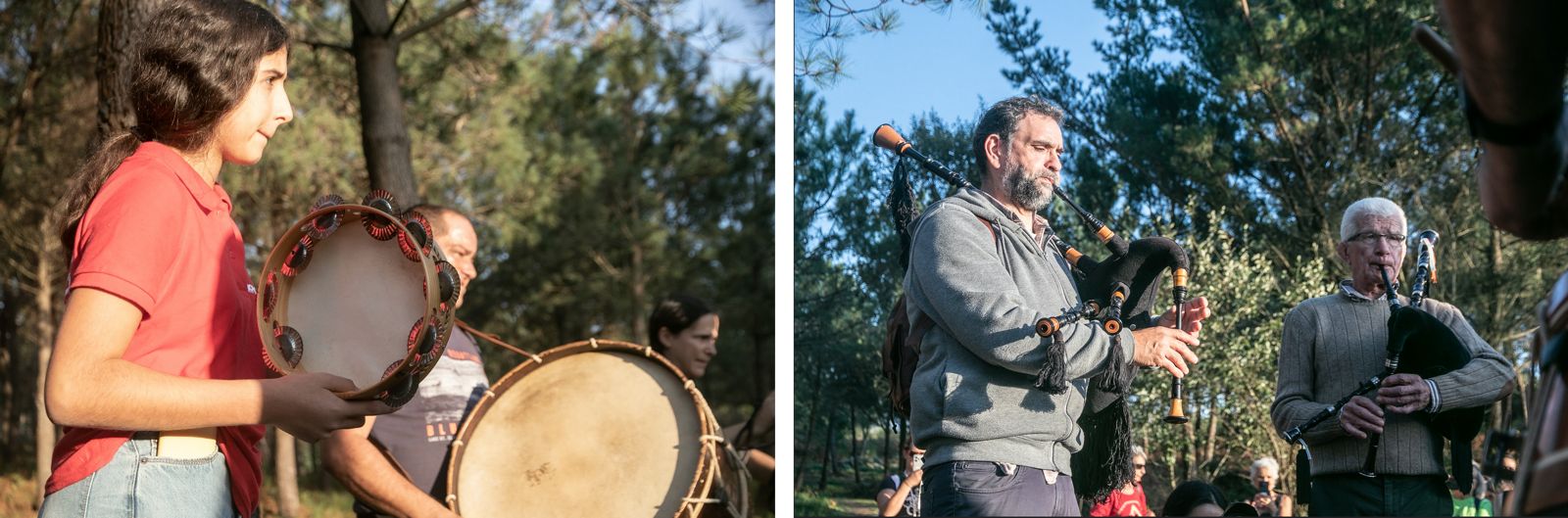
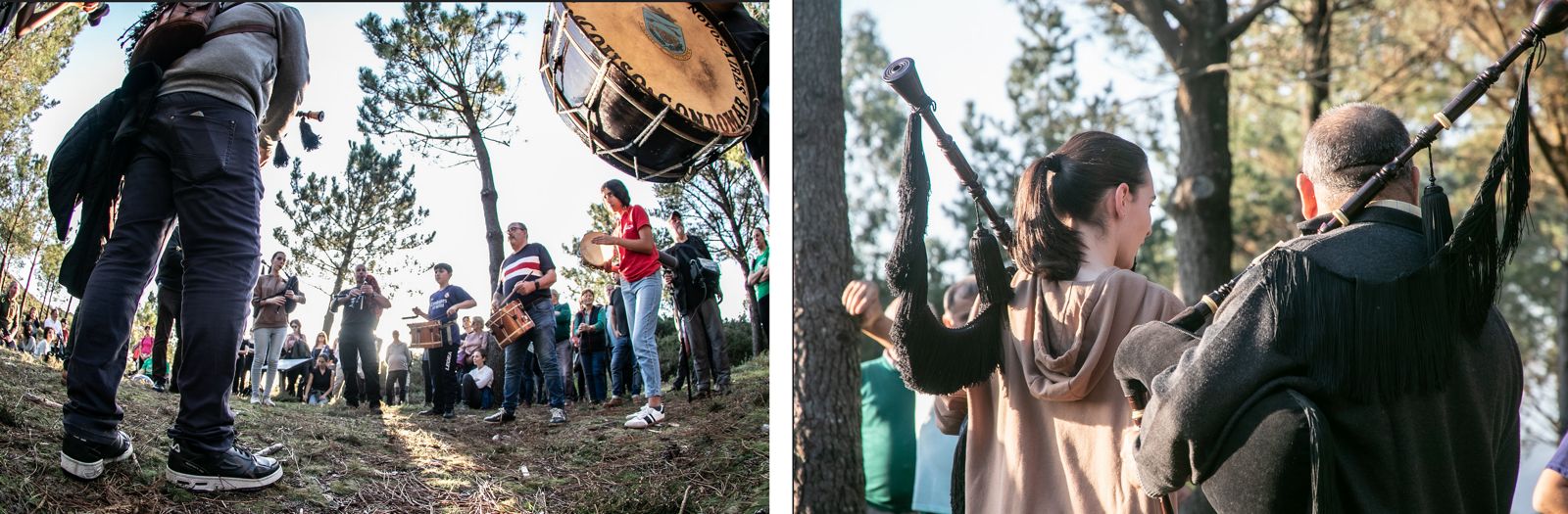
The artist Mercedes Peón composed a performative and sonorous space within the Festa-Ritual with the Pipe Band Novos Aires de Couso from the marmó at the foot of Monte do Facho. The bagpipe players Marcos Castro González, Jose Lago Vila, Fabio Durán Deus, Nicolas Abaldes Lorenzo, Jesus Abaldes Perez, José Antonio Hermida Pérez, Andrea Gomes Rodriguez, Nayara Fernández Benites and Javier Abalde blew the fol of the bagpipe as if it were a third lung, emulating their breathing through the mountain, as our ancestors did, when there was no electric light, to scare away the fear with their bagpipes. At the foot of the mountain they played the piece that M. Peón composed for them as an offering to the Couso Mountains.
9th ACTION: Firewood
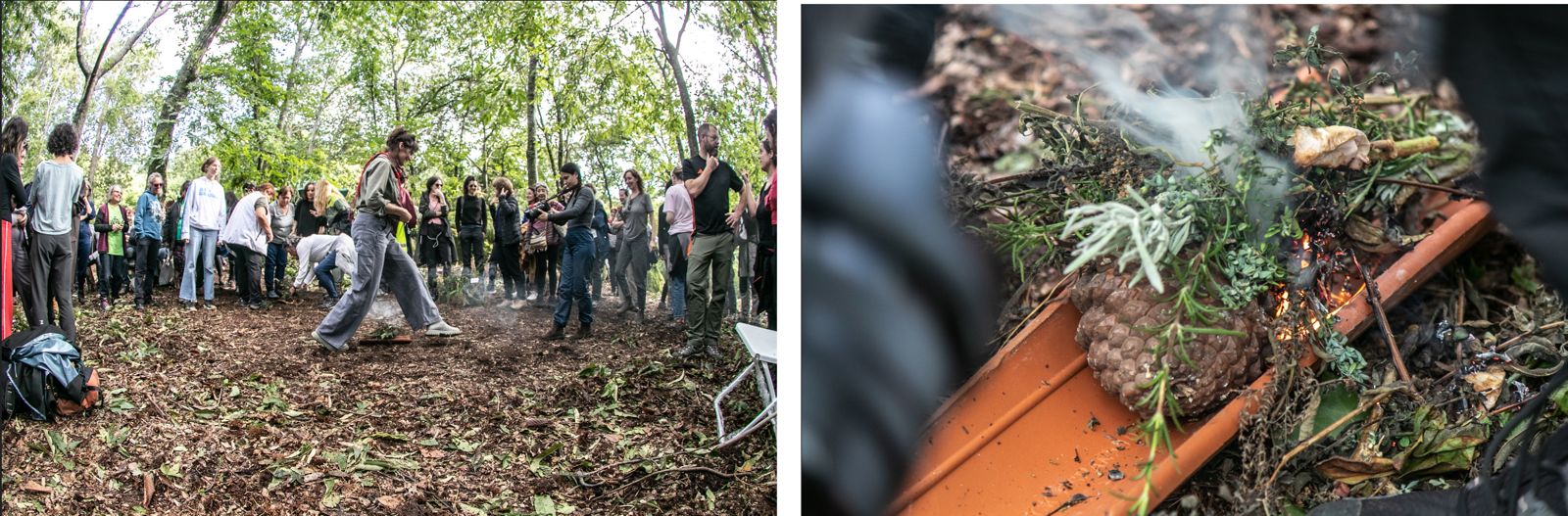
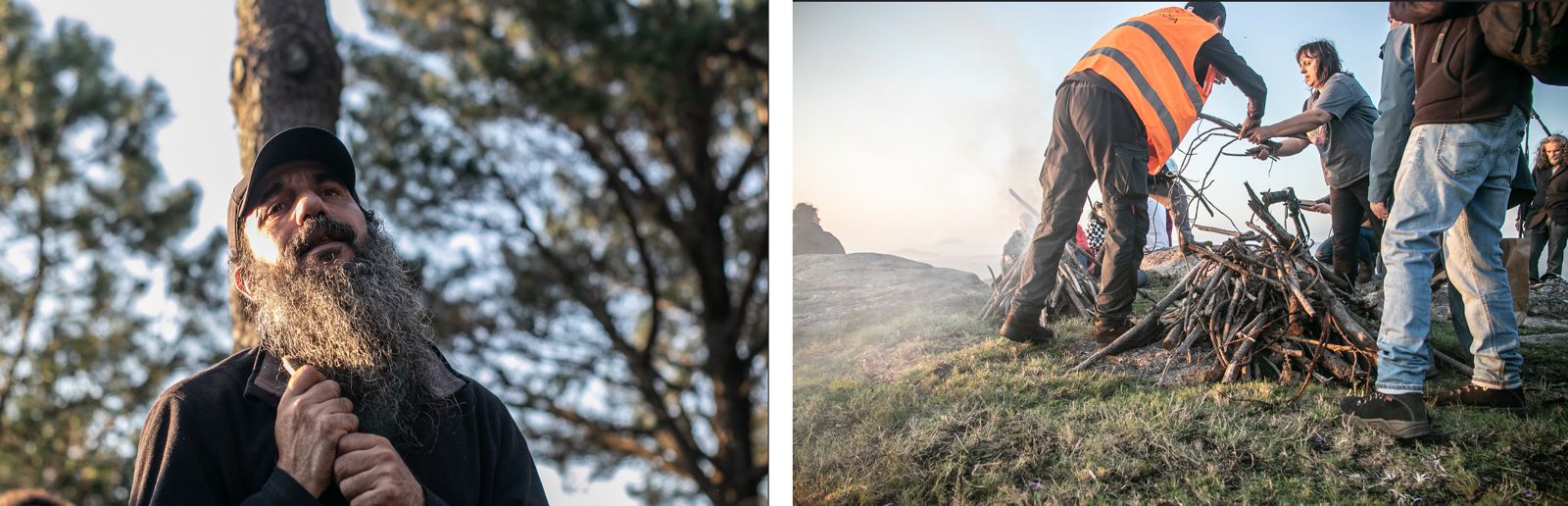
By the end of the day, as the afternoon was drawing to a close, Basilio Calzado from the San Salvador Mountain Community shared his knowledge and lessons on how to collect firewood to light the fire and what other uses the woody plants of the mountain have had, such as pineapples and toxo. After their instructions, the whole group collected a bundle of firewood to go up Monte do Facho and burn it in a collective, communal fire.
10TH ACTION. Lume
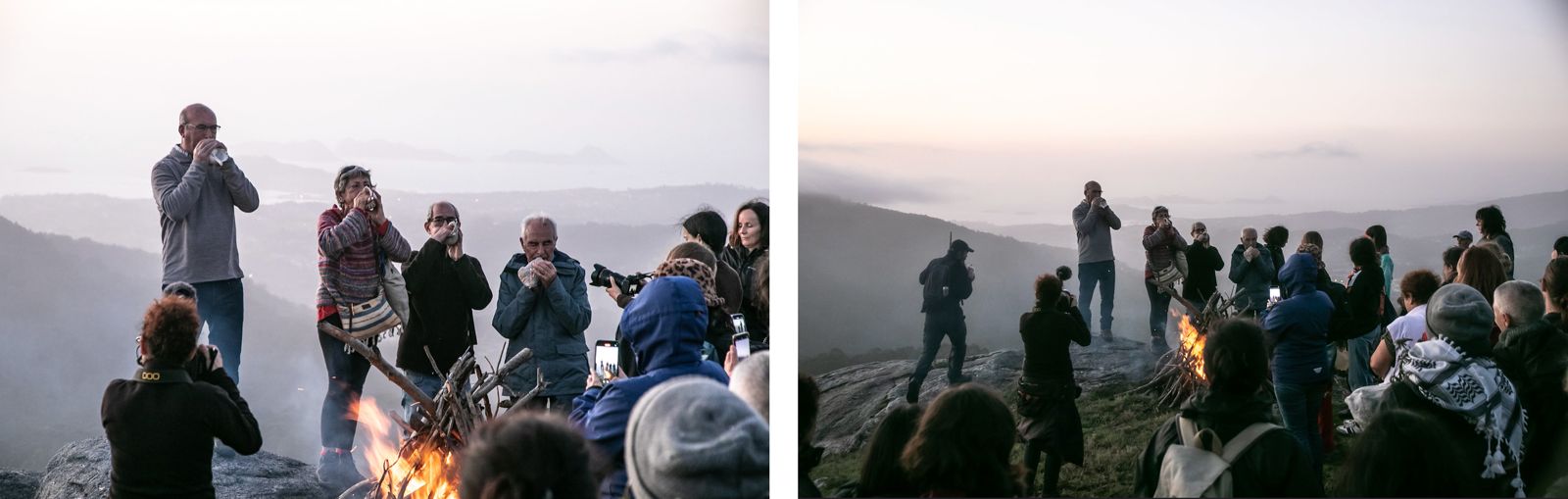
They ended up at the top of Monte do Facho, composing a common firework to illuminate, as they did their devotees to the neighbouring communities of the sea, as a lighthouse. A comunidade de montes de Couso iluminou o monte, deixáronse ver, estamos aquí, estamos vivos, estamos xuntos, seguimos coñecendo o noso monte, xerando novos vínculos con el e entre nós e hoxe vimos escoitalo.
11th ACTION: Plan de Protección do Monte
Iria Enriquez Blandón, one of the newest community members, reads a poetic adaptation that the artist Asunción Molinos Gordo wrote of the Plan de Autoprotección do Monte, also written by the artist herself, based on the work sessions carried out with community members, neighbours and people from other mountain communities. It is a legal document that aims to inspire other forest communities to protect this common good that is so valuable for life.
A rite that marks a beginning
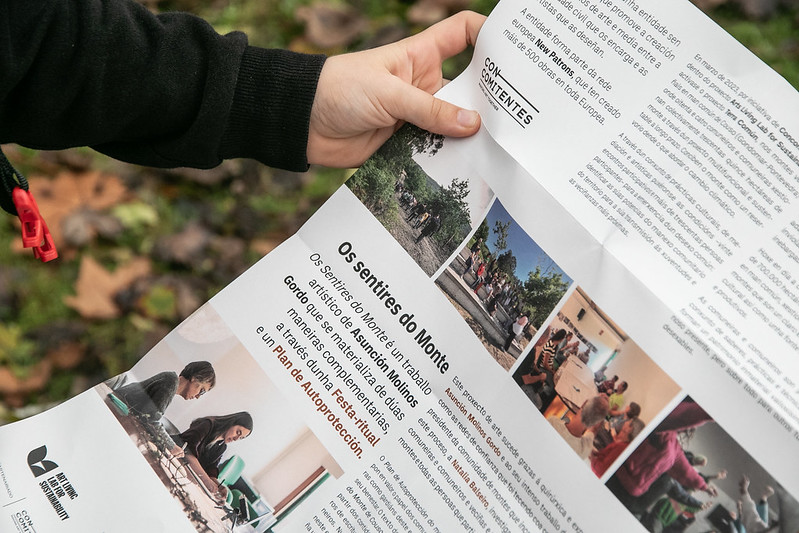
In addition to this ritual festival, which is intended to be an annual event, the artistic process also takes the form of a Self-Protection Plan for the Mountain that recognises the rights of these mountains and which was designed by the artist on the basis of the collective work sessions.
A document, inspired by other similar processes such as the Law approved in 2022 to grant legal personality to the Mar Menor in Murcia and the Tins de Outes River in Galicia, which seeks to safeguard the future of these territories managed by the local communities, and thus inspire other similar models.
The content of this Self-Protection Plan, the result of various meetings between the artist, the mediator and the working group, made up of members of the community, neighbours and members of other forest communities, will include topics such as care, protection, use, production and transmission of knowledge in the territory.
In addition, at the last working session of the Terra Común project, scheduled for December, the Community of Couso Mountains will receive the protocol through which they undertake to give continuity to this Festival-Ritual every year, keeping it alive, changing, adapting it to their needs and to the times, but living it together, in common.
Asunción Molinos Gordo,
A work about the world of farming
The researcher and visual artist, Asunción Molinos Gordo, developed an artistic work that revolves around rural cultures and international peasantry. She produced work connected with the transformation of agricultural work, the impact of biotechnology, international food trade, transhumant architecture and peasant protests, the CAP and the bureaucratisation of the territory, ancestral irrigation systems and peasant forms of building welfare. He won the Sharjah Biennial Prize in 2015 with his project WAM (World Agricultural Museum) and represented Spain at the XIII Havana Biennial 2019. His work has been exhibited in institutions such as Museo Carrillo Gil in Mexico, Vitoria & Albert Museum in London, The Townhouse Gallery in Cairo, Jameel Arts Centre in Dubai, Arnolfini Contemporary Arts in Bristol, Tranzit in Prague, Cappadox Festival in Uchisar-Turkey, MUSAC in León, CAB in Burgos, Matadero in Madrid, La Casa Encendida in Madrid, CA2M in Madrid, among others.
Identity and history of the community of Montes de Couso
A comunidade de Couso está integrada por 85 comuneiros e comuneiras e busca converter o monte forest n a resource of multifunctional value and a source of resources in order to achieve a greater environmental value and a more respectful environment with native tree species. They work to advance in their self-sufficiency. The forest is a territory where they grow raspberries, blueberries, blackcurrants, chestnuts and the «shiitake» variety of mushrooms. Montes de Couso was recognised as an example of good management, appearing in the UN ICTCA register and received the IRGADE award for the promotion of the Galician language.
European Project: Art Living Lab for Sustainability
Terra Común is part of the European project Art Living Lab for Sustainability, financed by the European Union's Creative Europe programme and coordinated by Concomitentes together with the European partners De Nieuwe Opdrachtgevers and A Société des Nouveaux Commanditaires; and the University of Santiago de Compostela.
The project's challenge is to address three mechanisms of community management: the mountain with Terra Común (Monte Veciñal de Couso, Galicia, Spain); the clay with Clay Commons (Boom, Flanders, Belgium); and the water with Water Commons (Parque Natural Rexional do Alto Xura, France), through participatory processes in these territories, which will result in three works of art that respond to the needs of these communities and territories.
CO-CREATORS OF THE RITUAL:
Natalia Balseiro, Xosé Antón Araúxo, Susana Sáiz Medinger, Iria Enríquez Blandón, Pilar Taladriz Cobas, Luis Alonso Bacigalupe, Paloma Amigo García, María López Gallego, Manuel Villot Pascual, Jesús Rodríguez Dieguez, María Lemos Cerqueira, Elena Gómez Dahlgren, Jose Manuel Lago, Basilio Calzado, María Dolores González Alonso, Mercedes Peón, Luis Enrique Correa Piñerro (Caruncho), Alba Herranz Pazos, Mar Herranz Pazos, Carmen Villanueva Rey, Paula Piñeiro González, Ruth Comesaña Granja, Montse Salgueiro Varela, Lucila Rial Prado, Sara González López, Patricia López Palmas, Xoaquín de Acosta Beiras, Pepe Reñones Rodríguez, Emilio Dios, Paco León, Suso Alonso Santos, Jose Alonso Santos, Jose Manuel Riobó Hermida, Marcos Castro González, Héctor Alfaro, Olivia Dawod Molinos, Adrián Alonso Docampo, Sheila Ribero Rodríguez, Francisco Javier Alonso, Jose Antonio Herbida Pérez, Fabio Duran Dios, Nicolas Abaldes, Jesés Abraldes Pérez, Juan Raúl Hernández Cuevas and Andrea Gómez Rodríguez.
All the photos are by Andreia Iglesias, whom we thank for her dedication and vision in bringing us these little visual stories.