

Extremadura project ‘Non Plus Ultra’, winner of the Arte Juventud por la Sostenibilidad (Youth Art for Sustainability) call for proposals
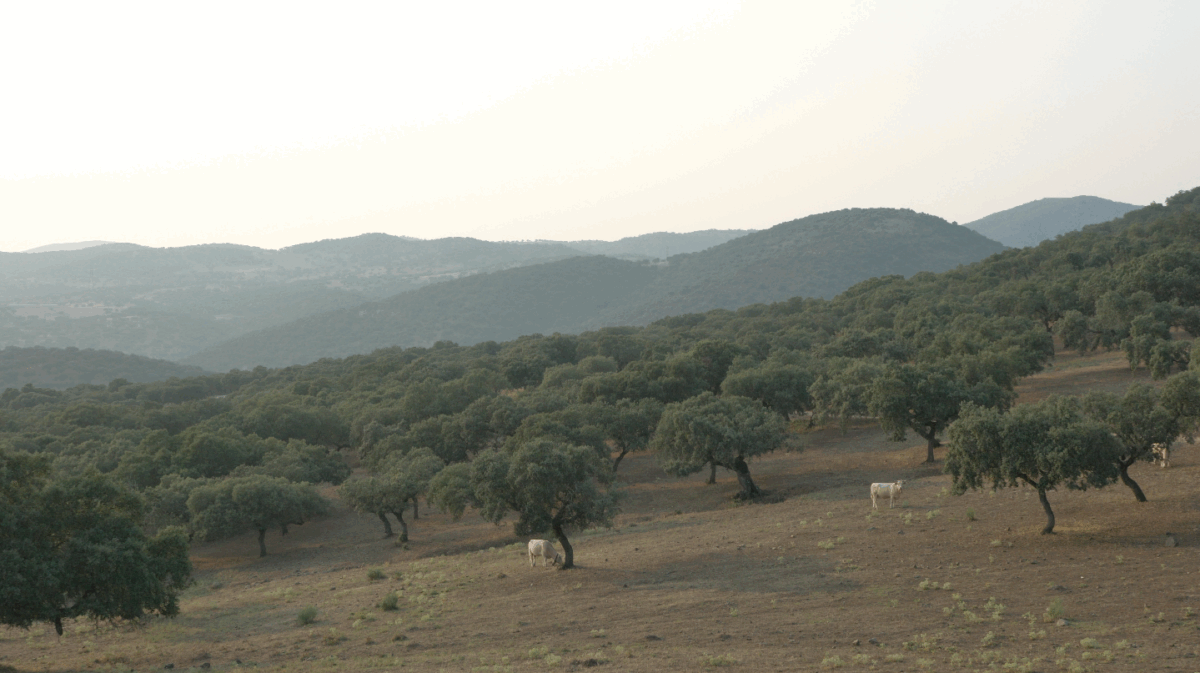
The project will address the issue of the ecological crisis from the imperial and colonial viewpoint that naturalises the destruction of ecosystems, led by the mediator José Iglesias García-Arenal and a group of six young people from the south of the province of Badajoz.
The Extremadura project ‘Non Plus Ultra’ is the winner of the ‘.‘Youth Art for Sustainability Call for Proposals’launched by Concomitentes last July.
The proposal will be driven by by the mediator Jose Iglesias García-Arenal (Madrid, 1991), -who from 2019 will direct the MAL Platform, dedicated to research and creation projects, exhibitions and other activities around the transformations of “diffuse urbanities”, as well as working as an artist and curator from Los Santos de Maimona (Badajoz) -, together with a group of six young people between 26 and 33 years of age living in the south of the province of Badajoz..
The second edition of the public call was aimed at citizen groups under the age of 35, who wanted to address an environmental challenge in their local context, through a participatory process. Non Plus Ultra‘ will thus address the the problem of the ecological crisis from the imperial and colonial viewpoint that naturalises the destruction of ecosystems. The project, which will work between the districts of Tierra de Barros and Zafra-Río Bodión (Los Santos de Maimona, Feria, Zafra, Valverde de Burguillos and Hornachos), proposes a ecofeminist perspective to oppose these forms of extractivist projects and to promote other ways of relating to non-urban spaces, “re-enchanting” with the land based on diversity, joy and seeking other mythologies and illusions to escape patriarchal and colonial impositions.
The mediation thus faces a multiple challenge: on the one hand, to create an artistic piece that helps to reverse local colonial mythologies; also to generate a process of “study” to understand the links between the normalisation of patriarchal and colonial structures and the threat to the region's water resources; and, finally, to strengthen a network of links in the south of Badajoz to reinforce eco-social demands.
The project has been selected after several hours of deliberation among 37 others received, by an jury composed of Carmen Haro, Christian Alonso, Maria Sanchez y Matías Rubio; together with Lucia Casani y Pepa Octavio of the Daniel and Nina Carasso Foundation; Maral Kekejian, The Spanish Presidency Coordination Office of the Council of the European Union; and the coordinator of Concomitentes, Fran Quiroga.
The final decision was not an easy one for the committee due to the quality, solidity and interest of the projects that reached the final phase.
In the coming weeks we will be sharing more details of the start of the eighth concomitance that consolidates the expansion and consolidation of Concomitentes in Spain, which began its journey in 2018 with the help of the Daniel and Nina Carasso Foundation as founding patron, and which today has active projects in Galicia, Madrid, Catalonia, the Canary Islands, Cantabria and Castilla y León.