


"A library can be anywhere".
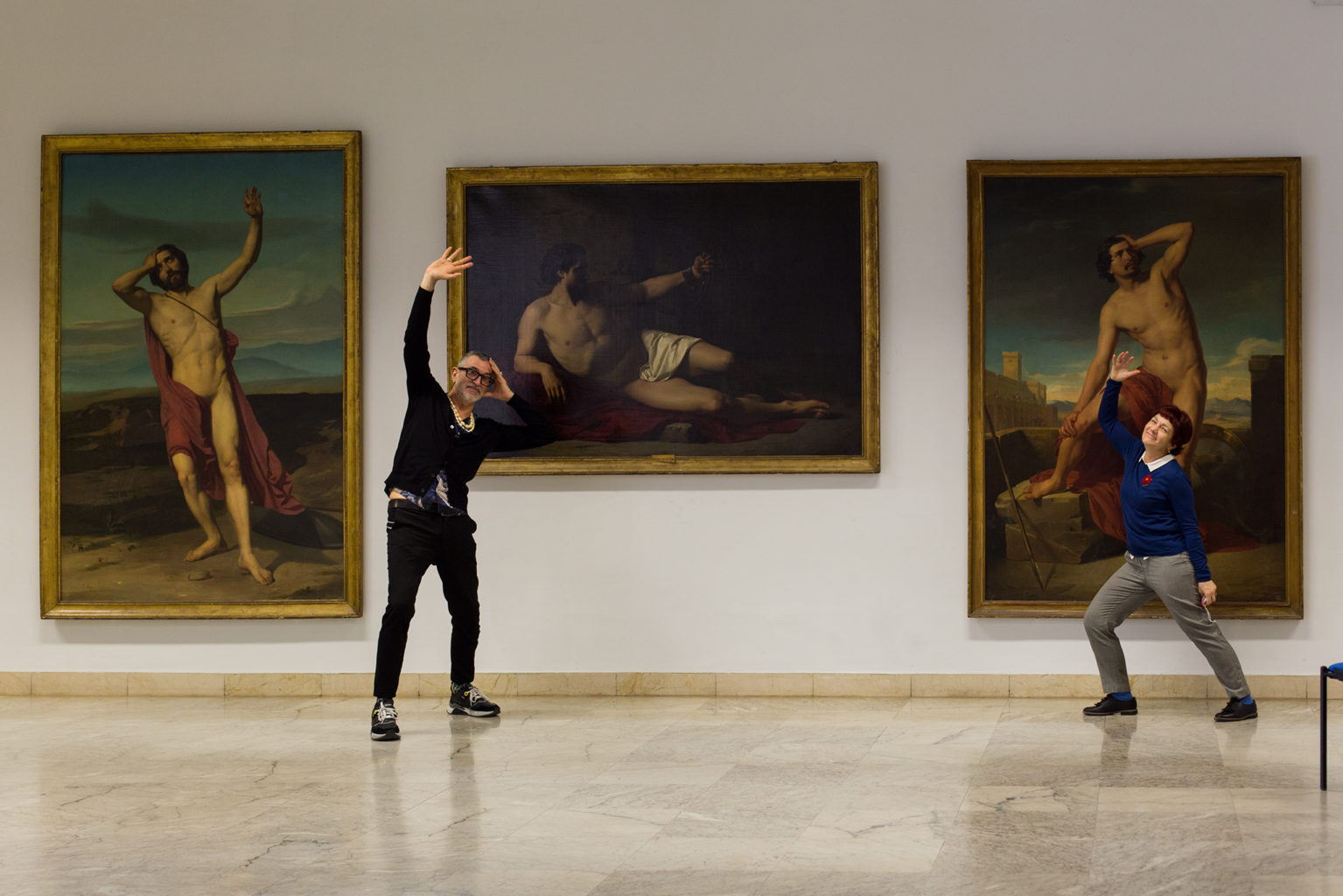
Interview with Javier Pérez-Iglesias and Amelia Valverde, patrons of the Library of the Faculty of Fine Arts of the Complutense University of Madrid.
While the spirit of the libraries beats in the pages of their books, the soul of the library of the Faculty of Fine Arts of the Complutense University is embodied by its director, Javier Pérez-Iglesias, and her deputy director, Amelia Valverde, the members of our Madrid concomitance. Through a journey that has now lasted almost four years, both of them, together with the mediator, Julia Morandeira, How has this journey been and where are you at now? Both tell us about it in this interview.
What is this library for you?
AMELIA VALVERDE: For me, this library is an essential part of the faculty, where we learn, we are open to everything and we try to excite everyone who enters, even if they don't always find what they came looking for.
JAVIER PÉREZ-IGLESIAS: For me, the library is a place where different people meet and contaminate each other, whether or not they belong to the Complutense institution. It is a place where people come not only to look for information, which would seem to be the proper thing for a library, but also a place where people come to do, to create and, above all, to offer us services and experiences that we can develop here. The library is a fissure within the institution.
How do you define your library project within this fissure?
A: I see it as a service within the university, a public service. I always put everything that is of interest to everyone who comes here first.
«We are a place that lets the outside in, and also allows the faculty to go to other places that are of interest to society and the community. I see the role of the library within the university as a place of resources and a place of «learning by doing» in every sense».»
How did you get the opportunity to be a co-conspirator?
J: The timing of our meeting with Concomitentes has to do with our relationship with the Carasso Foundation, who are the initiators of the landing of New Commaditaires in Spain. From there, both the Foundation and the library saw that we could fit into such a project. The next step was to connect with our mediator, Julia Morandeira, and from there, everything started to happen.
You have created a community around the library with which you collaborate. How do you activate this group?
J: One thing we saw very clearly from the beginning was that it had to be a collaborative process, we need to listen to and work with the community we serve. So we created a working group, the Ranganathan, named after an Indian librarian who defined the five laws of librarianship. The working group is made up of people from both the university community - students, researchers, professors, or representatives of the library committee - and people from outside the university, who are part of the library world or the art world who relate to us.
«It's a great opportunity for the library, because it's a way of projecting it, of collaborating with a lot of people, of opening up, which we already do on a regular basis, but this way we do it even more strongly. In short, it's one more way of giving the library meaning».»
How do you assess this Ranganathan process and what are the main conclusions and ideas you have drawn from this experience?
J: It has been opening the door to the opportunity to have a collaborative work in the library, to make this «inside-outside» a reality and to be able to project ourselves towards society and towards our own inhabitants. Working with the Ranganathan group has meant proving that we can carry out participatory processes and then count on the invaluable and vigorous help of Sagrado Nova, a service designer, who has accompanied Ranganathan's life and who has allowed us to go further, not only to dynamise the meetings and work sessions, but to value the power of co-creation with people who are not from the Ranganathan group, but who belong to our community. This joint work is something that will last beyond Concomitentes.
From these meetings you were able to draw conclusions that led to a commission that led to the artistic production phase. How do you define this commission?
J: We want to make it clear that a participatory, collaborative library, based on doing, can be anywhere and wants to be anywhere. This commission has a fundamental line and that is that the library wants to go beyond this «inside-outside» and be the one that is in other places in the faculty, in other places in the university, and in other places in the city of Madrid itself. That is to say, starting from what we thought it was going to be at the beginning, an intervention inside the library itself, we have come to the conclusion that the artist's intervention can take place anywhere. I think that the main thing about the line that the artist is going to receive is that whatever happens doesn't have to, in fact, won't happen here. We are a library that opens up, a library of dispersion in the good sense of the word.