


Today's struggles shape tomorrow's territory
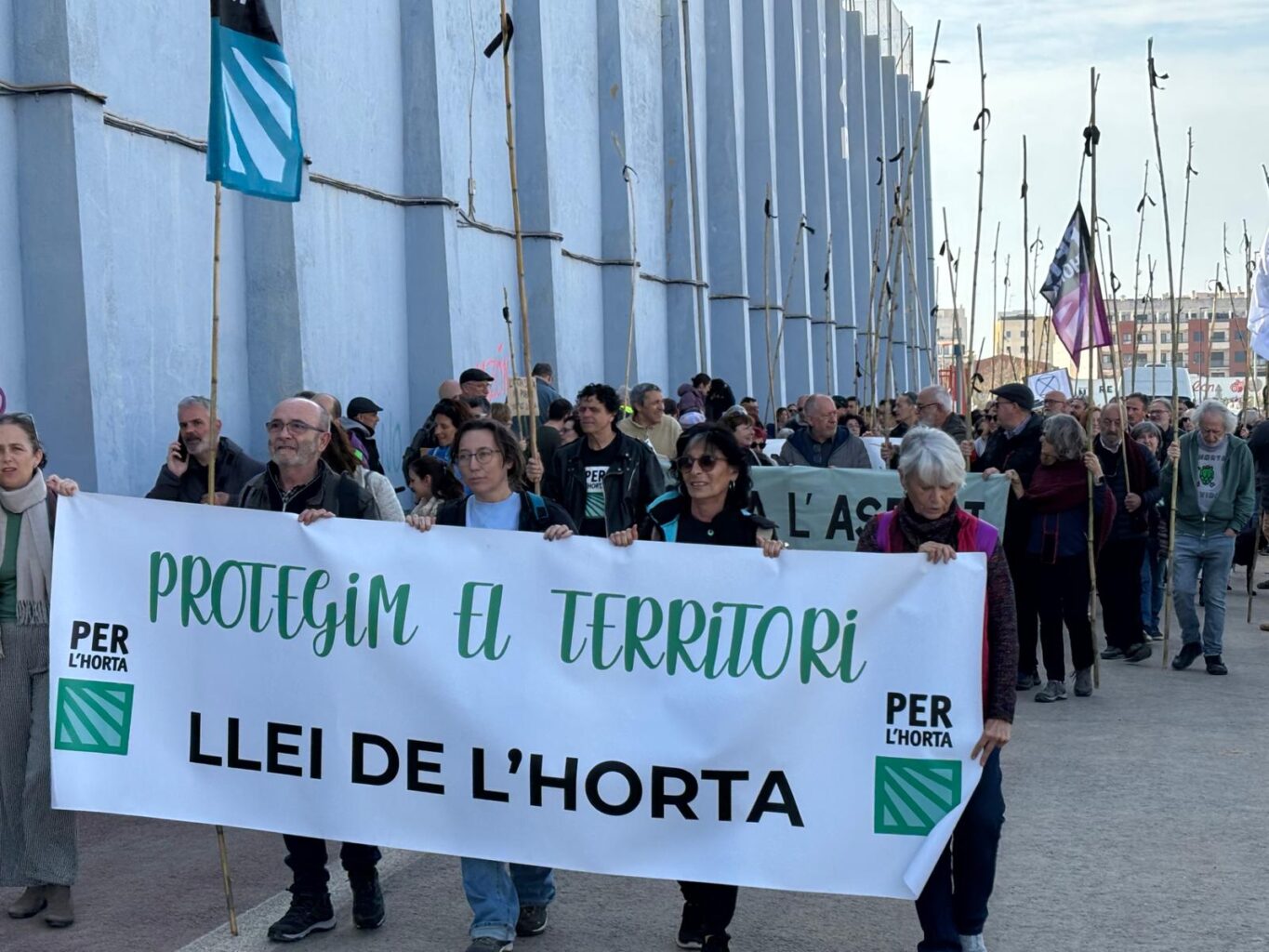 Courtesy of Per l'Horta
A chat with the activists from Per l’Horta
Today's struggles shape tomorrow's territory
A conversation with Per l’Horta activists
We published this interview with Lorena Mulet Delgado and Pilar Masó, two clients of the project. Metabolic connections to better understand the ecosystem of L’Horta de València and the threats that endanger its integrity.
Chiara Sgaramella: Good morning, Lorena and Pilar. To begin, could you explain your relationship with the Per l’Horta association?
Lorena Mulet DelgadoI am Lorena Mulet Delgado and I have been a member of Per l’Horta since 2014. I discovered the association when I was studying at the Faculty of Architecture at the Universitat Politècnica de València. It was a very turbulent time politically, as Rita Barberá's government wanted to reclassify 400 hectares of *huerta* around the city for urban development. At that time, I started to get involved with Per l’Horta, especially in the campaign called Horta i Futur, which managed to halt this reclassification plan. From 2018, I started working at the association as a coordinator, and I continue to do so to this day.
Pilar Masó: My name is Pilar Masó. I have been involved in social movements for over 30 years, particularly against urban speculation. I was the coordinator for Salvem el Botànic and Recuperem Ciutat, and I have also participated in the movement to defend l’Horta de la Punta and in the Horta Viva Sense Autovia coordination group, among other initiatives. And, of course, I am also a member of Por l’Horta, helping in any way I can.
C. S.What does L'Horta represent for the city of Valencia? And why do you consider it important to preserve this ecocultural system?
L. M. D.I would say that, in reality, you cannot understand Valencia without its market garden. There has always been a symbiotic relationship between the Horta and the city: the former provided food and acted as Valencia's larder, whilst, for example, the city's organic waste was reused in the fields to improve soil fertility. On the one hand, we highlight this agricultural value as l'Horta is a food production space, but it also has a heritage and historical value. L'Horta has its own culture and is part of the identity of Valencia. Its importance has been recognised institutionally: for example, the Tribunal de las Aguas was declared intangible heritage of humanity in 2009. The Food and Agriculture Organization of the United Nations (FAO) declared the historic irrigation system of l'Horta de València a Globally Important Agricultural Heritage System (SIPAM).
In recent years, furthermore, emphasis is also being placed on its ambient valueL'Horta connects with the Turia Natural Park and the Albufera Natural Park. Therefore, it is a key piece of the territory's green infrastructure, providing numerous benefits to the city. Consider, for example, torrential rain: thanks to the irrigation channels of Muslim heritage that function by gravity, rainwater can be channelled to the sea without the need to consume energy. It is a very efficient system that has been in use for centuries. Furthermore, l'Horta helps to regulate temperature, facilitates carbon absorption, and provides various environmental benefits that help to increase the city's resilience to the climate crisis.
PM.Yes, l'Horta is a productive, alluvial, and flood-prone soil, and historically it has always played an important role during floods. At the same time, it is important that people know that l'Horta de València was traditionally considered a garden; this is why it has great importance from a landscape perspective thanks to its colours, flavours, smells... It is also a very important larder of quality products that we have at our fingertips. Without a doubt, the fundamental value that we cannot lose is the food sovereignty. Furthermore, L'Horta also acts as the city's green lung. Why should we give all that up? L'Horta encompasses a language, a culture, and traditions that constitute a collective richness that must be protected and defended.
C. S..Your reflections are very interesting because often, from the city, we live with our backs to the countryside, although, in the case of Valencia, l’Horta is very close to us. I also find the aesthetic dimension you mentioned very relevant, as an element capable of generating an affective bond with the territory and of driving its defence. Per l’Horta promoted a popular initiative law for the protection of the Valencian orchard. How would you describe the process of citizen struggle that led to its approval in 2018?
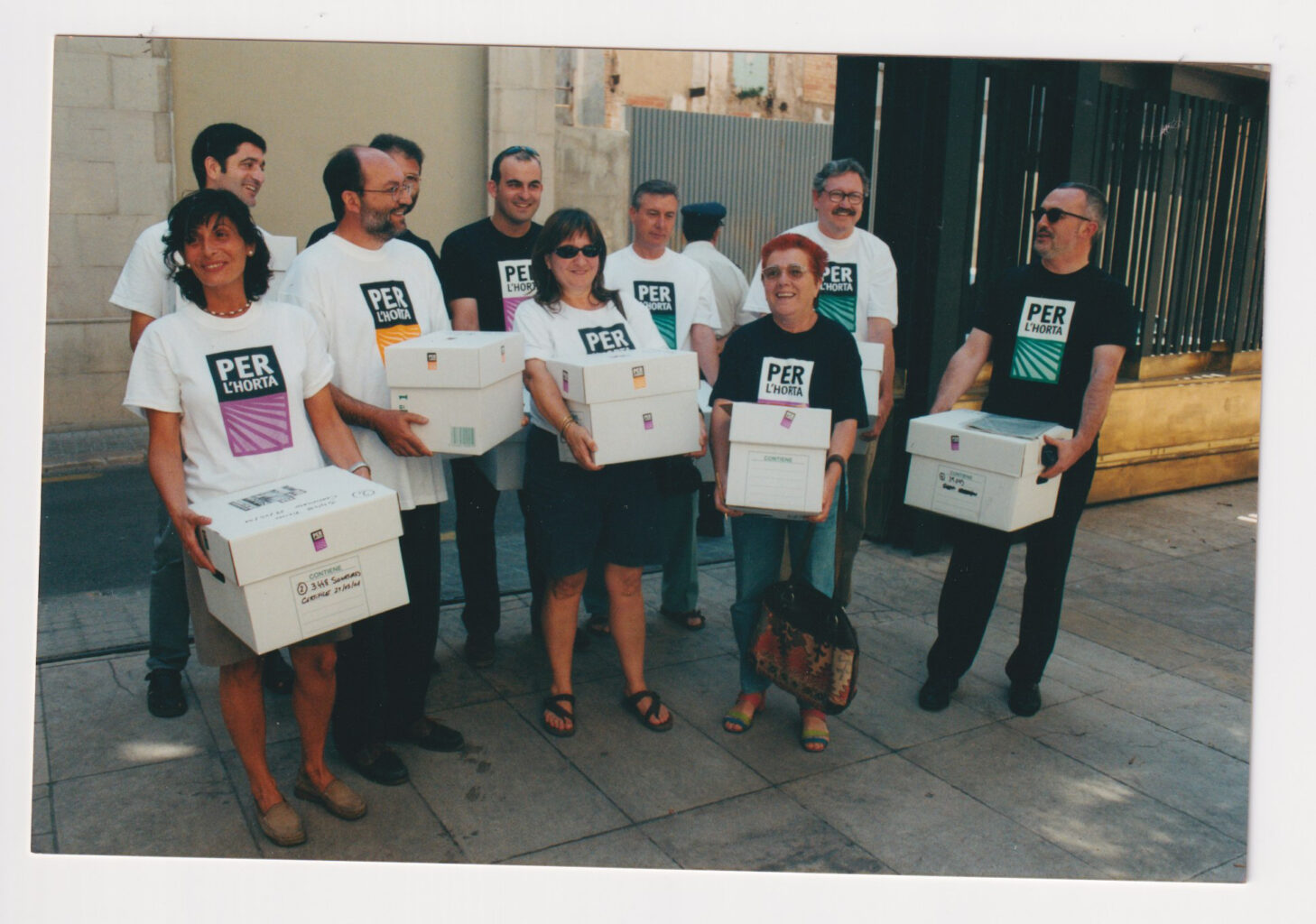
PM.: The people who ended up founding the Per l’Horta Association launched in 2001 a Popular Legislative Initiative to protect this territory. This initiative involved a wide process of collection of over 118,000 signatures in all the towns in the metropolitan area. The proposal arose in response to the aggressions suffered by the territory and the urgency to defend it. In fact, from the sixties of the last century until the two thousands more than 60%% of the cultivated garden surface was lost. The public's response was very significant, especially if we consider that the internet was still in its very early stages at the time and signatures were collected mainly on the street or through like-minded groups.
After the Valencian Parliament rejected the ILP, we continued to insist until, with the Botànic government, the drafting of the Llei de l’Horta began, in which some members of our association also participated as drafters. The Llei de l’Horta de València was finally approved in 2018. It has been a very long and difficult process, but we succeeded to drive and consolidate a legal framework which obliges the administrations to protect this space and to promote the revitalisation of agricultural activity.
C.S.: This legislative initiative was pioneer and one historic achievement for organised citizenry. Do you think the final text of the law included the approaches and demands of the activist groups that drove it?
L.M.D.The law is very positive because it protects the Horta and agricultural activity, and it is a very important achievement. Nevertheless, there are aspects that could be improved. For example, there are high-value agricultural areas that have not been included within the protection area, as they have been reserved for the growth of villages without any technical criteria. This reflects that we still maintain a mentality oriented towards urban expansion.
C.S.Following the DANA in 2024, the Valencian regional government approved Decree-Law 4/2025, a reform of the Law of l’Horta. Why do you believe this decree could endanger the protection of agricultural land?
L.M.D.This amendment to the law is very worrying because, de facto, leaves 3,800 hectares of farmland unprotected, since it allows for residential and speculative uses of land. It also abolishes the Council of l’Horta, a democratic body for the management of agricultural land. The Law provided for the creation of a “Product of l’Horta” brand to support local harvests, but this initiative has been paralysed by the repeal, which harms local farmers.
Furthermore, the way the reform has been carried out has been highly questionable, because after the DANA, the law was modified through urgent procedures without any social dialogue, claiming that the Llei de l'Horta had prevented the carrying out of hydraulic works to prevent floods. At such a tragic moment, when l’Horta had also shown that it could contain the rising waters, this argument was used, which was completely False, to justify a reform that, in reality, only aims to continue urbanising the territory.
C.S.: And this is despite many experts pointing out that uncontrolled construction has been one of the causes that have worsened the devastating consequences of the DANA...
Afternoon.In fact, it's important to stress that The Orchard Law does not mention hydraulic infrastructure at any point. This misleading argument has been used to confuse the public. To defend this popular legislative initiative, we pushed for politicians to mobilise to file a constitutional challenge with the aim of annulling the reform decree, and we are currently awaiting the judgment.
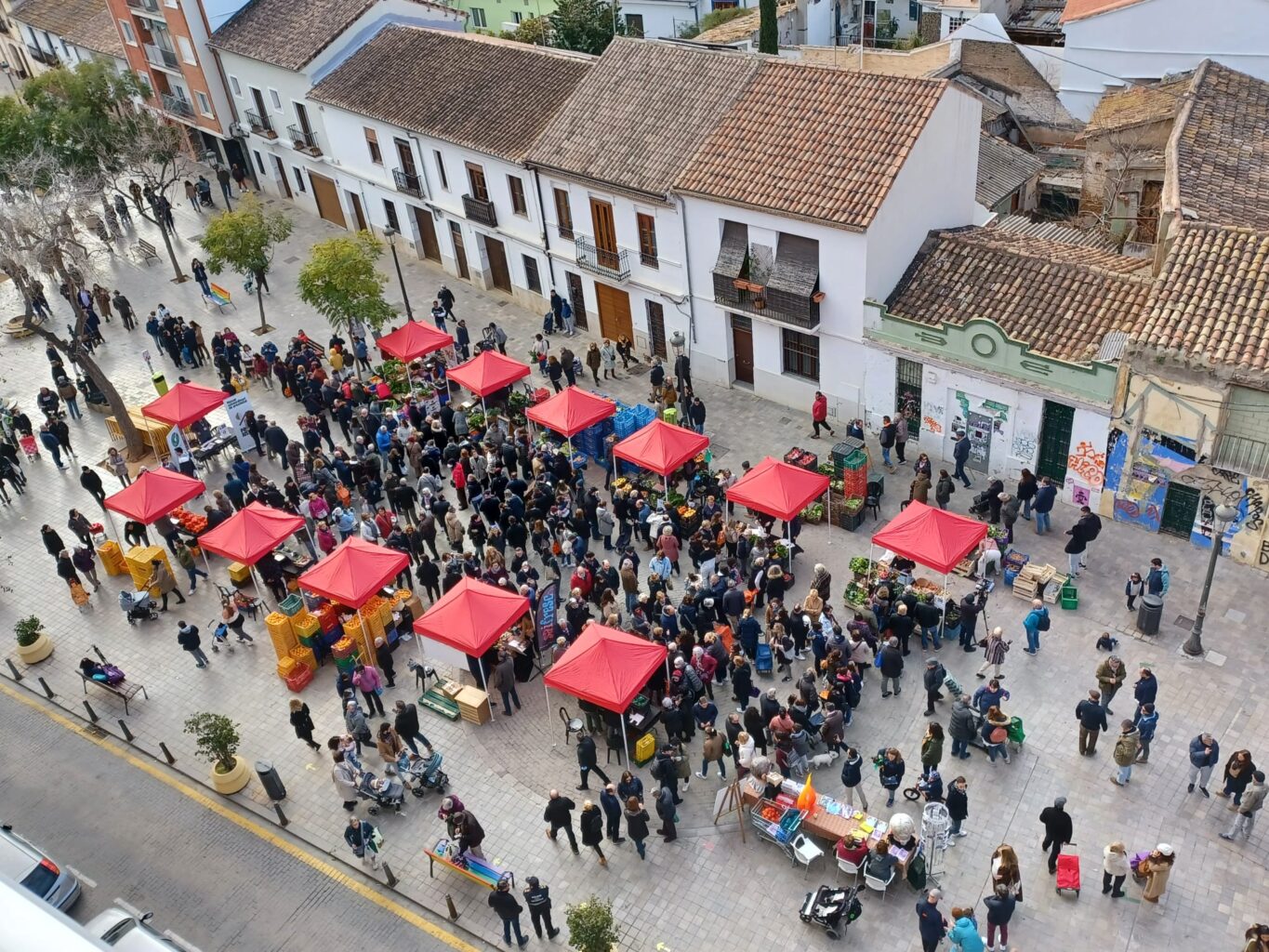
In addition to mobilisation and social and legal denunciation, we also advocate for Local sourcing, direct sales, and fair prices for producers. In fact, it's not just asphalt and speculation that represent a great danger to l’Horta. There is another threat that is just as serious, although more silent: the lack of generational handover. L’Horta, without farmers, could disappear. Currently, the average age of people working in agriculture is very high, exceeding 60 years. Young people do not want (or cannot) dedicate themselves to agriculture because, nowadays, it is very difficult to make a dignified living from this activity. Training must be promoted and work experience programmes in agricultural companies encouraged for young people who wish to join the agricultural sector. Furthermore, we are promoting the Orchard markets and other direct marketing networks between farmers and citizens, as an alternative to large supermarkets that suffocate small producers. All these struggles are essential because what is at stake is the future of our territory, and not just that of those who live off the land.
C. S.What a powerful image to end this dialogue: today's struggles help to shape the future of the territory through democratic participation. Lorena, Pilar, it has been very enriching to talk with you and learn about the vital importance of l’Horta de València. Thank you very much for your time and, above all, for the tireless work you do at Per l’Horta.




 Concomitentes