

"We want the mobile library to be transformative, not just entertainment".
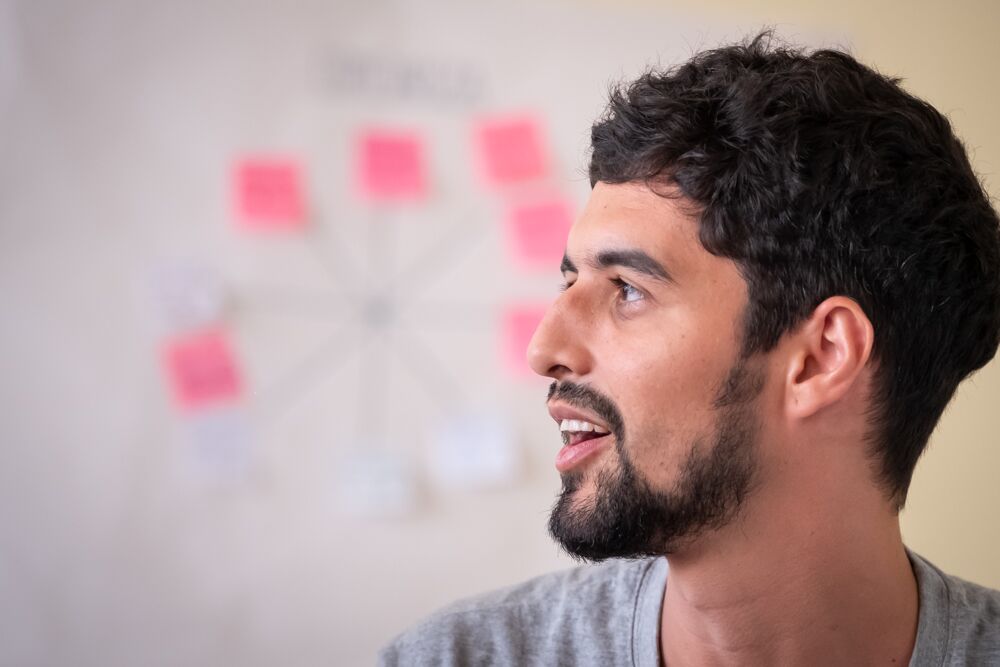
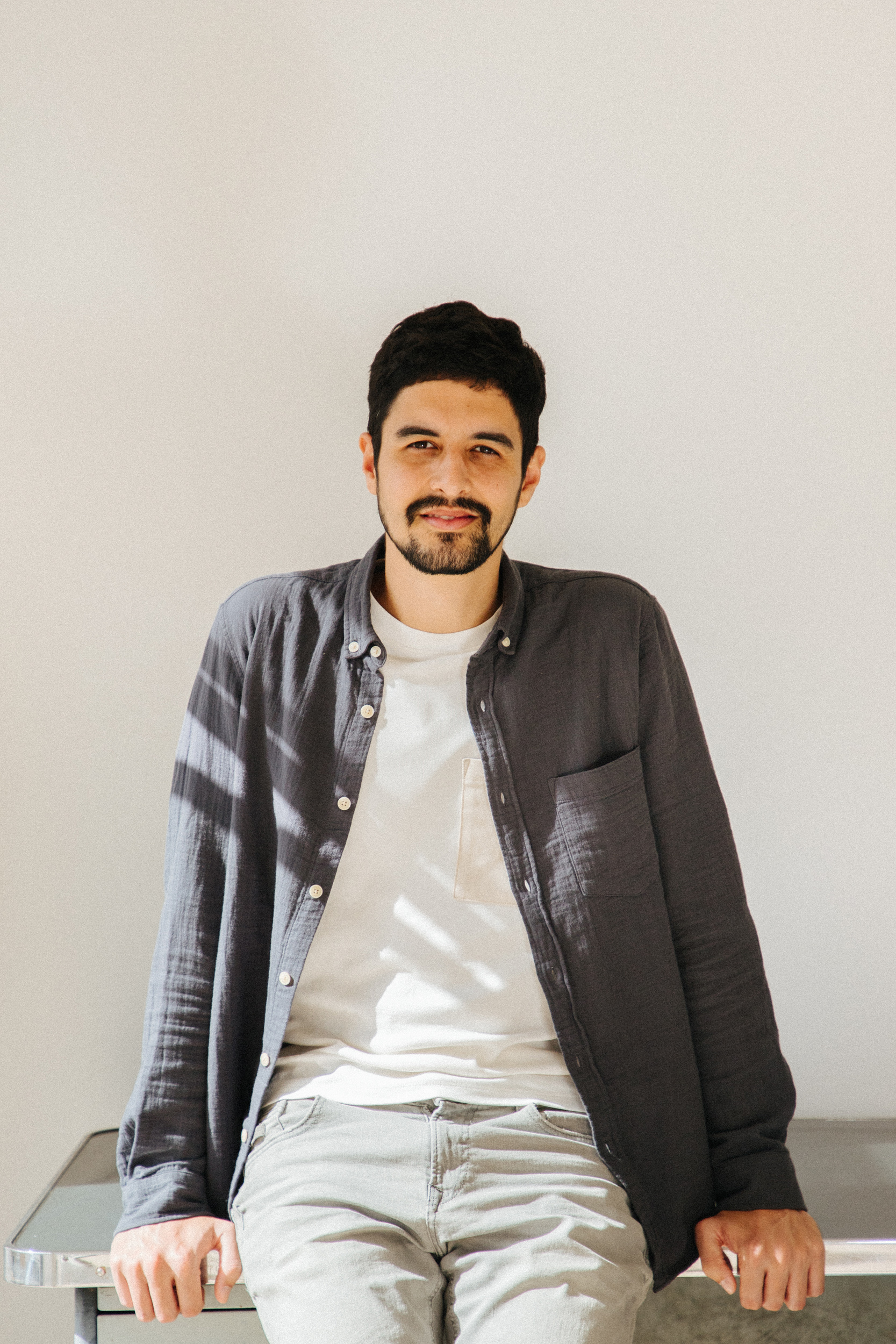
The architect, Artemi Hernández, from the Office of Civic Innovation (OFIC), will be in charge of the construction of the third building site of the concomitant Paediatric ICU.
The magical process of concomitance transforms relationships and results on different scales, as well as the very conception of what contemporary art is. That is why the challenge facing the architect from the Canary Islands, Artemi Hernández of the Office for Civic Innovation (OFIC), How to turn the construction of a mobile library into a participatory, horizontal and open process for the intangible and much-needed transformation of a paediatric ICU? The keys to this journey, which has just begun, are explained in this conversation with the five commissioners.
How did you start your professional career and how would you define your practice?
I studied architecture at the University of Las Palmas de Gran Canaria and, when I finished, I set up a studio with my brother. We started working in our studio in 2014 in Fuerteventura and, after 3 or 4 years, we decided to create a cooperative between 6 similar profiles and combine our careers, creating a common infrastructure, a space where we also take care of each other.
You are more than a group of architects...
Yes, we do things that have to do with traditional architecture, but a large part of our practice has to do with issues of community project design, where the community plays an important role and with a very important social and collaborative component.
What was your first contact with Concomitentes like?
I have many people in common with Felipe, the mediator of the project. Moreover, we organised one of the concomitance activities in our workspace. At that time, they were already looking for an artist who could develop the mobile library, so, shortly after the event, Felipe said to me: “I've been thinking that you fit perfectly in this project, because you have the more technical part of architecture and design, and the more social part”.
How do you approach Concomitentes from your practice, perhaps less connected to contemporary art?
From the beginning we saw that we were a perfect fit, so we took on the project with great enthusiasm because it is related to community health, one of the main lines of our work. It is an opportunity to experiment and get closer to healthcare, through the team of comitentes, and a challenge to work from the limitation of being in an ICU. We are thinking about how to create an element with which to do pedagogical work, both for the patients and their families and for the nursing team itself and for the medical professionals. We are thinking of something that is really transformative, not just for entertainment.
How to ground such abstract terms as ‘emotional care’ or ‘social transformation’ in something as concrete as a mobile library?
We are still in a very abstract and conceptual phase, our way of working is based on a participative dynamic, on reaching certain agreements about what we want to achieve or transmit with this object. We haven't yet specified much, we are all learning a lot in the process. This mobile library will perhaps transform the ICU, beyond what we imagine.
How is this process of working together with the principals going?
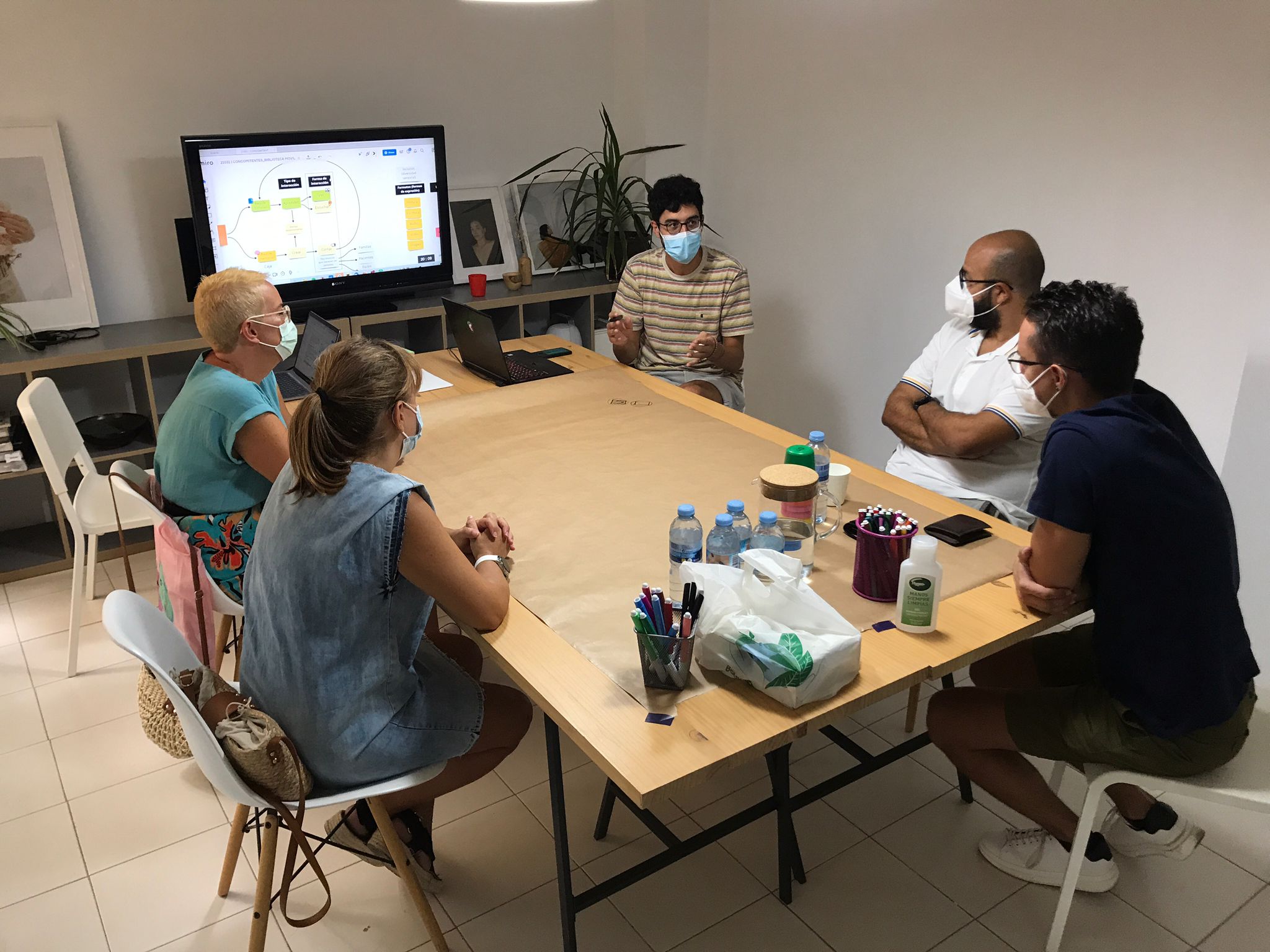
Getting to know them has been wonderful, but the first time we interacted was in yesterday's session. Besides, they have a lot of complicity between them, which makes it easier to mature ideas and reach consensus. Getting out of the technical scenario and exchanging in a more horizontal way, based on our skills and experiences, is turning out to be a very natural and positive experience.
It is also about breaking preconceived ideas and schemes.
These processes try to translate the direct solutions they express into the real needs they have and, from there, build the solution together.
What are the next steps you will take in this creation process?
We are still settling the agreements, listening and asking them to understand the functioning and relationships - social and human context - within the ICU. We are, therefore, at a point of translating what everyone has in their head. Where do we want to influence and impact? If the element fulfils everything we have agreed, everyone will end up agreeing with the outcome, which is why this phase is so important.
This phase is crucial, I expect it will take more time.
Yes, the design of the object and the production can take shorter times, because the road will already be paved. The part that worries me most is this initial part, that of understanding, so that it can really be transformative for them.
Your work will be more connected to the useful than a piece of art, do you think it will be easier to evaluate?
There are two other lines in the project, such as storytelling and podcasting, which are other forms of storytelling in relation to what happens in an ICU. In this sense, the library would not only be a boot of stories, but of memory, where the inhabitants themselves continuously or seasons that pass through there tell those stories to create that black box of the ICU. Stories that are an apprenticeship for others who pass through that experience, giving way to other forms of expression such as a painting or a video. We need to think about how this library accommodates all kinds of formats and can generate an impact on such different scales.
Interesting question...
Yes, it's about seeing not only how you create a piece, but experiencing how you are part of it.
You are looking for a different kind of impact as well.
Yes, we want to see the impact we have on people, beyond the material. If I am generating a change in day-to-day life, this impact will be greater, even if it is not perceived because it is invisible. Something that is very present in this type of process, because the social value is lost along the way. However, this is something we are taking into account, but it is not incompatible with the object itself.