

We don't need social peace, we need social energy
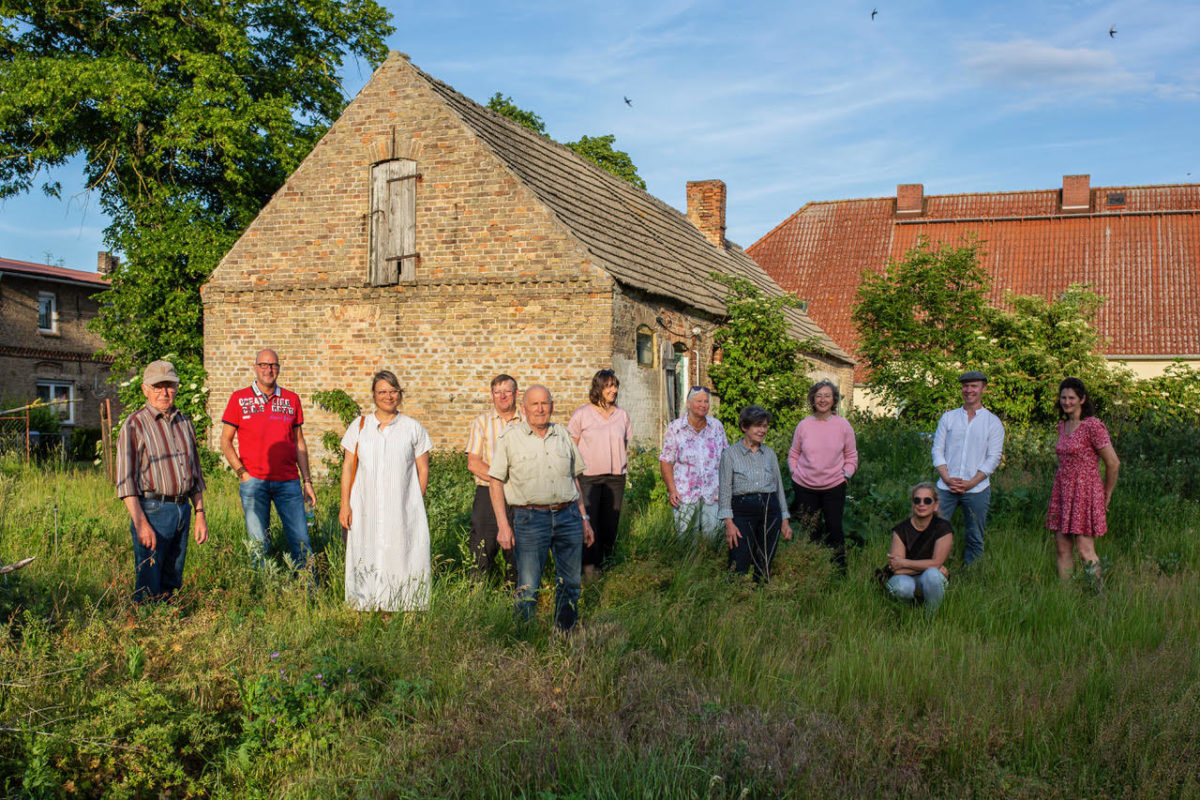
A conversation between Anastassia Makridou-Bretonneau, Alexander Koch and Sören Meschede.
Sören Meschede: There is a sense that the public sphere and public space are undergoing profound change. The pandemic and the public response to the health emergency have reinforced many trends that had somehow gone unnoticed until now: the fragility of the public sphere and public space, the increasing digitalisation of our professional and social life, or the opportunities and dangers of teleworking. Alexander, you are the director of the German organisation Neue Auftraggeber, Anastassia you are one of the most experienced mediators of the Nouveaux Commanditaires in France. Our three organisations are united by a methodology, and the purpose of generating art pieces that are commissioned by citizens. I have invited you to participate in this conversation because it seems to me that we are at a crucial moment for our work, since in our work we depend to a large extent on the existence of a public sphere. How do you see the short-term future of our practice?
Alexander Koch: Everything that reaches me from the world of politics seems to indicate that in the coming years the costs of the current crisis will be obvious and high, and that the arts will suffer greatly. I have the impression that two things will change: on the one hand, the pressure to legitimise and defend our projects will increase. On the other hand, I think that smaller, more fluid structures will have an advantage over larger institutions, because they can adapt better to different situations.
Anastassia Makridou-Bretonneau: As citizens, but also as consumers (it seems to me that, unfortunately, the figure of the consumer today has more political weight than that of the citizen), the current situation invites us to maintain sobriety. And this sobriety is conditioned by the enormous debt that the pandemic will leave us with, but also by the even more systemic crisis into which we have already entered: the ecological crisis. I think it is a good thing that the pandemic has somewhat accelerated awareness of the current situation. We have lived through years of real madness and indeed we have to assess the situation at all levels. It is a good time to rethink our cultural institutions, from an economic and ecological point of view. If we take the example of the great museums of modern and contemporary art, we can observe that in recent decades they have started to compete with each other to attract the largest number of visitors. In order to achieve this goal, it has been necessary to organise more and more expensive exhibitions, and these museums have become big companies that attract tourists, but not city dwellers. For example, those of us who live in Paris hardly ever visit the Louvre, because we have neither the desire nor the time to queue for hours to get into the museum. If we go back to the origins of such institutions and ask ourselves why we invented them, we find that initially there was an educational interest. Today we have turned them into great factories of cultural consumption. If the pandemic helps us to reflect on all these things, it will help us.
AK: Anastassia, you have said something very important. I think the covid crisis and ecological awareness have come together. Now that we realise that we can't move around as we used to, we are suddenly beginning to accept that, in the future, we really shouldn't travel so much. The consequence of this change in attitude - and this is a crucial idea - is a greater acceptance of the local and regional, both among artists and audiences. In our own projects, I have noticed that even international artists are beginning to be attracted by the idea of working in a village an hour away from the city. To some extent this mental shift will prevail and change our behaviour and the general image of the arts in the future.
SM: Do I understand, then, that you both think that the ecological and social crisis will favour models of cultural production such as Nouveaux Commanditaires? What makes you so optimistic? I get the feeling that a large part of our society is deeply interested in things going back to the way they used to be, and that politics should act accordingly.
AM: Well, I can only talk about what is happening in France, a country that has always acted in a very centralised and paternalistic way. But it is becoming more and more obvious that the Ministry of Culture has no political vision, no objectives. I think it will be a long time before any substantial measures are formulated in this direction. But, at the same time, many changes are taking place at municipal and regional level. Of course, there are difficult years ahead, as Alexander said, but I think it is going to be a very interesting time. I have the feeling that there is a will for change. It hasn't happened yet and it doesn't have the support of a majority, but there is a will to do things differently, also in the arts sector. Artists do not want to follow the beaten track, join the industry or conquer the art market. Rather, they are beginning to organise themselves in collectives and cooperatives, in search of other economic models that are not based on subsidies or commercial success, but that allow them to generate relationships of support and proximity. It's really incredible to witness the birth of all this... It's not a revolution, no one has taken it upon themselves to burn churches or raise the guillotine, but one can see that something has changed in the mentality, especially among the younger group of artists.
AK: I fully confirm and endorse what Anastassia has just said. I too have noticed that there are many forces that are trying to restore what they call “normality”. On the other hand, many things are perhaps even more progressive than before. The notion of participation has been a key word in politics for years now, and we finally seem to have reached a point where a stronger awareness of the value of community and the common good has developed. A sense of social and cultural belonging is seen as fundamental to our existence as humans; that a macro exhibition in a museum may not be the best strategy to satisfy people's desires; and that active participation in a cultural process may be a better response. I think there is a growing consensus between left-wing and conservative politics, and that constellation could be interesting from a cultural policy point of view. We have become more vulnerable and that is a good thing, and I hope it will help us all to make better decisions in the years to come.
SM: Until now, the method of evaluating and assessing art has been based primarily on numerical values, either on its economic value or its popularity. If local and participatory aspects become more important, this system will lose its relevance, as many other subtle factors will enter the equation. Do we therefore need a completely new system for talking about and evaluating art?
AK: Have you been following the recent NFT auctions? This new trend shows that there are many parallel art worlds, and among them, an ever-expanding world dominated by big capital. In this context, really funny things can happen, such as a piece of art selling for thirty million at auction, just because that's the way things work in that world. That realm of art is likely to remain a private space for private individuals who handle private money and private discourses. But then there is another, closer world that the three of us represent. I think that, if we compare them, our world has occupied a very marginal position in the past and is now becoming more and more relevant. It is clear that public opinion and public activity have to play a much more important role in our society.
AM: Going back to your question, what would you say is the value of a poem? When we talk about art I think we have to be careful to transcend its commercial and quantitative dimension. There are works of art that have been destroyed, or have disappeared, or even never had a physical materiality, but still seem valuable to us, even if we only know them indirectly. It is this value, the aesthetic value, that cannot be systematically confused with the economic value of the object in question. And, in the case of Nouveaux Commanditaires, we must take into account not only this aesthetic value, but also the affective value, because the works emerge from a process involving many people, people who have met and formed a community.
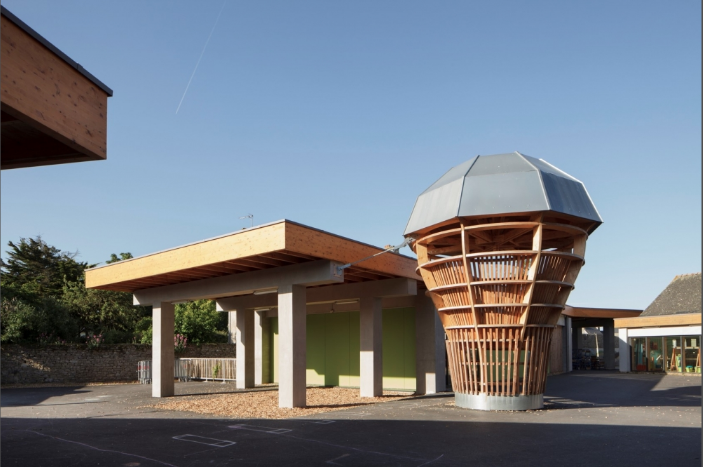
AK: I think we can simply state that the value of art cannot be determined. The only reason why a work of art at auction can fetch a few cents or half a million euros is that, fundamentally, art is of incalculable value. In this sense, I think we must insist that the value of a project such as the Trébédan primary school, which was built on behalf of Nouveaux Commanditaires, is also incalculable. What matters is not the money that has been invested in the creation of this school, but an aspect that is often overlooked: the mere fact that this school exists. As Anastassia has just said, this is not necessarily an aesthetic dimension, but the emotional, social and political aspects surrounding the project. I would even go so far as to say that something magical happens in Nouveaux Commanditaires projects, something that we could never have imagined could happen with these people, in this place and in this way. And once the project has materialised, people are totally blown away! These projects have an incredible social beauty and the value of this social beauty is incalculable. From the point of view of a society's needs, we have to start comparing this ephemeral and difficult to explain value with the incalculable value of a work by Jeff Koons, for example.
SM: This is precisely what I wanted to get at, because, with all that we have said, the question we must ask ourselves is: To what extent would it make sense to redefine Nouveaux Commanditaries as a social rather than an artistic initiative?
AM: (laughs) Never!
AK: François Hers, the person who drafted the founding protocol of Nouveaux Commanditaires, always refused to make this distinction. As I see it, his motto, “Faire art comme on fait societé”, means that the political and democratic project can be equated with the human capacity to create something that did not exist in the world before. Democracy is nothing other than an idea that we put into practice, day after day. This is why our political, aesthetic and artistic ambitions cannot be evaluated separately. When we talk about Nouveaux Commanditaires we are always tempted to make a distinction between an artistic project and a social project, but I think we should resist this.
AM: It should be borne in mind that in many Nouveaux Commanditaires projects the response to citizen demand could have been something other than a work of art. There are many initiatives that work with a similar methodology to ours with the aim of building, for example, a bicycle park or a community garden. The common factor is the desire to make a project happen by involving and mobilising people. These are wonderful projects, but Nouveaux Commanditaires also incorporates this artistic and aesthetic dimension that is a real game changer. As Alexander said, there is something magical, something that transforms us profoundly as people. For me, the aesthetic dimension is the space in which our ability to change the world takes shape. If we want to change the world, we need to change it aesthetically in our imagination, and it is the arts that allow us to do that.
SM: Given the enormous potential of this magic that you both talk about, isn't there a certain danger that these participatory spaces could be appropriated by someone motivated by political interests, or to safeguard social peace?
AK: The danger of instrumentalisation is unquestionable. The very moment we say that the project is artistic and social at the same time, it is very easy for public representatives to say: “Okay, great, so you are able to fix a problem, to solve conflicts, to reassure people... so take this money, go to that village and talk to them”. This is what happened in the 1990s in Britain, where ambitious programmes of participatory arts projects were launched, and, in my opinion, there was an overt political instrumentalisation aimed at healing the wounds that neoliberalism had opened up in those places, an extremely perverse process. Nouveaux Commanditaires, as a programme, has to protect itself and avoid being attributed this function. But at the same time, personally, I am fully aware that a project like ours can serve as a support in conflict situations. Anastassia, I think you will agree that you have worked on projects where there was a lot of discussion, where conflicts were experienced, negotiated and sometimes pacified. Democracy is nothing other than generating conflicts and facing them constantly, every day, and that is what happens in our projects. So, yes, in a certain sense we contribute to social cohesion, to social peace and to the constitution of a democratic culture. But I think we want that to be understood as something that people do on their own behalf, not as a consequence of a government policy that aims to solve problems that politicians cannot solve.
AM: Absolutely. Our democracies, on the contrary, are strengthened when debate arises, when people promote initiatives. Democracy dies when things stagnate. Every micro-project is always a miniature emancipation, and we need those sparks to ignite. We don't need social peace; we need social energy and vitality.
SM: And, in this sense, I think the fundamental difference with the New Labour projects you just mentioned, Alexander, is that in the Nouveaux Commanditaires projects, the initial demand comes from the citizenry.
AK: Indeed. This process bottom-up completely changes the rules of the game. The projects belong exclusively to the citizens and not to other political or social bodies.
SM: We are currently experiencing a shift towards the digital sphere, both in our professional and social lives. The right to telework has started to be included in the legislation of many European countries, and this, on the one hand, is very positive; but the extra time we spend in our private spaces and in front of the screen may result in a partial erosion of our social awareness. I see this as a potential threat to projects such as ours, which are essentially based on people meeting and the emergence of that spark that Anastassia just mentioned. Can you imagine if our projects were carried out via video calls?
AM: Oh yes, until now we've always met in bars and cafés, so how are we going to manage now? (laughs) Well, as you just said, I think some changes are going to take hold. For example, the circumstances surrounding the conversation we are having tonight are a good example that digitalisation is not so bad. But, of course, every detail counts, especially when you play a mediating role: gestures, looks, smells... That's why I'm sure I would be unable to do the job of mediation through digital means.
AK: Yes, it is impossible to develop a mediation project without meeting physically. The main element and, from a political point of view, the biggest advantage of our projects is that we create an atmosphere that inspires trust. People trust us: the mayor of a town, people from all walks of life, even international artists. And trust is something that comes when you share a room with someone and breathe the same air. For this reason, we will always need to create those kinds of moments. But once the project is underway and the initial trust has been established, the digital turn can effectively benefit the way we work. Things develop in a much smoother way. At the moment, in Germany, sixteen projects are running and all groups of citizens are communicating digitally, including a 92-year-old lady who lives in a small village and has never used a computer before. This paradigm shift has happened quite naturally. Two years ago, we would not even have considered working in this way. The more we get used to technology and the more we understand the difference between the need for a physical meeting and a mere organisational meeting, the better things will work.
SM: The projects we carry out are based on citizen demand. Aren't you afraid that if we spend so much time in front of the screen and in filter bubbles, there will come a time when interest in shared public space and neighbourhoods will diminish?
AK: We all like to be physically present and hear the voices in real space. There will come a time when we will get out of the screen and come together like humanity has been doing for 10,000 years (laughs). People are still able to decide, I think they will eventually find the balance. And I think we are on the verge of learning to make a difference between dispensable moments and important moments of meeting other people.
SM: Anastassia, Alexander, thank you very much for this conversation.