

“The relationship with Concomitentes allows us to talk about issues that are close to our hearts”.”
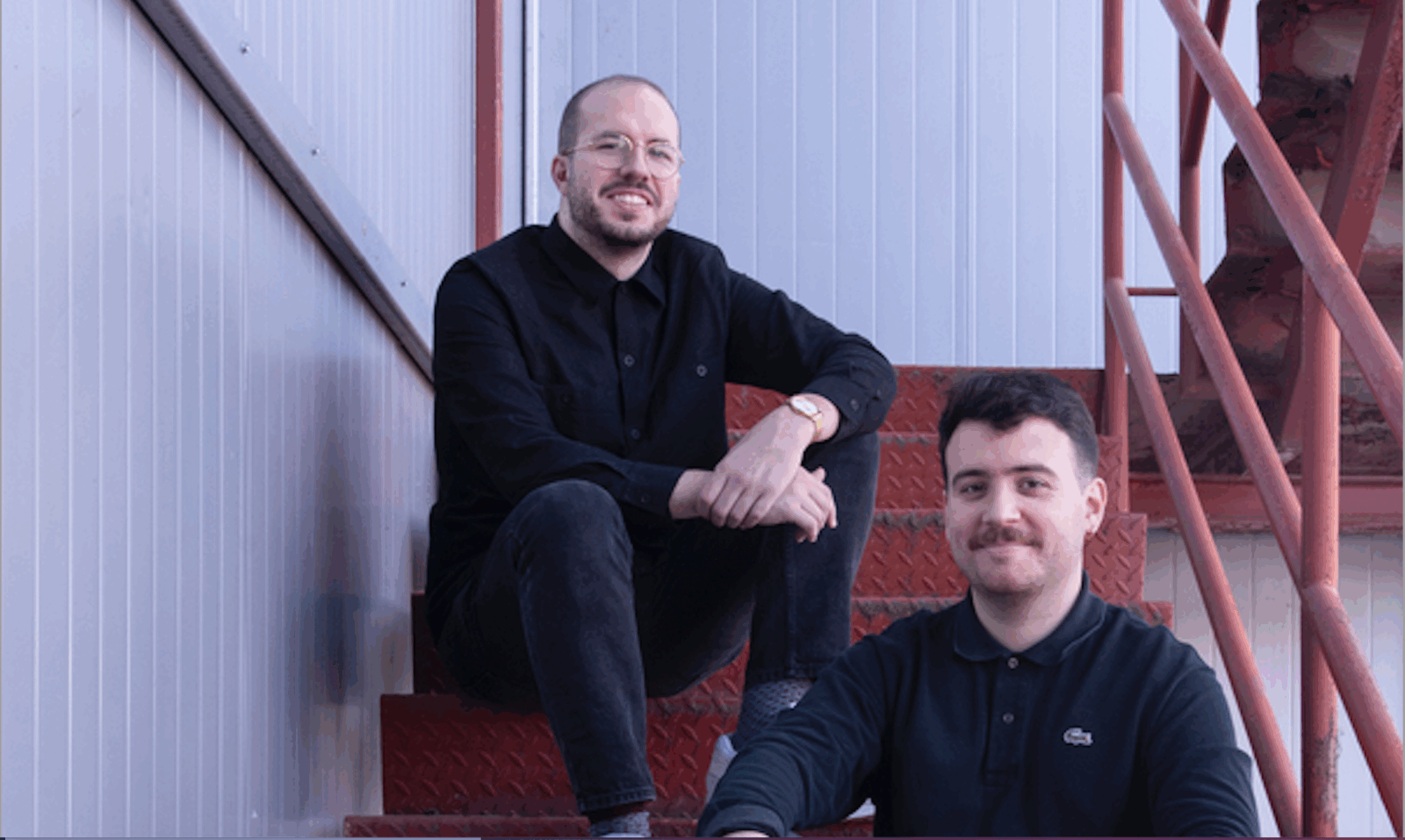
Interview with the two members of the publishing house Bartlebooth, Antonio Giráldez López and Pablo Ibáñez Ferrera, with whom we have embarked on the adventure of launching 'Mutaciones en el espacio público'.
It has been a process of more than a year, of self-discovery, listening, rich exchange. The Concomitentes editorial collaboration with Bartlebooth shows a path that today is made concrete by the publication of Mutations in Public Space and which is open to other processes and future launches. The two members of the publishing house, Antonio Giráldez López and Pablo Ibáñez Ferrera, tell us from their perspective how they have experienced the genesis of this common project, from where they contribute to broaden the reflection and knowledge around the collaborative practice of public space, on which Concomitentes thinks and operates.
What does this relationship with Concomitentes mean for you?
ANTONIO: Above all it's the opportunity to expand ideas that interest us about public space, about participation with certain communities, to other disciplinary fields that, a priori, are not so close to us. To look at public space from the perspective of contemporary art is a very interesting opportunity, also to understand these other possibilities of understanding it, how commissions are mediated, I think the whole process of Concomitentes is very interesting and enriching.
PABLO: Our work is in the field of architecture, but it is not too disciplinary, it is always crossed by other processes. In this sense, Concomitentes fits very well in this line, it works more around the process of how the space is constructed than around the results, more interested in the methodologies or this search for how to explore the ways of constructing it. In an operational way, it is also nice to have a medium-term project, not very common in our publishing house or in our world, which allows us to explore other rhythms of publication and communication, even in terms of internal working rhythms.
How do you start conversations to begin to build this relationship?
A: We had worked with Fran Quiroga on other occasions, both in ‘A través das marxes’, and in ‘La fiesta, lo rare and public space’, which were always very interesting experiences precisely because we were able to look at all these issues that are very close to our editorial line, but looked at from a perspective that was not our own at all. We had always been promoters of our own projects, and we often found that we lacked time and references or a much closer knowledge of certain issues, which we could not have. Obviously, we can't know everything in this life. Thus, the relationship with Concomitentes allows us to talk about topics that are related to us, but we are not the people who detect these references, but rather we support them.
P: The previous projects we have done with Fran have the interest that the publications are not mere catalogues, nor mere extensions of larger processes, but are thought of as devices in themselves, they expand many discussions that if you haven't been part of the process you don't understand.
«In that sense, we believe that they are projects with ambitions to expand or make accessible many issues that often remain within the process, that are not able to communicate or open up to more audiences».»
How do you see the projection of this relationship in the medium to long term?
A: We think it's nice to think about the autonomy of the project and of this line, to think that there are interests that have been discussed and discussed, agreed upon by both parties, and that in the medium to long term it could be a support for other voices. There is a starting point, some quite clear common needs, but we want it to be well received so that it can continue to add voices, because we believe that it is a field that has not had so much space or publishers interested in it, at least in the Spanish context.
Concomitentes has citizen participation in its processes as its hallmark, how can this vision be incorporated into the books?
P: We always say that we are interested in making knowledge accessible. We don't always succeed, because it is often difficult to bring the themes that run through the books to the general public. We believe that in this specific project there is a desire to bring art closer to the public, to understand how it can be a tool for constructing space, questioning what happens in a city, how everything is constructed. We think it's a very accurate vision and that it's in line with what we want to be, what we would like to be; often it's not easy to achieve and often we don't achieve it.
This editorial project with Concomitentes aims to reflect on the adaptation of the Nouveaux Commanditaires protocol to the Spanish context. How do you perceive this task from an editorial point of view?
A: It is the opposite of what we were already doing, talking about public space or citizenship, where many disciplines converge. We as a publishing house have a very particular, and we believe propositional, view of all these issues of architecture or critical spatial practices, where all those interested people can come together to broaden the discourses and those they reach.
«That's the fundamental point, apart from the fact that we like to get very involved in the projects we take part in, to put an extra layer of care and attention, an external view when thinking about the books, to make things come out better».»
P: Being “outside” the process I think it is also an interesting position, the concomitances are taking place in different places in which we are participating, that allows us to be able to expand the interests of the issues that are being revealed, as often when you are very much inside a process it is difficult to be able to expand it and take it to other audiences. Our external position can give that added value to the publication.