

"The interesting thing about the project is the union of art and culture with protest and vindication".
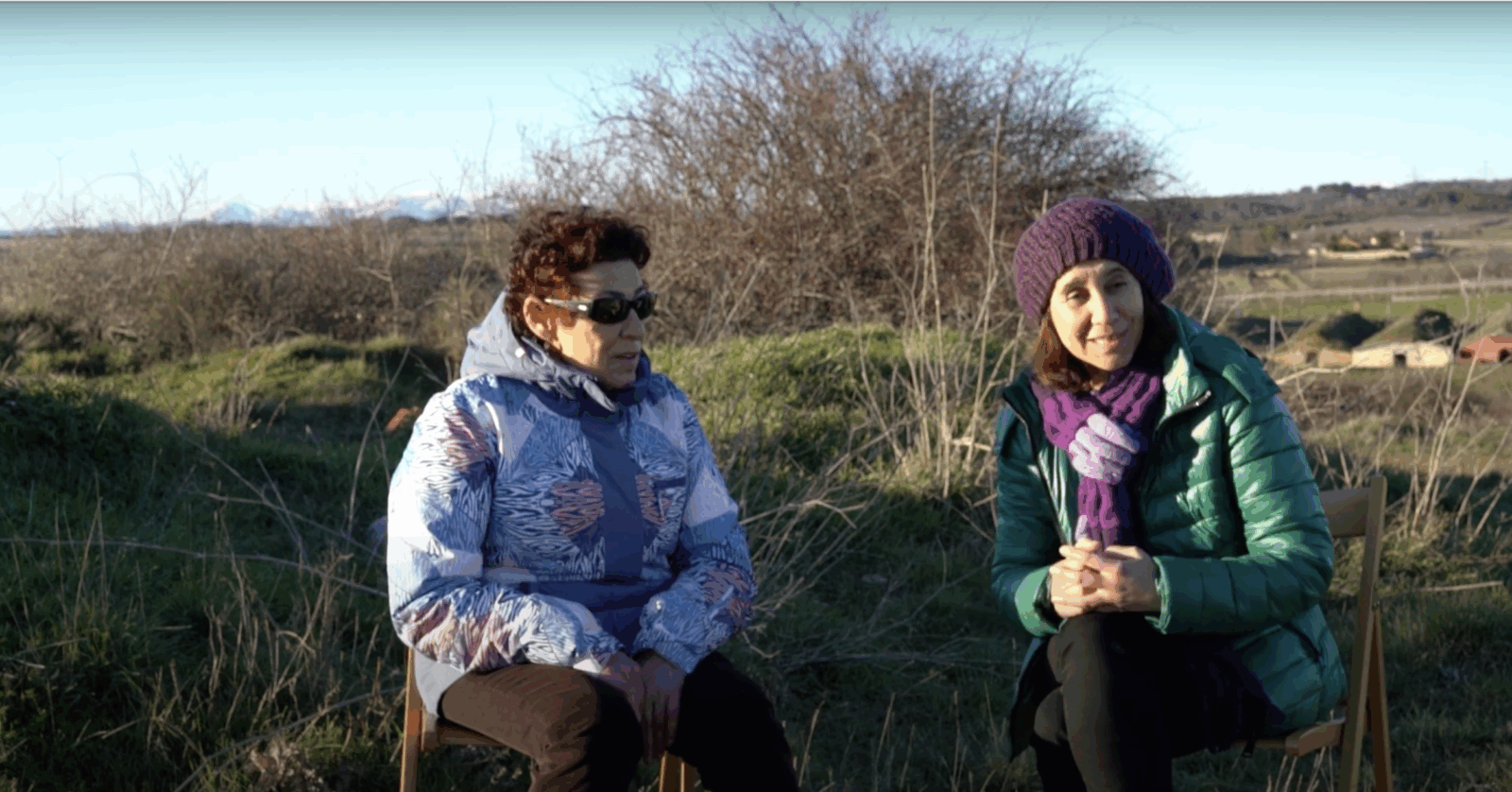
Interview with the commissioners of Narrativas Solares, Aurora Panizo Luengo and Marina Castro Getino, the project that seeks a just ecological transition in the province of León.
The ‘Citizens' Platform for the Defence of Sobarriba’ is the collective to which the project's principals belong.‘Solar Narratives’which seeks a just ecological transition in the province of León. Two of them, Aurora Panizo and Marina Castro, reflect on the struggle which led them to participate in the Call for Art for Sustainability, The process is a way of sharing to inspire others but, above all, to inspire themselves.
Concomitentes (C): How did the ‘Platform for the Defence of the Sobarriba' get started?
Aurora Panizo (AP): The platform was born more than a year ago when we learned that they wanted to install a macro solar park in this town. At that moment, Daniela, one of the neighbours who lives in the village where the land where these panels are going to be installed belongs, started to call everyone, she promoted the platform and here we are.
Marina Castro (MC): Alfredo knew me, and he is the one who has been coordinating and bringing us together.
C: And how do you get in touch with Alfredo?
AP: The link to Alfredo is because he lived in the area for many years, here in Villavente, one of the villages of Valdefresno.
C: How is the ecological transition impacting on the territory and what do you envision for a process that is complex to stop?
AP: Those of us who consider ourselves environmentalists are very clear that we have to decarbonise, we can not to continue living the way we do, especially in this very mining province where coal has given us many resources, quality of life and jobs? We ecologists have sometimes been branded as crazy, utopian, unsupportive, we are clear that the ecological transition has to be made, but it has to be fair, what cannot be is that we exchange some monsters for others and that we are on this path of self-destruction. The people who have always lived in the territory were very clear about how to do things in a sustainable way, that was a just transition, also because there was no abuse.
MC: There are very few people who are really aware of what a macro-project can imply and what an ecological transition can impact. We have to work from there, the important thing is that we reach more people.
C: Marina, how have you experienced this impact in your immediate context?
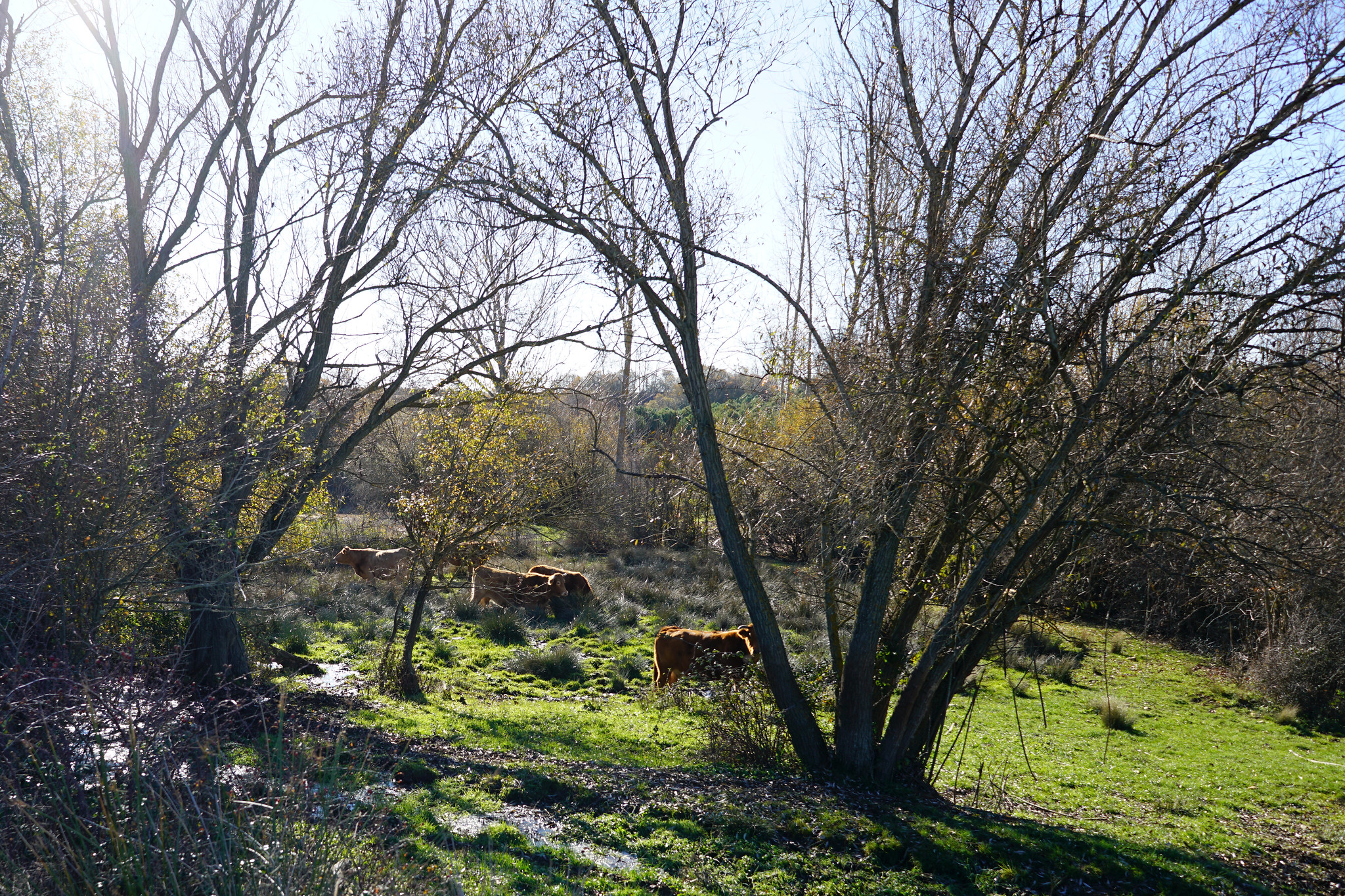
MC: My breath runs out every time I see the map and the area of the first floor that they are going to put, I have always been looking at the sky, I am a very mountain person, to be in the street as much as possible, even so I think that if people found out what the installation of these plates involves...
«There is no awareness, they have not come to know how important it is to go out on a road and see birds, to see a field and how the sun rises, how the sun sets. From there, from that valley, bee-eaters come out at dusk, and the day it's gone, it's hopeless. It is missing, it is missing to reach more people...».»
C: Were you familiar with the Concomitentes project, and how do you think the tools of art and culture can help such a difficult, direct, social and current issue?
AP: We didn't know it, it's going to be something very new. Combining art and culture with protest and vindication is what makes the project interesting. In the rural world, there are few of us and we can't make big demonstrations, But we do resist, we are not stupid, we know what is good for us and we do not want this environment to become an industrial estate.
Those of us who have come to live in rural areas want to continue living in this marvellous environment, hence the struggle: «We want clean energy but not like this”, not with these macro barbarities, not with macro farms or macro wind farms or solar farms?
C: In this sense, Concomitentes offers you a way of amplifying this protest...
AP: When the Concomitentes project arrived and Alfredo told us about it, it was «well, it's good that we can keep going in this struggle to try to stop it”. Whether we can stop it or not is different, but the fact that we are now in ‘Narrativas Solares’ is very exciting.
MC: Yes, like being able to do something.
AP: We still don't know what it will turn into, but I think it will be very nice for the people of the territory. To see that it's not just that we come with the banner, which we will also do, or how the allegations were made, or how to appear in the press, but that we transform the struggle into something else. Whether it remains or not, I think it will be a symbol.
MC: And as it's not political... I think that art is going to make an impact and make something much more visible that is not easy to explain to people.
AP: We also have to work with the frustration that we may not be able to stop it.
MC: You have to have the illusion of doing something, not be stuck in a rut.
C: How was the start of the project and mediation?
AP: Four of us started it with Alfredo, when we began the project was not yet won. Later on, more people joined in and, as a result, some very interesting ideas have emerged.
MC: We are very diverse people with good ideas, a lot of respect for each other and a love for the territory that I am amazed by. I'm almost the only native and those who live here are giving us real lessons in how to enjoy what we have.
As we have always had it, it turns out that those of us who live here appreciate it less.
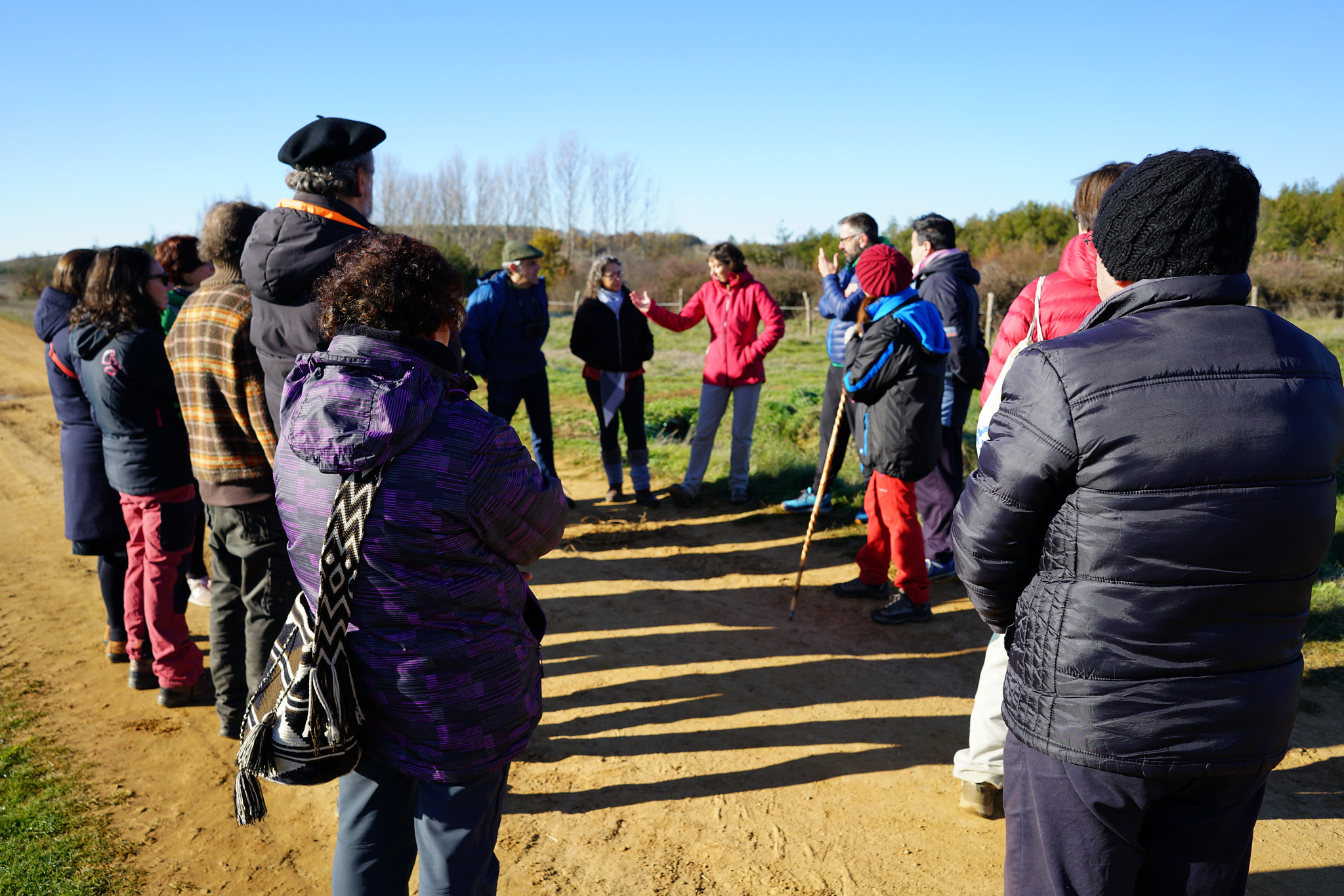
AP: Yes, maybe we people who have come to live here value it more. The other day we went for a walk around the area where they want to install the macro park and it was beautiful, wasn't it Marina?
MC: With each other...
AP: It is true that there are already concrete ideas, but we don't know how they will materialise, but that walk was a before and after.
MC: And contact, we live close by and I didn't know that there were such great people around here. We're very down-to-earth and locks…
C: Just the process you describe is very interesting, have you talked about or visualised anything about the work of art or are you sticking to the path you are on for the moment?
AP: Personally, I had the idea of a sculpture, something that would remain and could be seen, so that when people passed by, they could say: «This was installed by these people who did not want the plaques and here is the memory of that struggle».
MC: I want to take people out into the territory and see bushes or the sunset. I have always thought that some marked routes where you bring the children from school or the grandparents, some routes through a dry land or one of those barley or wheat fields that look like waves of the sea when the air blows. I don't know, something to see the territory.
AP: Another thing I would like is a walking labyrinth, not one of those where you have to find the exit, but one of those where you have to go along an established path and you get to the centre, and to get back out you have to do it all over again. Something with trees and the sun could also be...
»Another thing I would like is a walking labyrinth, not one of those where you have to find the exit, but one of those where you have to go along an established path and you get to the centre, and to get back out you have to do it all over again. Something with trees and the sun could also be...».»
C: How is Alfredo helping you as mediator to guide this process and lead you to make decisions?
AP: Alfredo asked us to write down both expectations and concrete things, but we will have to build consensus.
MC: The territory can be shown with something that can be placed in the middle of the square of each village, with significant photos and say «look at what we have», and encourage people to take a walk through the territory.
C: Finally, are you aware of the impact or inspiration you will be for other territories that are going through a similar process?
MC: Just as I am looking at what others are doing and see what can be done, I think yes, we will get something out of it and it will inspire others.
AP: Fortunately, just as we have been able to appreciate things that have been done in other places and say «look what a good initiative», what we transform this initiative into will give us a lot of strength and, if it can then be an example for others: Why not? The seed has already been sown.