


Slow is not always late
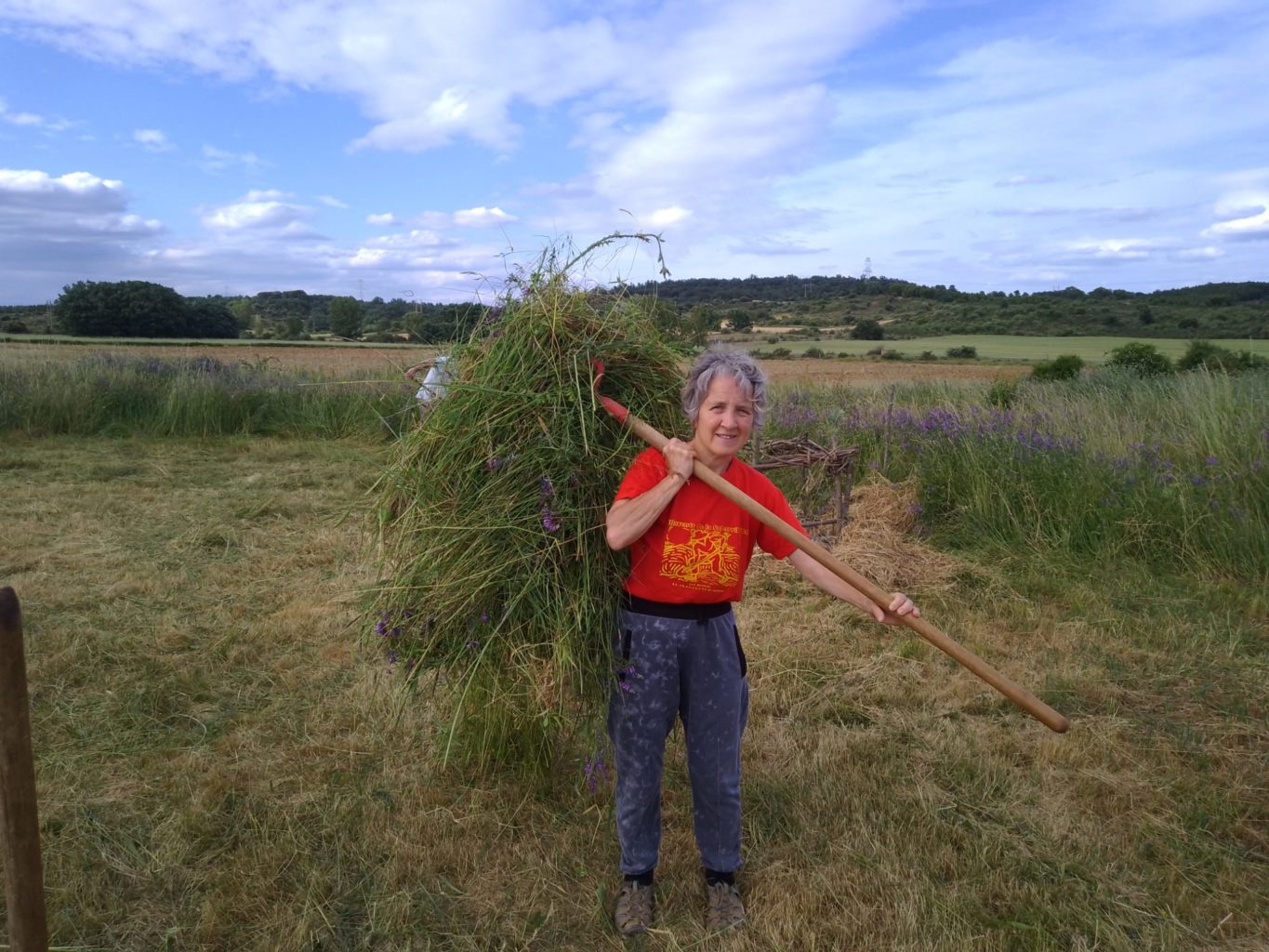
Sharing harvest times
Being in the cycles of nature has something of a rebelliousness with respect to the times of progress. Stopping because it snows or because the heat is suffocating is an experience that reconnects us with who we are. Even if the speed and promises of progress are always pushing us towards the future, whatever it is and whatever it sweeps away.
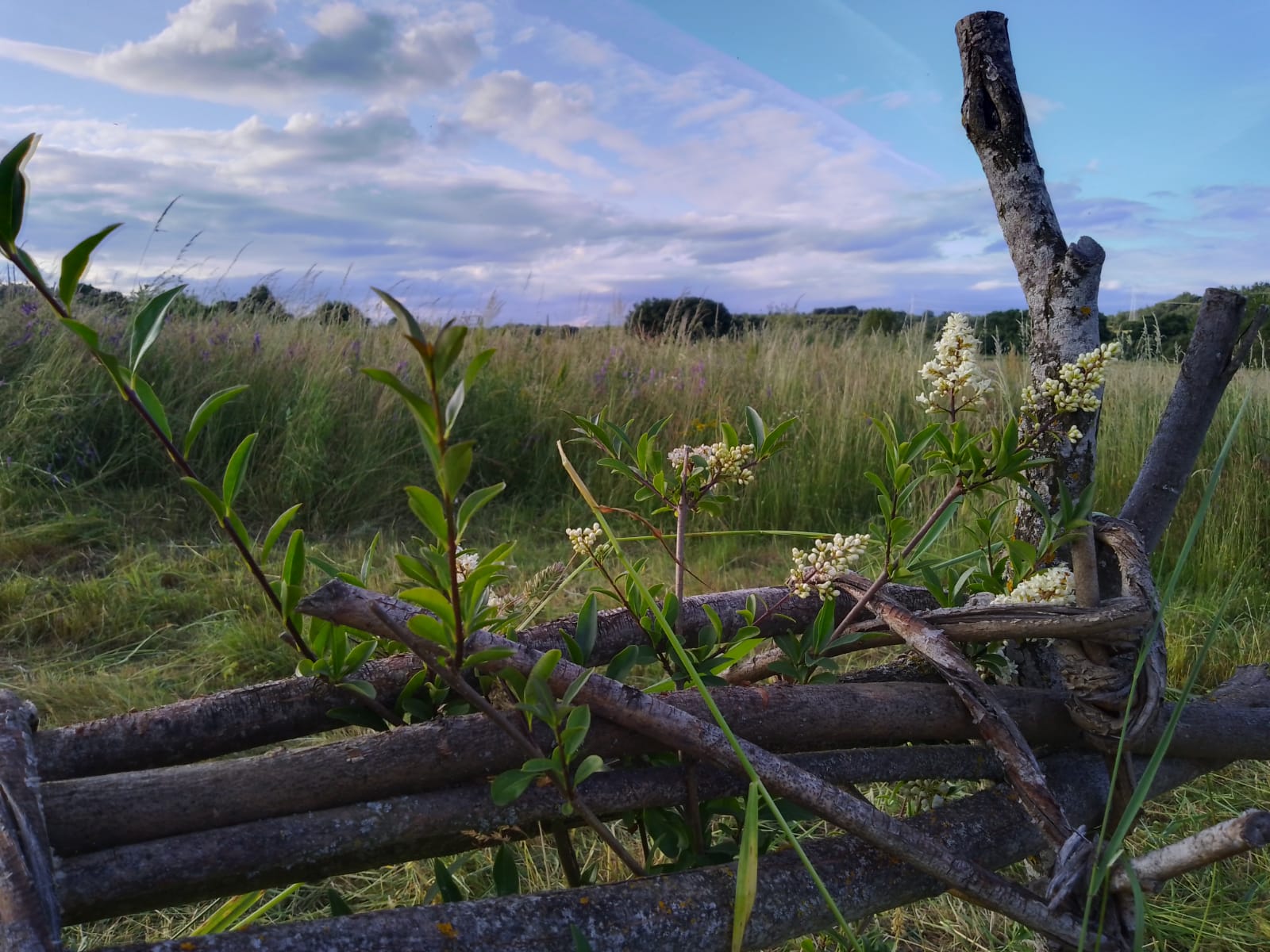
To construct a part of the piece that we have devised together with Auxi Gálvez with living sebe, with living matter, far from being exclusively an aesthetic act, is very much an act of resistance. Of self-government and resistance. And also an act of love for what we are creating and for the territory we inhabit.
Care has that magic. The magic of the fruit. A fruit that is not necessarily for consumption. A fruit that is more than edible, it is liveable. And which is transformed according to the natural cycle in which we find ourselves. Thus, this excessively rainy spring has prevented the comitentes from cutting the grass when it was still very low and, now, we are learning to mow with a scythe. Also, a rather dry and cold winter has prevented us from digging certain areas necessary to install the rest of the piece. But these “inconveniences” are allowing us to experience each encounter, each progress, in a special way. And they are allowing us to experience what we can do in the future.
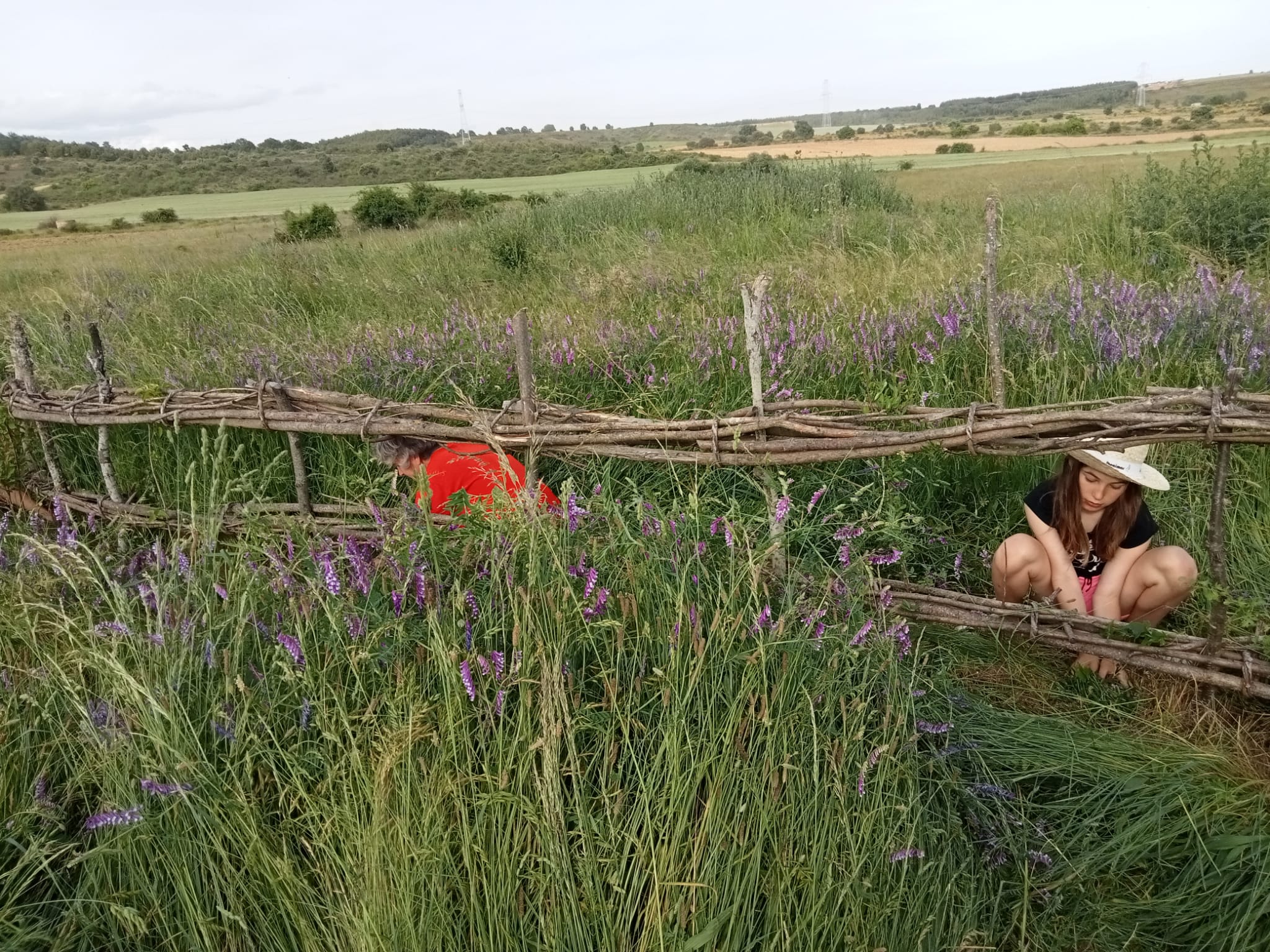
“Let's go on”, says Fran, a customer, “a little bit at a time”. Gaia is there, watching us, calmly, watching us mowing and collecting the grass while, in a field not far away, triple drum mowers with a cutting width of 8.95 metres are working hard to ensile the grass. While we move forward a few metres with our scythes, the mowers cut hundreds of metres for a truck to pick them up later. The movement along the road is continuous. Progress does not stop, but we sharpen the scythe with the stone and continue until the sun begins to set. We didn't have time to finish. It was obvious. “A poquitines”, says Carolina now.
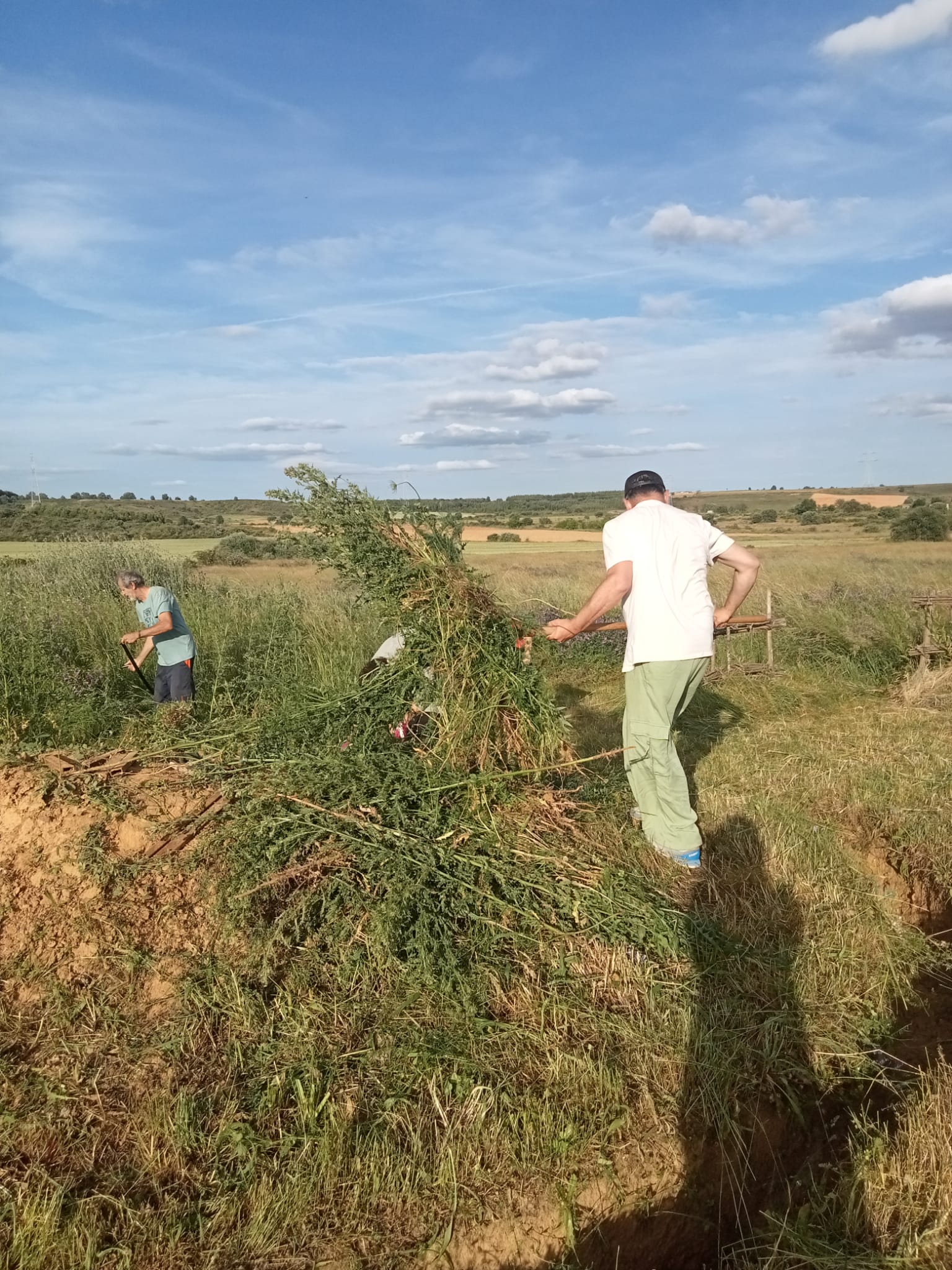
We meet again next week. There are no more trucks. They finished their work that day.
A scythe, two sickles, two rakes, two pitchforks and our hands. Hand in hand and laugh by laugh, we tell each other about our lives and talk about the present and the future of this place that we are taking care of. Of the ways that Solar Narratives will continue in the future, once the piece is inaugurated. During these works there is a sound that accompanies us constantly. Fran tells us to crouch down behind the grass we haven't mowed yet and takes out her mobile phone. He lifts it up and presses play. The sounds we had heard multiply. “They're partridges,” he says, “if we're quiet they're sure to come up to where we are. But they don't. It doesn't matter. This gesture is already an apprenticeship on what Solar Narratives can be once the mediation is over.
Aristotle and the Peripatetics come to mind. They learned as they wandered, we share teachings as we mow or build seeds. And this school that is being Solar Narratives for all is already beginning to have a foundation as deep and alive as that of the “fences” of the living sebe that we are building and caring for with our hands.