

Schlamm. The women's stories were swallowed up by the mine rubble.
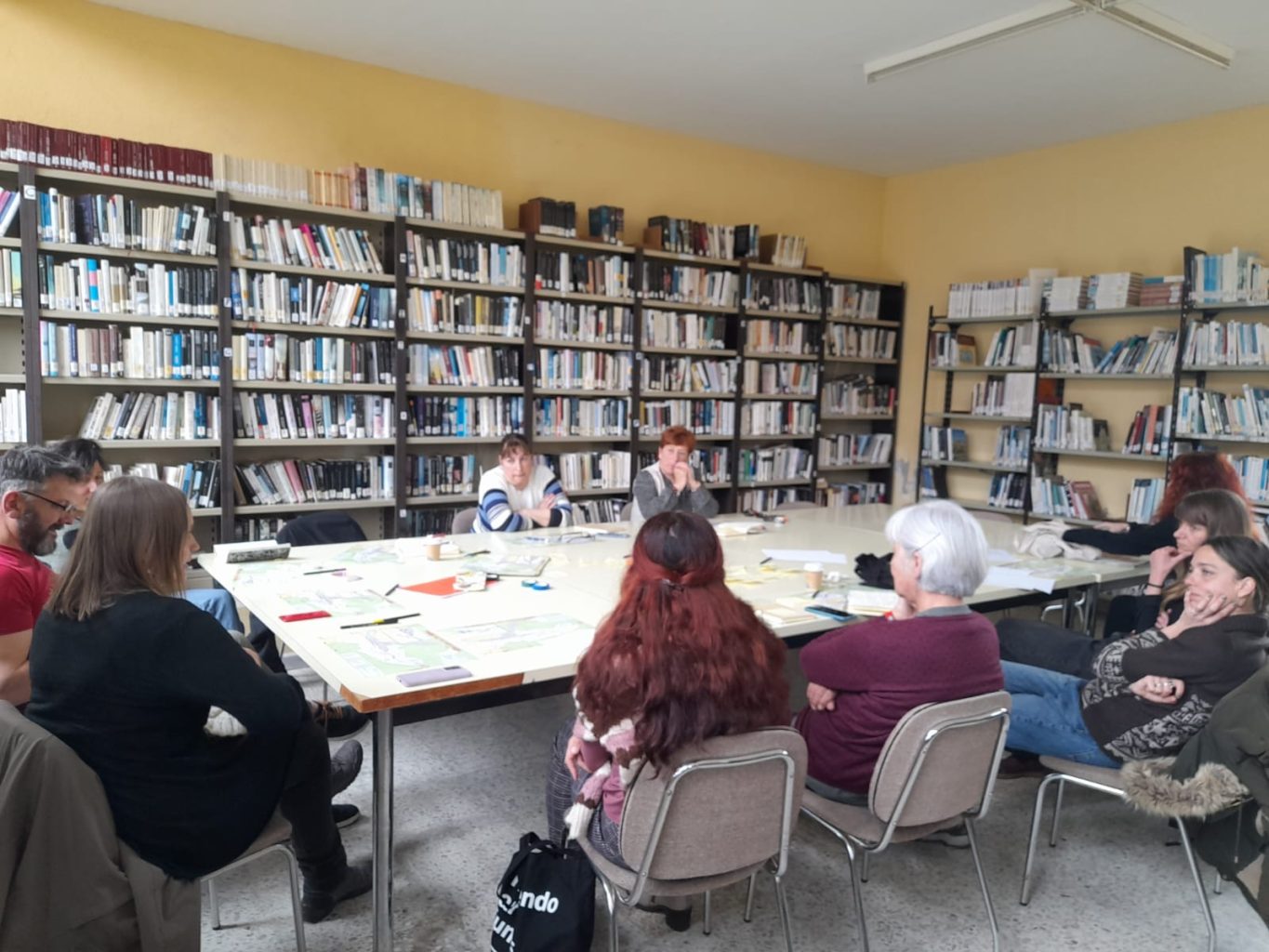
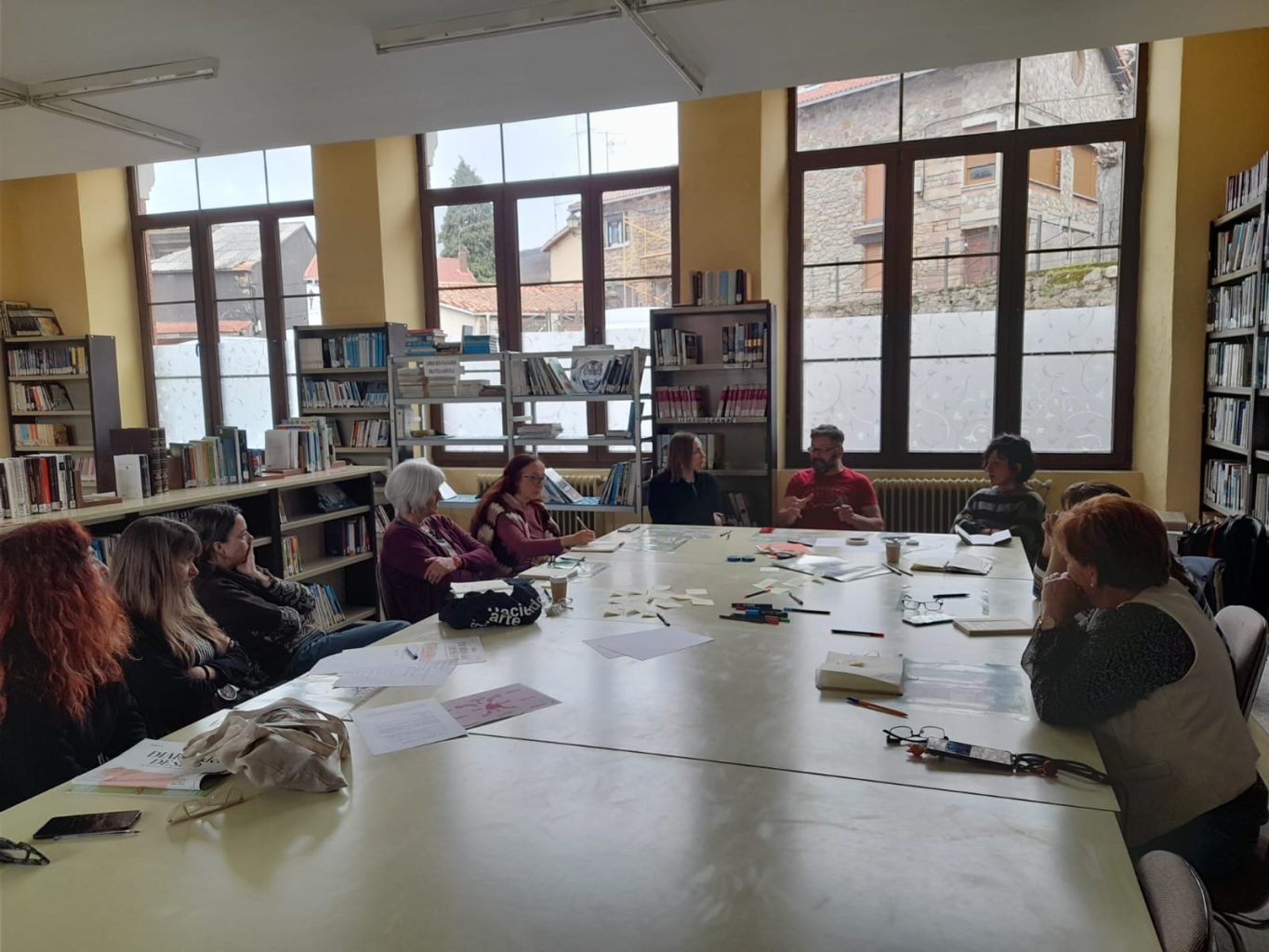
 Participants at the second working session. Photo: Alfredo Escapa
The clients work on the word “aftermath” and go deeper into their wishes.
On this occasion we met in the library of Barruelo de Santullán. Mila, one of the guests, is the village librarian and the library is a space that she has created with a lot of love. The place has a lot of books and a big table on one side. This is where we will be working today. Little by little, the guests arrive and we greet each other. It is still very cold outside, as it was the day before.
Today, as on the previous day, the definitions of a word are the pivot around which the start of the day will revolve. This time we delve into the word “sequel”. As we debate, the two-sided conception of the world begins to emerge, and we sense that this may accompany the work process. The commentators say that the aftermath can be objective or subjective, physical or psychological, sentimental or material, visible or invisible, and because of the polysemy of the word “aftermath” in Spanish, there can be sequels and prequels.
These two faces are like those of the god Janus: the god of beginnings, doors, thresholds (the recurring image of the first day reappears here) and endings. Janus is depicted with two faces. One looks backwards and the other forwards, observing past events and looking towards the future. This image is important as it is this project in which we are still on the threshold, with the desire to delve deeper and glimpse what lies ahead. Moreover, our dialogues have already spoken of co-responsibility, and for this we must look both to the past and to the future. Towards legacies.
We continued working and wrote on the table, on a concept map, the desires we have: for me, for you, for us and for the territory. And after reading everyone's wishes, we started to play. In this way, our own desires become collective or territorial, and the desires for the person next to me become the desires that another person has for me.
Reappropriating each other's individual desires as collectives and vice versa can be a good exercise in understanding the community and understanding ourselves within it.
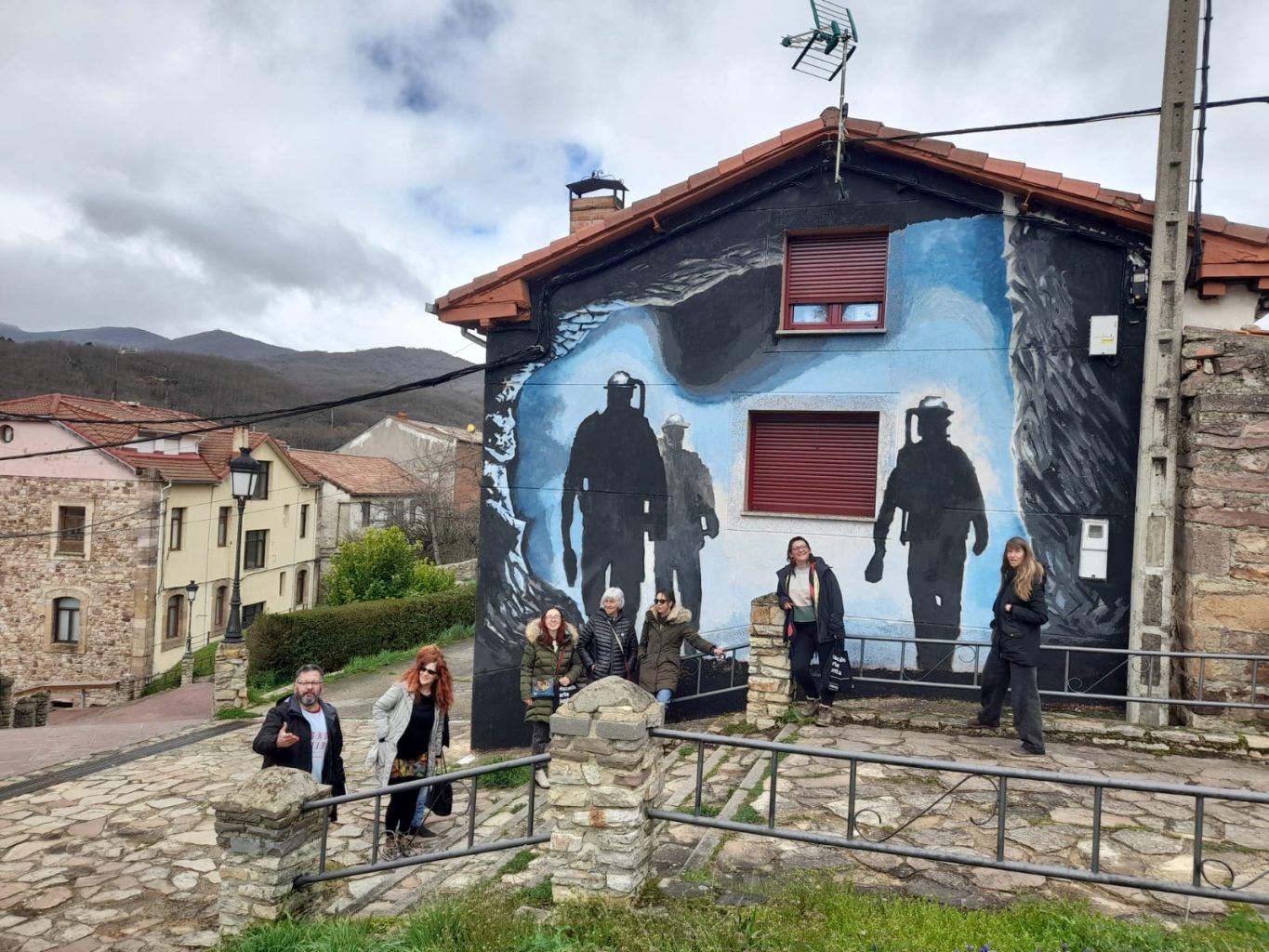
We continue to talk about this community. Of the comitentes, and of one that we imagine to help us conclude this process, as well as another that has preceded the comitentes: the women who lived in this village. Women who fought in a hostile territory, where the myth of the male miner is still today what sustains the territory. Women who, despite being widowed with many children, did not succumb and brought their families forward. Widows who died collecting mine waste in order to keep warm, because no one could bring them the warmth of the earth's interior.
After this working session, it is increasingly clear to us that the issue that occupies and concerns us has very little to do with the heroics of the mining basins, and a lot to do with the stories that have been silenced. As Geles, one of the participants, says, it has a lot to do with the aftermath that women have left in the territory.