

Key questions and answers to apply for the 2024 call for proposals
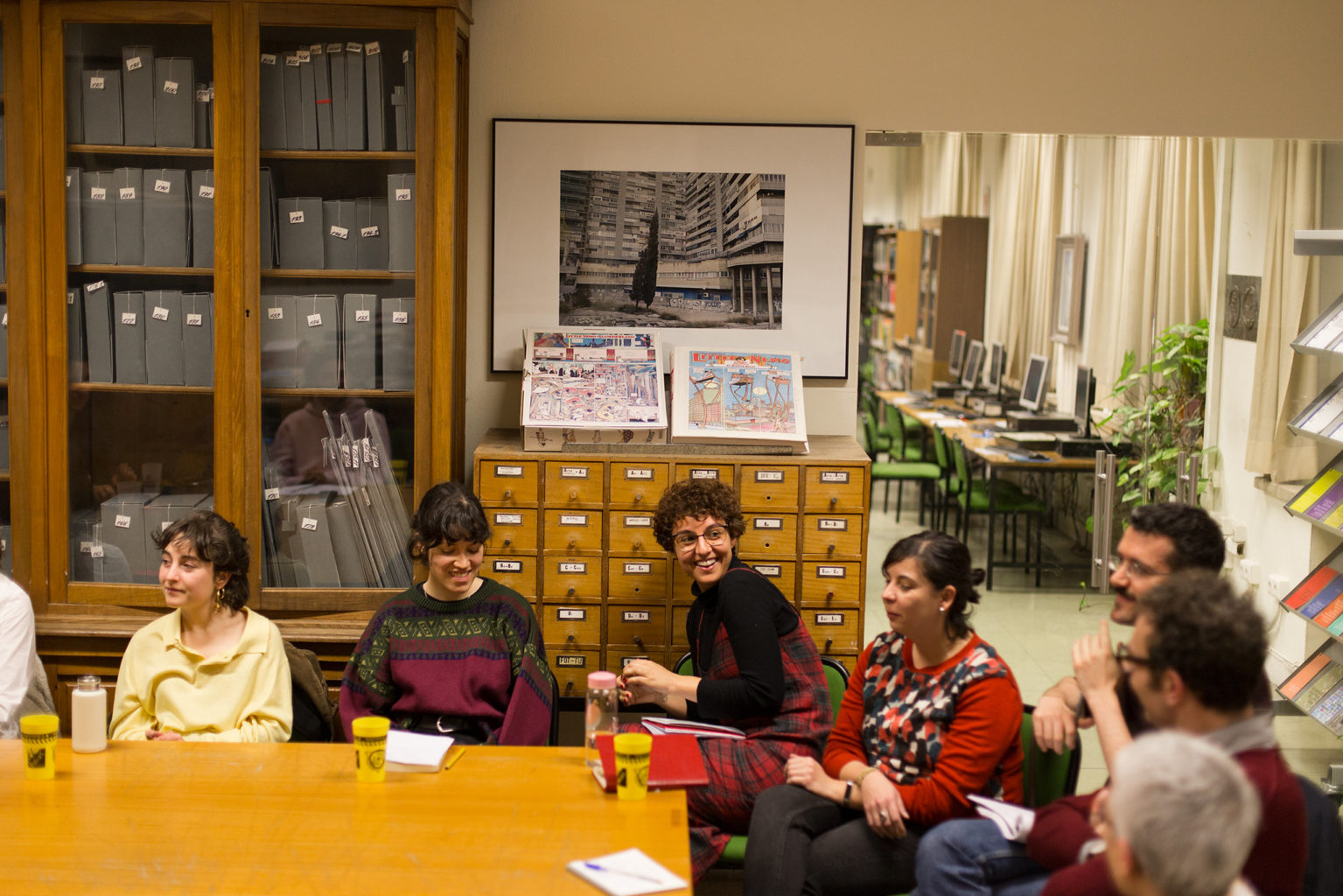
We also share the full video of the briefing that took place last Monday, 6 May.
The third edition of the Call ‘Youth Art for Sustainability’.’ The Concomitente's application form will be open until next Monday, 20 May. Below, we share some common questions and answers when applying, and other new issues that arose in the information session, which took place last Monday, 6 May.
Also, if you want to see the full video of the session, click here.
PROJECTS SOUGHT:
What kind of projects are you looking for?
The call seeks to set up a new concomitance so that a mediator, together with a citizens' collective made up of young people, responds to an environmental problem connected to the climatic urgencies of our time, pressing in their environment, following the methodology of Concomitentes. The aim is to activate a new participatory process to commission a work of art connected to the local context in which it is situated.
What kind of projects are considered “socially relevant”?
The subject matter is broad, the key is that it is aligned with the lines of work of Concomitentes. This means any type of initiative that serves to improve the local environment, taking into account the SDGs, including citizenship-nature or citizenship-landscapes, energy transition, rurality, among others.
Even if a new project has to be presented, can it be a continuation of a previously identified cause that has been worked on in the past?
If it is possible, taking into account the deadlines of the call for proposals and the fact that we are looking for very local projects, it is understood that a mediator may have already collaborated with the collective or have already worked on the same cause.
But it is requested that the project is not already underway, the call is not to obtain funding for a previous or active project, but must start from scratch and be governed by the working methods of the protocol followed by Concomitentes.
Will proposals outside urban settings be favoured?
It will be taken into account positively, since the last few years Concomitentes has been trying to locate its practice outside the big cities and towns, also for a question of redistribution of cultural resources.
Can the project be located in different sites?
No, we are looking for projects with a very specific conflict, desire or need, located in a particular territory. Although there are conflicts that affect several territories at the same time in different ways, the project will focus on a specific area where the mediator and the principals are located.
Can a project focus on one territory, but the participants live in other regions?
It is possible that the principals may not live regularly or constantly in the place where the project is being carried out, but they must have a link with this territory and the conflicts that affect it. In any case, this can be assessed and analysed on a case-by-case basis, to ensure a presence, a link and the capacity to meet and move forward together in this space for dialogue so that the project can be activated and developed successfully.
ON THE MEDIATION PROFILE:
Can the mediator be part of the citizens' collective?
Ideally, to avoid potential conflicts of interest or tensions, the mediator should not be part of the collective.
In this case, there would be two alternatives:
a. The collective can apply as a citizens' collective and, if successful, Concomitentes will find a mediator to activate and develop the partnership with them.
b. If the collective has experience in the field of cultural mediation, it can present itself as a figure of mediation by proposing a collaboration with a citizen group in its environment.
And can the project be mediated by a district board?
The mediator may be part of a public entity, but only one person will be in charge of leading and developing the mediation. Concomitentes' practice does not envisage this work being done collectively.
Can the mediator be part of an association?
Yes, it is possible. The mediator can be part of an association, a cooperative or a group of people working together, and can be a natural person or a legal entity.
Does the mediator have to be under 35 years old?
No, but it will be taken into account. If, apart from having a track record and experience, you are under 35 years of age, it will be positively valued for the idea of handing over leadership in the challenges of society to the new generations.
Are there formal requirements for the mediator profile?
No, the track record and projects in which you have participated must be specified in the application form. It will depend on the type of project with which you apply, and your experience in leading citizen participation initiatives such as Concomitentes, your background and knowledge in the cultural sector and, of course, your roots in the local context where the concomitance will take place, will be valued.
What are the main skills that a mediator should have?
We understand that the profile of mediator is new, and that it is currently used to refer to different functions within the cultural field, but basically it should be a professional who knows how to manage relatively high project budgets, has had experience in mediation processes and knows how to lead the process of an artistic production. They should also know how to facilitate listening and negotiating environments in social settings, and know how to seek funding and generate networks and collaboration in the local contexts where they work.
Can the mediator live outside the context where the project will work?
No, they must be professionals who operate in the context and place where the initiative is going to be developed and where the group of clients lives. Firstly, in order to have an in-depth knowledge of the problems to be addressed; secondly, to facilitate the creation of a link with the citizen group; thirdly, to be able to develop networks with local partners, which may already exist or have been generated if the mediator operates in that territory.
Does the mediator have to be autonomous?
It must be a professional with capacity to work in Spain, either through an association or being self-employed, in order to be able to execute the budget and collect the fees. Concomitentes will sign a collaboration agreement with this person establishing all the issues to be taken into account.
Can two people present themselves as mediators?
In principle it should be a single person. Exceptions could be made, but in no case a collective of people because of the complexity of the process and decision-making, and of communication.
ON THE PROFILE OF THE CITIZENS' GROUP:
Is there a minimum number of participants for the citizens' group?
There is no minimum number to present as a citizens‘ group. In fact, we have projects like ’Diversorium‘ that work with only two members, with strong links in their community, but work directly with the mediator. In contrast, in the case of ’Aguas vivas', the group is made up of the whole village. This group mutates as the project progresses, adding people and collaborators to the initial driving group.
Why are we targeting a group of young people as clients?
Young people are great leaders in the fight against climate change, which is why it has been decided to focus the call on this sector of the population.
Can an artist be proposed as a citizens' group?
No, it is not contemplated within the practice of Concomitentes. The figure of the artist appears at the end of the mediation process.
Can people who will be 36 years old at the end of this year apply for the citizens' group?
Yes, there must be a majority of young people, but there is flexibility in this regard and this will be discussed in detail on a proposal-by-proposal basis.
Should the citizens' collective be local or international?
The project should focus on a local and national context, with a deep-rooted social cause connected to this territory.
Does the citizens' group (principals) have to be already constituted or created as a result of the project?
The project should start with a citizen's driving group that is interested in participating in such a project, which will then be strengthened through mediation work. This can be reconfigured depending on what happens during the course of the concomitance.
Does the group have to be registered?
No, it can be a group of any nature and informal. It does not need to be legally registered or constituted as an association or registered in the civil registry as a group.
If we “show up” only as a citizens' group and without a mediator, will we be considered worse?
No, if you are selected for a project that does not propose a mediation profile, Concomitentes will take care of finding a person who meets your needs and who can accompany you in your process.
Is it possible for two collectives united by a common cause to present themselves, one constituted as an association and the other not?
Yes, it is possible. One example is the Legado Cuidado partnership, which counts three different neighbourhood associations among its members. Citizen collectives can also be informal groups; they do not need to be part of a “legally established” association.
Can a person who is part of two collectives submitting two different proposals to the call for proposals apply?
Yes, it is possible.
Once the group is formed, can more interested parties join?
Yes, there is what we call a ‘driving group’ with the members of the citizens' group who will be there throughout the process, and others, collaborators, inhabitants of the village where the initiative is being developed, among others, who can expand the group of participants at different times.
The group of principals receive some financial compensation for their participation in the project.
No, the value of their legacy will be in the network of links resulting from the project and, in addition, they will be the owners of the resulting artistic work.
FIGURE OF THE ARTIST:
Can an artist apply?
No, this is a call addressed to citizen groups, who want to respond through an artistic proposal to a problem in their environment, together with a mediator. The figure of the artist appears at the end of the process, once the commission has been developed, which includes the conclusions of the mediation and which will guide the artistic production.
Are the commissioners involved in the artistic process?
Yes, the mediation work includes meetings between the artist and the citizen group, so that the former can get to know the problems they have to tackle with their work and connect their proposal with the specific needs of the group.
However, there is a creative freedom for the artist to be more or less linked to the group or to include or not include them directly in his or her creative process.
Can any type of artist be selected for creation?
Yes, there is no stipulation of previous trajectory or nationality, practice or format, but it will be positively considered if they are familiar with or open to being part of a participatory process to nurture their work and oeuvre. They can also be established or emerging artists, the proposal is thus open to any creative person that the mediator and the group consider suitable for the commission that responds to the group's conflict.
Is there a network of artists to which one can subscribe in order to be considered for artistic projects?
No, all artists can be selected; the selection process is in the hands of the mediator, who makes the initial proposal, and the group of commissioners who end up defining the artist who will develop the artwork.
Should the candidature include an artistic proposal?
No, at the start of the project it is not possible to know what kind of artistic intervention will emerge. Insofar as this intervention is the result of consensus with a group of citizens, the decision has to be made afterwards, when all the people involved in the project have spoken and defined the artistic commission that will inspire the work.
Can the work be produced by a collective of artists or does it have to be an individual artist?
Just as the format of the works is open, so is the format of the creative figure. Therefore, it can be an individual figure or an artistic collective.
Is there a specific time requirement for convening the artist?
No, but in order for the project to be effective, a coherent and feasible timetable must be established for the good development of the concomitance. This timetable should include a period for mediation, another for the selection of the artist and, finally, another for the presentation of the pre-project and the production process of the work.
RELATIONSHIP WITH CONCOMITANTS:
What will the relationship with Concomitentes be like throughout the project?
We will maintain a constant, day-to-day accompaniment and exchange with the mediator. We will integrate them into our team to exchange good practices, improve and nurture the process by resolving doubts or unravelling problems that arise along the way so that the project is successful. This will be done through informal meetings or conversations, or by inviting them to take part in our events.
Can Concomitentes help us in our search for funding?
Yes, depending on the artistic proposal and the specific needs of the project, it is possible that the budget may need to be increased. In this case, both the mediator and the people working in the Coordination Office will look for possible partnerships.
The aim is that public institutions or municipalities operating in these local contexts, including national level calls, get involved with the projects and support them in some way.
What will be the relationship with the Concomitant team after the concomitance has ended?
The call for proposals is conceived as a one-off project. However, the mediator's relationship with Concomitentes remains open and to be defined when the time comes.
BUDGET AND FINANCIAL JUSTIFICATION:
How does the financial justification by the mediator work out?
The mediation fees are divided into different work phases, which will be reflected in the collaboration agreement that Concomitentes will sign with the mediator. Payments and justification will always be by invoice.
Does the budget cover the purchase of materials?
Yes, it is included, the only thing that is not included in the budget is the communication and documentation work (video and photos), which is covered by the general budget of Concomitentes.
How is the project justified?
The Concomitentes team will monitor and provide continuous support to the selected project. The mediator will be responsible for the financial monitoring of the expenses which, at the end of the project, Concomitentes and the mediator will have to justify to the FDNC. The mediator is also the person responsible for ensuring that the project is completed and achieves its objectives.
Are the costs for the production of the work also for the meetings with the participants?
As these are long-term processes, there are intermediate milestones, presentations or events that would be incorporated into the artistic production budget. The mediation budget is only to remunerate the work of the mediator, who is the one who accumulates the main burden of the project.
FORM AND APPLICATION:
What is the form like?
It is a short answer form, with very limited characters, which serves to give a global and general overview of the idea to be developed. It cannot include, in this first phase, a dossier or attached information.
What happens in the second phase?
The five shortlisted projects will be informed by 31 May of the procedure to be followed to submit their proposals.
What should the proposal not include?
A budget, an artistic proposal and specific partnerships for the co-financing of the project.