

Hands, wishes and knots
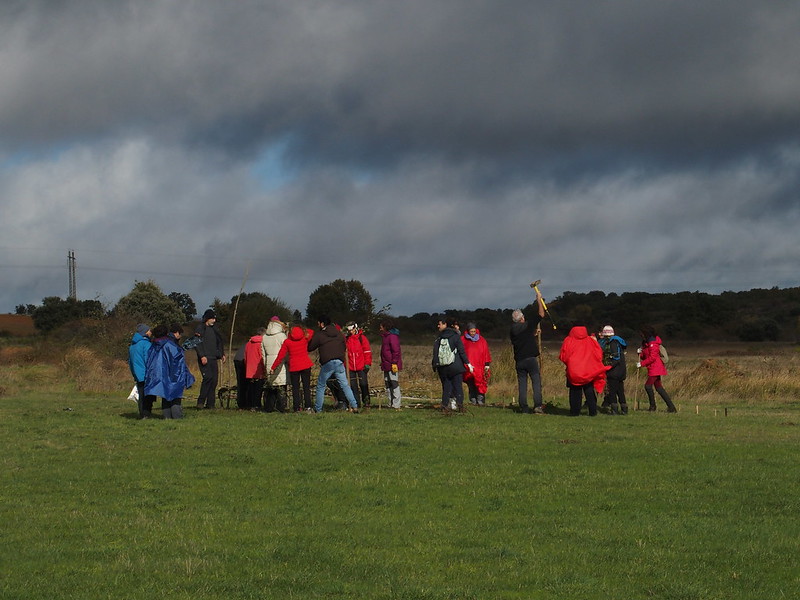
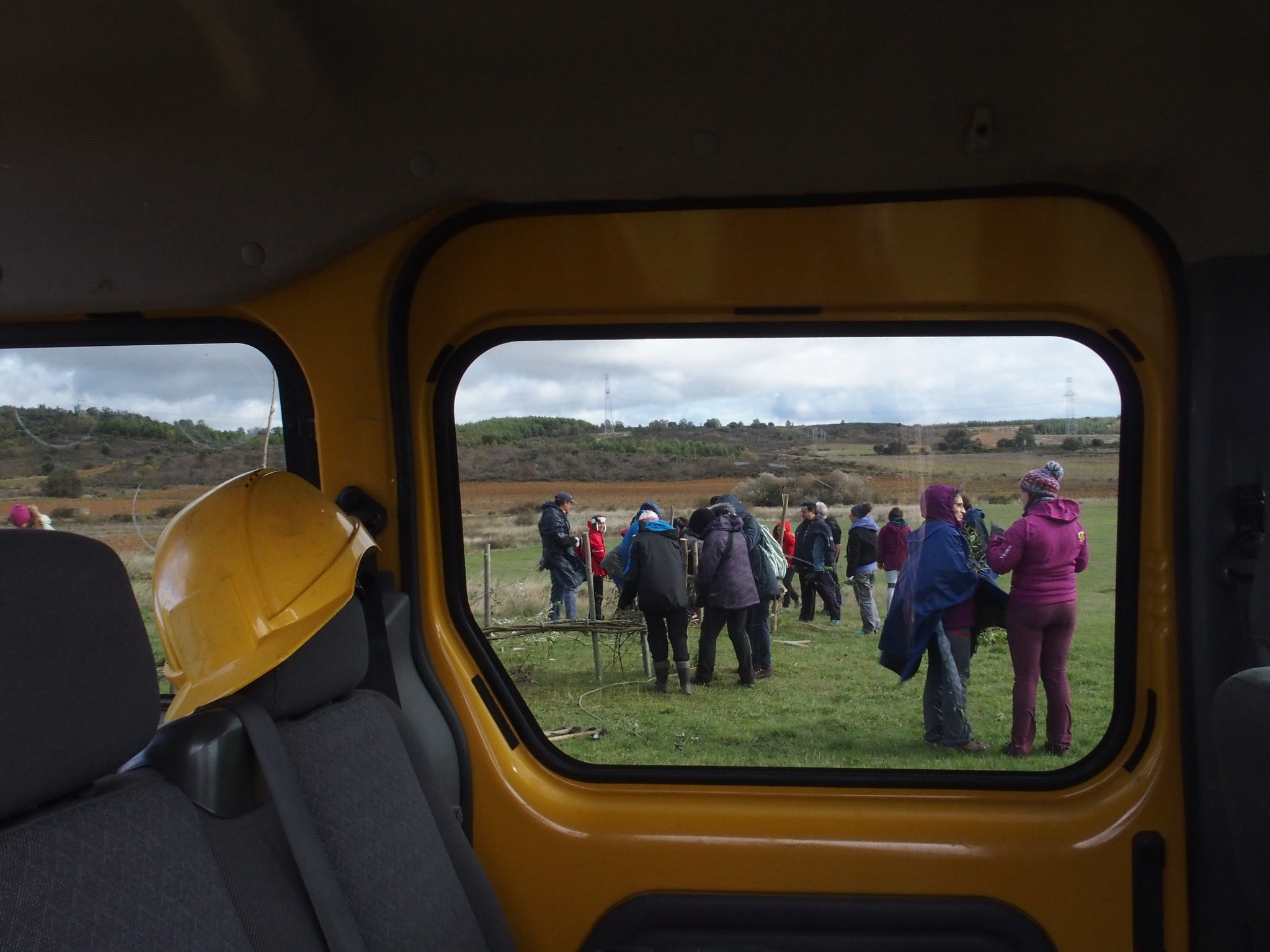
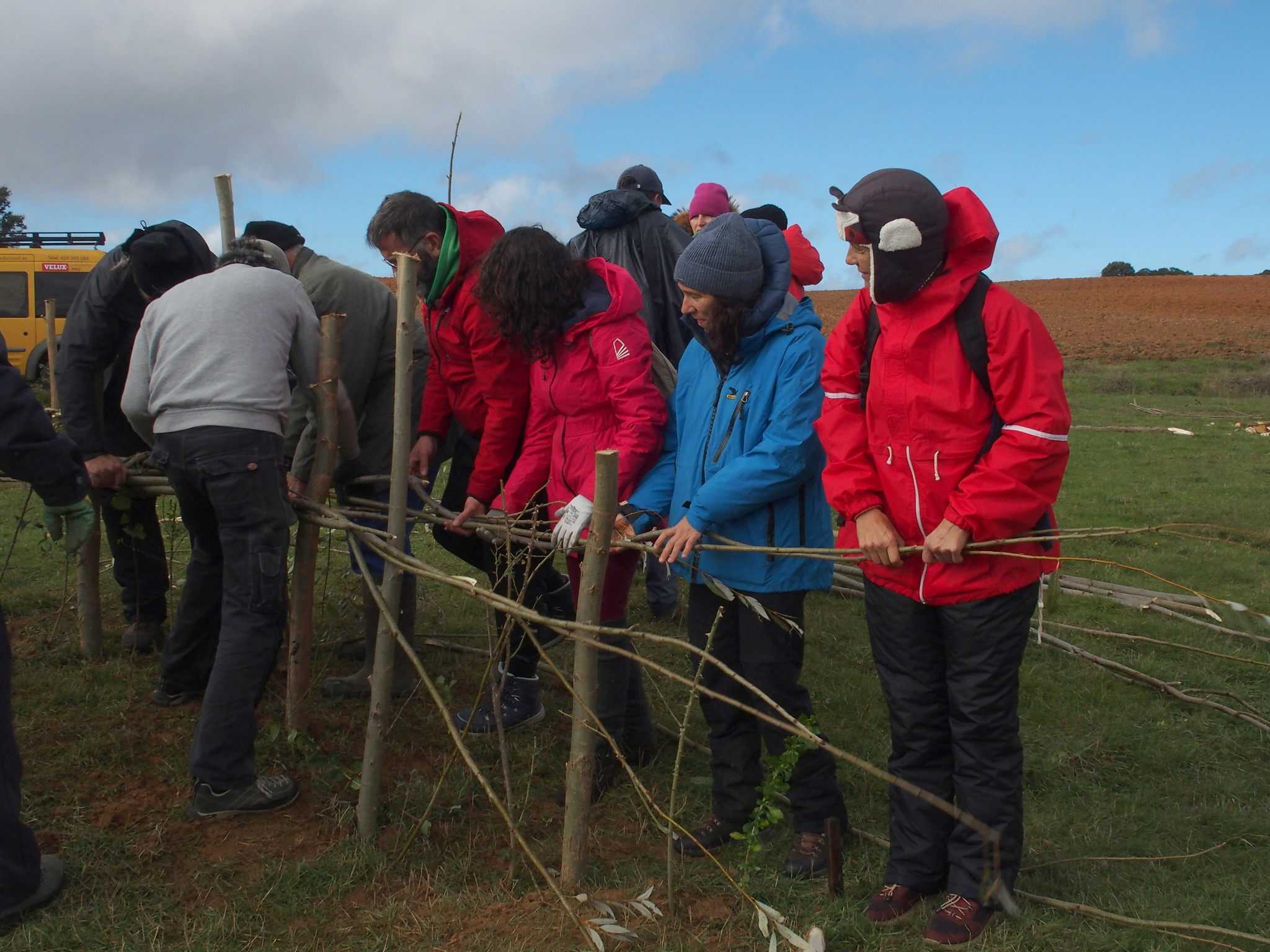
On 4 November, the mediator, Alfredo Escapa, together with the commissioners and the artist, Auxi Gálvez, carried out a collective activity to start building the sebes that will form the heart of the art piece that will be installed in La Sobarriba.
There is a desire in the León region of La Sobarriba, often hidden, to be together. To do something together, to build together. It has been going on for months. Before the beginning of the concomitance of ‘Narrativas Solares’. And it happens because, in places like this, being together has always been what has saved us, but for some time now, this being together has been emptying of content.
So the work, now, consists only in remembering. It is to focus our attention on what was already happening, to put our senses back on the territory, on the land, on its inhabitants (human and more than human), in order to weave life together.
On the 3rd and 4th of November we were doing it in León. Remembering the struggle of ‘La Plataforma en Defensa de La Sobarriba’ and the path that ‘Narrativas Solares’ has chosen in order to give a common voice to the neighbours and to all that is more than human in this territory.
It was a special moment for us. We had thought about how to tell the rest of the public about the reasons that had brought us together in this concomitance, as well as to publicly present Auxi Gálvez, the artist who will accompany with her piece this desire of ours to be together and begin the work in community, in hacendera *(1).
We have explained the reasons on many occasions, in private and public spaces, but doing so in the Faculty of Biological and Environmental Sciences of the ULE with Daniela Canestrari and Estrella Alfaro, professors who are experts in the effects suffered by environmental diversity in the face of the implementation of macro energy structures in rural areas, has helped us to think about how the words that construct the ideas that make up the story, allow us to soften the effects that these infrastructures create on places: we say biodiversity and we think of forests, and not of a continuity of mountains with windmills on their summits; we say farm and we imagine a farmer with his animals, and not a fenced extension of 190 hectares of solar panels; we say landscape and we think of that idyllic landscape designed to be enjoyed by the tourist or the walker, not to be inhabited by those who walk it every day with their chores or by the Black Crow and its breeding in community.
To take up signs and meanings from the place where they had been appropriated. This is one of the ideas of ‘Solar Narratives’. Thinking about this, a quote from John Berger comes to mind, which the recent winner of the Cervantes Prize, Luís Mateo Díez from León, puts at the beginning of the third edition of Relato de Babia: “The self-portrait of each town is not built with stones, but with words, spoken and remembered: with opinions, stories, eyewitness accounts, legends, comments and rumours. And it is a continuous portrait, never to be stopped. Until relatively recently, the only materials available to a people and its inhabitants to define themselves were their own spoken words. The portrait that each people painted of itself, apart from the physical achievements of the fruits of its labour, was the only thing that reflected the meaning of its existence. And this is what we have been immersed in since we began.
Auxi Gálvez accompanies us in our self-portrait, giving us a frame for this self-portrait in which we can be and feel-think (in the manner of Orlando Fals Borda). Thinking from the heart and from the mind with the territory, co-reasoning. But this framework is more than an object, a space or a place. It is a possibility to return to a possible, desired narrative with the co-authors who inhabit the lines of the Sobarribeño territory.
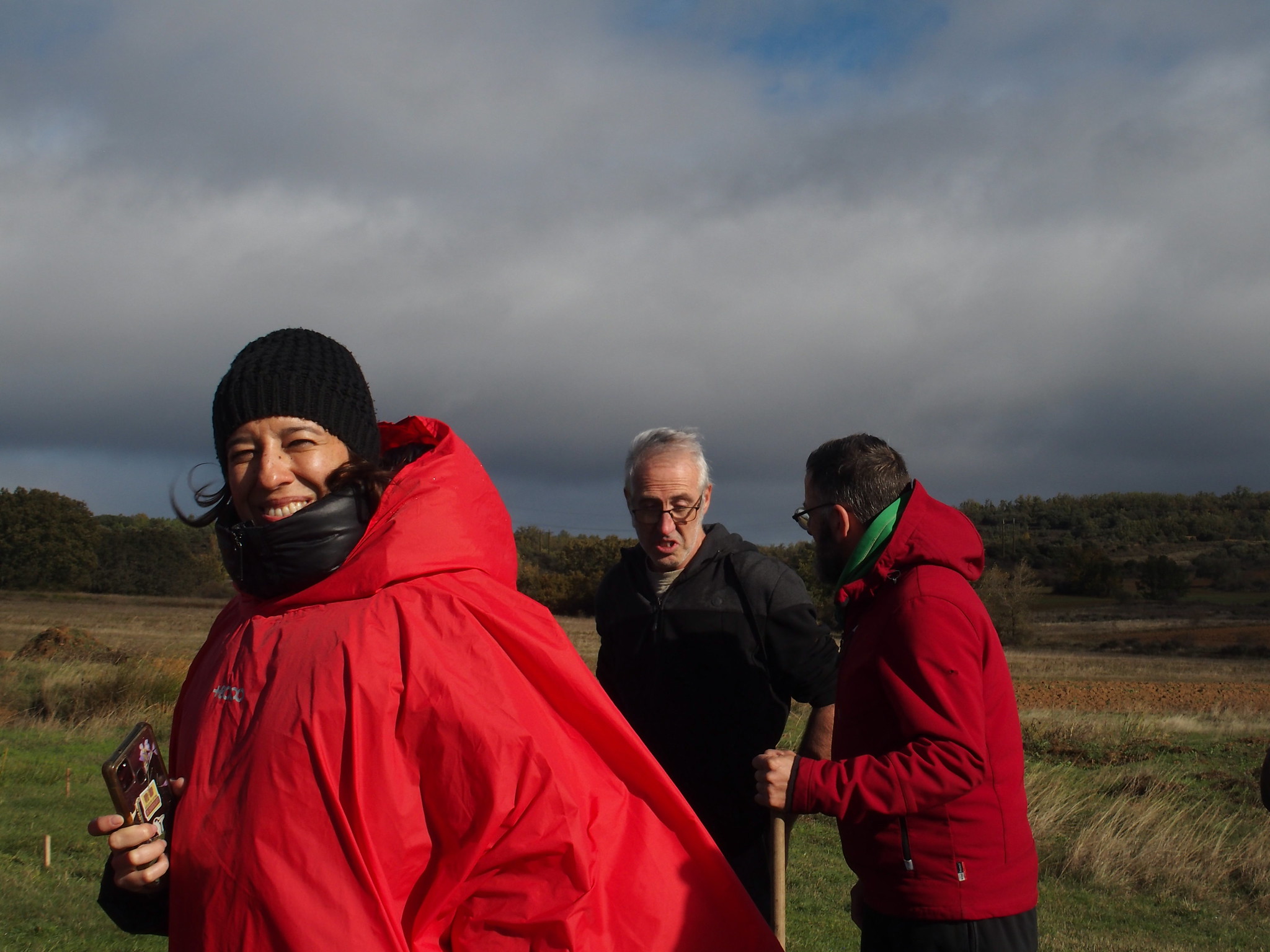
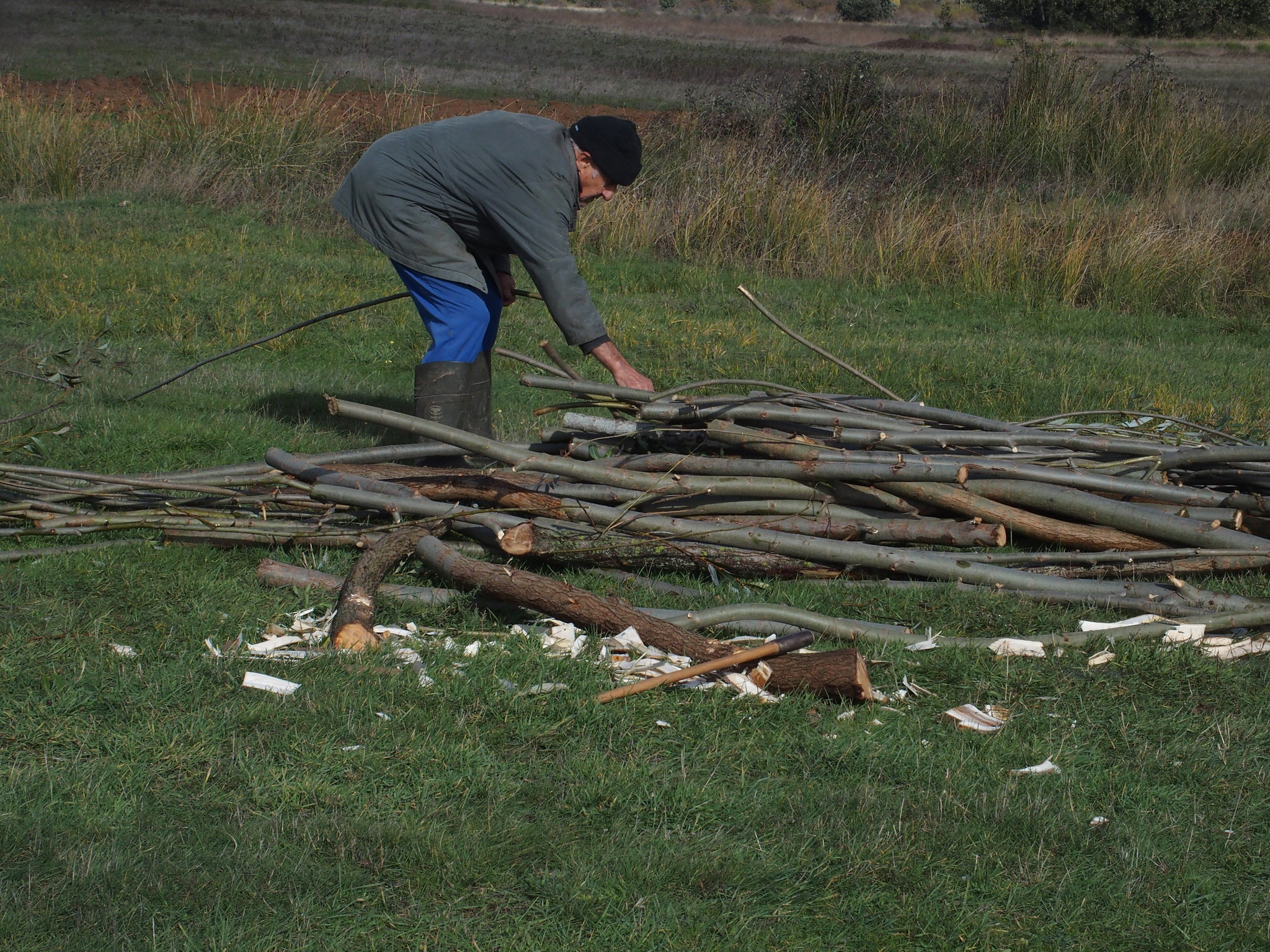
And in writing with knots, as if they were vegetable khipus, we were there on Saturday morning, the 4th. Weaving community with knowledge, art and science through the act of building a living sebe as the beginning of construction. With the patience of the master Justo (a wise neighbour from Villavente who showed us how to make the sebe viva), with the smiles of everyone, with the songs of Azucena, with the photos of Mar, with the sun that dried us after the downpour of water that had soaked us on the way, with the desire to learn of everyone (but especially of Soraya), with the excited guests watching the work begin, with the hincones, with the vilortas and the cincones, with the people of Villavente, with the people of Villavente who were so excited to see how the work began, the vilortas and the cinchos (all these words are important because they allow us to escape from the unifying narrative of the extractivist colonist), with the parva we drank to regain strength and warm up, with the Pintas goat eating the vegetable remains of the construction, with Marina telling us about each bush we planted, with the girls running around the communal land that will host the piece of ‘Solar Narratives’ but that will be for everyone.
Thus, with all these ways of writing in this territory, is how we will continue the narration of the project. Narrating with our hands, our actions, our knots and our desires.
To see the full gallery of the day click here here.
* (1) The "hacendera" or "facendera" in León is a collective work carried out by all the villagers for communal work.