

“O que está en xogo é moito máis relevante que restaurar unha figura” (What is at stake is much more relevant than restoring a figure).”
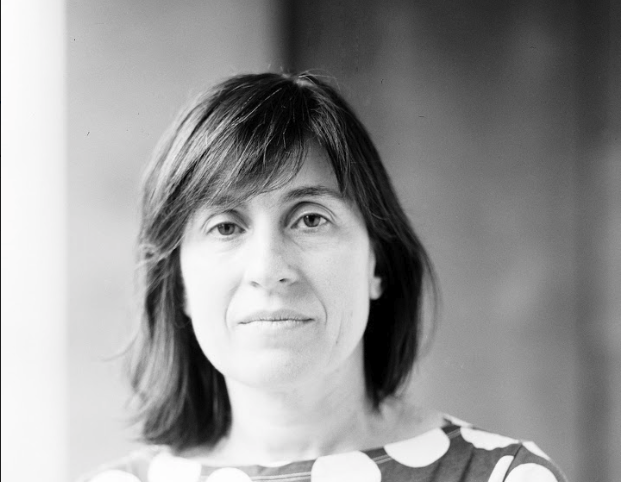
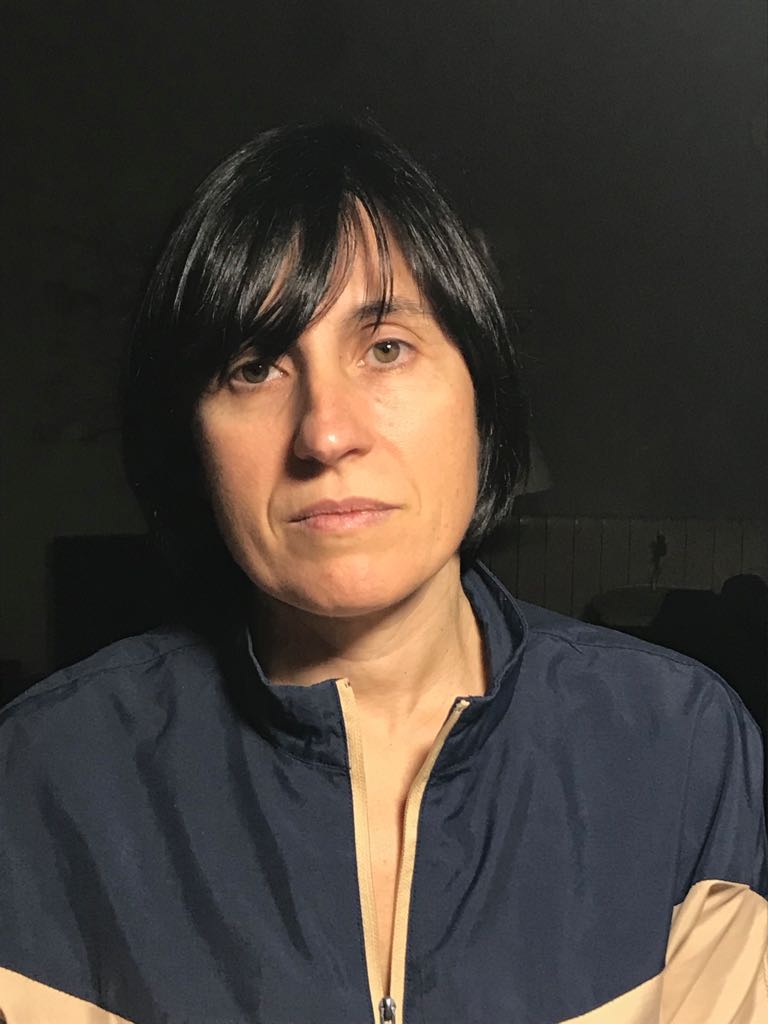
Interview with the researcher and multidisciplinary artist, Carme Nogueira (Vigo, 1970), selected to develop the artistic project that takes place in Betanzos.
To see the text in English click here.
Interview to the researcher and multidisciplinary artist, Carme Nogueira (Vigo, 1970), selected to develop the artistic project that takes place in Betanzos. A concomitance, Legado Coidado, reflects on the historical legacy of the irmáns García Naveira, specifically in the Parque do Pasatiempo, and the relationship between citizenship and heritage.
How do you face the challenge of being in charge of the production of Legado Coidado?
Carme Nogueira (CN): It is a great challenge for several reasons. The first challenge is the place: a special space that has a very important symbolic value and a great prestige in the Galician artistic imagination. The second is the civil society that is behind the whole project. I am used to working with communities, but not in an area of social defence as powerful as the Parque do Pasatiempo.
Your career is closely linked to research and intervention in public space, what are the tools that you bring with you to tackle this project?
When we talk about public space, there are always communities or groups of people who are very visible at a given moment, but there are many levels of visibility that may not be so obvious.
I always try to put all my tools on the table and start from humility, you have to be open to all the things that can happen in the process, something that I like a lot about Concomitentes because you have it built in.
When you arrive at a place, no matter how much you want to get rid of your previous ideas, it is difficult, so it is interesting to try to dialogue with all these layers.
How is the creative process going with the mediator, Fran Quiroga, and the commissioners?
Although I am used to collaborating with communities, this project is a luxury because the work has already been done, I don't have to start from scratch. This is also a greater challenge because the desires of the territory are much more elaborate.
How did they transfer and verbalise this request or collective desire to you, after years of mediation?
We had an online meeting and also a face-to-face meeting with part of the group. The collective desire was very structured, with a dossier that Fran shared with me, so I already had a more or less clear idea of where their desire lay. I think that this desire goes beyond the physical, from the specific place, and extends to the whole territory.
It is to create an intervention on a project and an artistic legacy that is very important in the local context, even on a national level. Do you see this as a burden or a strength?
It is a double-edged sword, the project is a challenge, which is why the possibility of failure is greater. Firstly because of the more elaborate discourse and the expectations it brings with it. I always think from the point of view that my work is a tool, not an end, I don't want to compete with what already exists, but to create resources that serve to highlight the importance of the place or to talk about what is happening there.
How do you think your work is linked to contemporary creation and to a context with this iconography and historical weight?
I am not going to intervene in a space declared a Cultural Interest Asset (BIC), we are going to work on the lost part. My proposal will be along the lines of pointing out that ‘lost’, that which is not seen, real and imaginary.
This project highlights the lack of care for heritage, how will your work dialogue with this responsibility to care for and understand what already exists in the Parque do Pasatiempo?
The most important thing is that people connect with the value of what is in their territory, it is essential to talk about these physical aspects, but also about more abstract aspects such as its use and meaning. When something has meaning for the people who live in a place, it transcends.
And the institution itself is also responsible for this abandonment of the legacy.
Ás veces, cuando falamos do público, prodúcense paradoxos, por exemplo, con ese campo de fútbol que está en ‘estaque dos papas'. This is a metaphor that shows that sometimes decisions are made according to the immediate, the most profitable in the short term.
How to create an artistic work despite the fact that what is needed is an integral rehabilitation of the park?
This is a complicated issue and one that I have reflected on many times. I understand that you think “if there is money, why not invest in taking care of what is already there”.
I don't know if these costs would solve the problem, and I don't know if the work I'm going to create will do so. I don't think an artist has to respond in a practical and pragmatic way to this kind of questions, but he has to generate a new way of seeing things.
Art allows access to places that cannot be accessed in any other way: My idea is not to create a work that solves the problem of the Parque do Pasatempo, but to try to show that what is at stake is much more relevant than restoring a figure.
In this sense, how do you think art helps us to create society?
In art you don't have to be in total agreement to feel included in what you see, to feel part of a community, in a certain sense, but it opens up a place to reconcile different perspectives without arriving at a single point of view.
What is fundamental is the whole process that leads us to this work, it is a project open to all those places that will shape this path, such as the land where we are going to insert the pieces... And what I hope is that, along the way, new voices will appear that we have not been able to choose so far.
«Ás veces, cuando falamos do público, prodúcense paradoxos, por exemplo, con ese campo de fútbol que está na ‘estaque dos papas». This is a metaphor that shows that sometimes decisions are made according to the immediate, the most profitable in the short term".»
What brushstrokes could you give us about your artistic work?
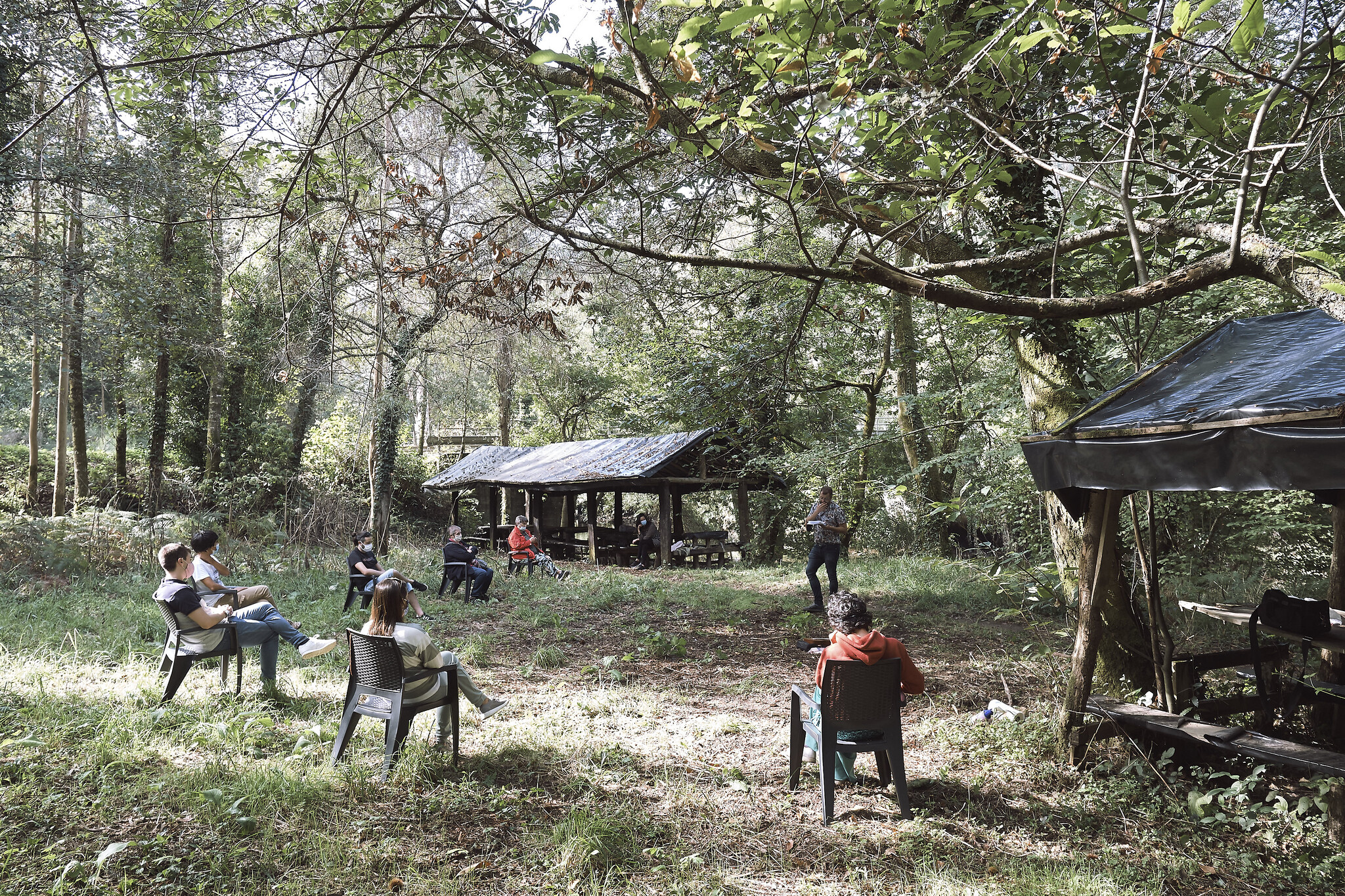
The idea is to create small interventions in several places to create a kind of path or route. If we get the permits we want to recover a lost element of the lower part of the park, where there was a canal connected with the river itself and with the upper part, by means of bridges, caves...
The theme of water in the park is something fundamental, an element that links Pasatiempo with other works by the irmáns García Naveira, such as the washing place. It will be a work where we will be able to sit, where we will be able to play...
In your career, which projects are most related to this process?
It is always difficult to choose, but I would highlight a project from 2007, “Os Camiños”, in an old porcelain factory in Vigo, an area where there was something to conserve and which was also located on the banks of a river. There I worked hand in hand with the locals to ask them what parts of the river should be conserved, which served to reconstruct different stories, finally configured around three fundamental elements: the factory, the river and the land. At that stage I also participated in projects in this line, such as ‘Que facer nas nosas prazas?’, in which I built objects, models, that looked like benches.
In which part of the artistic process do you find yourself and which photos are going to appear in the calendar.
I hope that my proposal will initiate a dialogue on how I think about the territory, and that the local population will share my vision in order to make it a reality.
Agora xa hai un anteproxecto presentado, o seguinte paso será definir en marzo xunto cos comitentes e o concello o lugar das instalacioness. We will also create a meeting or conferences, although I hope that there will be several moments of joint work.
O proceso culminaría coa instalación en setembro, aínda que no verán podemos reunirnos dúas o tres veces, a instalación da peza farase de xeito comunitario.
How do you value this work as a way of strengthening the community's bond around the care of a work?
O éxito sería que se referise ao propio territorio e que este coidado xurda con naturalidade.
“What is at stake is much more relevant than restoring a figurehead”.”
Interview with the researcher and multidisciplinary artist, Carme Nogueira (Vigo, 1970), selected to develop the artistic project of the concomitance that takes place in the Galician region of Betanzos. The concomitance, Legado Cuidado, reflects on the historical legacy of the García Naveira brothers, specifically in the Parque del Pasatiempo, and contemporary philanthropic work.
How do you face the challenge of being in charge of the production of Legacy Care?
Carme Nogueira (CN): It is a great challenge for several reasons. The first challenge is the place: a special space that has a very important symbolic value and great prestige in the Galician artistic imagination. The second is the civil society behind the whole project. I'm used to working with communities, but not in an area of social defence as powerful as the Parque del Pasatiempo.
Your career is closely linked to research and intervention in public space. What are the tools you bring with you to tackle this project?
When we talk about public space there are always communities or groups of people that become very visible at a given moment, but there are many levels of visibility that are perhaps not so obvious.
I always try to put all my tools on the table and start from humility, you have to be open to all those things that can happen in the process, something I really like about Concomitentes because you have it built in.
When you arrive at a place, no matter how much you want to let go of your previous ideas, it is difficult, so the interesting thing is to try to dialogue with all those layers.
What has the creative process been like with the help of the mediator, Fran Quiroga, and the commissioners?
Although I am used to collaborating with communities, this project is a luxury because the work has already been done, I don't have to start from scratch. This is also a bigger challenge because the wishes for the territory are much more elaborated.
How have they conveyed and verbalised this collective request or desire, the fruit of these years of mediation?
We had an online meeting and also a face-to-face meeting with part of the group. The desire was very structured, with a dossier that Fran shared with me, so I already had a more or less clear idea of where his desire was going. I think that this desire goes beyond the physical, beyond that specific place, and extends to the whole territory.
It is to create an intervention on a very important artistic project and legacy in the local context, almost on a national level, do you face this as a burden or a strength?
It is a double-edged sword, the project is challenging, which is why the possibility of failure is greater. Firstly because of the more elaborate discourse and the expectations it brings with it. I always think from the perspective that my work is a tool, not an end, I don't want to compete with what is already there, but to create resources that serve to emphasise the importance of the place or to talk about what is happening there.
How do you think your work will be linked to contemporary creation and to a context with this iconography and historical weight?
I am not going to intervene in the area declared of Cultural Interest (BIC), we are going to work on the lost part. My proposal will be along the lines of pointing out what is ‘lost’, what is not seen, both in a real and imaginary way.
This project highlights the lack of care for a community's heritage, how will your work dialogue with this responsibility to care for and understand what is already there in the Parque del Pasatiempo?
The most important thing is that people connect with the value of what is in their territory, it is key to talk about those physical aspects, but also about the more abstract aspects such as its use and meaning. When something has meaning for the people who inhabit a place, then it transcends.
And for this neglect of the legacy, the institution itself is also responsible.
Sometimes when we talk about the public sector, paradoxes arise, for example, with that football pitch over the ‘potato pond’. This is a metaphor that shows that sometimes decisions are made based on the immediate, the most profitable in the short term.
How to generate an artistic work even though what is needed is a comprehensive rehabilitation of the park?
This is a complicated issue and one that I have often reflected on. I understand that people think “if there is money, why not invest it in taking care of what is already there”.
I don't know if that money would solve the problem, just as I don't know if the work I'm going to create will. I don't think that the artist has to respond in a practical and pragmatic way to these kinds of questions, but I do think that she has to generate a new way of looking at things.
Art gives you access to places you can't get to otherwise: My idea is not to make a work that solves the problem of the Pasatiempo Park, but to try to show that what is at stake is much more relevant than restoring a figure.
«What is fundamental is the whole process that leads us to this work, it is a project open to all those places that are going to shape this path».»
In this sense, how do you think art helps us to create society?
In art you don't have to be in total agreement to feel part of a community, it helps us to reconcile different perspectives.
What is fundamental is the whole process that leads us to that work, it is a project open to all those places that will configure that path, how that land in which we are going to insert the pieces will speak... And what I hope is that, along the way, new voices will appear that we have not been able to hear until now.
What hints could you give us about the work of art?
The idea is to generate small interventions in various places to create a kind of path or route. If we get the permits, we want to recover a lost element of the lower part of the park, where there was a canal connected to the river itself and to the upper part, through bridges, grottoes...
The theme of water in the park is something fundamental, an element that links Pasatiempo with other works by the García Naveira brothers, such as the washing place. It will also be a work in which we will be able to sit, play...
From your background, which projects are most related to this process?
It is always difficult to choose, I would highlight a 2007 project ‘Los Camiños’, in an old porcelain factory in Vigo, a territory where there was something to conserve and which was also located next to a river. There I worked hand in hand with the neighbours to ask them which places in that river should be preserved, which served to reconstruct different stories, finally configured around three fundamental elements: the factory, the river and the land. At that stage I also participated in projects along these lines, such as ‘Qué facer coas nosas prazas’, in which I built objects, models, that looked like benches.
Where are you in the artistic process and what milestones are on the calendar?.
I hope that my proposal will initiate a dialogue about how I think about the territory, and that the commissioners will share their vision for the realisation of that piece.
The next step will be to define the location of the facilities in March together with the principals. We will also create a meeting or conferences, although I hope that there will be several moments of joint work.
The process would culminate with the installation in September, although we may get together two or three times in the summer, and the installation of the piece will be done in a communal way.
How do you see this work as a way of strengthening the community's bond around the care of a work?
The success would be if it were to refer to the territory itself and if this care were to be born naturally.