

When art floods into protest
Ana Moure Rosende Ana Escariz Pérez
Ou de como o río Ulla atravesou a manifestación contra Altri en Compostela
To read the text in English click here.
Art has the capacity to explore new ways of approaching reality, to expand the ways of telling what concerns or affects us. This happened at the demonstration against Altri on 15 January in Compostela. A large number of people flooded the city, shouting loudly in opposition to the macro-cellulose that is intended to be installed in the Ulloa region. This living territory demonstrated, together with many allies, its rejection of the implementation of an industry that would not only affect the Ulloa region, but also many of the territories that belong to the Ulla river basin, both in terms of their ecosystems and food production systems.
The demonstration, called by the Plataforma Ulloa Viva Platform and PDRA, counted, among many allies, with the participatory art project Os Contos do Leite, promoted by Concomitentes since last year. The project seeks, under the leadership of the local community, to highlight the value of the current ways of life in this region while at the same time demanding a future that is inseparable from the land. Among the actions included in this process, which is currently in the collective deliberation phase, is to take advantage of the synergies of art to performativise this collective watercress.

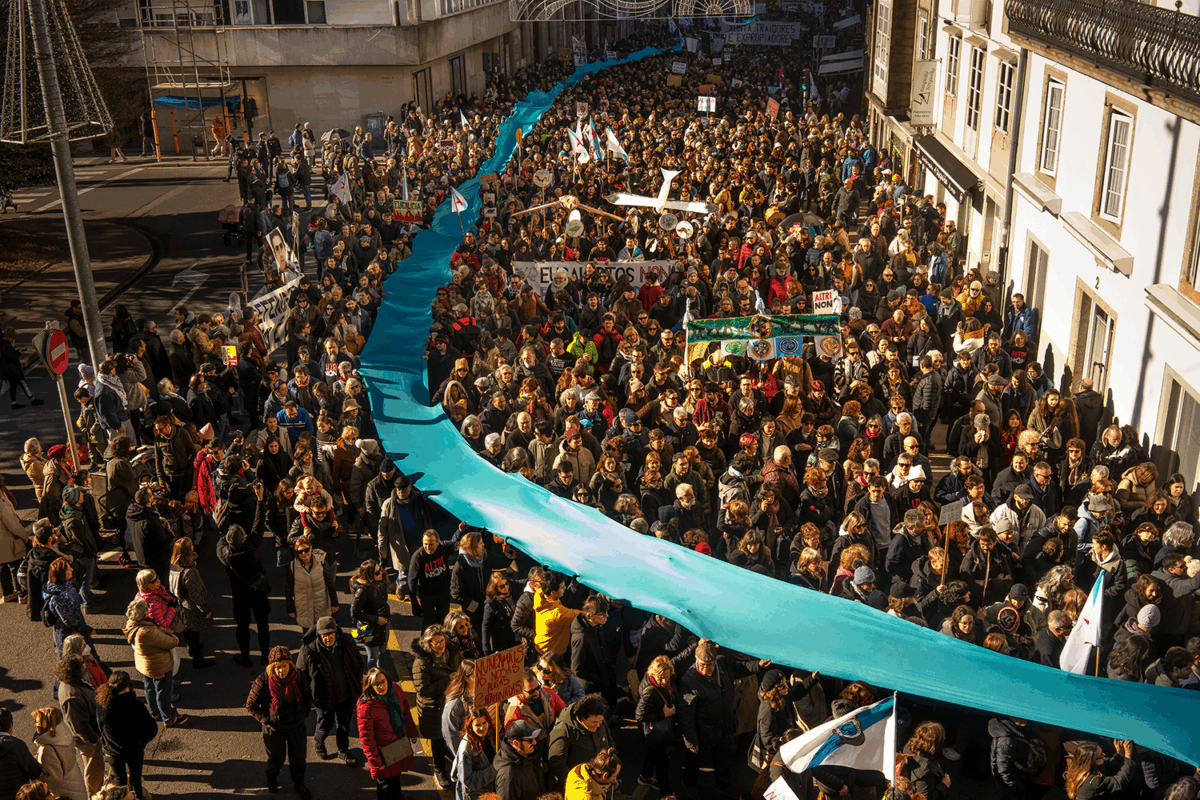
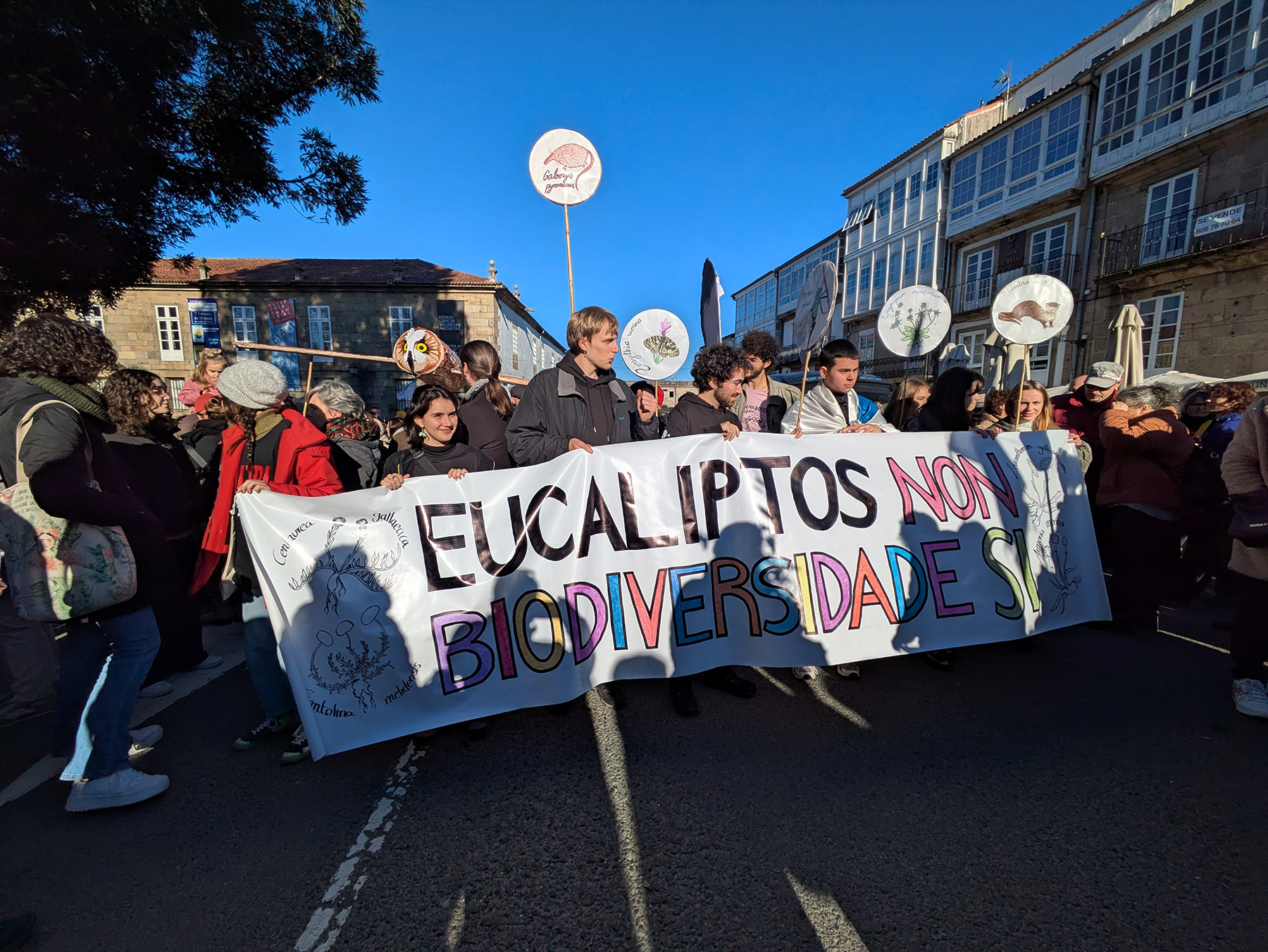
Thanks to many volunteers who supported a long 150-metre-long fire, a simulated river Ulla crossed the capital of Galicia during the demonstration. The fire was accompanied by numerous banners, made by demonstrators, representing some of the naturocultural elements that accompany the Ulla in its course to the Ría de Arousa (cows, troitas, cockles, queixos, mexillóns, páxaros, etc.). Thus, this collective gesture was able to underline the fact that the macrocellulose would affect many of the territories that bathe the river.
In addition to being exhibited in art centres, art is at the service of the public and has the capacity to create new iconic images to respond to contemporary problems. This long tea that ended in such a significant square as the Obradoiro, heart of the great Galician historical demonstrations, continued a series of demonstrations, such as the Nunca Máis, in which the citizens demonstrated their commitment to the care of life through art and creativity.
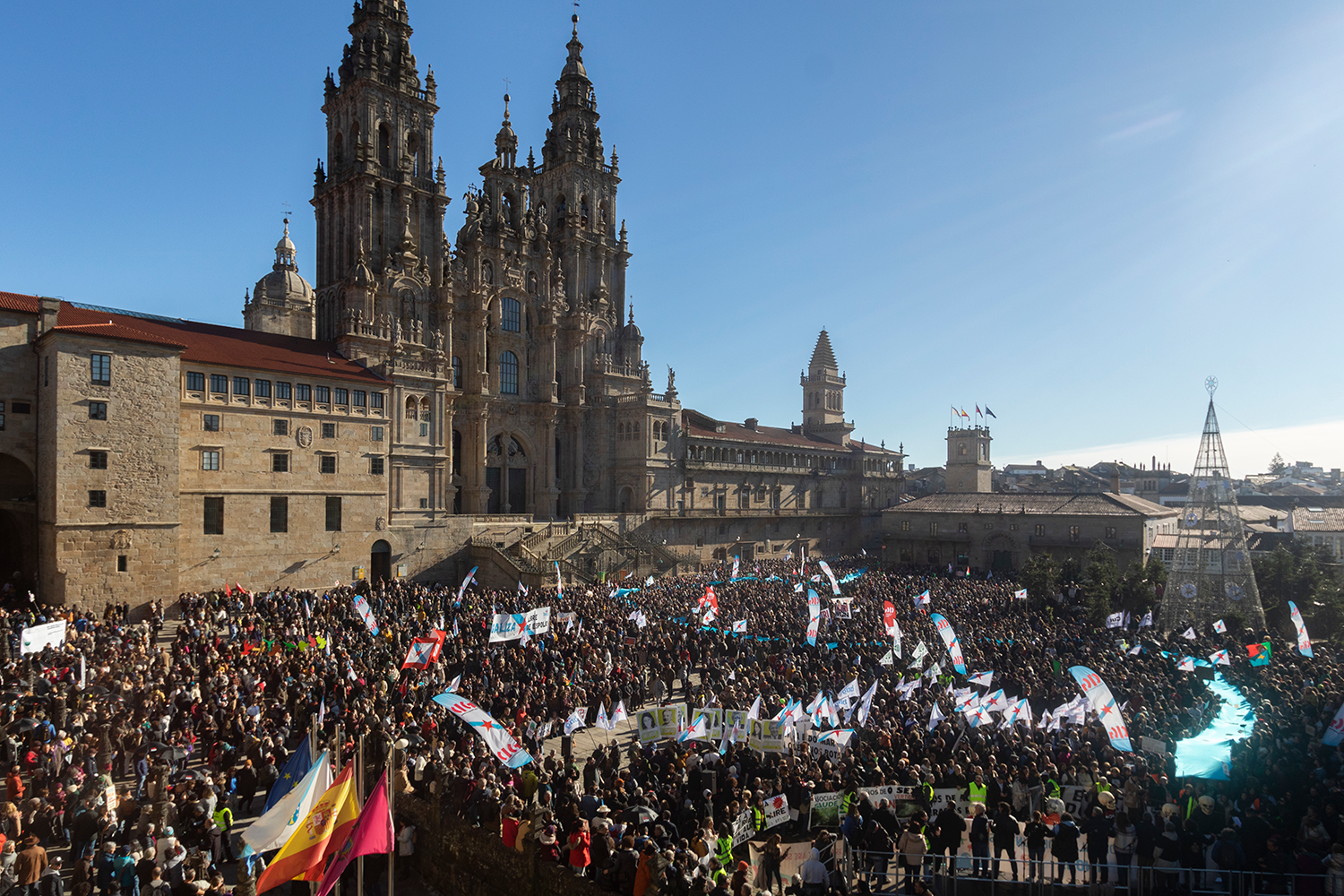
Cover photo by Natalia Varela.
When art floods the protest. Or how the river Ulla crossed the demonstration against Altri in Compostela.
Art has the capacity to explore new ways of approaching reality, to expand the ways of telling what concerns or affects us. This happened at the demonstration against Altri on 15 January in Compostela. A huge number of people flooded the city shouting loudly their opposition to the macro-cellulose plant that is to be installed in the region of A Ulloa. This living territory demonstrated, together with many allies, its rejection of the implementation of an industry that would not only affect the region of A Ulloa, but also many of the territories that belong to the Ulla river basin, both their ecosystems and food production systems.
The demonstration, organised by the Ulloa Viva Platform and PDRA, counted, among many allies, with the participatory art project Os Contos do Leite, promoted by Concomitentes since last year. The project seeks, under neighbourhood leadership, to highlight the value of current ways of life in this region while at the same time calling for a future that is intertwined with the land. Among the actions linked to this concomitance, which is currently in the collective deliberation phase, was to take advantage of the synergies of art to perform this collective cry.
Thanks to many volunteers who held up a 150-metre long canvas, a simulated river Ulla crossed the capital of Galicia during the demonstration. The canvas was accompanied by numerous banners, made by demonstrators, representing some of the naturocultural elements that accompany the Ulla on its way to the Ría de Arousa (cows, trout, cockles, cheeses, mussels, different types of birds, etc.). Thus, this collective gesture was able to underline the fact that macrocellulose would affect many of the territories bathed by the river.
In addition to being exhibited in art centres, art is at the service of the citizenry and has the capacity to create new iconic images to respond to contemporary malaise. This long canvas that ended in a square as significant as the Obradoiro, the heart of the great Galician historical demonstrations, continued a genealogy of demonstrations, such as the Nunca Máis, in which citizens demonstrated their longing for the care of life through art and creativity.