

The missing sculpture
Can processes such as Concomitentes solve latent social problems?
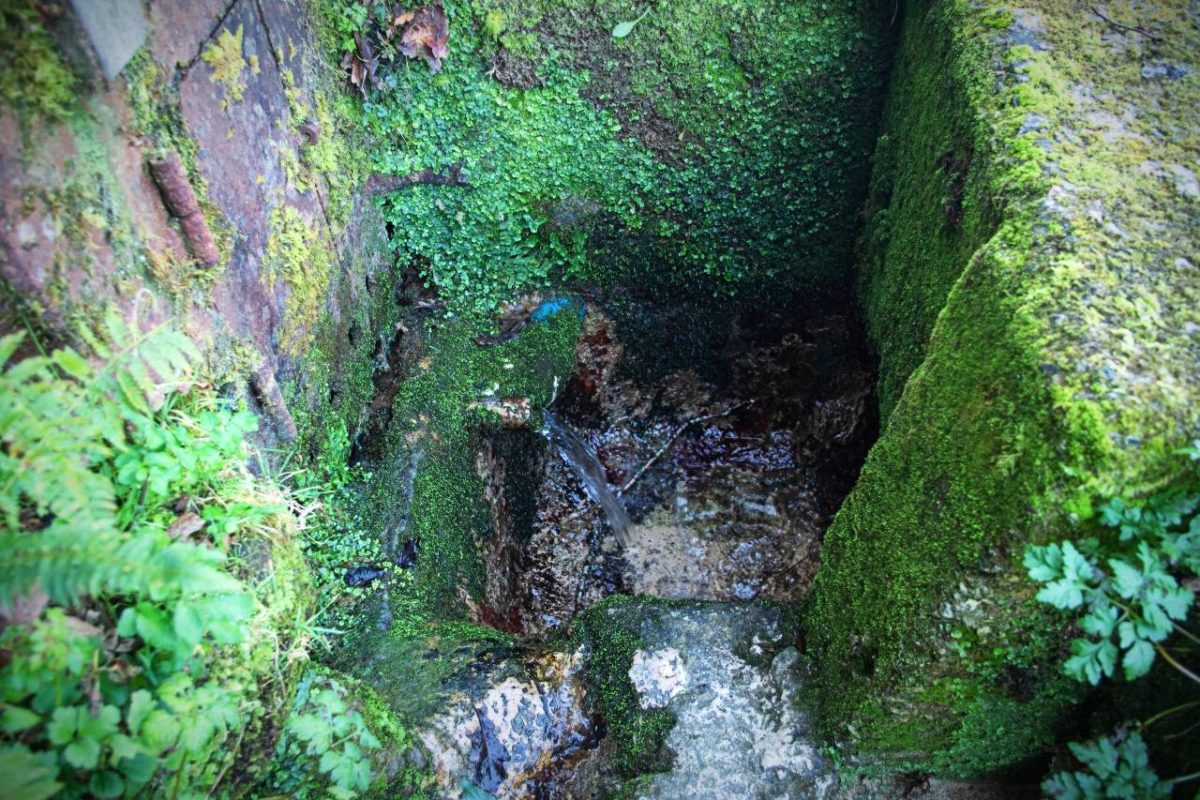
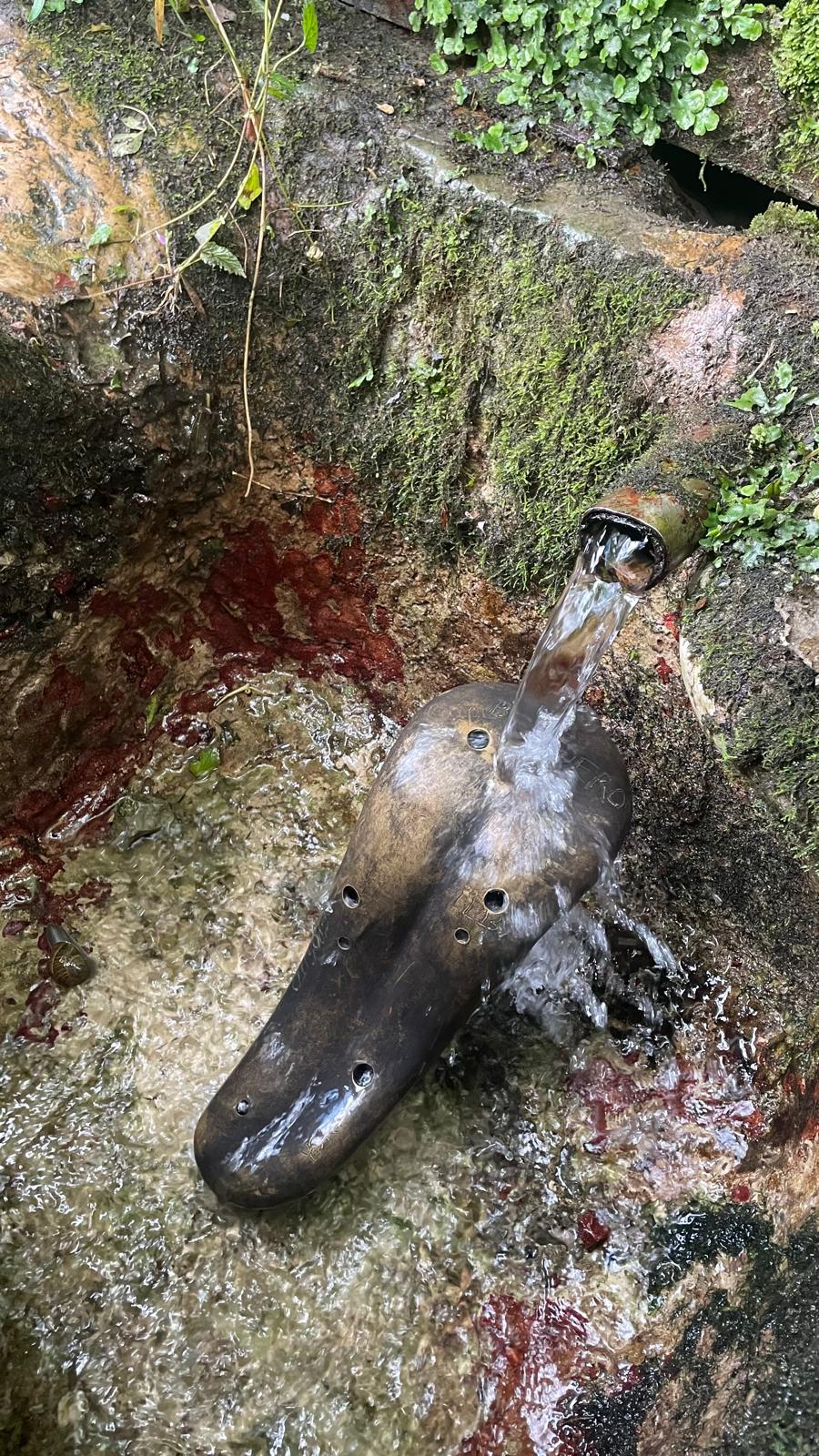
The “Living Waters” concomitance concluded with the inauguration of «Tongues of Water», by Laia Estruch, an installation that includes three sculptures placed in the fountains of Llanos de Penagos. This project was the result of a two-year mediation process and was a milestone in the revitalisation of the village's natural and cultural heritage, which was developed through a community process with the broad support of the village's neighbours.
However, just two weeks after the inauguration, one of the sculptures, located in the Fuente del Cubo, was stolen by unknown persons. It is suspected that rather than theft, it was an act of vandalism perpetrated by someone in the vicinity. This was received with bewilderment and frustration by the local community, which had actively participated for two years in the design and materialisation of the project.
Beyond the event itself, the disappearance of this work has highlighted the complexities and tensions inherent in participatory processes. “Living Waters” opened up previously non-existent channels of communication that allowed locals and new residents to reflect together on the town's heritage. However, the dialogue generated by the project, which in many cases strengthened ties between neighbours, also brought with it moments of friction and has exposed dissonances and differences of perspective that had previously remained latent. The social dynamics of the village, characterised by the coexistence of former residents with those who have chosen Llanos as their new home, have revealed a multiplicity of voices that do not always find consensus.
These tensions are a natural part of any participatory process, where openness to dialogue necessarily implies confrontation of differences. Sometimes it seems that in order to break new ground, disagreements have to be brought out into the open and old conflicts discussed. It is not always comfortable, but perhaps necessary.
How can these projects balance their artistic goals with the needs of long-term social change?
The great potential of the François Hers protocol that governs Concomitentes makes it possible to work on just this aspect, because it lends itself perfectly to being a social catalyst that promotes dialogue. As we have seen many times before, once the group of comitants is constituted, the real and tacit part of the work begins: the projected work of art serves as a pretext for all the people involved to have the opportunity to see their situation and their relationships from a new perspective. A new common space is created, allowing a dialogue that brings together people who have not had the opportunity to meet each other before and allows them to talk about themes that can only be dealt with in the form of a “commission for a work of art”. In this sense, the brief instructions of the Hers protocol open the door to an often much-needed exchange between different population groups. For me, the real value of the Hers protocol lies in this social aspect.
However, many relational art projects and also those of Concomitentes, which, although based on a clear social vocation, are governed by a calendar that is linked to the achievement of artistic objectives: the commissioning of a work, its production and inauguration.
While these projects can generate a significant impact, as has been seen many times over the last decades, the time constraint imposed by this conceptual framework is not always adequate to sustainably address the complexities of work with an important social dimension. Profound transformations in community relations and in the social fabric require other times and milestones than those focused primarily on achieving an artistic outcome.
In this sense, it is worth asking whether processes such as “Aguas Vivas”, which aim to activate the social fabric and promote collective reflections, do not end up stirring up community dynamics without offering sustainable tools to manage them in the long term, with the inherent danger of intensifying divisions and generating additional tensions that can leave the community more fragmented than before. While art has undeniable value as a driver of change and dialogue, its impact can be limited or even counterproductive if it is not accompanied by an ongoing commitment to accompany the social processes it unleashes.
The removal of the sculpture therefore invites us not only to reflect on the care of shared heritage or on how to help the people of Llanos to overcome their internal tensions, but also to question the tools and approaches used in processes that seek to have a social impact through art. How can these projects balance their artistic objectives with the needs of long-term social change? Perhaps the real challenge lies in integrating both dimensions and opening paths towards interventions that, although framed in the artistic, consider as a priority the social sustainability that makes them possible.