

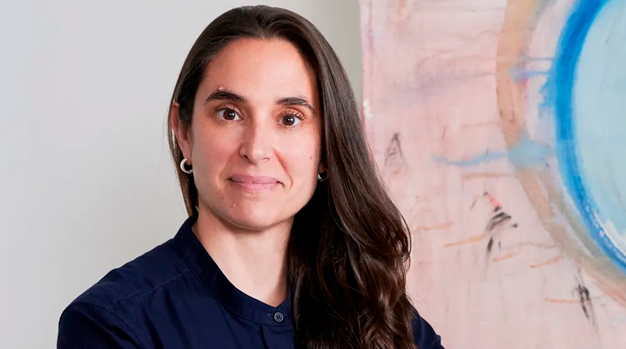
The artist Asunción Molinos Gordo will create a work with the community of Montes de Couso.
The artistic proposal based on nature, which the contemporary artist will produce in a participatory process together with the community, seeks to raise awareness of the ways of managing the communal forest so that future generations can maintain its legacy.
To see the text in Galician click here.
The Montes de Couso, located in Gondomar (Pontevedra), is one of the many associations of commoners that exist in Galicia and is made up of 84 commoners who manage 330 hectares of woodland, of which three hundred are productive.
Since the beginning of 2023 this community has been working hand in hand with the mediator Natalia Balseiro at ‘Common Ground’ of Concomitentes, an initiative within the framework of the European project ‘Art Living Lab for Sustainability’, which seeks to promote innovation ecosystems to achieve artistic solutions based on nature.
After a year's work of participation and mediation that highlights the present and future life and way of life of these mountains, a contemporary artist has been chosen. Asunción Molinos Gordo (1979, Guzmán, Burgos) to develop an artistic process that will make known the ways of managing the communal forest so that new generations can perpetuate its legacy.
Tierra Común‘ is now entering a second phase of work, in which the creator will initiate different meetings - which will combine research, exploration of the territory, accumulation of knowledge about the communal forests, generation of links or opening of new conversations and dialogues - to give shape to a work that will respond to the wishes defined by the community members, and which will see its fruits in October 2024.
This combination of desires and participatory processes - built on collective negotiation and listening - will create a dynamic of work and research to create a more solid community that incorporates new knowledge and experiences, and builds links with other key actors, such as artists, cultural agents, neighbours, among others, finding in the creation of networks and community fabrics the same strength to build a sustainable future.
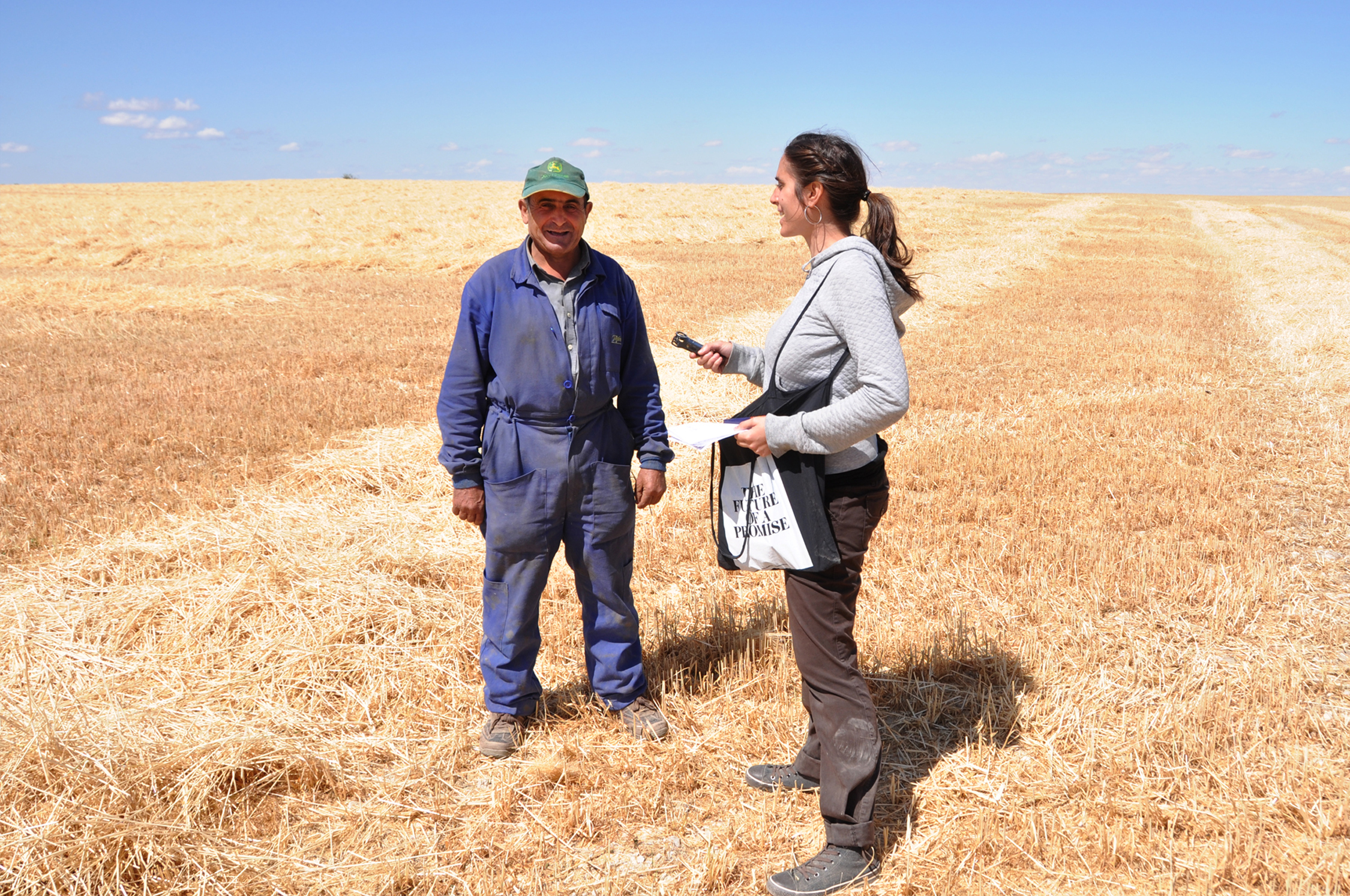
The artist, a creator with a strong link to the rural environment and participatory processes.
Asunción Molinos Gordo is a researcher and visual artist with a practice crossed by disciplines such as anthropology, sociology and cultural research. A way of doing that questions the categories that define «innovation» in today's dominant discourses, and that works to generate a ‘less urban’ way of understanding progress.
From this perspective, the main focus of his work is on the ‘contemporary peasantry’, the understanding of the figure of the small or medium farmer not only from a logic of ‘food producer’ but rather as a ‘cultural agent’, responsible both for perpetuating traditional knowledge and for generating new knowledge in the face of the challenges posed by the current context.
His work uses installations, photography or video, these and other formats serve him to examine the rural environment, - driven by a strong desire to understand the value and complexity of its cultural production - also alongside the burdens that keep it invisible and marginalised from general discourses. His catalogue includes works that reflect on land use, nomadic architecture, farmers' strikes, bureaucracy in the territory, the transformation of rural labour, biotechnology and the global food trade.
Her work has been exhibited at venues such as Art Jameel, Dubai, UAE; IVAM, Valencia, Spain; Victoria & Albert Museum (London, UK), Delfina Foundation (London, UK), ARNOLFINI (Bristol, UK), The Townhouse Gallery (Cairo, EG), Darat Al Funun (Amman, JO), Tranzit (Prague, CZ), Cappadox Festival (Uchisar-Turkey), The Finnish Museum of Photography (Helsinki, FI), Museo Carrillo Gil (Mexico), MAZ Museo de Arte de Zapopan (Guadalajara, MX), MUSAC (León, ES), CA2M (Madrid, ES), CAB (Burgos, ES), Matadero (Madrid, ERES) or La Casa Encendida (Madrid, ERES), among others.
Europe-wide project, with three projects in Spain, France and Belgium.
The European project, Art Living Lab for Sustainability, is funded by the Creative Europe programme of the European Union and coordinated by Concomitentes together with De Nieuwe Opdrachtgevers, La Société des Nouveaux Commanditaires and the University of Santiago de Compostela.
Its challenge is to address three community-based management mechanisms: that of the forest with ‘Tierra Común’ (Monte Vecinal de Couso, Galicia, Spain); clay with ‘Clay Commons’ (Boom, Flanders, Belgium); and water with ‘Water Commons’ (Parc Naturel Régional du Haut-Jura, France).
The artist Asunción Molinos Gordo will create a work of art with the community of Montes de Couso
The artistic proposal based on nature, which the contemporary artist will produce in a participatory process together with the community, seeks to raise awareness of the ways of managing the communal forest so that future generations can maintain its legacy.
Os Montes de Couso, located in Gondomar (Pontevedra), is one of the many associations of woodlands that exist in Galicia and is made up of 84 communeiras and comuneiros that manage 330 hectares of woodland, of which three hundred are productive.
Since the beginning of 2023, this community has been working with the mediator Natalia Balseiro in ‘Terra Común’ by Concomitentes, an initiative framed within the European project ‘Art Living Lab for Sustainability’, which seeks to promote innovation ecosystems to achieve artistic solutions based on nature.
After a year of participatory and mediation work that highlights the value of present and future life and the way of making mountains, the contemporary artist Asunción Molinos Gordo (1979, Aranda de Duero, Burgos) was chosen to develop an artistic process that will raise awareness of the ways of managing the communal forest so that new generations can perpetuate its legacy.
Thus ‘Terra Común’ now enters a second phase of work, in which the creator will initiate different meetings, which will combine research, exploration of the territory, accumulation of knowledge in the area of the community forests, generation of links or opening of new conversations and dialogues, to give shape to a work that will respond to the desires defined by the community members, and that will see its results in October 2024.
This combination of links and participatory processes, - built on collective negotiation and choice - will create a dynamic of work and research to create a more solid community that incorporates new knowledge and experiences, and forges links with other relevant actors, - such as artists, cultural agents, citizens, among others -, bringing together in the creation of networks and community fabrics the same strength to build a sustainable future.
The artist, a creator with a strong link to the rural environment and participatory processes.
Asunción Molinos Gordo is a researcher and visual artist with a practice that crosses disciplines such as anthropology, sociology and cultural research. A way of doing that questions the categories that define «innovation» in today's dominant discourses, and that works to create a less urban way of understanding progress.
Under this prism, the main focus of his work is centred on the contemporary peasantry, the understanding of the figure of the small or medium farmer, not only from a ‘food producer’ perspective, but rather as a ‘cultural agent’, responsible both for perpetuating traditional knowledge and for generating new knowledge in the face of the challenges posed by the current context.
His work uses installations, photography and video, and these and other formats serve to examine the rural environment, driven by a strong desire to understand the value and complexity of its cultural production, as well as the burdens that keep it invisible and marginalised from generalist discourses. Its catalogue includes works that reflect on the use of the land, nomadic architecture, farmers' folklore, bureaucracy in the territory, the transformation of rural work, biotechnology and the world food trade.
O seu traballo foi exposto em lugares como Art Jameel, Dubai, Emiratos Árabes Unidos; IVAM, Valencia, España; Victoria & Albert Museum (London, UK), Delfina Foundation (London, UK), ARNOLFINI (Bristol, UK), The Townhouse Gallery (Cairo, EG), Darat Al Funun (Amman, JO), Tranzit (Prague, CZ), Cappadox Festival (Uchisar-Turkey), The Finnish Museum of Photography (Helsinki, FI), Museo Carrillo Gil (Mexico), MAZ Museo de Arte de Zapopan (Guadalajara, MX), MUSAC (León, ES), CA2M (Madrid, ES), CAB (Burgos, ES), Matadero (Madrid, ES) e La Casa Encendida (Madrid, ES), among others.
Europe-wide project, with three projects in Spain, France and Belgium.
The European project, Art Living Lab for Sustainability, is funded by the European Union's Creative Europe programme and coordinated by Concomitentes together with De Nieuwe Opdrachtgevers, A Société deas Nouveaux Commanditaires and the University of Santiago de Compostela.
Its challenge is to attend to three community management mechanisms: the forest with Terra Común (Monte Veciñal de Couso, Galicia, Spain); the clay with Clay Commons (Boom, Flanders, Belgium); and the water with Water Commons (Parque Natural Rexional do Alto Xura, France).