

"Art and culture can make issues a driving force and a place to work".
The work will be inaugurated next spring and aims to restore the community's relationship with its water heritage and create a social space for exchange and dialogue.
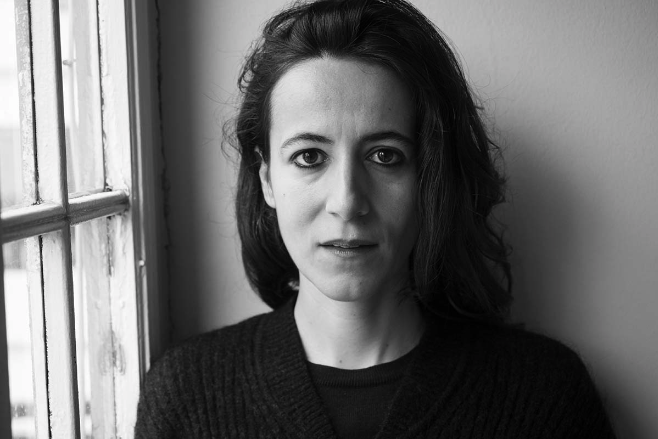
The Conomitentes group of Llanos de Penagos (Cantabria) has chosen the proposal of the artist Laia Estruch. In this interview, Laia explains in more detail her artistic proposal, a work that seeks to recover the relationship between the community and its sources and generate a social space for exchange and dialogue.
Concomitentes is a cultural project that addresses social problems through an artistic proposal. How do you value the potential of art and culture to help in these environments?
Art and culture raise various points of view of a problem and can make the problem a place to work from.
In this sense, culture and art can contribute their grain of sand to the problems by bringing out the positive and creating a school in which we all learn together.
Concomitentes is a project that has been able to identify the potential of society's problems to generate a light that becomes more important than the problem itself.
On your first visit to Llanos, you spoke of the inspiration offered by the sound of water. How do you connect your artistic proposal with the Cantabrian landscape and natural environment?
When I met the people of Llanos, the water sounded all the time and transported you around it. This is very interesting, because water has different sounds: there are times when there are underground passages that you can't locate, the presence of the three fountains, when we finished it was raining cats and dogs, the passage over the bridges... The different forms of water were very present.
Tell us about other similar or related projects that will be connected to this ‘Living Waters’ work.
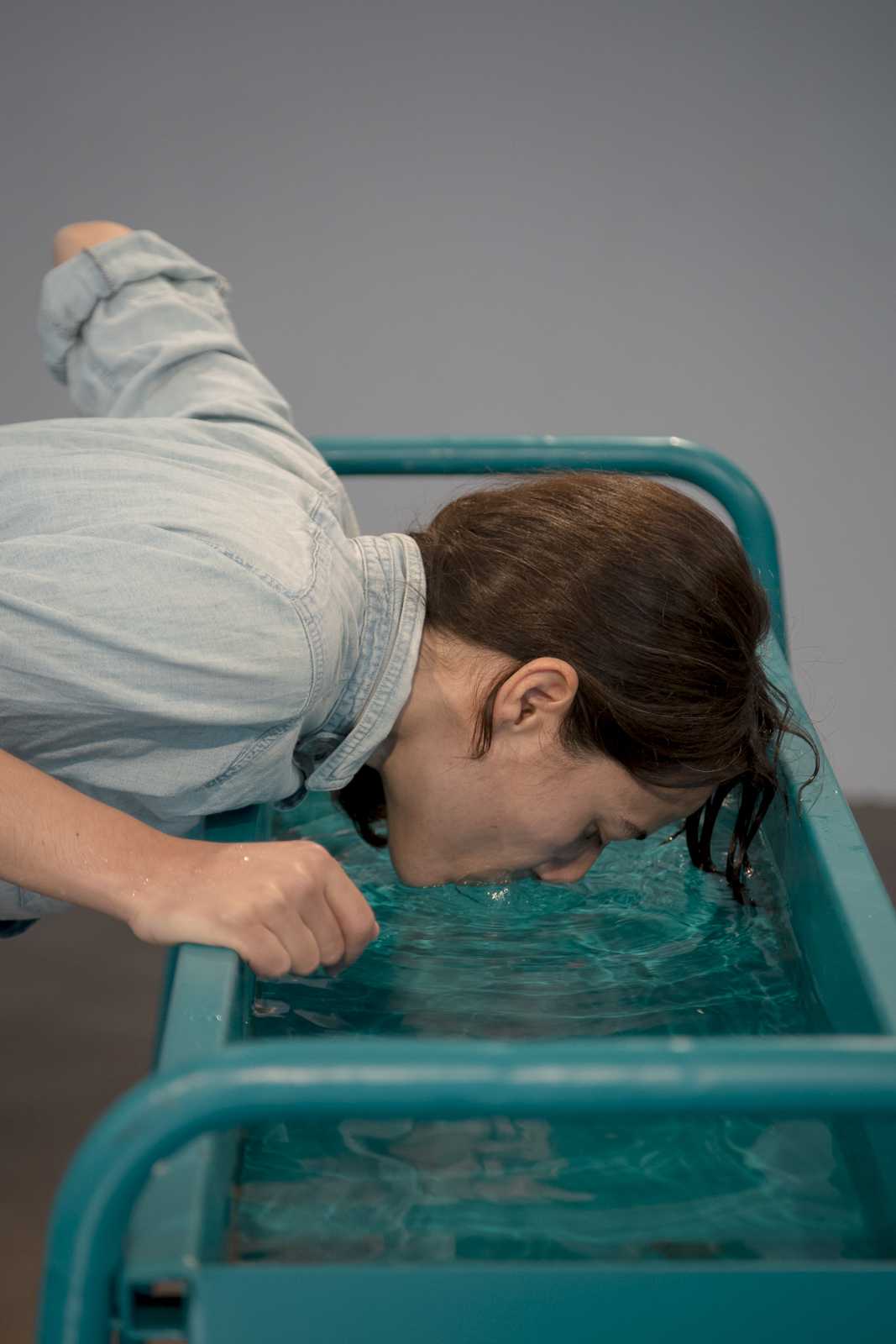
In each project I try to rescue something that inspires me to go on, even if it is very different, there is always something in previous works, one project leads to another and all my research has to be revised in order to continue. In this sense, the resource of water is very present in my practice and is an element that I have integrated in three of my projects. In ‘Sibina’, in particular, I have worked on the “water women” - mythological beings from Catalonia, who are also present in Mallorca, the Basque Country and Cantabria -, from which I wrote a tonada or field song inspired by an archive where ancient songs were stored with which people told each other about their daily lives.
How does this commission relate to your own artistic career?
When I arrived at Llanos I found the same landscape that I had written for ‘Sibina’. As I walked through it, it didn't seem to me to be a foreign terrain, but I thought “oops, I'm walking through some of the pieces I've already worked on”. I like the theme of water and, above all, I like being able to explore it in a different way. And when I heard about the problem of the village fountains, it was immediately clear to me what I wanted to do.
How was the invitation to be part of the artistic production of ‘Living Waters’?
The mediators, Sören Meschede and Alejandro Alonso, explained to me what Concomitentes is and the project they wanted to do with the village of Llanos. I was also interested in the landscape and the land of Cantabria, an opportunity to get to know this territory, the countryside and rural life. Four of us artists were invited to propose a preliminary project after having visited Llanos and exchanged impressions with the community. I, in this first meeting, coincided with the artist, June Crespo, and this created an opportunity to share from the artistic community. There were four artists, four proposals, and the neighbours chose one of them.
«I like the subject of water and, above all, I like to be able to explore it in a different way. And when I heard about the problem of the town's fountains, it was immediately clear to me what I wanted to do».»
And how has the exchange been with the mediators who are the link between you and the clients (or citizen groups)?
Very positive because they both know the community very well, a community where many generations live together. There are young families with children, older people who know the history and how the village has changed, there are people who have their business here... It was a long and intense day in which I had the opportunity to talk to all of them and be part of their stories. The mediators were always there, very present and attentive to our conversations, which culminated in a snack meeting where the neighbours openly expressed to us that they wanted to work on fixing the three fountains of the village and create a space around them to enjoy them.
Describe what artistic proposal you defined from this?
I want to give a voice to these three fountains, an autonomy, a way of functioning, to give a gesture, a sound and a rhythm to the water... I also want these three fountains to be distinguishable, so that, if they were together or if you recorded them, they could sing a song.
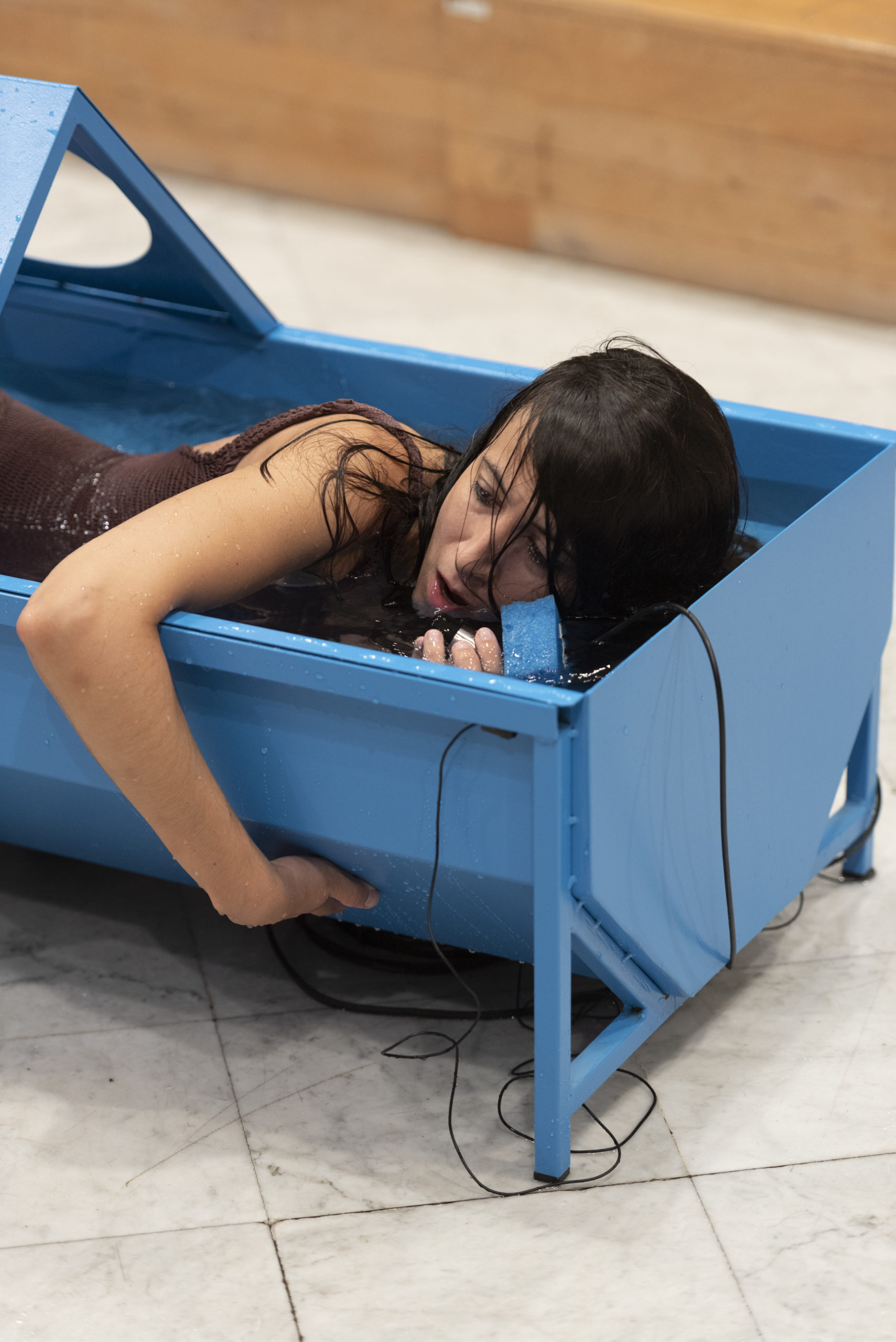
My work has several layers in various formats. Among them, I work with the voice and make recordings, I use experimental music... that's why I also proposed to them, as in ‘Sibina’, to invent a story in relation to the life of the people and their history and anecdotes, and this in relation to their life in Llanos and with the sources.
To be able to do a score and leave a song to which other instruments from the region could be added and, afterwards, to work on a closure that remains in the community beyond the sources. This is linked to the idea of returning to the traditions of orality.
Share with us details of this year's production schedule.
We are preparing a festival for October and, from there, we have stipulated a few days for the town to start looking for local craftsmen, creators from different fields and materials such as cement and stone, with whom to work on this reconstruction of the fountains. I could even see an application of what is already there.
The idea is that we all contribute, the people have said “they are there to help me with whatever I need”. We have discussed all these initial stages, also so that I can work on prototypes and everyone can contribute their ideas. The ideal time is to start now and make the final presentation in spring-summer, after the winter thaw, the village water will sound.
In Concomitentes the work is in common with the community, in this case Llanos in Cantabria. How has it been, firstly, to work in a participatory project and, secondly, to incorporate this layer into your creative work?
It makes me work in a different way, I work in a network, but in my own way, with my own collaborators specialised in different types of material. In this project I'm going to get out of this comfort zone and I'm looking forward to it. I will have more dialogues, working in collaboration, with all that that entails. But I am very open, we are going to learn from each other.
The resulting artwork remains as a legacy of the community. How do you value the fact that art remains in the hands of a community, not a public institution or entity?
Fantastic. It is a way of valuing experiences around artistic work and for people to get to know the processes and familiarities of the contemporary artistic process. For posterity, apart from this work, this story will remain and they will have something to tell. There is a very transversal learning process for the whole town that takes care of these pieces and that end up being part of the landscape and of the town.
How do you think this work can contribute to the creation of ties and new networks in the community?
What I want is for the whole journey to be a place for learning. It's positive because we're building something, they're going to learn more about themselves, in terms of creativity and how an idea can be executed and brought to fruition.
Awareness, the endurance of the creative times, all this will be inserted in an artistic process that has its own life and course, and they will learn as they go through these different phases. The during and after will be very surprising for all of us, and also for me, because we will be situated on an unknown plane that will give us an affection for listening and embracing the development of the production. We will get to know each other from the depths.