


Arredor da produción dun desexo colectivo
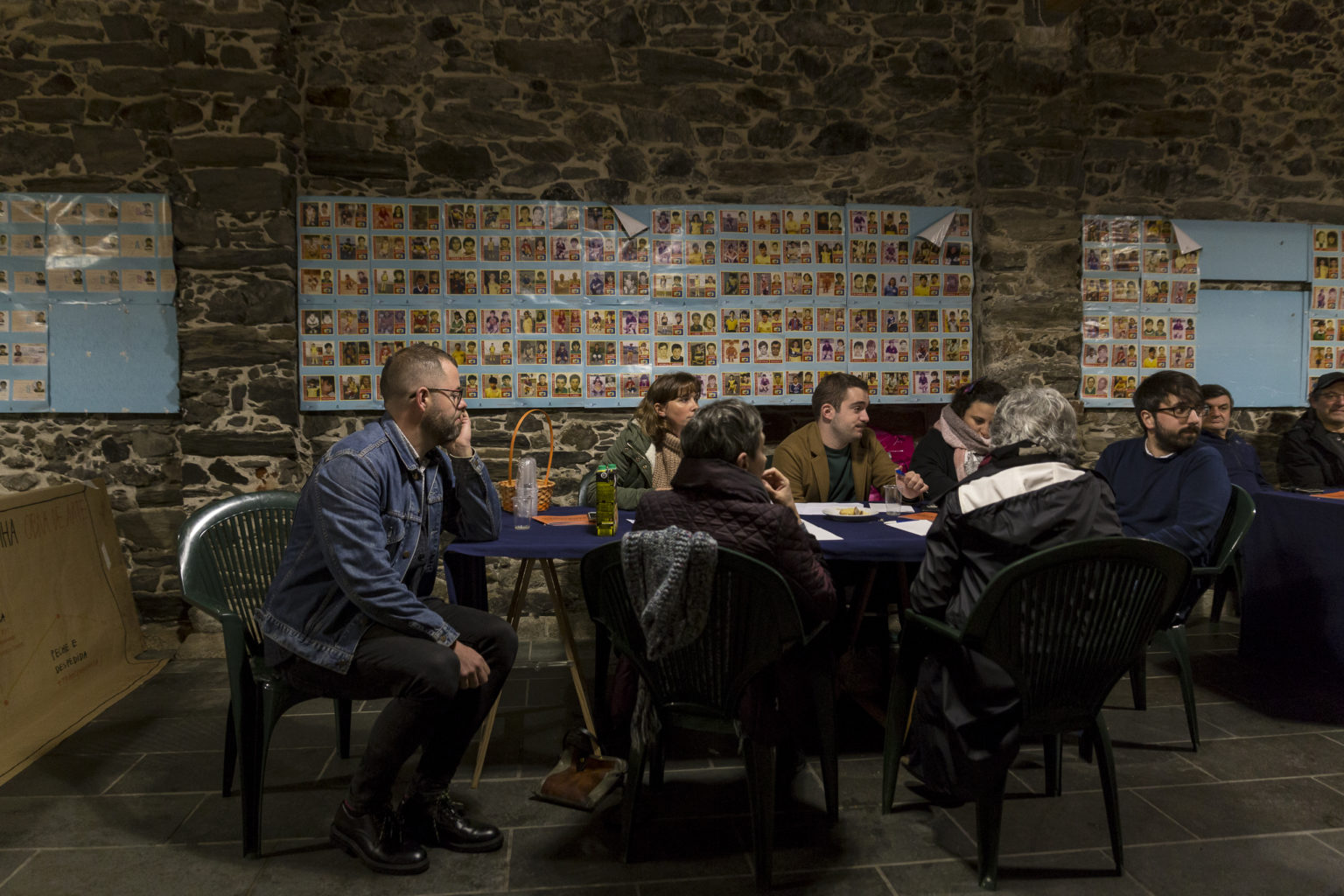
Relato da xornada do 24 de xaneiro.
It may be that this whole process that we are about to carry out is the engine of a machine that produces collective desire. That, in some way, the great challenge of this project is none other than learning to desire in community. But, which mechanisms move us to desire something? And what do we need to move from personal desire to common desire? This machine for producing collective desires required a more intimate gathering, in a place where the participants felt at home; a familiar and comfortable space. If we have a common will, if we can work for similar things in our environment, then we needed the intimacy to bring them out.
In the country's vineyard, a glass of wine and some wine bottles awaited the thirty people who gathered to continue the participatory process of commissioning a work of art for Betanzos, following in the wake of the legacy of the irmans García Naveira. The country's vineyard, with the table set and the fireplace lit, seemed to provide us with a familiar and refined environment in which to sit down and discuss our anxieties and try to put them into words. The premise of the day seemed complicated. It was a question of negotiating the desire, of beginning to outline this commission to complete the first phase of this project. That's why it was also a celebration of the end of this stage and the beginning of the next: the choice of the artist and the materialisation of the commission.
But, how does it connect with desire? What would we like to happen in Betanzos, to materialise this personal and collective desire in a work of art? The proposed game was to put ourselves in the artist's shoes; to use the tools that art gives us to begin to imagine that work and, based on the proposals, to begin to delve into them, taking into account all the criteria that were emerging from the previous sessions.
To do this, we cleared the table - which was already prepared for the hunt - and disputed it for the debate. While people were coming in to hunt at our tables, we began to represent the desire. And things came out like... It should be something lasting in time and practical; and it should also have something of a game, of discovery, said one participant. The work should be a place where to spend time but without being a physical place, engages another person. Let us ask ourselves, what is left of the work when we take out its most material part? Then, we would create sound archives, songs, short films, something that, in addition, could imply a commitment to continuity. Thinking of something more material, taking as a reference the space of Pasatempo, the work could be immersive or interactive, in a confluence of the artificial with nature, says another of the assistants. But what if we make an immersion in the desert," says another voice.
And if we channeled the rage to create an installation, located in various busy places, where you can choose and see how the betanceiro heritage collapses? Obrigaríamos á cidadanía a tropezar a cada paso co desleixo, encararíano permanentemente. And with this proposal we opened the debate, with opinions in favour and opinions against, because some of the participants stated that they wanted to feel proud of Betanzos, but not defensively, but in a more proactive or constructive way.E se fai un barca?, indicates a small group that worked collectively. A boat moored on the side of the river, with a platform as a pier, a place that could function as a stage, usable, where things happen, as a kind of public pier where to hold meetings or concerts...
Something that drinks a lot from tradition, so that the selected artist can collaborate with artisans to learn about the ways of local craftsmanship.in the old days, in the vows, the noblemen used to put the shade of the regueifa, explains another person. We could organise a wedding, like a performance. Marrying Betanzos as a way of committing ourselves to the town. ... Or, precisely because of the lack of commitment, make a mural denouncing, says one of the last attendees to participate in this activity.
But perhaps it is much more interesting to build from what we have, in a purposeful way, and not only from the complaint. Perhaps it would be more interesting to think about heritage around the two axes around which the conference revolved: desire and the common good. That is, heritage as a common desire. And once the commons has been made... now what? Well, now we collect folios and continue this dialogue with the parties, continue to trust this story and select possible artists, because the participatory process will continue with them. Finally, let's take a short break from the participatory sessions to take them up again in May, when it will no longer be necessary to stand in the shade to keep warm. And so, we return to unpack the table to, now yes, put it back together again with the common harvest and the vineyards. And may the celebration continue, to the sound of the pandeireteiras and the coplas of the Pesquedellas!
Photographs by Oscar Gorriz
Report of 24 January.
It may be that this whole process we are carrying out is the engine of a machine that produces collective desire. That, in a way, the great challenge of this project is none other than to learn to desire in community. But what are the mechanisms that move us to desire something, and what do we need to move from personal desire to common desire? This collective desire-producing machine demanded of us a more intimate meeting, in a place where the participants felt at home, a familiar and comfortable space. If we have a common will, if we can be diverted by things similar to our surroundings then we need that intimacy to bring them out.
In the vino del país, the fire and a few glasses of wine awaited some thirty people who joined together to continue the joint definition of the commission for a work of art for Betanzos, following in the footsteps of the legacy of the García Naveira brothers. The wine of the country, with the table set and the fireplace lit, seemed to give us that familiar and relaxed atmosphere in which to sit down to reflect and put our commission into words. The premise of the day seemed complicated, it was a matter of negotiating the desire, of beginning to outline that order to close the first phase of this project. It was also an atmosphere of celebration of the end of this stage and the beginning of the next: the choice of the artist and the materialisation of the commission.
But what would we like to happen in Betanzos, to materialise this personal and collective desire in a work of art? The proposed work was to put ourselves in the artist's shoes; to use the tools that art gives us to begin to imagine that work and, on the basis of the proposals, to begin to delve into them, taking into account all the criteria that had emerged in the previous sessions.
To do this, we set the table, which was already ready for dinner, and started drawing. As people came in, we started to act out the wish. And some of the things that came out were: “It should be something lasting in time and practical”; or “you have to play, discover something”, noted another participant. ”The work should be a place to spend time, but without being a physical place,” added another person. We ask ourselves, what is left of the works when we take out their most material part? Then there is talk of sound files, songs, short films. Something that can also imply a commitment to continuity, that is not just reduced to a work of art. In a confluence of the artificial and nature, says another of the participants. But, “what if we immerse ourselves in carelessness”, adds another voice.
What if we channeled the rage to create an installation, located in several busy places, where you can hear and see how the heritage of Betanzos collapses? We would force the citizens to stumble upon the neglect of their heritage at every step they take, they would face it permanently. And with this proposal the debate was opened, with opinions for and against, because some of the participants stated that “they wanted to be proud of Betanzos, but not in a defensive way, but in a more proactive or constructive way”.”. A boat moored on the river bank, with a platform as a dock, a place that could function as a stage, usable, where things happen, as a kind of public dock where meetings, concerts... Something that draws heavily on tradition, so that the selected artist can collaborate with the artisans to learn about ways of making places. «In the past, at weddings, the bride and groom wore the regueifa hat,» explains another person. We could organise a wedding, as a performance, marry Betanzos as a way of relating to the people... Or, «precisely, given the lack of commitment, make a mural to denounce», adds one of the last participants to take part in this activity.
But perhaps it is much more interesting to build on what we have, in a proactive way, not only on the basis of denunciation. Perhaps it would be more interesting to reflect on inheritance around the two axes on which the journey revolved: desire and the common. In other words, inheritance as a desire for the common. And once these agreements in common are ready... what? Well, this dialogue will continue with the parties, trusting in this history and selecting potential artists, because the participatory process will continue with them.
In any case, we will take a short break from the participatory sessions to resume them in May, when it will no longer be necessary to be by the fire to keep warm. And so, we will again clear the table to fill it with the common dinner and the jugs of wine. May the celebration continue.
See the full photo gallery of the event here.




 Concomitentes