

Affective mediation in the aftermath of the disaster
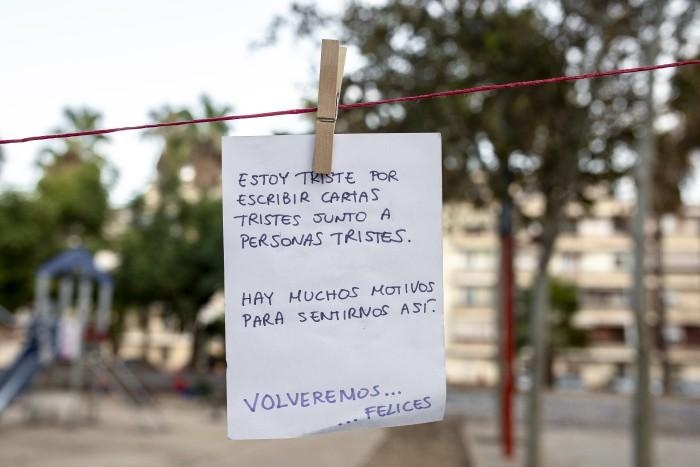 image by Tamara Sánchez Pérez
respecting the times, sustaining the mourning
To read the text in Valencian click here.
On 29 October 2024, seventy-five municipalities in the province of Valencia, two in Castilla-La Mancha and one in Andalusia suffered a devastating ravine, as a result of governmental inoperativeness during the Dana and decades of urban speculation on flood-prone land. A total of 229 people died. The next morning and for months, civil society self-organised state and local mutual support networks to help the thousands of people affected. For its part, the public administration activated measures to “restore normality”, such as financing new cars, clearing roads and chartering buses to resume studies and work obligations. Ultimately, the population was instigated to be or appear functional and thus mask negligence.
Today, Parque Alcosa and so many other flooded neighbourhoods remain stagnant: housing and neighbourhood infrastructures remain unrehabilitated; students are scattered in different schools or overcrowded in barracks; unbearable bureaucratic requirements; irreparable losses and the denial of political responsibility under judicial instruction, “without which there is no possible mourning” according to the victims' associations. In this context, pretending everyday life is institutional violence. Many people are still in shock or dissociated from the pain, while others are just beginning to somatisise the trauma. Even so, the majority - neighbours, workers, activists - remain on their feet, overwhelmed by accumulated exhaustion and fear of future extreme weather events, in the face of an opportunistic and reckless reconstruction plan, awarded to a company linked to the Gürtel plot.
When we conceive Structures of affection It seemed opportune to generate a vitalist project that would honour ties and give rise to desire; a contribution to the territory that would contribute to restoring another dimension of human dignity. However, activating it proved inopportune with so many open fronts and wounds festering. There was no right to mourn or to let our guard down for half a minute.
Working as a community in the aftermath of a catastrophe requires tact and sensitivity, facing the paradox between the need to act and the readiness to integrate.. Being the one who resists is not the same as being the one who insists. A mundane but significant example of this is the coinciding account by several teachers of how the huge donations of school materials triggered dopamine in classrooms and frustration in families every week: “Where do we put all this if we don't have a home? Revictimisation out of genuine and naïve compassion. Compulsive solidarity monopolised everything, by system. There was no room, not a pin could fit, there was no room for doubt: it is good to be grateful, even if there is no room for more pens, let alone for any hint of desire. Recess is confiscated.
Sometimes, expecting reciprocity becomes an abuse of privilege and the best gesture of recognition is to show calm, to be present without forcing the rhythms and to deactivate the ego of the project. Even to devote energy to supporting other mobilisations that the community feels are a priority. Artistic mediation is also a lot of subtle fieldwork, under the mud, before bringing forth; as the lotus flower grows. In this case, above all, spread seeds and cultivate patience: lots of peripheral conversation with full intention; discerning between the lines internal tensions; preserving intimacy, not discomfiting; taking advantage of joyful lapses to connect and entrench; taking on hiatuses and extending tentacles; reading articles, theses, archives; attending conferences and workshops; following the press; building a theoretical framework; constituting an ethical, enthusiastic and discreet practice; persisting free of expectations; harvesting situated knowledge to, when the time comes, channel the collective potency and reciprocate the legacy.
To this end, it is essential to have the backing of an entity that allows for sustaining processes that are not exhausted in the immediacy of the emergency, and that consider the medium term as necessary for real impact. Thanks to this approach, in this first phase we were able to sharpen our critical and appreciative eye, face our own dilemmas and approach the dynamics of the territory with a great deal of respect. It was not a matter of rushing into action, but of getting down to earth, understanding the codes and accompanying the feeling.
Affective mediation after the disaster: respecting time, sustaining grief.
On 29 October 2024, seventy-five municipalities in the province of Valencia, two in Castile-La Mancha and one in Andalusia suffered a devastating ravine, as a result of governmental inoperativeness during the Dana, and decades of urban speculation in flood-prone land. 229 people died. On the day of the disaster and during the following months, civil society organised local and state networks of mutual support to help the thousands of victims. For its part, the public administration activated measures to “restore normality”, such as financing new cars, filling in roads and abandoning buses to cover studies and work duties. The aim was to make the population functional or seem functional in order to mask the neglect.
Today, Parc Alcosa and so many other flooded neighbourhoods continue to stagnate: housing and neighbourhood infrastructures to be rehabilitated; pupils scattered in schools or housed in shacks; unbearable bureaucratic requirements; irreparable losses and the denial of political responsibility under judicial instruction, “without which there is no possible pain” according to the victims' associations. In this context, the simulacrum of everyday life is institutional violence. Many people remain in silence, dissociated from pain, or even just begin to somatise the trauma. However, the majority - victims, workers, activists - remain at the bottom of the heap, overwhelmed by the accumulated exhaustion and the panic over future extreme climatic events, in the face of an opportunistic and reckless reconstruction plan awarded to a company linked to the Gürtel plot.
In brief Affecting structures It seemed opportune to generate a vitalist project that would honour ties and make room for desire; a contribution to the territory that would help to restore another dimension of human dignity. Nevertheless, activating it proved unbearable, with so many open fronts and festering wounds. Neither the right to grieve nor the time to lower the guard.
Working in the community after a disaster requires sensitivity, facing the paradox between the need to act and the willingness to integrate. It is not the same to be the one who resists as to be the one who insists. A mundane but significant example is the coinciding account by several teachers of how the huge donations of school materials - collected in a weekly ritual of forced gratitude - triggered dopamine in the classrooms and frustration in the families: “Where do we find all this, if we don't have a home? Revictimització per compassió genuïna i ingènua. Compulsive solidarity monopolised everything, by system. There was no empty space, there was no room for doubt, there was no room for anything, no more flapping, no more pessimism of desire.
Sometimes, expecting reciprocity is an abuse of privilege, and the best way to acknowledge this is to show assertiveness, to be present without forcing the pace and to deactivate the ego of the project. Finally, to devote energy to supporting other mobilisations that the community considers to be a priority. Artistic mediation is also a lot of work in the field, under the mud, before being able to carry it out; like when the lotus flower blooms from the lot. In this case, above all, it is a matter of clearing away the rain and cultivating patience: a lot of peripheral conversation with full intention; to discern between lines of internal tensions; to preserve intimacy, not to be uncomfortable; to take advantage of the happy moments to connect and to hold on; to assume the torments and to extend the tentacles; to read articles, theses, archives; to attend conferences and workshops; to follow the press; to build a theoretical framework; to constitute an ethical, enthusiastic and discreet practice; to persist free of expectations; to gather situated knowledge so that, when the time comes, we can channel our collective power and participate in the arrival.
For this reason, it is essential to have the support of an entity that allows us to sustain processes that do not exhaust themselves in the immediacy of the emergency, and that consider the medium term as necessary for real impact. Thanks to this approach, in this first phase, we have been able to sharpen our critical and appreciative eye, face our own dilemmas and approach the dynamics of the territory with great respect. It was not a matter of rushing into vigour, but rather of taking hold of the land, understanding the codes and accompanying the feeling.