

A bubble where to imagine new stories, to write new rules
Ana Moure Rosende Ana Escariz Pérez
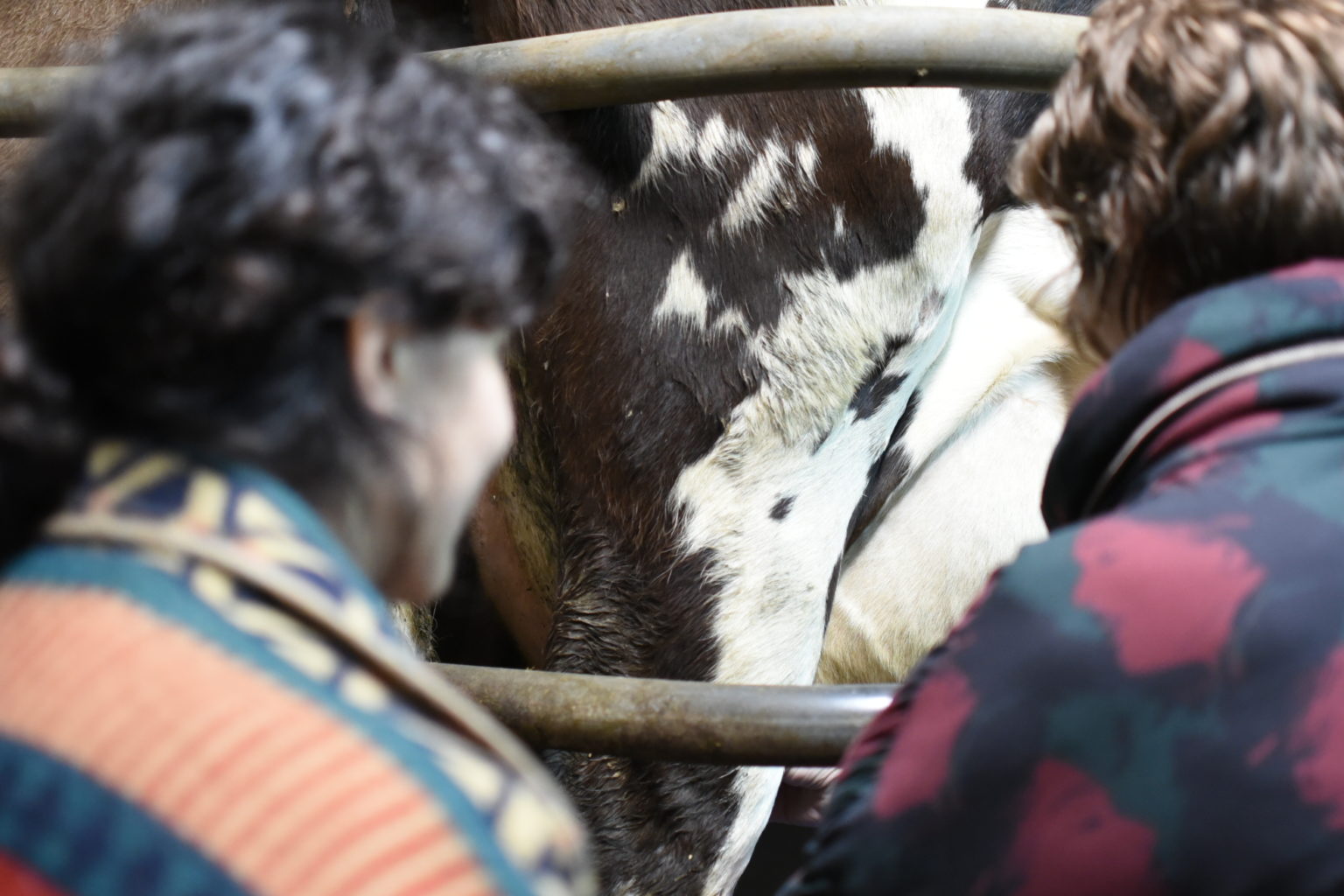
The central theme of the December sessions was something we do not see but which is crucial for the production of different types of dairy products in the Ulloa region: ferments.
To read the text in English click here.
Dear readers,
The week leading up to Christmas was very intense. We got tired of all the organisation that involved stretching the river Ulla for the demonstration against Altri's macrocellulose on Sunday 15 December. That's why we designed some light and brandy sessions, and we decided to make a little bit of the difference between our more collected sessions (Stories out loud) and our more active ones (Doing it out loud).
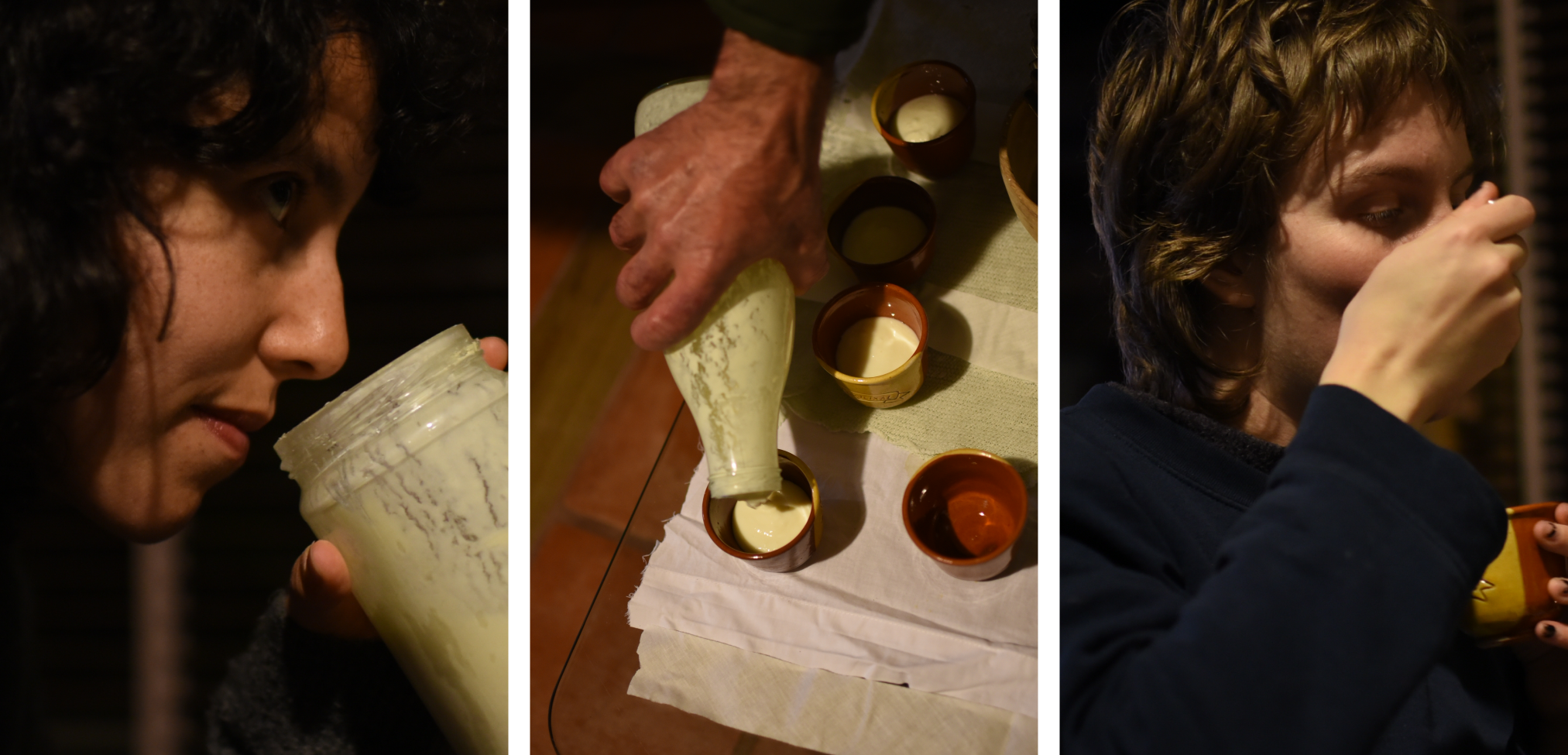
For the first session we met at Arqueixal, the farm of Xosé Luis Carrera Valín, one of the members of our group. Arqueixal, which produces queijoo, iogur and milk from artisanal and extensive production, is one of the pioneering initiatives in organic production in Galicia. In addition to using ferments to produce his products, Xose Luis is very interested in nutrition, so we asked him to make some kind of ferment with the group in his space. He proposed to make leite preso, an acidified milk that used to be drunk a long time ago. For our experiment we decided to muxify the cows ourselves, which, we have to admit, is more difficult than it seems. The recipe is very simple: leave the milk next to a heat source for 2 days. The milk will ferment with its own microorganisms (those that we normally kill with pasteurisation).
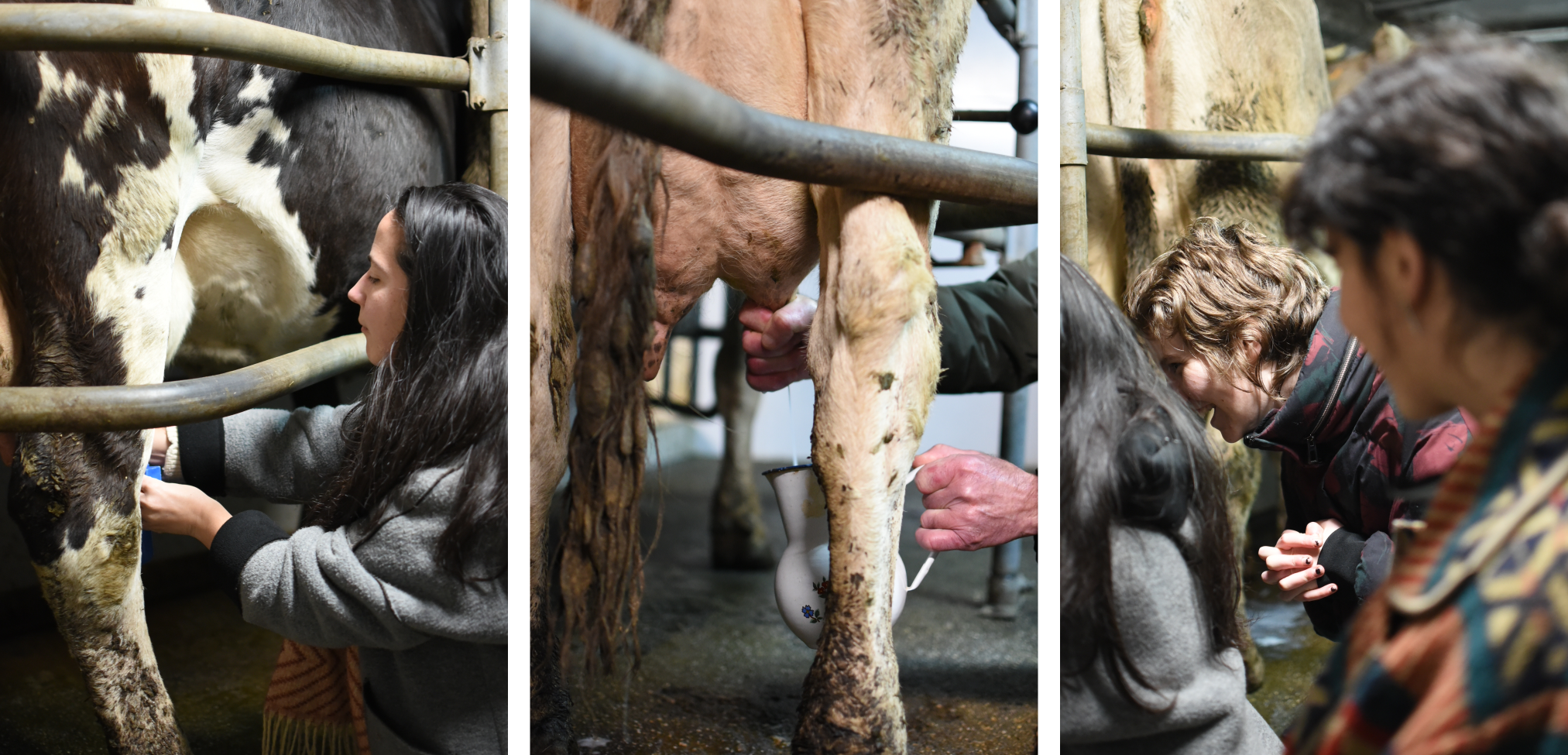
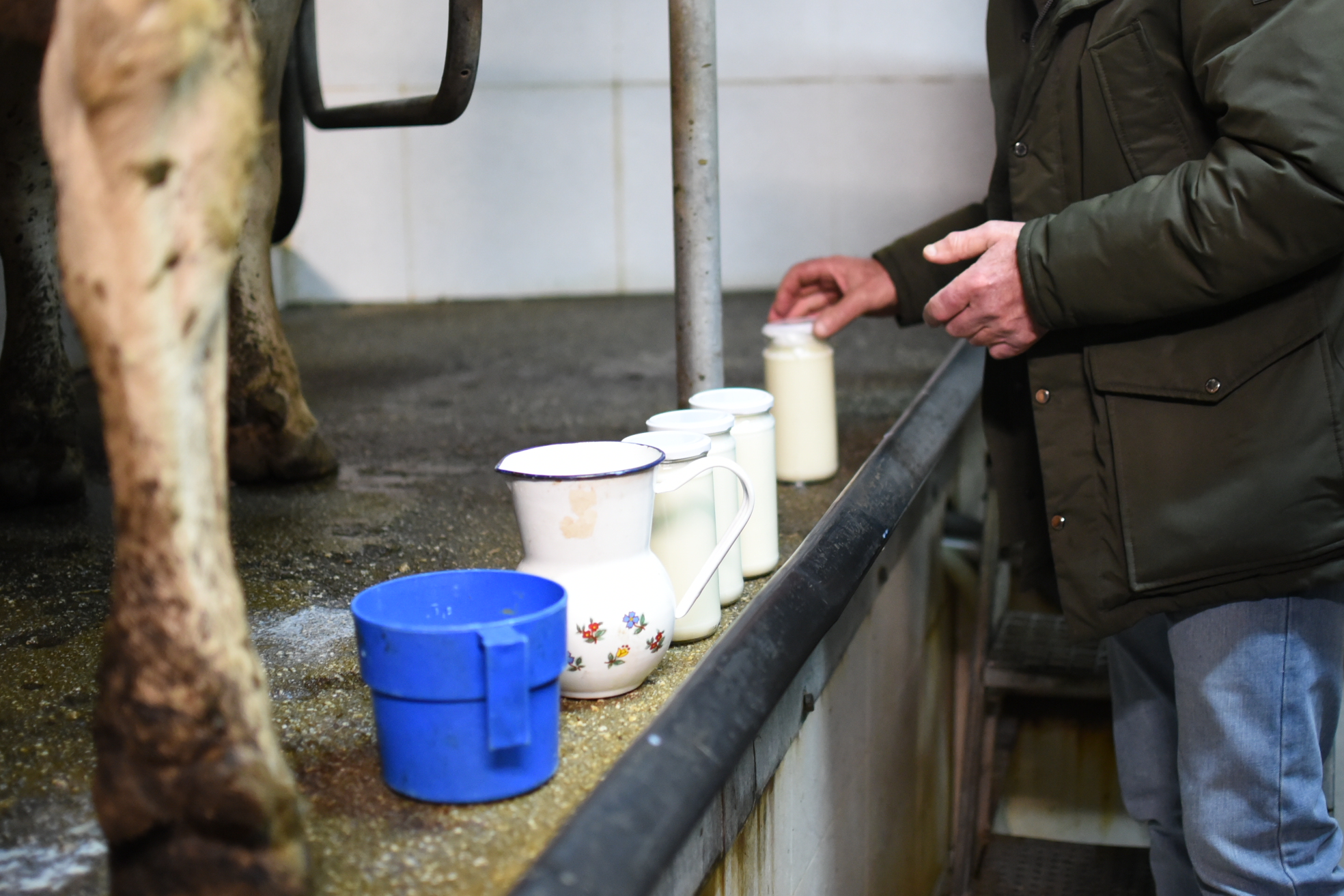
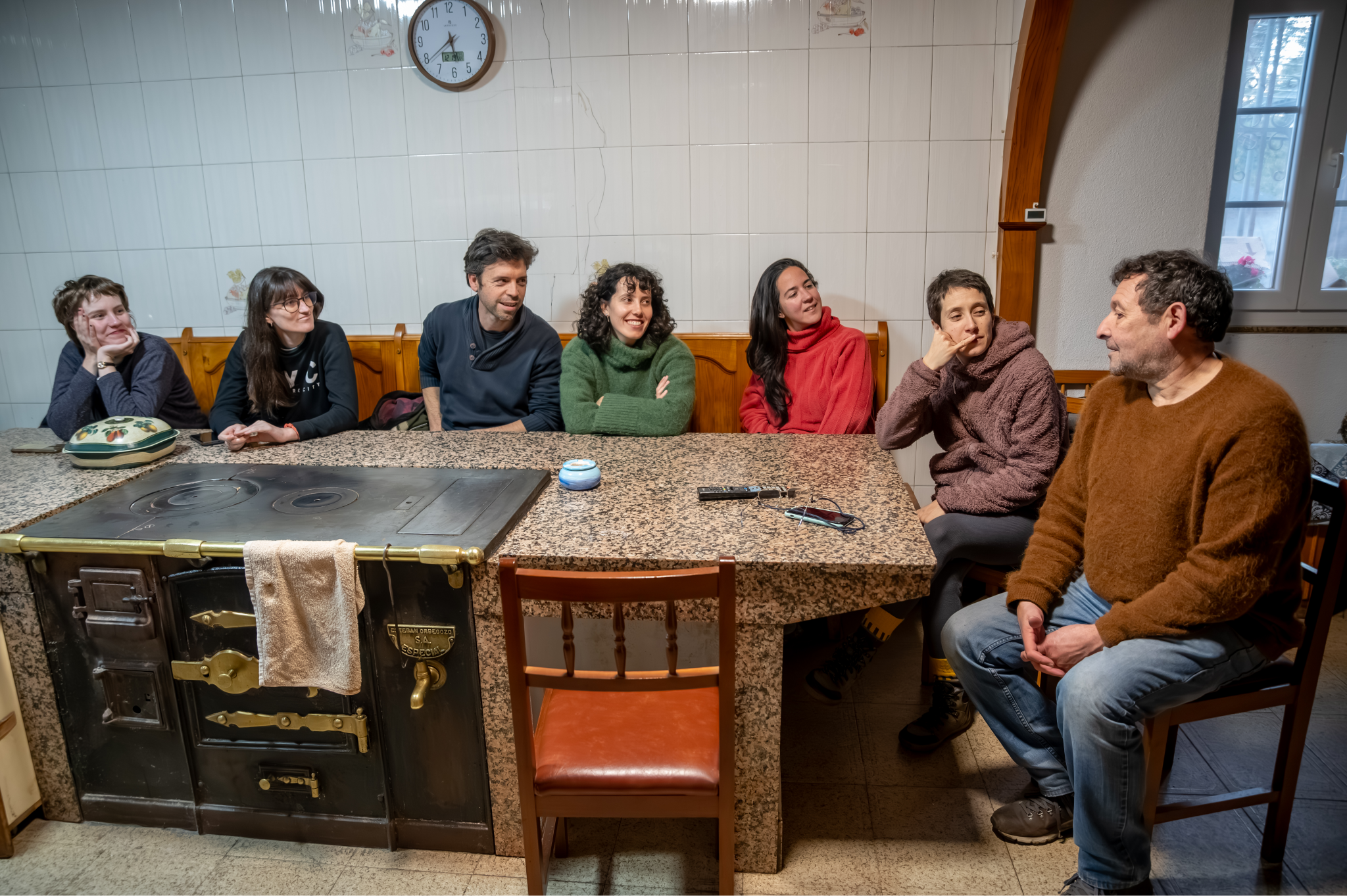
While we are doing it, first in the stable and then in the parladoiro, a multipurpose room that they have in Arqueixal, we are talking about ferments: what they are, what they are not, where they are found, what foods are fermented, what they are for... we also share an article about an archaeological study that confirmed that in our stomachs, many years ago, an enormous extinction of microorganisms took place. We talk about industrial diets and how they are changing the way we eat. We talked about the importance of eating fermented foods but the little time we have to make them. “But you can do it yourself,” said Xosé Luis. Little by little we tried the different leavings that he had made. In the last part of the session we do a meditation while we think about the demonstration on Sunday and we choose the Fervent Manifesto by Mercedes Villalba:
(...) It is at times like these that joy becomes a political issue (...) it becomes a matter of care to maintain and nourish that joy whenever it is found. (...) It is key to defend our joy and to do so we may be forced to make bubbles. Pockets of air and spaces of exception. Hiding places where to go to nourish and rest. Let these spaces abound, even if they are temporary. May they harbour the strangest and most creative of exceptions. Bubbles where to imagine new stories, write new rules. In times like these we are fighting for our right to the future. The trick is to make these bubbles ferment, rising up in fervour.
This is what we want the space that will be Os contos do leite to be like.
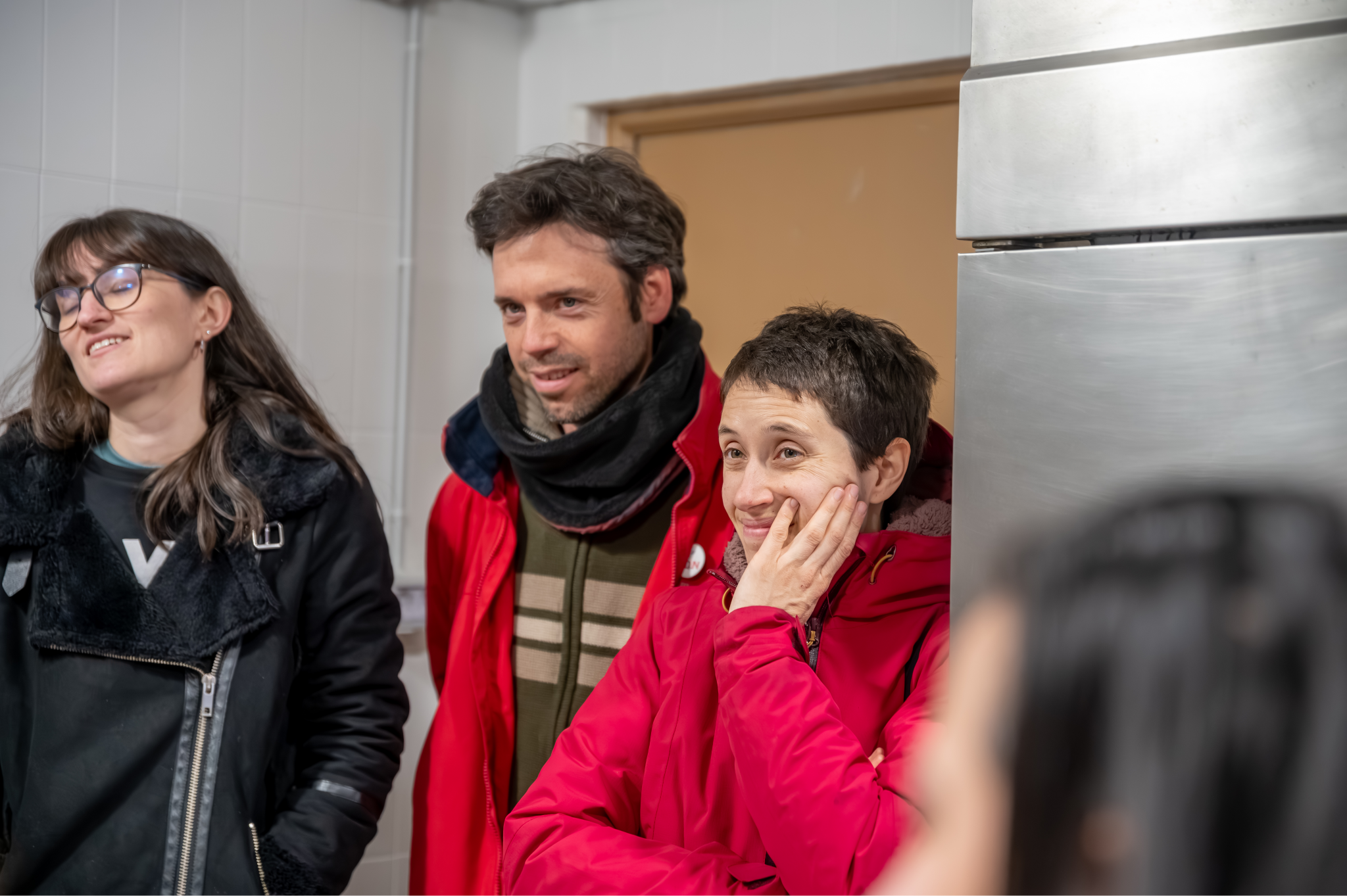
For the second session, we go to Senande, where the Dajosefa cows graze. Alí Miguel Vázquez and Josefa Vázquez show us the meadows where the cows graze daily. We get to know the stable, the dairy and Josefa's kitchen. We discover that the cheese Dajosefa uses the own ferments of the place, not the Dutch ones that are used to add to the Arzúa-Ulloa cheese. Miguel tells us about the paradox that the D.O. (Denominación de Orixe), which was created to protect the typicality of the local cheese, today would not accept the Dajosefa cheese despite being the only one in the area that uses the natural ferment of the territory. Tamén nos fala Miguel da bacteriotheque which they are creating in collaboration with the University of Vigo.

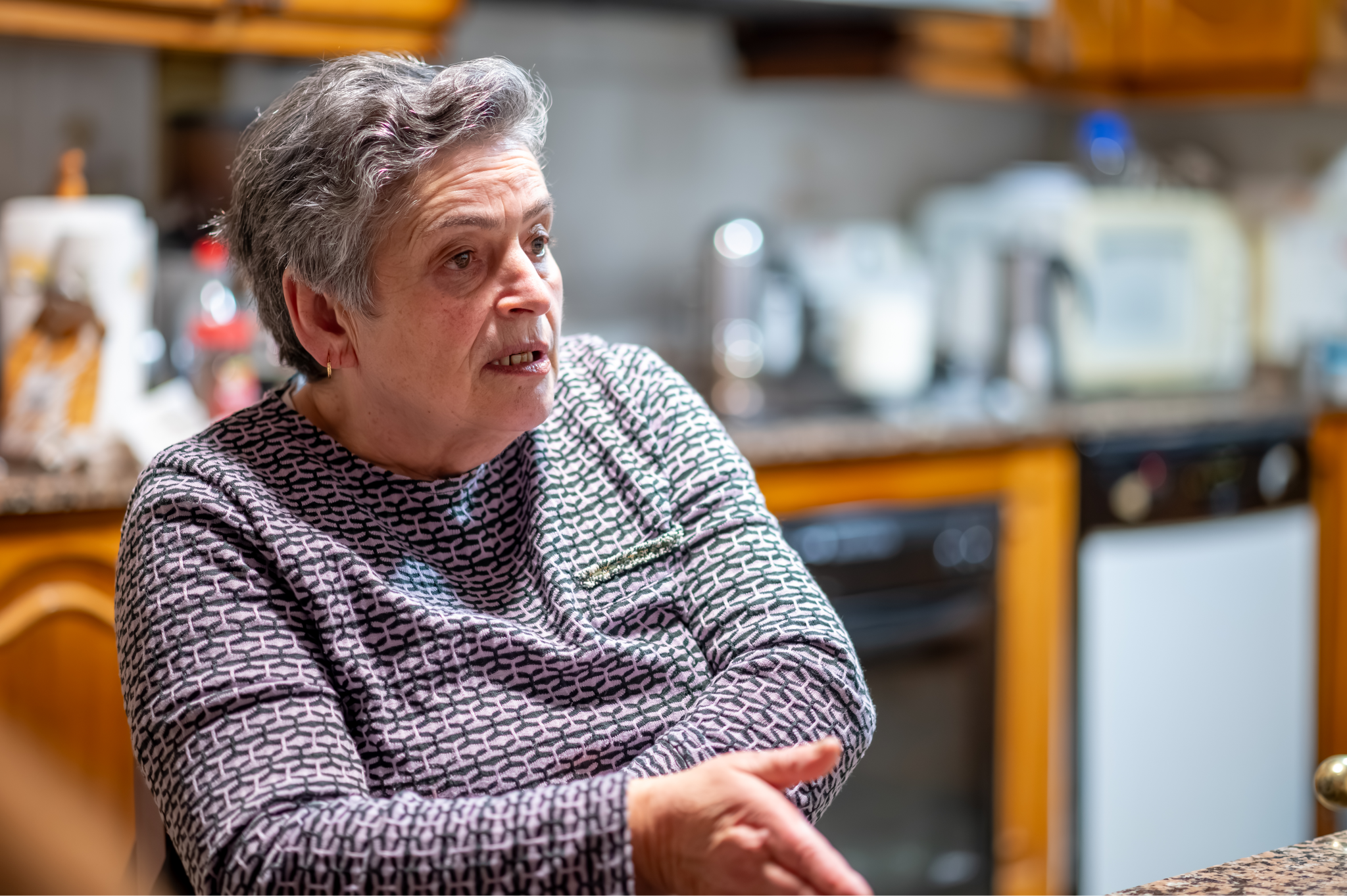
Back in her house, Josefa tells us, while she is cooking the biscotti, the story of how she started working with Miguel. She also explains details of her work, such as how to know by touch when it is time to cut the cheese or how the way of making it changes depending on the season of the year in which it is harvested. We talk about the miraculous fridge from which they were able to recover the ferment when a fungus killed what they had. Zeltia then recalls a fridge belonging to her grandmother in which the leavings were always delicious. “Just don't throw it away!” the rest of us shouted.
Before leaving, we handed out the leites presos that we had from the day before and we discussed the demonstration on Sunday and how to continue. Xa é noite pecha e no ceo vense unha morea de estrelas.
A bubble in which to imagine new stories, write new rules
Dear readers,
The sessions we held on 17 and 19 December focused on something we don't see but which is crucial for the production of different types of dairy products in A Ulloa: ferments. The week before Christmas was very intense. We arrived tired from all the organisation involved in the deployment of the Ulla river in the demonstration against Altri's macrocellulose on Sunday 15 December. That's why we designed some light and soft sessions and we blurred a bit the differences that we usually make between our more collected sessions (Storytelling aloud) and the more active ones (Doing out loud).
For the first session we stayed at Arqueixal, the farm of Xose Luis Carrera Valín, one of the members of our group. Arqueixal, which produces cheese, yoghurt and milk in an artisanal and extensive way, is one of the pioneering initiatives in organic production in Galicia. In addition to using ferments to make their products, Xose Luis is very interested in nutrition, so we suggested that he do some kind of fermentation with the group in his space. He proposed making curdled milk, an acidified milk that was drunk a long time ago. For our experiment we decided to milk the cows ourselves, which, we have to admit, is more difficult than it sounds. The recipe is very simple: leave the milk next to a heat source for 2 days. The milk will ferment with its own micro-organisms (the ones we normally kill with pasteurisation).
While we do so, first in the stable and then in the parladoiro, a multipurpose space they have at Arqueixal, we talk about ferments: what they are, what they are not, where they are found, what foods are fermented, what they are used for... we also share an article about an archaeological study that has confirmed that many years ago, inside our stomachs, there was a huge extinction of microorganisms. We talk about industrial diets and how they are changing the way we eat. We talked about the importance of eating fermented foods but how little time we have to make them. «But they make themselves!», says Xose Luis. Little by little we try the different curdled milks that he had already made. In the last part of the session we do a meditation while we think about Sunday's demonstration and listen to the Fervent Manifesto by Mercedes Villalba:
(...) It is at times like these that joy becomes a political issue (...) it becomes a matter of care to maintain and nourish that joy whenever it is found. (...) It is key to defend our joy and to do so we may be forced to make bubbles. Pockets of air and spaces of exception. Hiding places where to go to nourish and rest. Let these spaces abound, even if they are temporary. May they harbour the strangest and most creative of exceptions. Bubbles where to imagine new stories, write new rules. In times like these we are fighting for our right to the future. The trick is to make these bubbles ferment, rising up in fervour.
This is how we want the space generated by Os contos do leite to be.
For the second session, we go to Senande, where Dajosefa cheeses are made. There, Miguel Vázquez and Josefa Vázquez show us the meadows where the cows graze every day. We got to know the stable, the cheese dairy and Josefa's kitchen. We discover that Dajosefa cheese uses local ferments, not the Dutch yeasts that are usually added to Arzúa-Ulloa cheese. Miguel tells us about the paradox that the D.O. (Denomination of Origin), which was created to protect the typicality of the cheese of the area, would not accept Dajosefa cheese today, despite the fact that it is the only cheese in the area that uses the natural ferment of the territory. Miguel also tells us about the bacteriotheque which they are creating in collaboration with the University of Vigo.
Once at home, Josefa tells us, while filling our plates with sponge cake, the story of how she started working with Miguel. She also explains details of her work, such as how she can tell by touch when it is time to cut the cheese or how the way it is made changes depending on the season of the year. We talk about the miraculous fridge from which they were able to recover the ferment when a fungus killed off the one they had. Zeltia recalls her grandmother's fridge in which the cheeses were always delicious. «Well, don't throw it away!» the rest of us shouted.
Before leaving, we share out the curdled milk we had from the previous day and we talk about Sunday's demonstration and how to continue. It is already dark and there are many stars in the sky.