

A cuestión da auga será o que paralice Altri
Ana Moure Rosende Ana Escariz Pérez
Os contos do leite delves into the element of water
Dear readers,
We write on this occasion to tell you how the sessions of 12 and 14 November took place and what results they yielded, which we dedicated to the second element we deal with in Os contos do leite: water.
The relevance of this element in the current context in the Ulloa is enormous, because the macrocellulose that Altri intends to install in the heart of Galicia would consume 46 million litres of water per day, equivalent to the consumption of the entire province of Lugo. In addition, 30 million litres of water would be discharged into the Ulla, with all the implications this would have for the health of the ecosystems, the inhabitants of the Ulla basin and the food production projects linked to the territory. It was with all this in mind that we held the November mediation sessions.
STORIES OUT LOUD. WATER
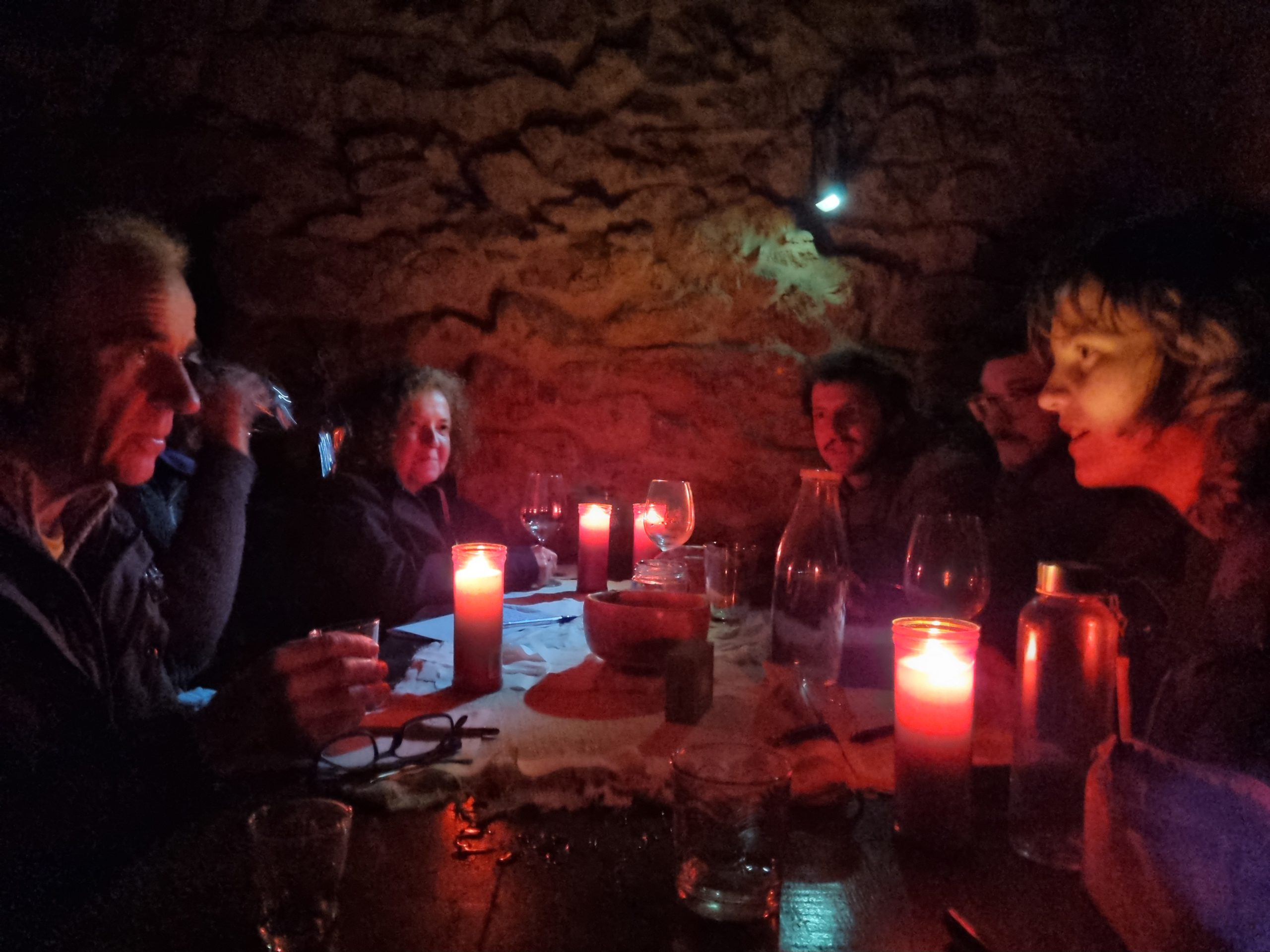
We held the session of Tales aloud of the element of water in the fishermen's refuge next to the ruins of the Frádegas spa. We wanted to think about the types of uses that were and are being made of rivers and water.
For this session, Luis, one of the participants, had suggested that everyone bring water from the source closest to their home or from a source they liked very much, so on this day we all arrived with our water to do a kind of tasting at the end of the session.
In the dark, lit by candles, we talked about the river as an element that unites diverse territories and in relation to this we shared a story, Bridge, Francis Alÿs, 2006, in which the artist uses a performance in the sea to talk about the geopolitical issues that mark the relations between Cuba and the U.S. This piece seemed very powerful to us and planted a first seed to start thinking about how to work with the Ulla River.
We also share the piece Under Discussion, Allora&Calzadilla, 2005, with which the artists talk about Vieques, an island in Puerto Rico that was a training camp for the US army and thus became a sacrifice zone. The images inevitably make us think of an undesirable future for Ulloa.
We then went on to do an exercise to reflect on the elements that we linked to the river and water in the past: we talk about a mill that belonged to Natalia's grandfather and she recovered it; about the collective water management that is carried out in the Cumbraos mountain, where there are three water taps that can only be opened at the same time, to ensure that no one person collects too much water for themselves; we remember the thermal baths and how in the past the washing places were spaces for socialising? Coming to the present day, we bring to the table the issue of the pressure on aquifers in areas suffering from drought, in different places where water is privatised or, on the contrary, understood as a common good, we talk about the movements of climate migrants and those that will occur more and more frequently. Thus we come to the time of the future: we are talking about the possibility of a future where bioregions are very important for the management of life.
We return to the idea of the Ulla as an affective territory to claim. Could we use this idea for the mini party on 15 December? Vanesa shares with us an application that allows us to see which streams and rivers a drop of water falling in a specific place would flow through. We thought about the option of making an action that highlights the entire route taken by the river. We imagine, laughing, a trout with a camera that makes eyes for all of them.
It is time to end the session, but not before toasting with each of the waters we have brought:
Water from the spring of the Frádegas spa, with an aftertaste of sulphur, by Adri and Alex,
chin, chin!;
Water from the O Picho spring, which is said to have a geolocated history in the «Architectures of Memory» project, brought by the Anas,
chin, chin!;
Water from the Cumbraos spring, in Marta, which is from the same stream as the one in do Picho, but when it reaches Cumbraos,
chin, chin!;
Water from the Albá spring, brought by Luis, from which he says that on one occasion some 6 or 7 young women from the village died and there was some doubt as to whether they had died because of the water. Now they have,
Cheers!
TO DO IT LOUDLY. WATER
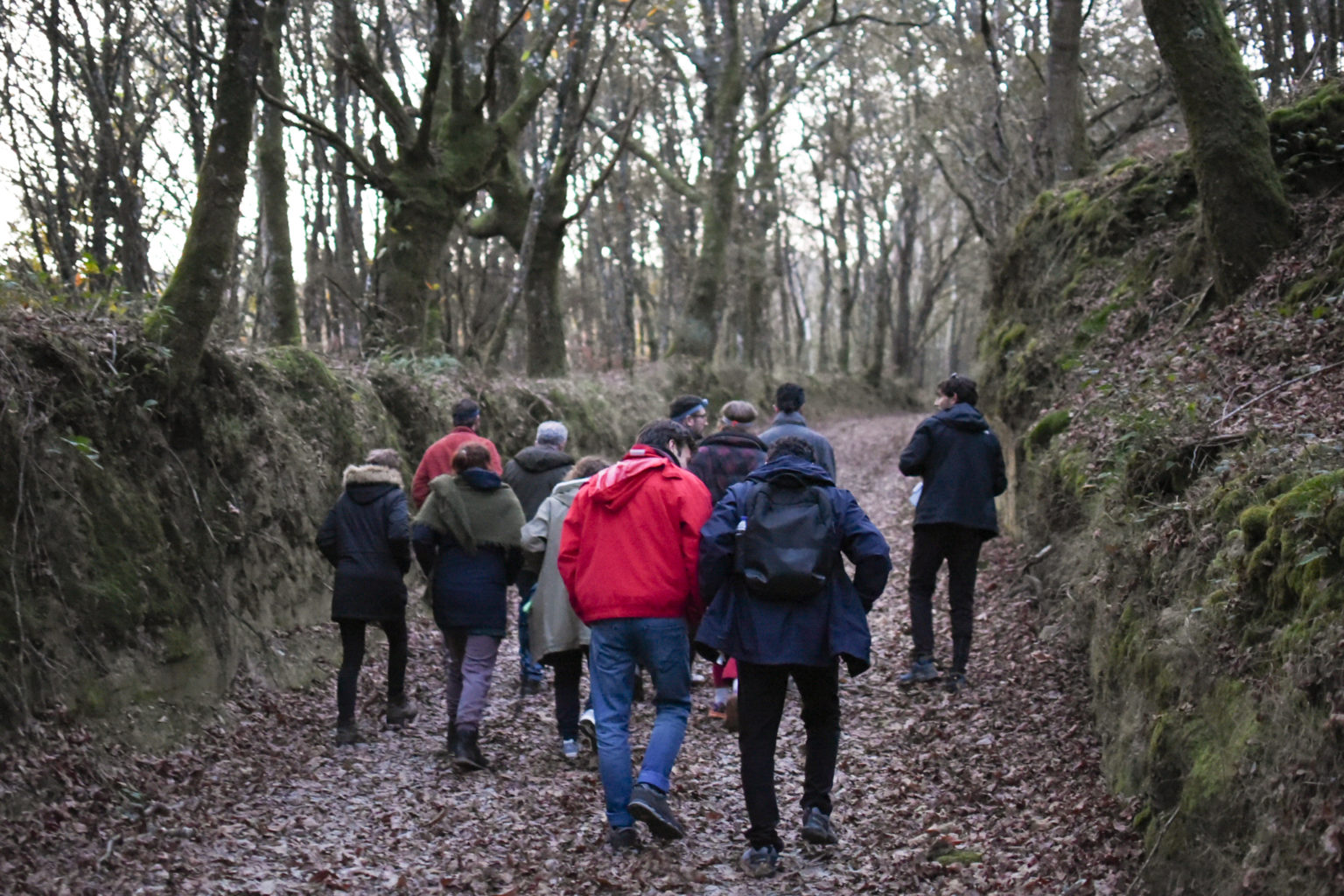
For this session we decided to visit the source of the river Ulla. We did it with Horacio García, the geographer who located it and who was also in charge of the hydrological impact assessment of the Altri's macrocellulose plant. in the report published by the Consello da Cultura Galega. We are also joined by Omar Arellano, a biologist and colleague of Horacio's who has worked extensively on the contamination of several rivers in Mexico.
We meet in Olveda, after driving along some beautiful roads. We talked about all the legends about the source of the river Ulla. One of them said that it starts nearby, in the Chousa da Poteira. It is close, but not exactly there. Horacio is surprised that now, some years after the publication of his study, the source of the Ulla is already marked.
We walk through the area with our headlamps on, the sun is setting.
On the sign indicating the source of the river there is a sticker that says Altri Non. We are in friendly territory. When we arrive, Horacio tells us how he did the survey and points out the source of the river: right under a birch tree. Immediately a line forms to put our hand in the hole where the water comes out. Natalia puts her whole arm in. «Go further down!» she says. Marta feels like crying as she feels the stream of cold water.
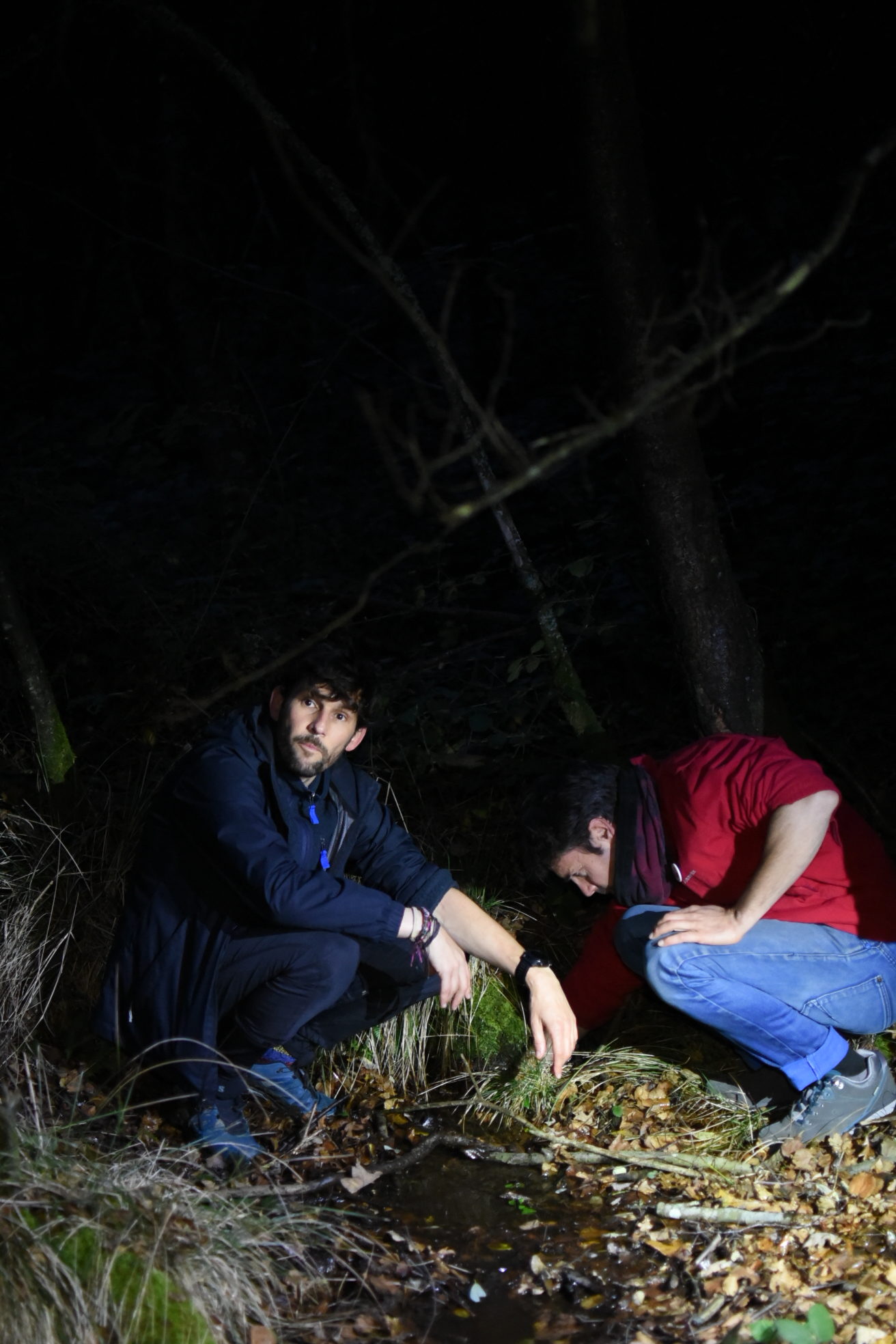
With a blackboard that he always carries with him, Horacio explains the impact that the implementation of macro-cellulose would have on the river. He tells us how Altri's data are based on the best averages that can be collected, without taking into account, for example, the critical summer months when talking about the river flow. According to him, it is the water issue that will paralyse the Altri project because the accounts don't add up. «Anyone can compare the open data of the report of the Conselleria de Cultura of Galicia and the numbers don't add up. If I were the official who had to do the evaluation, I wouldn't dare sign Altri's proposal,» he says.
We ended the session thinking about how to take the river to the demonstration in Santiago. How can we represent water, its importance and its way of connecting territories? We thought about carrying milk jugs filled with water from different stretches of the river; about carrying a long blue cloth, about dressing up as a river and as a mountain, about carrying blue umbrellas... We will continue to work on this.