


Of masterships, heroics and mediations
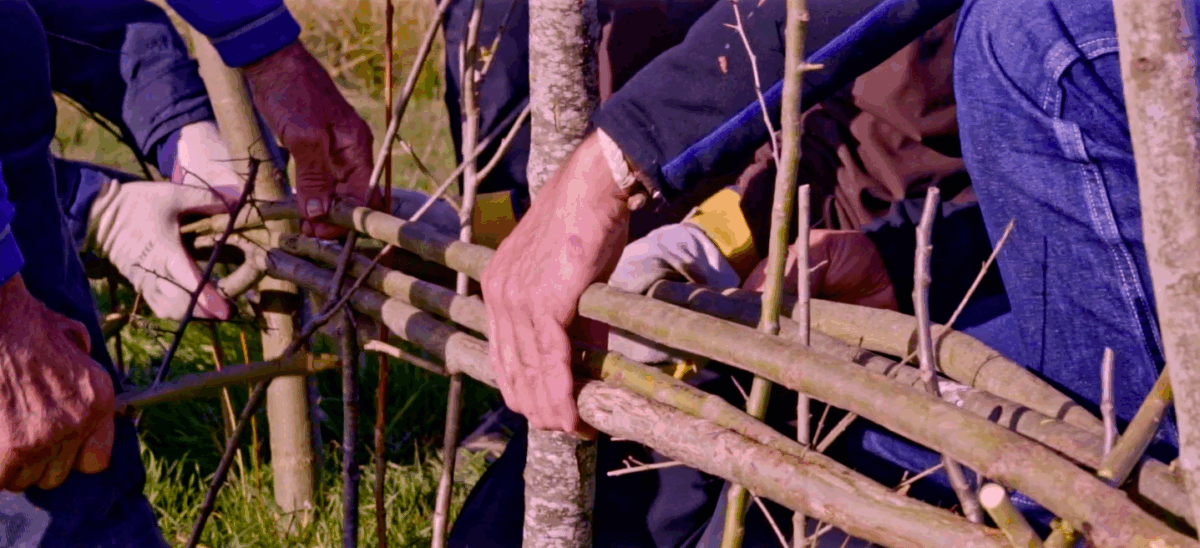
Reflection on the process of mediation in its last phase, a moment in which issues such as forms of governance or the constructed link that will remain once the artistic production is concluded come up.
A few days ago, the writer Luís Mateo Díaz received the Cervantes Prize and entitled his speech “Vivir contando y contar viviendo” (Living by telling and telling by living), he spoke of the craft of storytelling, of childhood, of places to listen to elders and of heroes who are not heroes.
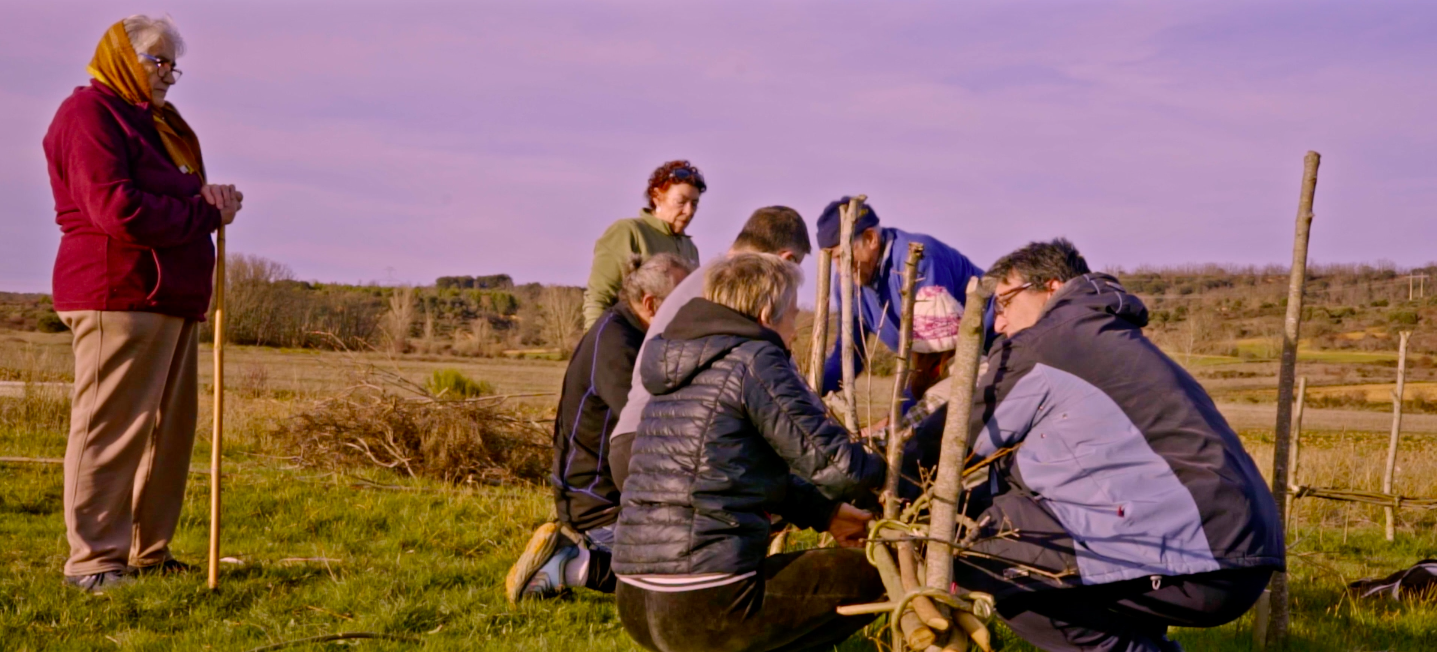
Listening to his speech, I can't help but think of the mediation we are doing in the León region of La Sobarriba. The writer from La Rioja says: “The entity of my characters was not, therefore, exempted from an uncertain heroism, so Cervantine and quixotic, for the sake of a liberating and redeeming imagination, being perhaps heroes of failure, as I liked to call them, but not because of the precariousness of those who dispense with the passion of living, the aspiration of the lively person who may fail in his misguided or idealistic ways, whom reality defeats with the suffering of a wounded will or a contradicted common sense”. Thus the comitants are these heroes and heroines (with a small h) who do not dispense with their passion for life, nor with their ideals, nor with their common sense, no matter how much it may be upset.
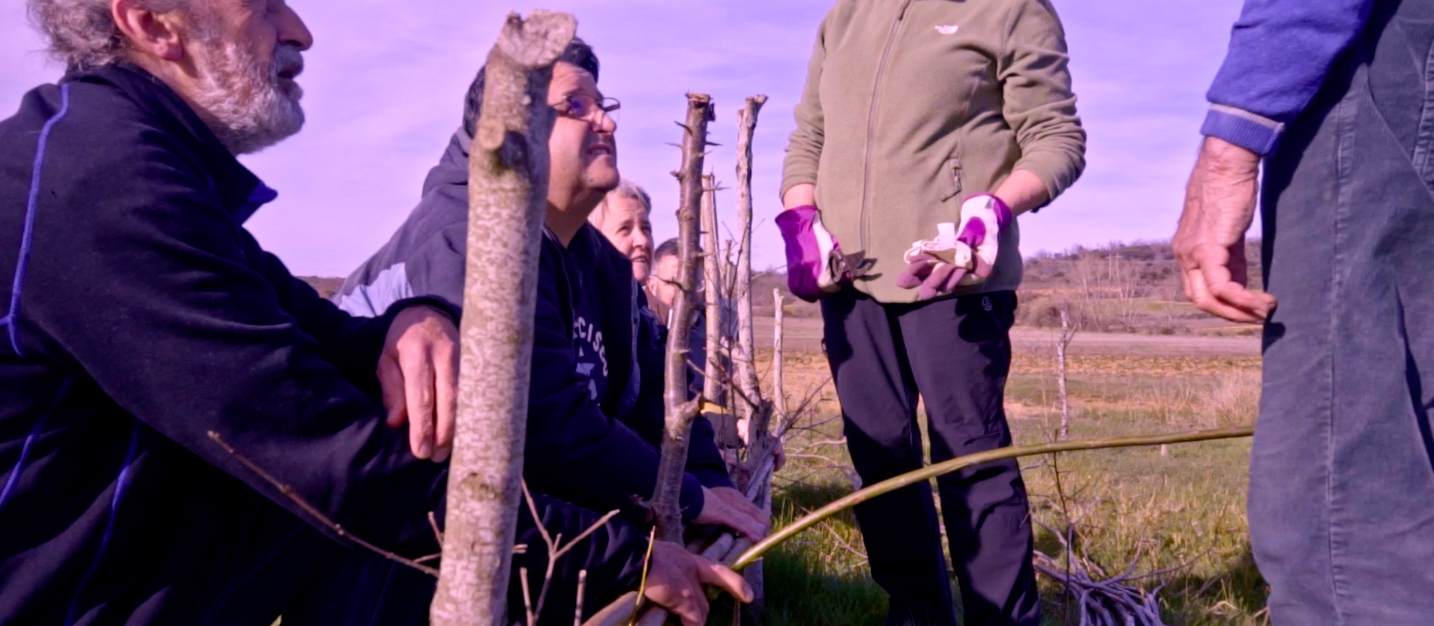
These neighbours gathered at the heat of imagination to rethink how the last phase of our concomitance is going, what possibilities are opening up for governance and co-management. Because, from rural areas, we know very well that only through a good use of the world can we survive.
Ursula K. Le Guin says in The Dispossessed that “to make good use of the world, to stop wasting it and the time we spend in it, we have to relearn what it means to be in it”. And being in this territory is meaning relearning through the masters who have inhabited it; like Justo who felt alienated from the claim of the Platform in Defence of La Sobarriba, The world has begun to understand what they are, but by teaching us how to create seeds, it is also intervening in them, and teaching us to listen to the ground, to the sky, to each other and to our inner selves.
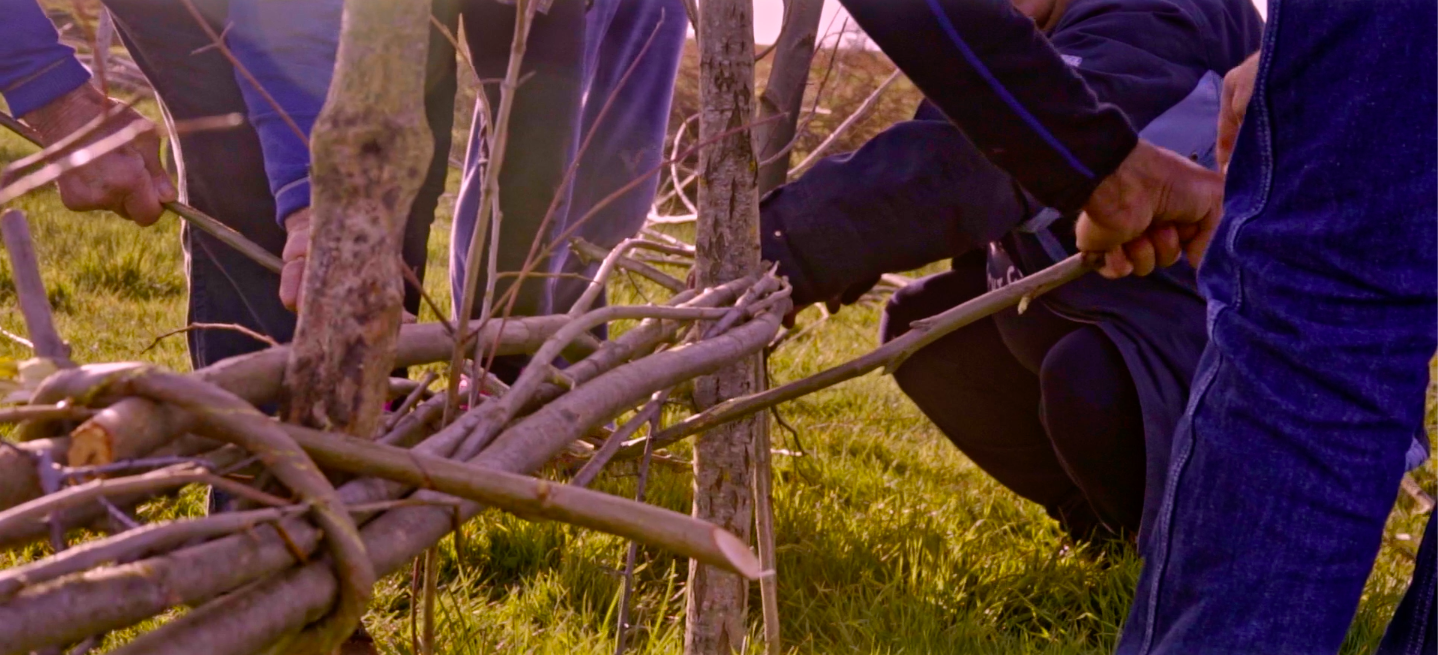
Y all of this is helping us and the organisations that accompany us to understand the place we inhabit from the human and, in this case, inter-species work, the work in which we find ourselves.. Intertwining palms, dogwoods, mustards, sylvars and privets. But also words, debates, silences, wounds, thoughts, frustrations and joys. Because beyond the real act of interweaving nature, there is the symbolic act of interweaving and rooting ourselves to the ground by treading on it and building new possibilities of inhabiting.
Understanding mediation from this point of view, from this idea of rootedness and interweaving; And also from heroism, from the liberating and redemptive imagination, as liberation through action, in order to make places worthy of being lived in.



 Concomitentes