


Unha vez compartido xa non ten forma de volver a desarticularse
Ou do relato da xornada do 13 de decembro
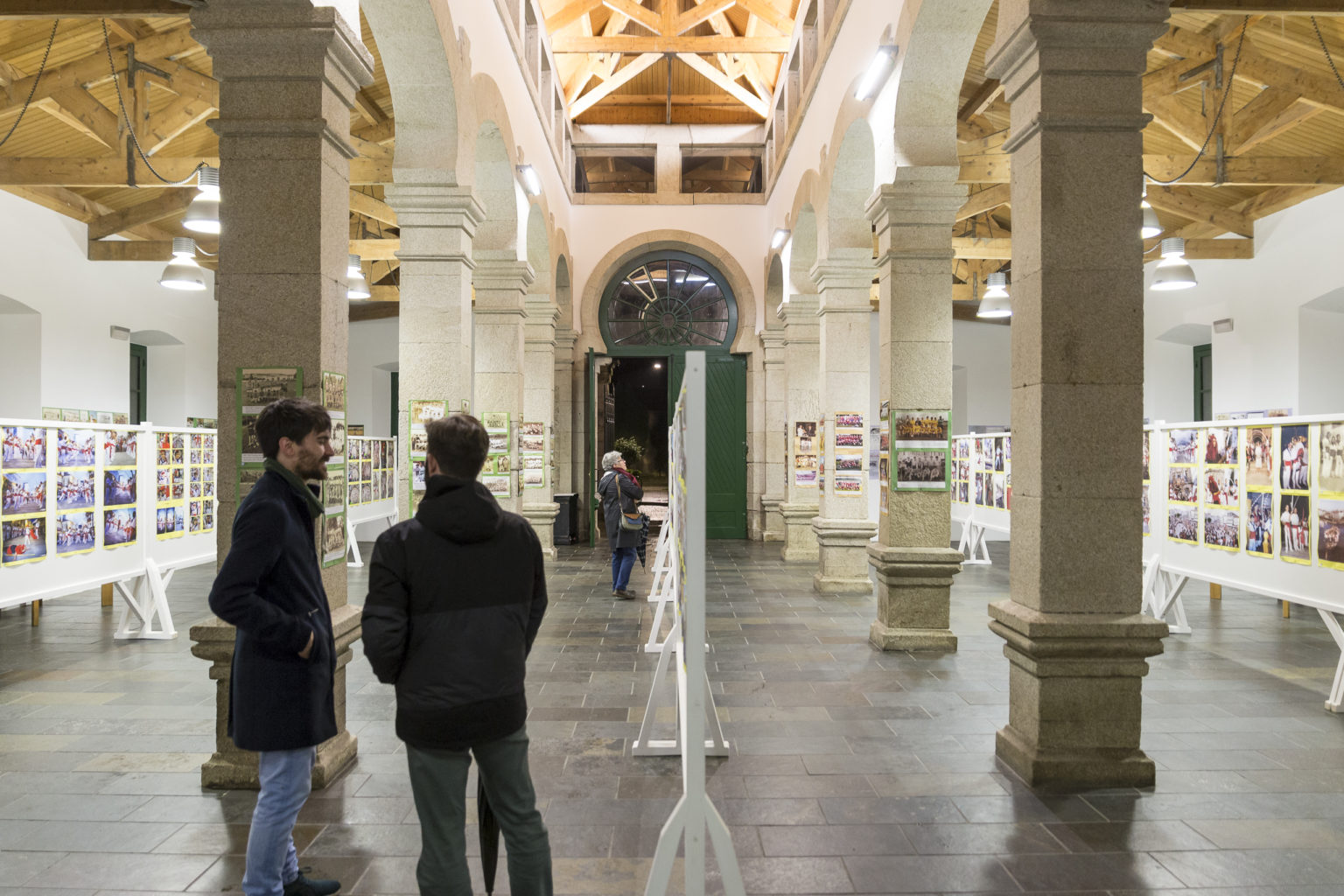
The masonry walls of the old slaughterhouse of Betanzos made the steps of the participants who met for the first time echo, or those who on 13 December came together again in this conversation-merenda to continue investigating the capacity of their sovereignty to coordinate, produce and negotiate in community the commissioning of the work of art that will be the product of these meetings, under the rain and around the organised merenda and the company of other thinking bodies. We could, not without any transcendent intention, dare to assert that the Naveira brothers, from their premises of combining reading and learning, would be more than satisfied with the methodological approach that was presented at the beginning of the session. Once again Fran Quiroga, project coordinator, and Andrea Rico, in the role of facilitator on behalf of the Rexenerando cooperative, emphasised the importance and the profound meaning of the meeting's pedagogies.
Thus, with the intention of generating this flow of knowledge and perspectives, in a warm framework that favours unexplored avenues of dialogue, it was proposed that the first issue to be addressed should be to identify and situate the collective challenges of the 20th century.It is not at all appropriate to stop and ask ourselves this question, being as we are too much heirs to the dynamics of our most immediate history, with only one foot still in a current situation that never ceases to pull us, impatient in its determination for fluidity in all spheres. But certain axes were heard in the voices without effort: the care and enhancement of heritage, respect for nature and for one's own, the conscious exercise of recovering the ecological and agricultural wealth of the area, the impact or social trauma of past and present migratory movements and everything that produces them, and above all the need to create living spaces that make it possible to “feel part of something bigger”.” and -appealing once again to the philanthropic spirit of the irmans Naveira- they welcome and accommodate, already from their own conception, those people that we can consider the excluded of our time. As well as responding to the challenges, it is important to delimit them.
So then, for example, we can say what we are talking about when we talk about heritage: a concept that in its breadth should embrace under its umbrella as many different aspects as possible, “both historical, natural, social, linguistic...”. A fío do que, por tanto como pode motivar a investigar cales son as perdas que nos afectan, así como a prender mecanismos activos de recuperación, resultará convinte seguir tirando.No caso de ser grandes benefactores e benefactoras, a veciñanza betanceira ten claras cales serían as súas prioridades, e resultaron evidentes as motivs de quen este dia se xuntou nos instalaciones do matado municipal. Specific problems were presented, such as the collapse of houses due to demolition in the historic centre, and in a broader framework, special importance was given to the power of physical spaces as devices for creating bonds between people and, therefore, networks of care. “Collectivity, participation and accessibility” were always pointed out as primary factors in the equation to be formulated. “What do I want the future work to tell me? This was the second question that Andrea Rico proposed to debate among us all, appealing to a sense of ”deep attention“ towards artistic representations and to investigate what is our relationship with them.
What do we go to a museum for? And to a theatre? What is it that makes us feel distant from that abstract statue that somehow our popular imagination always places at the roundabout of some industrial estate?
From the results of this joint meeting, the basic and realistic demands to be communicated to the artist who would be in charge of the work could be extracted. We tried to clarify what would be the criteria to be taken into account for this task, and most of them were agreed on at each of the tables: it would have to be a creation that would dialogue with the reality of the surroundings and would leave a lasting impression, something that the fact of conceiving a project with durability over time from the outset would already facilitate. Thus, manifestations of a strictly ephemeral nature were created, not only because of the scarce social involvement in the different local sectors it would produce, nor because of the difficulty of identifying the code and functionality of the resulting work within a reduced time frame, nor even because of a classical attachment to materiality or pragmatism.; But because it would be an important obstacle when it comes to interweaving three keys that are essential for the commissioners: legacy, identity and story.
Taking this into account, proposals such as the creation of a residence for artists or a new House of Arts (bringing to mind the tradition of guitar and lute luthiers in the history of the city), the compilation of a sound archive of the region that would include popular songs, the account of the city's anniversaries, the intimate narratives of all those voices that never had the opportunity to adhere to history? Ou mesmo a idea de recuperar o camiño da horta dos frades, que por un intre nos fai pensar a todas otra vez no que de tan obvio corremos o risco de pasar por alto: agricultura e cultura son -xa de por si os termos o evidencian- intrínsecas a unha para a otra. Hence the desire of the local residents that, whatever comes out of this, it should be partly unfinished as something in which to participate and to continue to grow over time, “something cyclical, even, and to which to return like a pilgrimage”, and to which to put it to use, the latter orienting itself once again towards something that appeals to co-responsibility and popular intervention rather than to a debate - by nature, it could be said, irresolvable - on the usefulness of art.
With this in mind we come to the last question of the day: what would we need to maintain the work? How would the legacy we want to leave be sustained over time, and how would it be cared for? It would be both desirable and necessary an absolute non-dependence on public administration, as well as “the capacity of the work to result in the creation of jobs”. While it is true that in previous meetings the possibilities of overflowing the project, its ramification into other actions and manifestations driven by the collaborative illusion were contemplated with triumphant optimism, this continues to be formulated with the same brightness in our eyes, but also leaving room for the need to be realistic and to know the limits of the project, even if only to be able to expand them from there. That is why we continue to invite you to the meeting, as a productive force of thought and celebration. And also of tensions, those very precise tensions: an unmistakable symptom that something has been put in common, and once it has been shared it can no longer be dismantled.
Photographs by Oscar Gorriz
The stone walls of the old slaughterhouse of Betanzos echoed with the steps of the citizens who approached for the first time and who gathered on 13 December for this conversation-refreshment, sheltered from the rain, around the organised snack and in the company of other thoughts. Organs, to continue investigating the capacity of their sovereignty to coordinate, produce and negotiate in community the commissioning of the work of art that will be the product of these encounters. We could, not without a hint of transcendent will, dare to affirm that the García Naveira brothers, from their premises of combining leisure and learning, would be more than satisfied with the methodological approach with which the session was focused.
Fran Quiroga, the project's mediator, and Andrea Rico, in the role of facilitator for the Regenerando cooperative, were in charge of the meeting. With the intention of generating this flow of knowledge and perspectives, in a warm framework conducive to unexplored avenues of dialogue, it was proposed that the first theme to be addressed should be “identifying and situating the collective challenges of the 20th century”. It is easy to pause to ask this question, being as we are heirs to the dynamics of our most immediate history, with one foot still in the present. Various themes emerged in the voices, without much effort: the care and enhancement of heritage, respect for nature and for oneself, the conscious exercise of the recovery of the ecological and agricultural wealth of the area, the impact or social trauma of migratory movements, both in the past and for the present.
Then, I pointed out what we are talking about when we refer to heritage: a concept that in its breadth should encompass under its umbrella the more uneven the better, «the historical as well as the natural, social, linguistic». A thread from which to motivate research into the losses that affect us, setting in motion recovery mechanisms, relocating priorities and the motivations of those who gathered at these municipal slaughterhouse facilities. Specific issues such as the demolition of houses due to neglect in the old town were also raised, and in a broader framework, particular importance was given to the power of physical spaces as devices articulating links between people and the creation of containment networks. “Collectivity, participation, and accessibility” were always pointed out as the primary factors in the equation to be formulated. What do I want the future work to tell me? This was the second question that Andrea Rico proposed to unravel, appealing to a sense of «deep attention» to artistic representations and inquiring about our relationship with them.
Why do we go to a museum, what about a theatre, what makes us feel distant from that abstract statue on the roundabout of some industrial estate? From the results of this discussion, the basic and realistic demands to be communicated to the artist who will be in charge of the work can be extracted. The aim was to clarify the criteria to be taken into account for such a task, and most of them agreed: it would have to be a creation that would dialogue with the reality of the environment and leave its mark on it, thus facilitating its durability over time. Thus, manifestations of a strictly ephemeral nature were rejected, not only because of the lack of social involvement in the various local sectors it would produce, but also because of the difficulty involved in identifying the code and functionality of the resulting work.
With this in mind, it is not surprising that if they made proposals such as the creation of an artists' residency or a new House of the Arts (recalling the tradition of guitar and lute luthiers in the city's history), or the compilation of a sound archive of the region to accommodate the history of the city's anniversaries and the intimate narratives of all those voices that never had the opportunity to adhere to history to popular songs.
Even the idea of recovering the path of the friars« garden which, for a moment, makes us think again about what is so obvious that we run the risk of overlooking it: Agriculture and culture, as the terms themselves show, are connected to each other. Hence the desire of the neighbours that, whatever comes out of this process, it should have an unfinished part as something to participate in and continue to grow as a community: »Something cyclical, even, and to return in pilgrimage", to give it a use that appeals to popular co-responsibility and intervention rather than to the - by nature one would say irresolvable - debate about the usefulness of art.
With this in mind we come to the last question of the day: What would we need to sustain the work? How would the legacy we want to leave be sustained over time and how would it be cared for? Absolute non-dependence on public administration would be both desirable and necessary, as well as «the ability of the work to result in job creation». While it is true that in previous meetings the possibilities of overflowing the project, its ramification into other actions and manifestations driven by the trend of collaborative illusion were contemplated with optimism, this is still being formulated in order to be realistic, the limits of the project must be known, if only to be able to expand them from there.
That is why we continue to invite to the encounter, as a productive force of thought and celebration. And also of the tensions, those very specific tensions: an unmistakable symptom that something has been put in common.
Photographs by Oscar Gorriz



 Concomitentes