


Doors and windows are the weakest parts of a home.
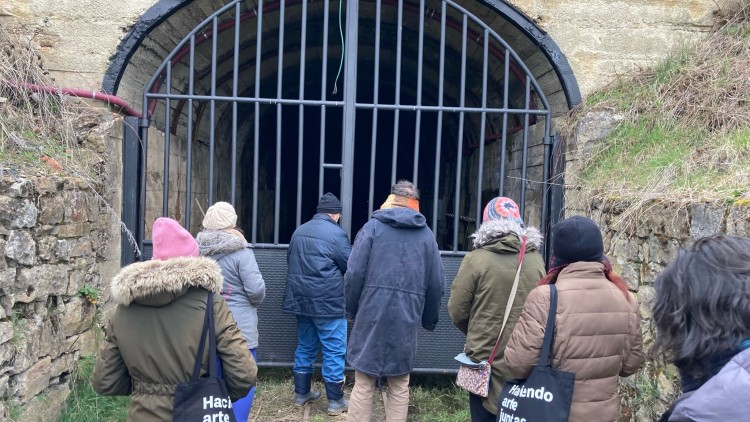 Participants at the third meeting
The commissioners work on the concept of leaving behind, of facing what comes in the future with joy and accepting the more-than-human as part of the territory.
Clara, one of the participants, told us that doors and windows are the weakest parts of a property. And she said this after doing an exercise in which we individually went through a door of the library, leaving inside a letter that we had written telling ourselves what it is that we want to leave behind by getting involved in this project. This act, as well as being a performative act that set our bodies in motion, was necessary in view of certain dynamics that the group was beginning to verbalise about the project and its position in the village.
This exercise awakens ideas such as: “I like my door because it builds a room of its own”, “the door is the boundary between the familiar and the social” or “the diana (popular music groups that go through the streets on the day of the village festival to cheer up and raise money for the festival and where the neighbours open their doors to welcome them) as a space in which the door is blurred”. The doors and their thresholds continue to be very present in our imaginary for the project.
In this session we had also decided to integrate the more-than-human into the project. And, in order to try to give it a voice, we wrote a story in which some of us spoke like coal sewage, like decomposing vegetable waste, like leaves and branches of an oak tree or like the aprons of our mothers and grandmothers.
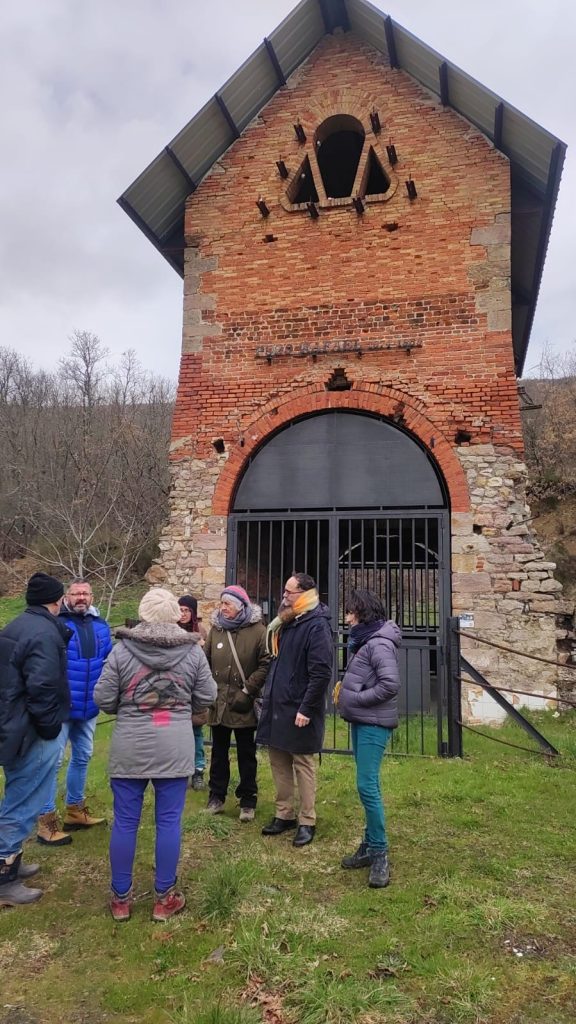
In addition, today we have a very special outing. Jose Luis, the president of ARPI (Association for the Recovery of Industrial Heritage) has invited us to visit an abandoned mine, the Pozo San Rafael in Vallejo de Orbó, a village 4 kilometres away.
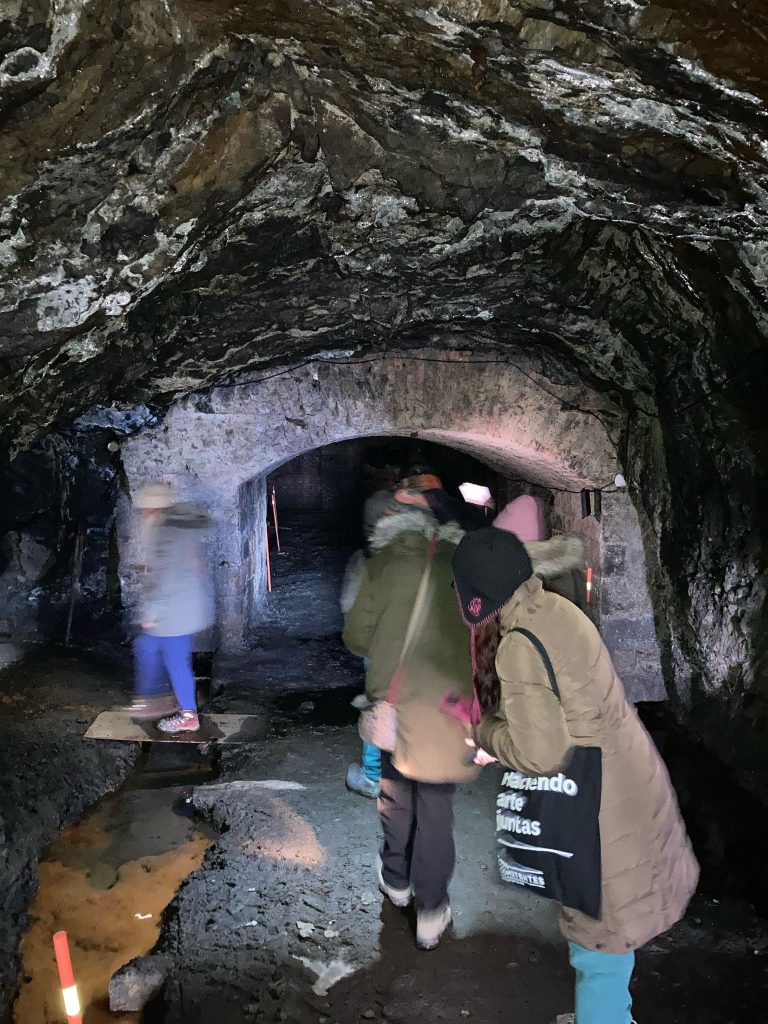
The experience is fantastic. We cross the door and walk through part of a gallery, listening to the sounds of the water flowing from the highest part of the mine and seeing the range of colours on the walls thanks to the lanterns we have brought with us, it becomes a communal experience that allows us to connect with each other, but also with the workings of the past.




 Concomitentes